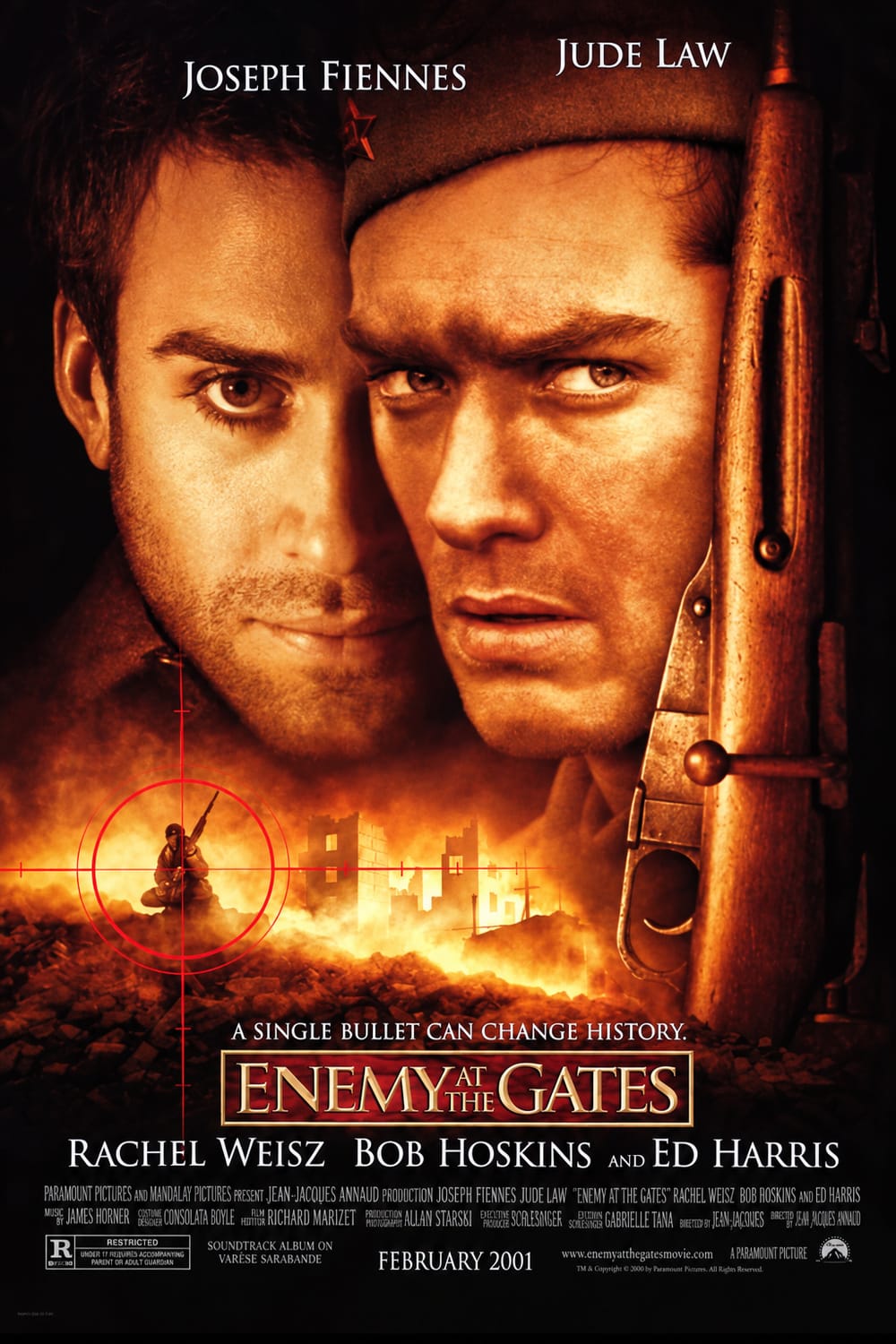
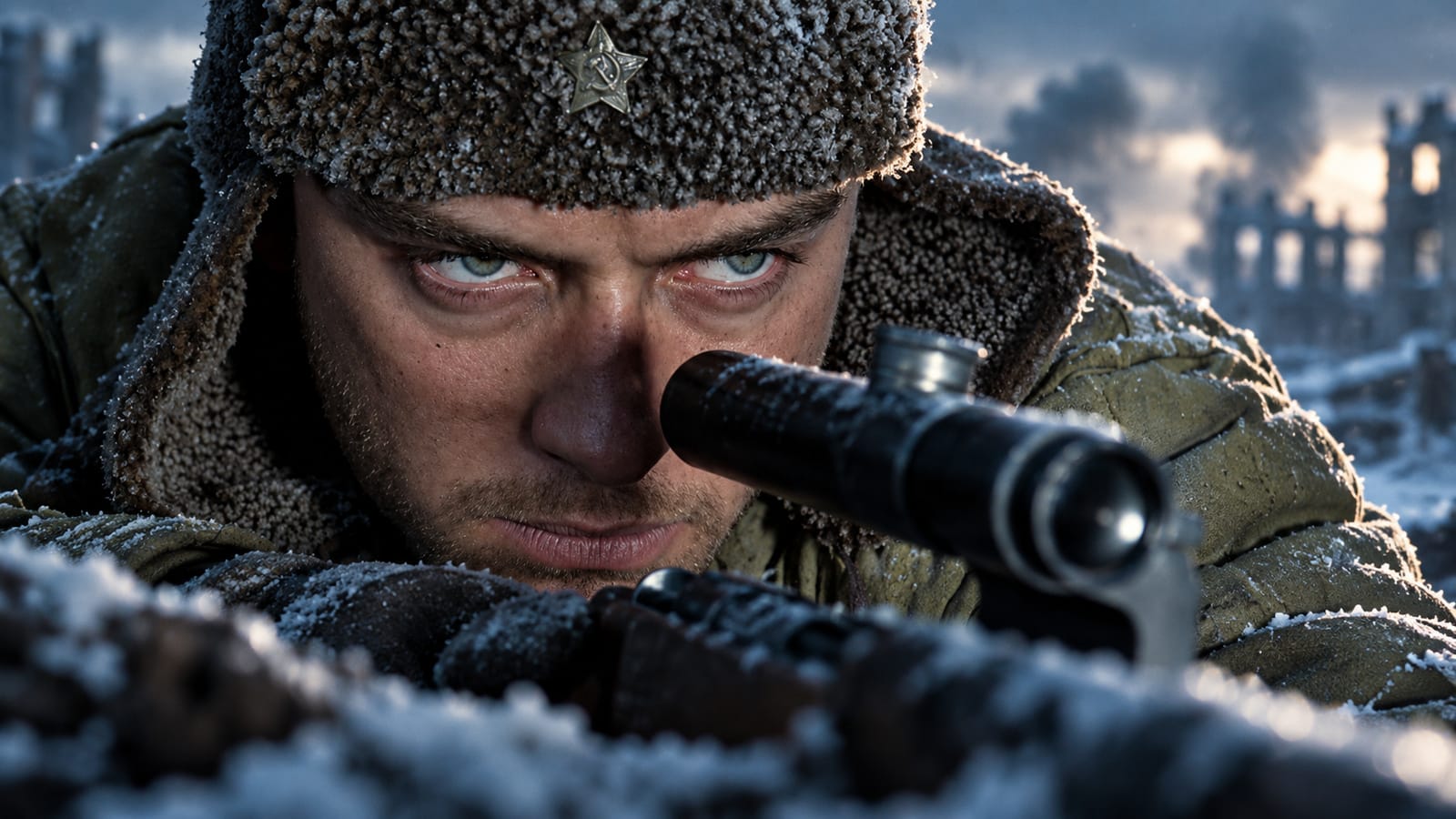
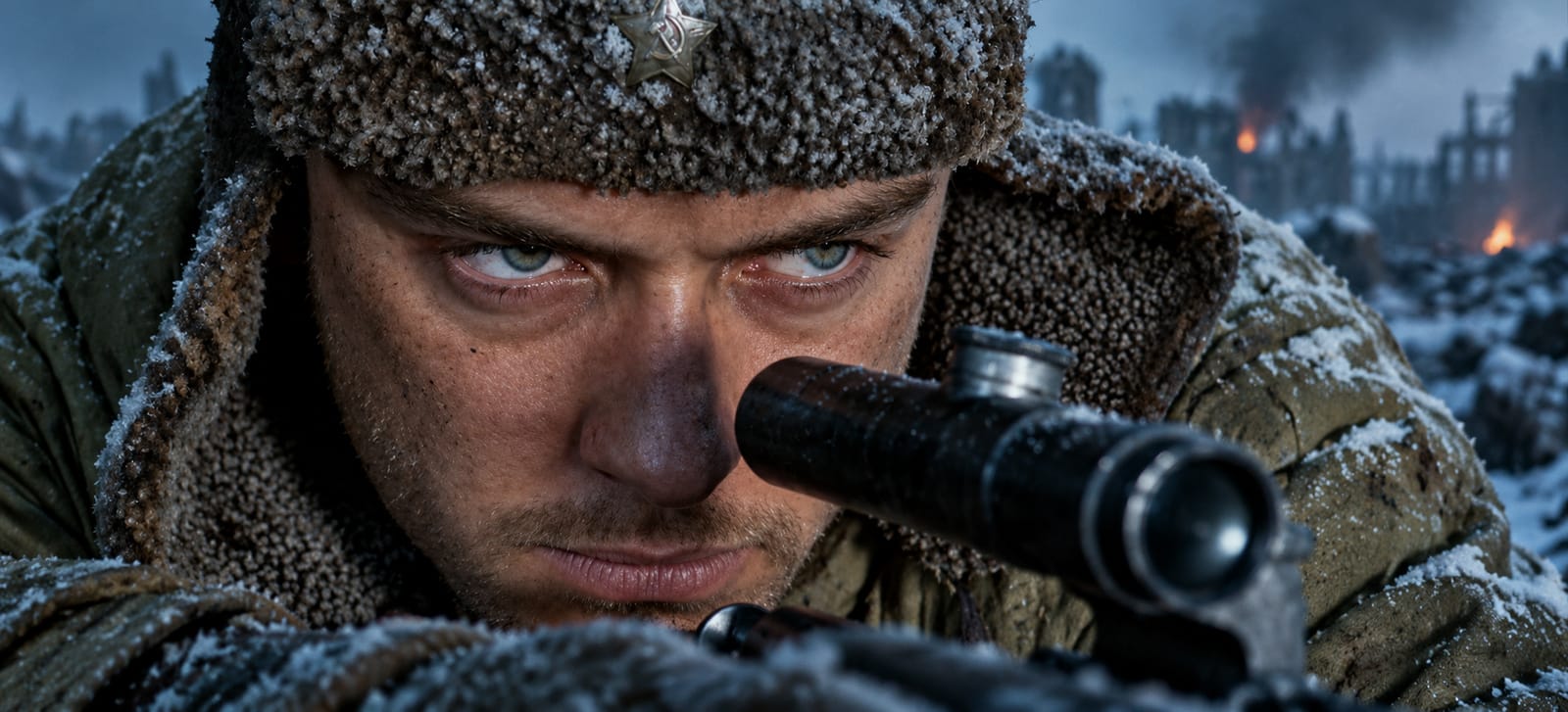
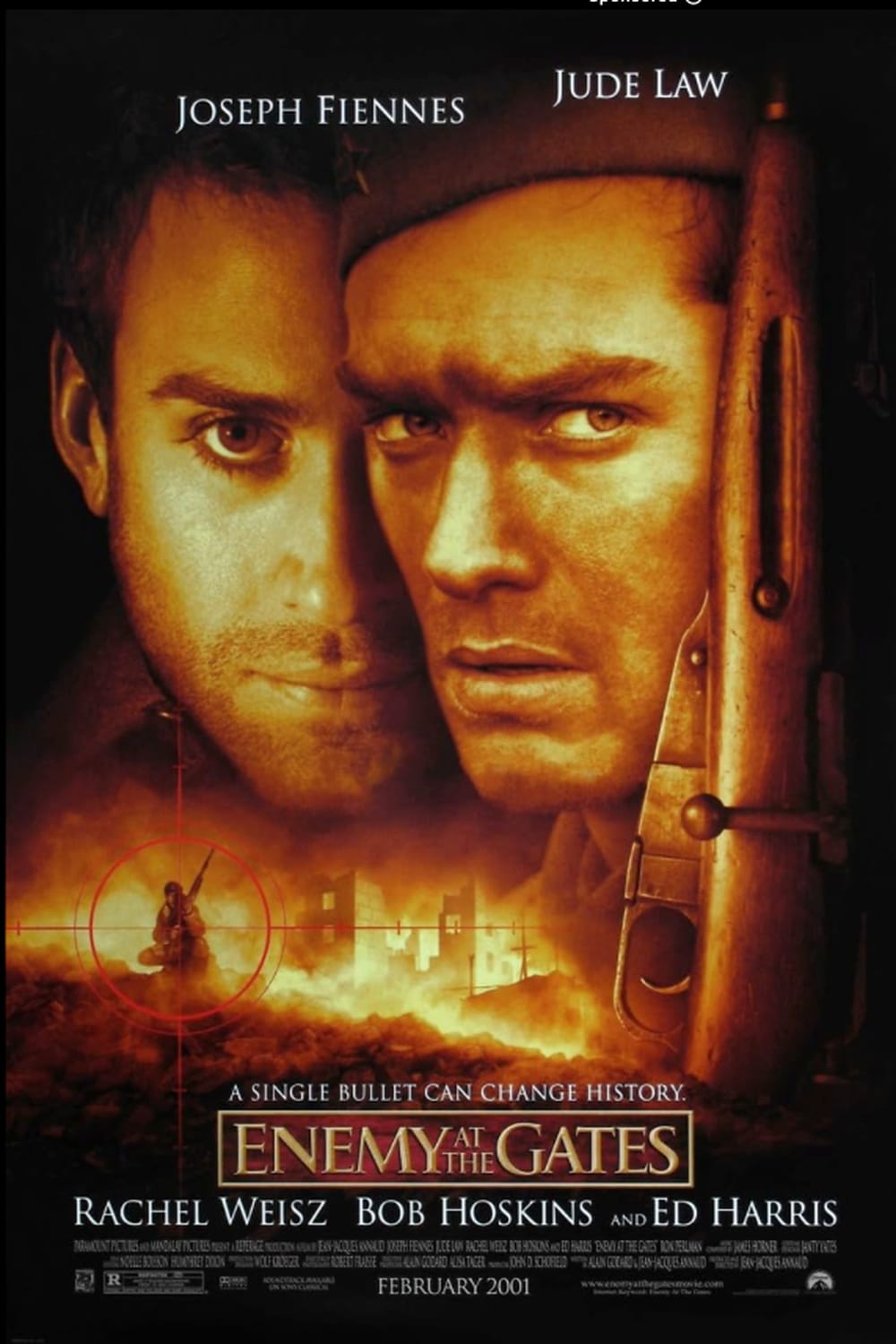
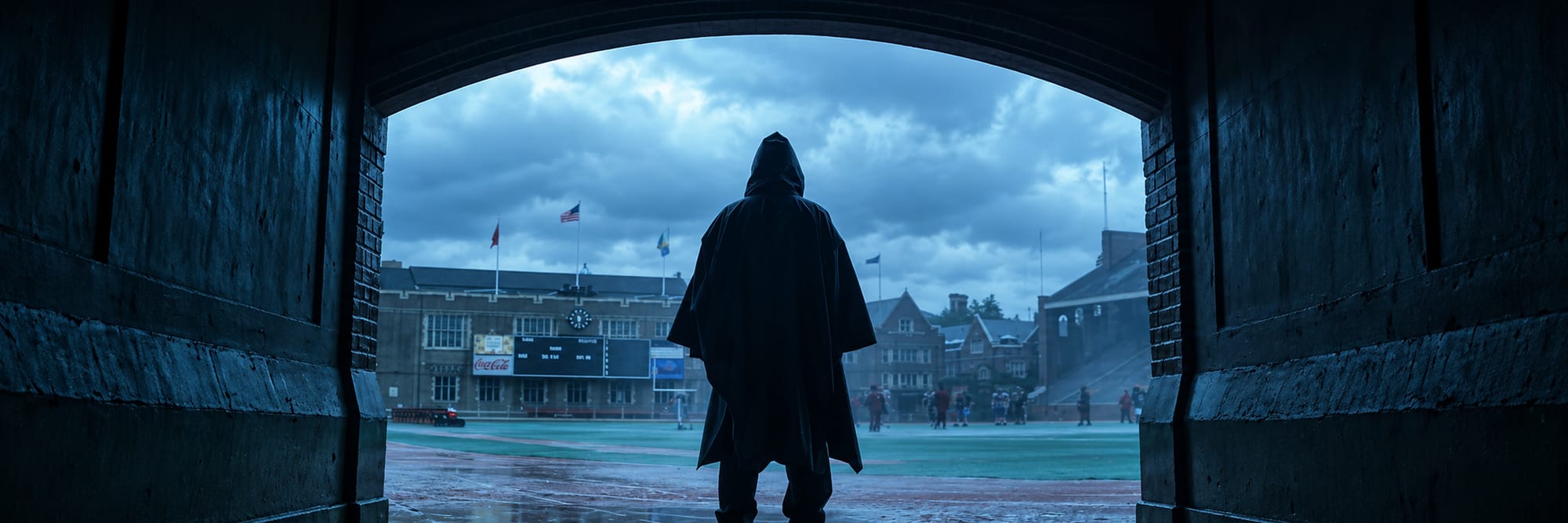
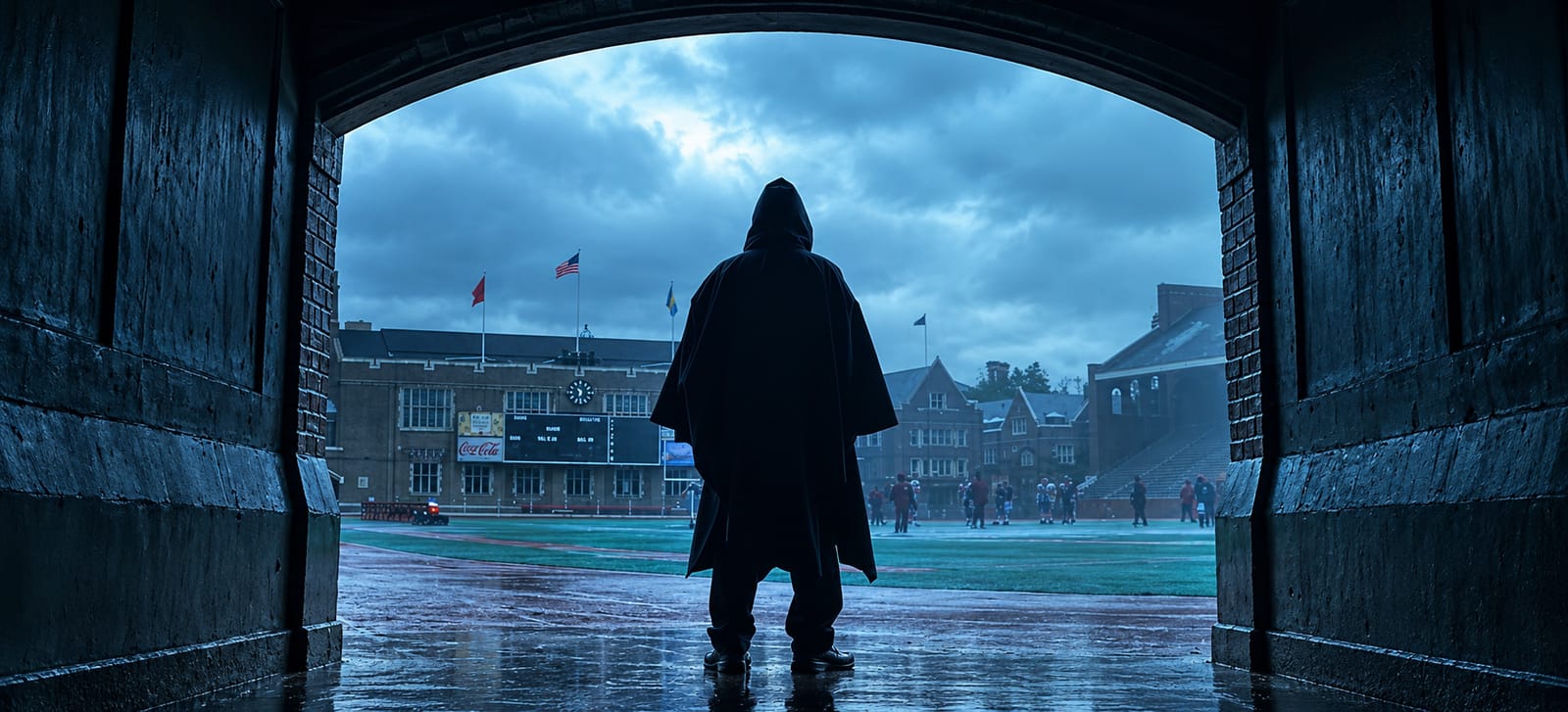
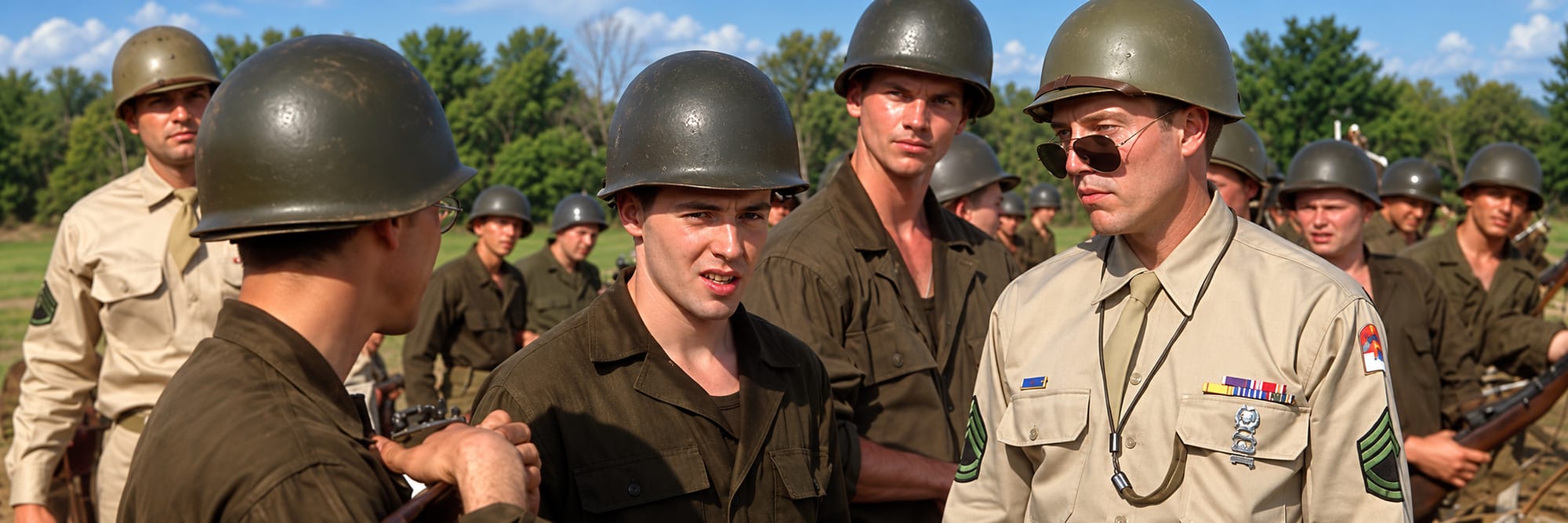
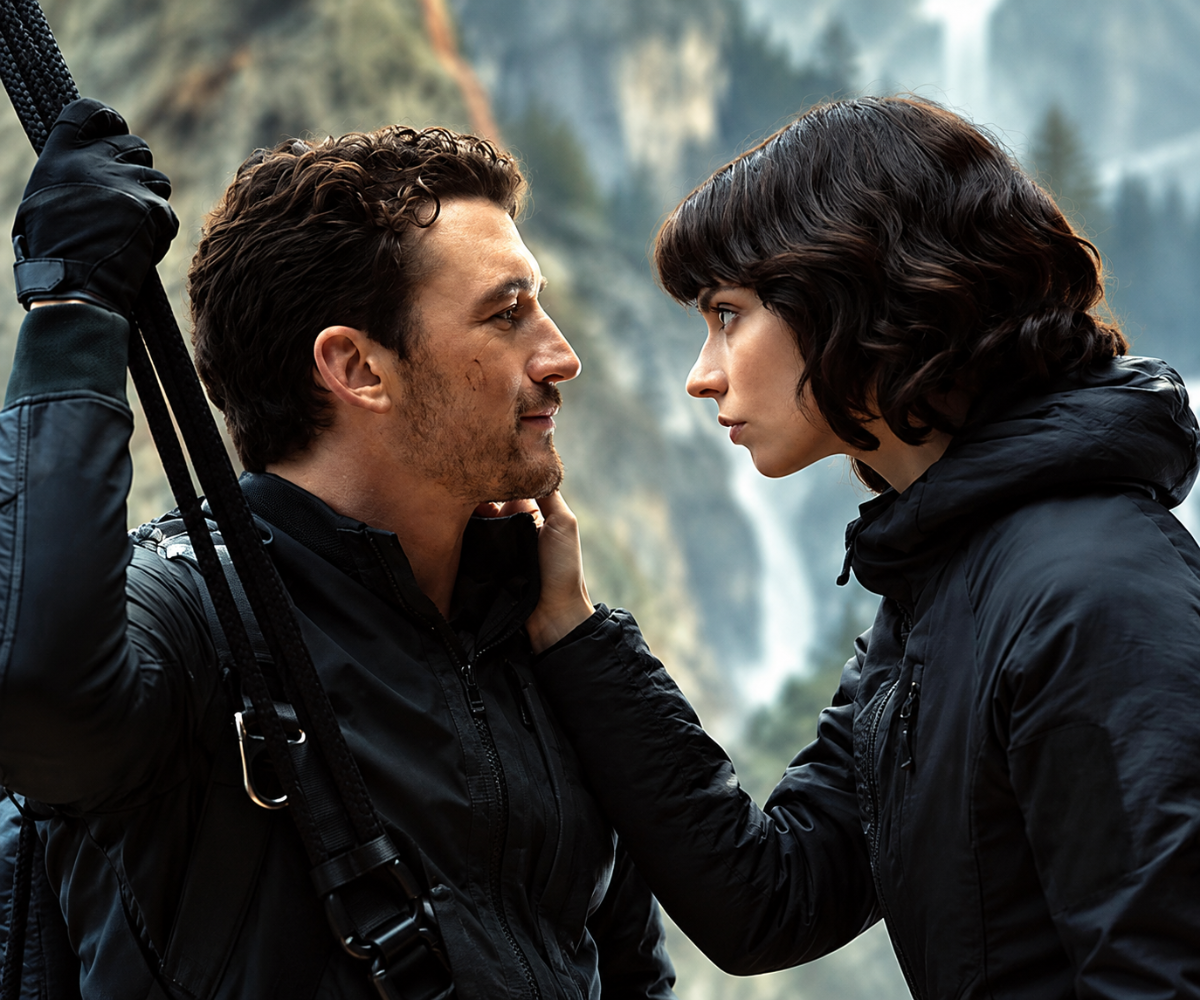
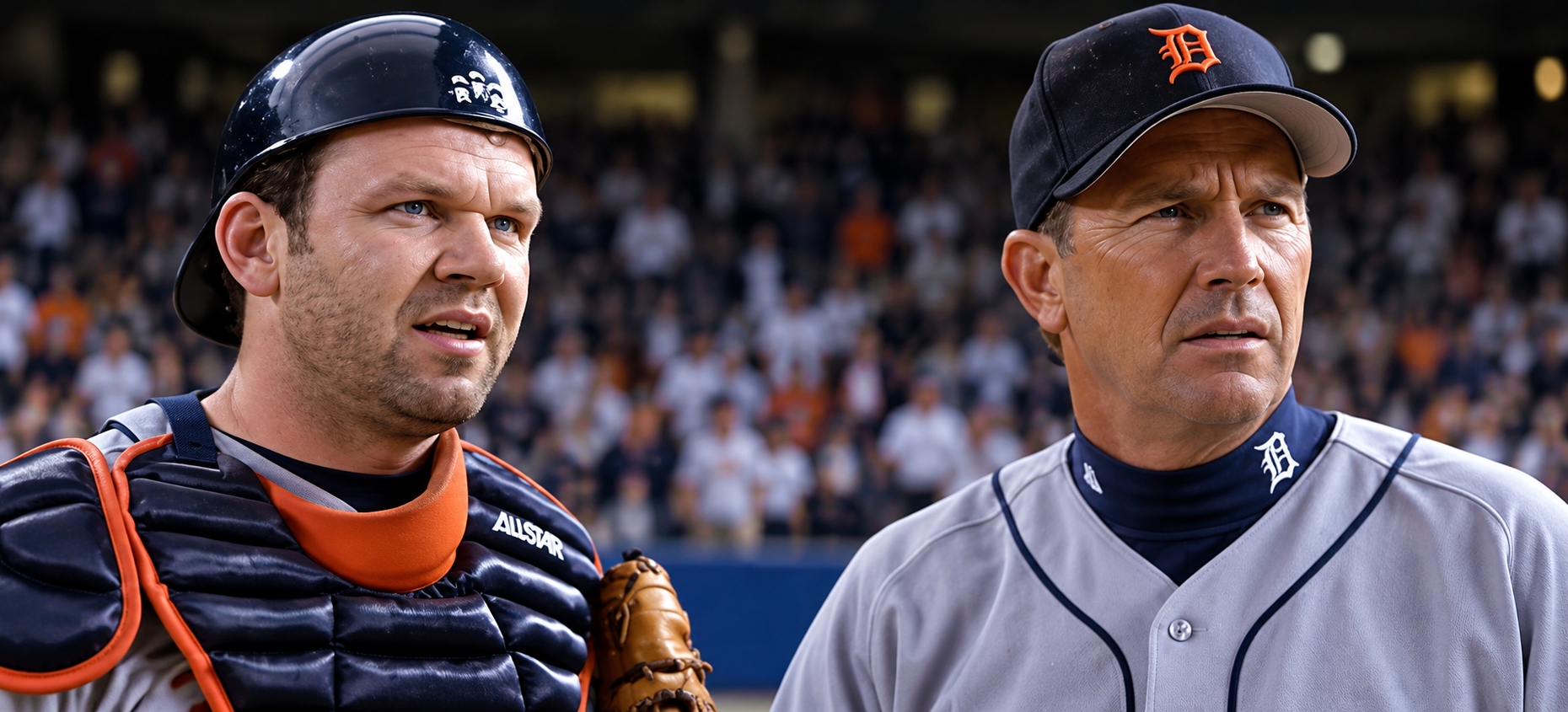
Being an excellent sniper is one thing. Having your government make sure the entire enemy army knows just how excellent you are is another.
That's the situation Vassili Zaitsev finds himself in during Enemy at the Gates. He's become a hero to the Russian people, but his growing reputation has also made him a target. And the Germans have decided to do something about it.
What It’s About
It's 1942, and the Germans are trying to take Stalingrad. The Russians are fighting desperately to hold the city, sending soldiers into battle under circumstances that make survival seem almost impossible.
Jude Law plays Vassili Zaitsev, a young Russian soldier whose remarkable shooting ability catches the attention of Danilov (Joseph Fiennes), a political officer who recognizes an opportunity.
The Russian army needs something to celebrate, and Danilov gives them a hero. Soon, Vassili's exploits are being reported throughout the city, providing a badly needed boost to morale.
Unfortunately, the Germans notice. They send Major König (Ed Harris), an experienced sniper whose assignment is simple: find Vassili and kill him.
What follows is a deadly game of patience and deception, with two skilled marksmen trying to outthink one another in the ruins of Stalingrad.
There's also Tania (Rachel Weisz), a young Soviet soldier who becomes romantically involved with Vassili, complicating his friendship with Danilov.
Who It’s For
If you enjoy war movies, particularly those that focus on individual soldiers rather than grand military strategy, Enemy at the Gates has plenty to offer.
The sniper confrontations are the main attraction. These aren't typical action sequences with everybody shooting at everybody else. Sometimes the characters spend more time waiting than firing, knowing that one careless movement could be their last.
Jude Law is convincing as a capable but increasingly vulnerable young soldier, while Ed Harris makes König a particularly intimidating opponent. He's quiet, calculating, and never seems especially worried about the man he's been sent to kill.
Some of the most gripping moments involve two men doing almost nothing. That's no small achievement for a war movie, and it makes this a must-watch.
Two expert snipers hunt each other through the ruins of Stalingrad, where patience can be just as deadly as a well-placed bullet.
The most frightening moment in a good sniper movie isn't necessarily when somebody pulls the trigger. It's the moment just before somebody moves.
You find yourself wanting to tell the guy to stay perfectly still. Don't raise your head. Don't look around. And whatever you do, don't assume the other guy isn't watching.
That's what makes Enemy at the Gates so good. I've seen plenty of movies featuring snipers, but I can't think of one that does a better job of showing what makes their particular kind of warfare so terrifying.
In fact, I think this may be the best sniper movie ever made.
The Most Dangerous Thing You Can Do Is Move
Enemy at the Gates takes place during the Battle of Stalingrad in 1942, when German and Soviet forces were fighting over a city that was rapidly being reduced to rubble.
And there is plenty of conventional warfare in this movie. Explosions, gunfire, enormous numbers of soldiers charging into battle, and some genuinely horrifying scenes showing just how expendable those soldiers could be.
But that's not what makes the movie special.
Jude Law plays Vassili Zaitsev, a Russian soldier whose extraordinary marksmanship attracts the attention of a political officer named Danilov, played by Joseph Fiennes. The Russians badly need a hero, and Danilov decides Vassili is going to be that hero.
Unfortunately, the Germans are paying attention, too.
They send their own expert sniper, Major König, played by Ed Harris, to eliminate him. And suddenly, in the middle of one of the largest battles of World War II, the movie becomes a contest between two men trying to kill each other.
What makes their confrontation so interesting is how little shooting is actually required to create suspense.
They're watching. Waiting. Trying to anticipate where the other man might be hiding. An abandoned building becomes a dangerous place to enter. A window becomes something you wouldn't dream of walking past. Even an apparently safe position might be exactly where the enemy wants you.
A single mistake could mean you're dead before you realize you've made it.
Jude Law and Ed Harris Are Outstanding
Jude Law is fantastic as Vassili. He's an exceptionally talented marksman, but Law never makes him seem like some invincible action hero who can casually dispatch anybody who gets in his way.
He's frightened, and understandably so. The better his reputation becomes, the more pressure he faces. Being celebrated as a national hero doesn't do much good when somebody equally talented has been sent specifically to kill you.
And then there's Ed Harris.
Harris has always been one of those actors who can dominate a scene without saying much of anything, and he's incredible here. His König is experienced, intelligent, methodical and almost unnervingly calm.
He doesn't need to act intimidating. You believe he's dangerous simply by watching him think.
That's a big part of why the movie works. You're not watching a talented young sniper fight some incompetent enemy who exists merely to be defeated. You're watching two exceptionally skilled men who know that the other guy is perfectly capable of killing them.
And both actors make you believe it.
The supporting cast is excellent, too. Rachel Weisz, Joseph Fiennes, Bob Hoskins and Ron Perlman all contribute to a movie that has quite a bit going on beyond the central confrontation. There are friendships, romantic complications, political maneuvering and the constant misery of a city being destroyed around its inhabitants.
But the movie is at its best when it returns to those two men and their rifles.
It's the Waiting That Gets You
Director Jean-Jacques Annaud understands something that a lot of action filmmakers seem to forget: suspense doesn't require constant action.
Sometimes it requires exactly the opposite.
The tension comes from not knowing what the other person is planning. Is he still there? Has he moved? Is that an opportunity, or is it a trap? Should you take the shot, or is somebody trying to make you reveal your position?
And perhaps the worst question of all: What if he's already figured out where you are?
There are plenty of war movies with bigger battles, more elaborate action sequences and spectacular explosions. There are also plenty of movies featuring remarkable shots made from extraordinary distances.
But Enemy at the Gates understands that the real skill of a sniper isn't simply being able to hit a target. It's having the patience, discipline and nerve to stay alive long enough to take the shot.
That's what separates this movie from the others for me.
You spend so much time worrying about somebody moving that when a rifle finally goes off, it's almost a relief.
Almost.
Being an excellent sniper is one thing. Having your government make sure the entire enemy army knows just how excellent you are is another.
That's the situation Vassili Zaitsev finds himself in during Enemy at the Gates. He's become a hero to the Russian people, but his growing reputation has also made him a target. And the Germans have decided to do something about it.
What It’s About
It's 1942, and the Germans are trying to take Stalingrad. The Russians are fighting desperately to hold the city, sending soldiers into battle under circumstances that make survival seem almost impossible.
Jude Law plays Vassili Zaitsev, a young Russian soldier whose remarkable shooting ability catches the attention of Danilov (Joseph Fiennes), a political officer who recognizes an opportunity.
The Russian army needs something to celebrate, and Danilov gives them a hero. Soon, Vassili's exploits are being reported throughout the city, providing a badly needed boost to morale.
Unfortunately, the Germans notice. They send Major König (Ed Harris), an experienced sniper whose assignment is simple: find Vassili and kill him.
What follows is a deadly game of patience and deception, with two skilled marksmen trying to outthink one another in the ruins of Stalingrad.
There's also Tania (Rachel Weisz), a young Soviet soldier who becomes romantically involved with Vassili, complicating his friendship with Danilov.
Who It’s For
If you enjoy war movies, particularly those that focus on individual soldiers rather than grand military strategy, Enemy at the Gates has plenty to offer.
The sniper confrontations are the main attraction. These aren't typical action sequences with everybody shooting at everybody else. Sometimes the characters spend more time waiting than firing, knowing that one careless movement could be their last.
Jude Law is convincing as a capable but increasingly vulnerable young soldier, while Ed Harris makes König a particularly intimidating opponent. He's quiet, calculating, and never seems especially worried about the man he's been sent to kill.
Some of the most gripping moments involve two men doing almost nothing. That's no small achievement for a war movie, and it makes this a must-watch.
Two expert snipers hunt each other through the ruins of Stalingrad, where patience can be just as deadly as a well-placed bullet.
Ben’s Movie Guide Rating
Skip
Not worth your time.
Watch If Free
Watch when there’s no extra cost.
Worth Paying For
Worth the rental or ticket price.
Must Watch
Make time for this one.
Trailer
More Ben Recommends
One of the best things about Enemy at the Gates is the deadly game of cat and mouse between Jude Law and Ed Harris. Two expert snipers hunting each other through the ruins of Stalingrad, knowing that one mistake could get them killed.
It's a terrific premise for a movie. But did it actually happen?
Well, half of it certainly did.
The Real Vassili Zaitsev
Jude Law's character, Vassili Zaitsev, was a real Soviet sniper who became famous during the Battle of Stalingrad in 1942. He was credited with killing numerous German soldiers, and the Soviet government used his accomplishments to boost morale during one of the most desperate battles of World War II.
So the movie's central character wasn't invented, and neither was his reputation.
But what about Major König, the German sniper played so convincingly by Ed Harris?
That's where things get interesting.
Was Major König a Real Person?
According to the story, the Germans sent an expert sniper named Major Erwin König to Stalingrad specifically to eliminate Zaitsev. The two men supposedly spent several days hunting each other before their confrontation ended.
Zaitsev himself described such a duel in his memoirs.
The problem is that historians have never found convincing German records establishing that König existed. Historian Antony Beevor, who extensively researched the Battle of Stalingrad, concluded that the famous duel was likely a Soviet propaganda invention.
That doesn't absolutely prove Zaitsev never fought another skilled German sniper. It does mean there's no reliable independent evidence confirming the particular confrontation depicted in the movie.
And there's something rather ironic about that.
Enemy at the Gates tells the story of a government turning a talented soldier into a national hero through propaganda. Yet the movie's central confrontation may itself have originated in that same propaganda.
Does that make the movie any less entertaining?
Not to me. Jude Law and Ed Harris make the confrontation so believable that I'm perfectly happy to accept it as a great piece of filmmaking, even if history can't back it up.
The Soviet sniper played by Jude Law really existed. But what about the German sharpshooter portrayed by Ed Harris? The historical answer is considerably less certain.
The most frightening moment in a good sniper movie isn't necessarily when somebody pulls the trigger. It's the moment just before somebody moves.
You find yourself wanting to tell the guy to stay perfectly still. Don't raise your head. Don't look around. And whatever you do, don't assume the other guy isn't watching.
That's what makes Enemy at the Gates so good. I've seen plenty of movies featuring snipers, but I can't think of one that does a better job of showing what makes their particular kind of warfare so terrifying.
In fact, I think this may be the best sniper movie ever made.
The Most Dangerous Thing You Can Do Is Move
Enemy at the Gates takes place during the Battle of Stalingrad in 1942, when German and Soviet forces were fighting over a city that was rapidly being reduced to rubble.
And there is plenty of conventional warfare in this movie. Explosions, gunfire, enormous numbers of soldiers charging into battle, and some genuinely horrifying scenes showing just how expendable those soldiers could be.
But that's not what makes the movie special.
Jude Law plays Vassili Zaitsev, a Russian soldier whose extraordinary marksmanship attracts the attention of a political officer named Danilov, played by Joseph Fiennes. The Russians badly need a hero, and Danilov decides Vassili is going to be that hero.
Unfortunately, the Germans are paying attention, too.
They send their own expert sniper, Major König, played by Ed Harris, to eliminate him. And suddenly, in the middle of one of the largest battles of World War II, the movie becomes a contest between two men trying to kill each other.
What makes their confrontation so interesting is how little shooting is actually required to create suspense.
They're watching. Waiting. Trying to anticipate where the other man might be hiding. An abandoned building becomes a dangerous place to enter. A window becomes something you wouldn't dream of walking past. Even an apparently safe position might be exactly where the enemy wants you.
A single mistake could mean you're dead before you realize you've made it.
Jude Law and Ed Harris Are Outstanding
Jude Law is fantastic as Vassili. He's an exceptionally talented marksman, but Law never makes him seem like some invincible action hero who can casually dispatch anybody who gets in his way.
He's frightened, and understandably so. The better his reputation becomes, the more pressure he faces. Being celebrated as a national hero doesn't do much good when somebody equally talented has been sent specifically to kill you.
And then there's Ed Harris.
Harris has always been one of those actors who can dominate a scene without saying much of anything, and he's incredible here. His König is experienced, intelligent, methodical and almost unnervingly calm.
He doesn't need to act intimidating. You believe he's dangerous simply by watching him think.
That's a big part of why the movie works. You're not watching a talented young sniper fight some incompetent enemy who exists merely to be defeated. You're watching two exceptionally skilled men who know that the other guy is perfectly capable of killing them.
And both actors make you believe it.
The supporting cast is excellent, too. Rachel Weisz, Joseph Fiennes, Bob Hoskins and Ron Perlman all contribute to a movie that has quite a bit going on beyond the central confrontation. There are friendships, romantic complications, political maneuvering and the constant misery of a city being destroyed around its inhabitants.
But the movie is at its best when it returns to those two men and their rifles.
It's the Waiting That Gets You
Director Jean-Jacques Annaud understands something that a lot of action filmmakers seem to forget: suspense doesn't require constant action.
Sometimes it requires exactly the opposite.
The tension comes from not knowing what the other person is planning. Is he still there? Has he moved? Is that an opportunity, or is it a trap? Should you take the shot, or is somebody trying to make you reveal your position?
And perhaps the worst question of all: What if he's already figured out where you are?
There are plenty of war movies with bigger battles, more elaborate action sequences and spectacular explosions. There are also plenty of movies featuring remarkable shots made from extraordinary distances.
But Enemy at the Gates understands that the real skill of a sniper isn't simply being able to hit a target. It's having the patience, discipline and nerve to stay alive long enough to take the shot.
That's what separates this movie from the others for me.
You spend so much time worrying about somebody moving that when a rifle finally goes off, it's almost a relief.
*Enemy at the Gates* might be the best sniper movie ever made. Jude Law and Ed Harris turn patience, fear and the smallest movements into something every bit as suspenseful as a massive battle.
Imagine being a parent who knows your child's school isn't doing a good job. You know your child is falling behind, and you're worried about what that means for their future.
Now imagine discovering there's a much better school nearby. Better teachers, better results, a genuine opportunity for your child to succeed.
There's just one problem. You can't simply enroll your child. You have to enter a lottery and hope their name gets picked.
Think about that for a second. Your child's future is determined randomly.
Meanwhile, the people running the school your child is trying to escape have jobs, contracts, administrators, unions and politicians looking out for their interests.
Who's looking out for your kid?
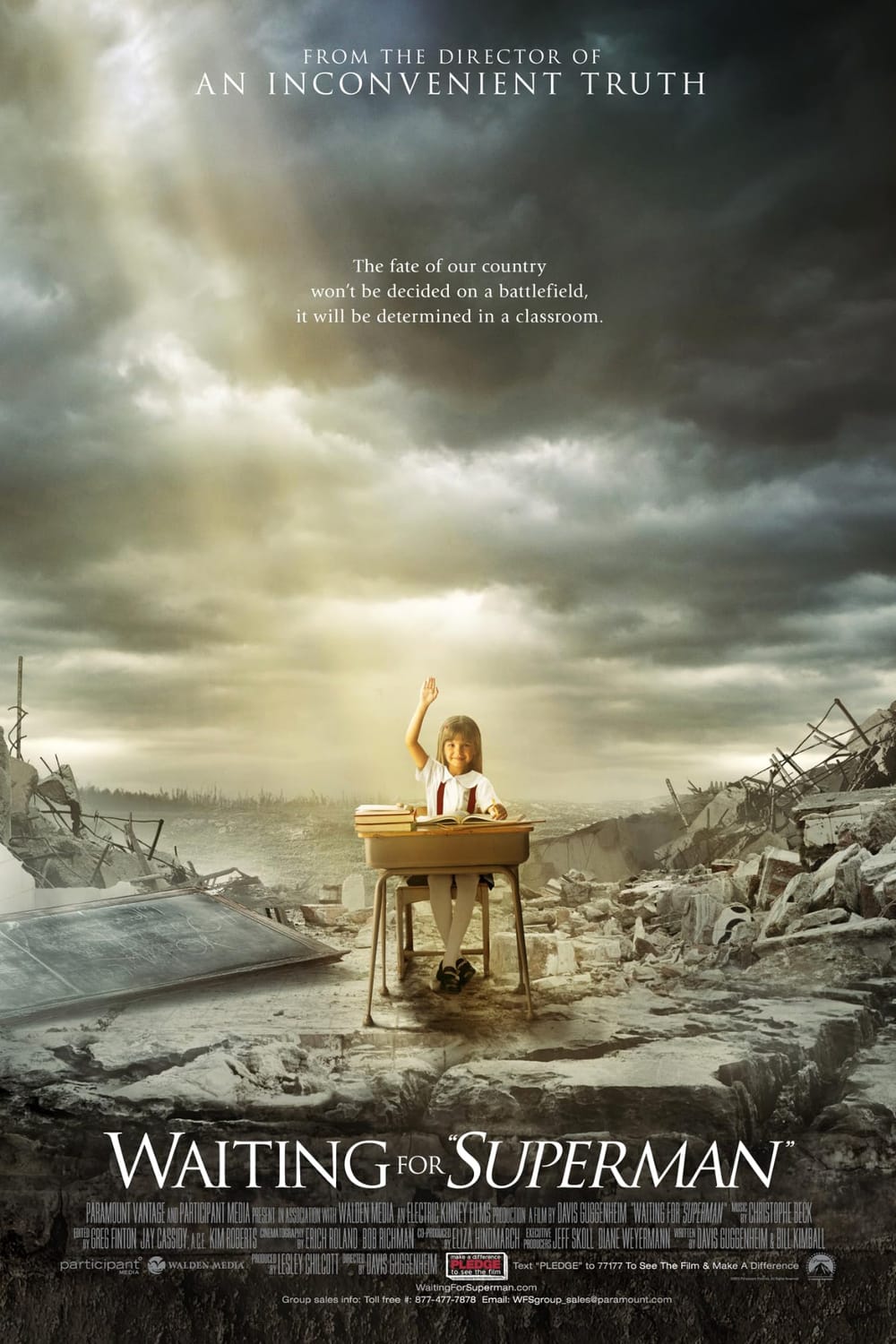
That's the uncomfortable question running through Waiting for "Superman", Davis Guggenheim's 2010 documentary about the failures of American public education.
A System Built to Protect Itself
The documentary follows five children and their families as they try to secure a better education. These aren't parents who don't care. They're doing exactly what we tell parents they should do: getting involved, paying attention and trying to give their children every possible advantage.
But the film spends just as much time examining the enormous educational bureaucracy standing between these families and the schools they want.
One of its biggest targets is teacher tenure and the extraordinary difficulty of removing ineffective teachers from classrooms.
Now, there's nothing wrong with teachers having job protections. Good teachers deserve fair treatment, reasonable security and protection from arbitrary decisions. Teaching isn't an easy profession, and plenty of teachers work extremely hard under difficult circumstances.
But there's a difference between protecting good teachers and creating a system that makes it nearly impossible to get rid of bad ones.
The film illustrates that problem with New York City's infamous "rubber rooms," where teachers removed from classrooms could spend extended periods collecting pay while their cases worked through the system.
Think about that for a moment. A school system could find itself paying teachers not to teach while children continued attending schools that desperately needed effective teachers.
How did we arrive at a point where that made sense?
Everybody Has Someone Fighting for Them
One of the documentary's most interesting figures is Michelle Rhee, then chancellor of Washington, D.C., public schools. She arrives determined to change a struggling system and encounters enormous resistance.
Rhee's approach was controversial, and it's reasonable to question some of her methods. But watching the institutional battles unfold raises a question that goes beyond whether she was right about every proposed reform.
Who is actually supposed to be in charge?
Teachers' unions exist to represent teachers. That's their job. They negotiate compensation, working conditions, job protections and other employment matters. There's nothing surprising about that.
But unions aren't the only adults with interests to protect. Administrators have careers, school boards have political considerations, and elected officials have constituencies they don't want to upset.
None of these groups necessarily has bad intentions. The problem is that their interests don't always align with what children need.
And children don't have a union.
They don't negotiate contracts. They don't vote in school board elections. They can't threaten to strike, and most can't simply transfer to a better school when things aren't working.
Their parents can complain, organize and advocate, but that doesn't necessarily give them the power to change anything.
The Lottery Says Everything
The documentary builds toward several school admission lotteries, and these scenes are difficult to watch.
By this point, we've gotten to know the children. We've heard their ambitions and watched their parents struggle to find opportunities for them.
Now their futures appear to depend on whether someone pulls the right number or calls the right name.
It's an absurd situation when you think about it.
These families aren't asking for special privileges. They're asking for a decent education, something public schools are supposed to provide every child.
The documentary clearly favors successful charter schools, and that's one area where its argument deserves some skepticism. Not every charter school is successful, and changing how a school is managed doesn't automatically make it better. Poverty, family circumstances, funding and countless other factors also affect educational outcomes.
But those complications don't erase the central problem.
When parents are desperate to get their children out of one publicly funded school and into another, something has gone seriously wrong.
And when the system makes it easier to defend its existing arrangements than to respond to those families, its priorities deserve to be questioned.
Waiting for "Superman" isn't a perfectly balanced examination of every problem in American education. It has an argument to make, and it isn't particularly shy about making it.
But it asks a question that shouldn't be controversial at all.
If public education exists for the benefit of children, shouldn't their interests come first?
The remarkable thing is that we apparently still need to ask.
Teachers have unions, administrators have careers, and politicians have constituencies. But when public schools fail, who is fighting for the children? Waiting for "Superman" asks an uncomfortable question about America's educational priorities.
If you make your living picking pockets, you probably spend a fair amount of time worrying about getting caught. Somebody grabs your wrist. A cop sees something. An otherwise productive afternoon ends in handcuffs.
Those are reasonable occupational concerns. But there’s another question worth considering before you reach into a stranger’s pocket.
What if this particular person is considerably more dangerous than you are?
That’s the problem facing Harry Lehman in The Only Living Pickpocket in New York. He steals something valuable, sells it, and then discovers that its owners expect him to get it back. They aren’t interested in having him arrested. They’re interested in having their property returned, and Harry would be wise to understand the difference.
Business Was Already Bad
John Turturro plays Harry, an aging thief trying to earn a living in a city that has made his particular skill considerably less useful. People still carry wallets. Unfortunately for Harry, those wallets increasingly contain cards their owners can cancel.
You can appreciate the inconvenience without feeling especially sorry for his business model.
But Harry also cares for his disabled wife, Rosie, and that gives his financial problems weight beyond his own comfort. He has someone depending on him. Whatever judgment you make about how he earns his money, the responsibilities waiting at home are real.
Then he makes a mistake that turns all those existing problems into background concerns.
The Wrong Person to Rob
The item causing the trouble is a valuable USB stick Harry unwittingly steals and fences. What he treats as something to sell turns out to belong to people with considerably more power than the average pickpocket. A crime family wants it returned.
Unfortunately, returning stolen property becomes complicated once you’ve already sold it.
That’s the part of the setup I like. Harry has successfully done what he normally does, and doing it successfully has created the problem. He got away with the theft. He found a buyer. Under ordinary circumstances, that would qualify as a decent day at work.
Now he has to undo it.
He Has Something to Get Home To
The danger matters more because Harry’s life extends beyond the stolen goods. Getting himself into trouble also threatens his ability to care for Rosie. He can’t consider what happens next as though he’s the only person affected.
That gives the premise somewhere to go beyond watching a criminal try to escape the consequences of being a criminal. We can recognize that Harry created this mess and still want him to find a way through it. Having someone depend on you doesn’t excuse a bad decision. It can make that decision considerably more painful.
For years, his success has depended on walking away before somebody realizes what’s missing.
This time, walking away was only the beginning of his trouble.
John Turturro plays an aging pickpocket whose latest theft leaves him owing a crime family something he’s already sold. Getting caught is only the beginning.
Having your brother beside you for every important moment sounds pretty good. Someone who understands you, backs you up and knows when you need a little help.
Having him there for every date might take some getting used to.
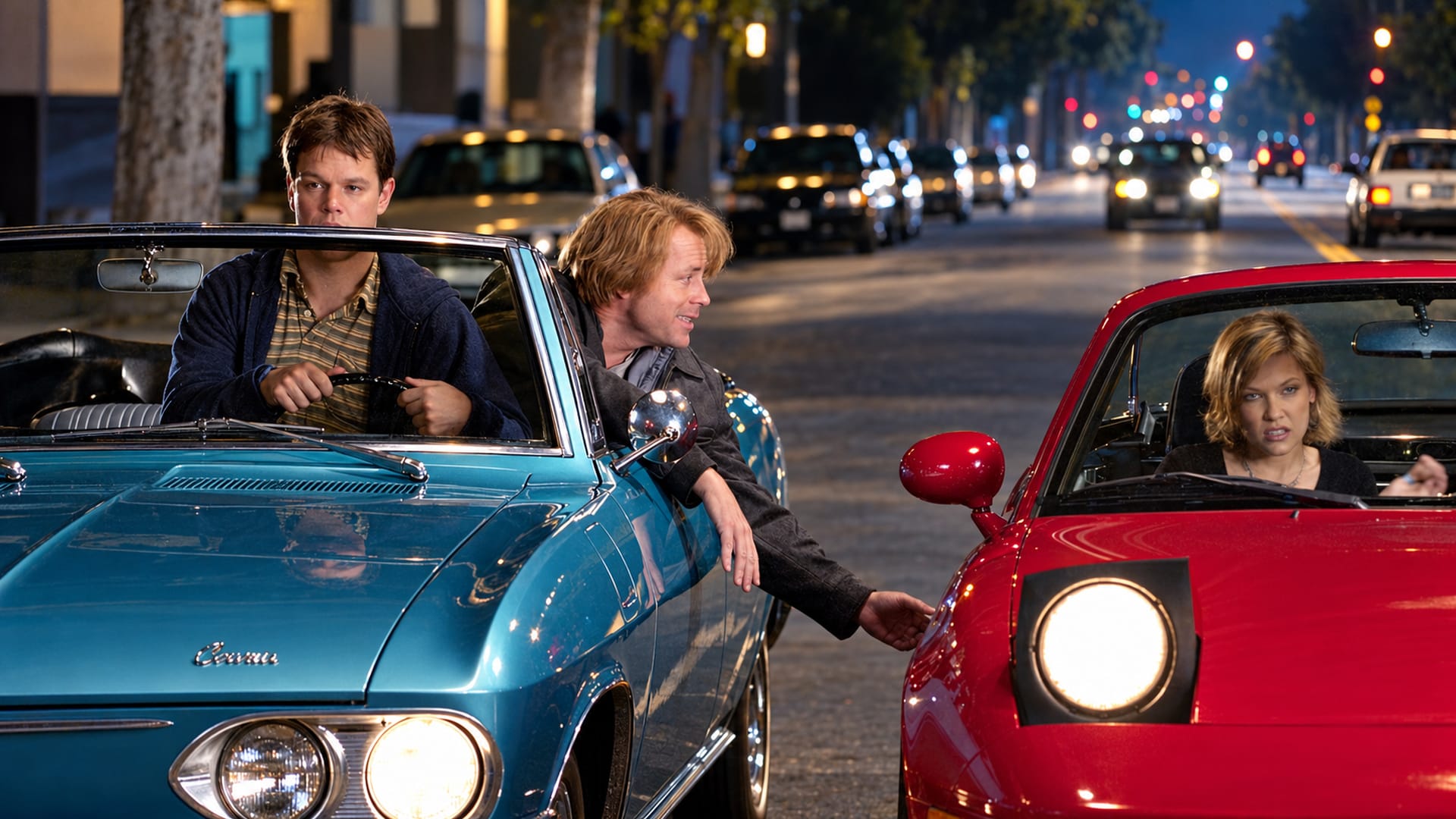
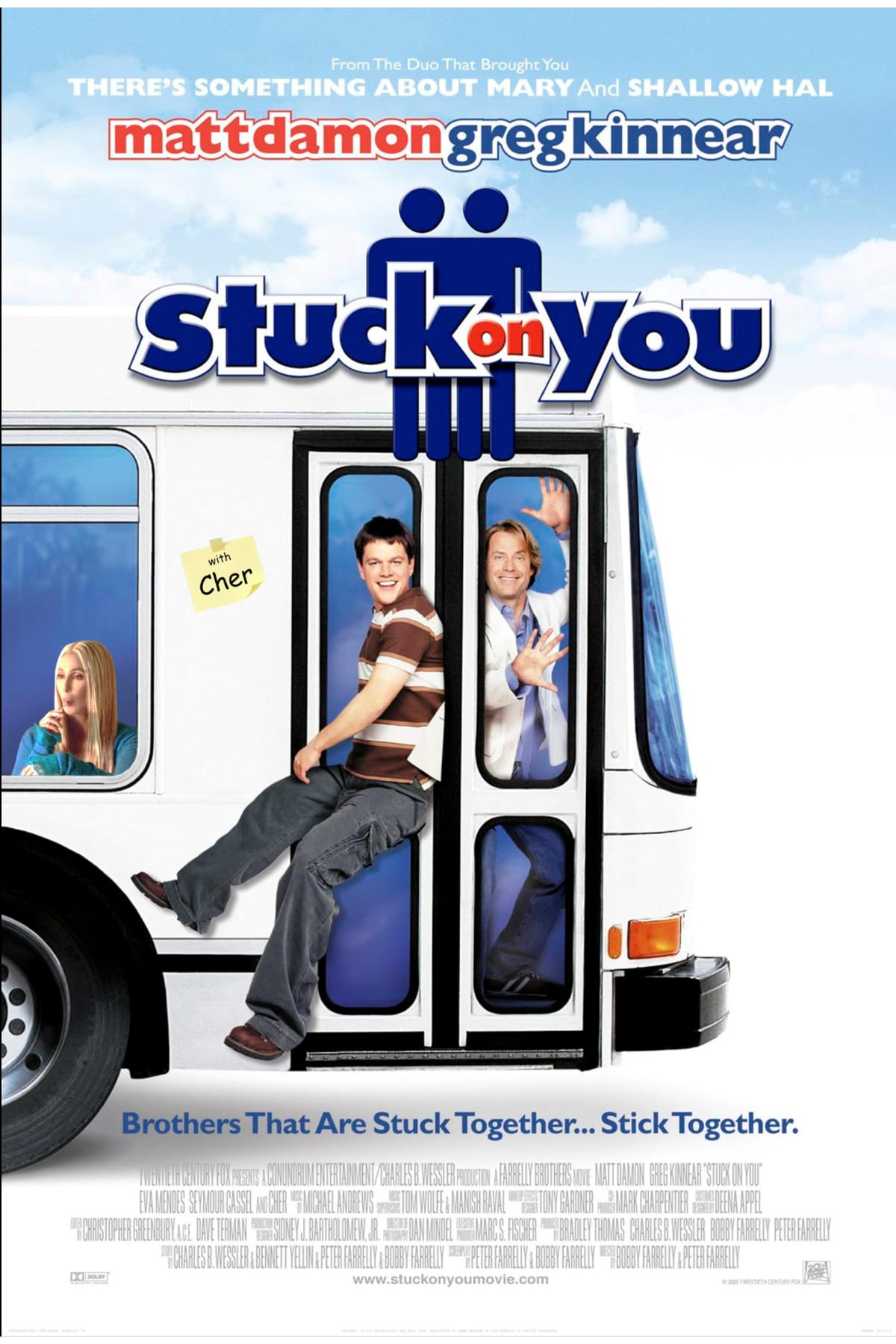
Bob and Walt don’t have much choice. The brothers in Stuck on You are conjoined twins, which means neither gets to leave the other at home. They’ve built a life around that arrangement, and much of it works surprisingly well. The complications really start when they want different things.
Walt wants to become an actor. Bob would be perfectly happy if Walt wanted to keep running their restaurant.
It’s difficult to wish somebody luck in Hollywood when you have to move there with him.
They Already Know How to Be Together
Matt Damon plays Bob, the quieter brother, while Greg Kinnear plays Walt, who has considerably fewer reservations about being the center of attention. You can see how this arrangement has lasted. Walt supplies the push. Bob supplies some brakes.
Their everyday life is full of accommodations they barely seem to notice anymore. Working together, moving together and making room for each other’s preferences are ordinary parts of the day. What looks impossibly complicated to everybody else is familiar territory to them.
That familiarity gives the movie something useful beneath the physical comedy. These men have a functioning life. They work, have ambitions and get irritated with each other. Neither spends every waking moment contemplating his unusual circumstances.
You start to understand why Bob would hesitate to trade that life for an uncertain one. He knows where he belongs. Walt sees possibilities somewhere else.
Both positions are reasonable, which makes the disagreement harder.
One Brother’s Adventure Is the Other Brother’s Ordeal
Walt’s acting ambitions create plenty of opportunities for ridiculous situations, but the move also exposes an imbalance. He’s pursuing something he wants. Bob is accepting the disruption required to help him get it.
That’s a recognizable problem, even if most families can negotiate it without sharing a doorway.
How much do you owe someone you love? At what point does supporting his dream mean indefinitely postponing your own comfort? And if he has spent his entire life beside you, how do you even begin explaining that you need some room?
Walt isn’t wrong to want more. Bob isn’t wrong to be anxious about what “more” might involve.
A Little Independence Can Feel Like a Loss
The obvious assumption is that these brothers would benefit from greater independence. But independence involves giving something up, too: the reassurance of having someone close who already understands what you need.
Learning to live together took them a lifetime. They’ve become good at it.
Now comes the uncomfortable business of discovering which parts of that life they still want to share—and which parts they’ve never had the chance to choose.
Bob and Walt have spent their lives making room for each other. When one brother wants something different, Stuck on You finds an unexpectedly thoughtful problem beneath its outrageous premise.
Most parents want their kids to spend a little less time staring at screens. Ben has his kids living in the forest.
They hunt their dinner, climb rock faces and discuss books that plenty of adults would struggle to finish. Nobody needs to remind them to get some exercise or find something constructive to do. As parenting accomplishments go, that’s a pretty impressive list.
Then they spend some time around other people, and you start noticing what isn’t on it.
An Education Most Parents Would Envy
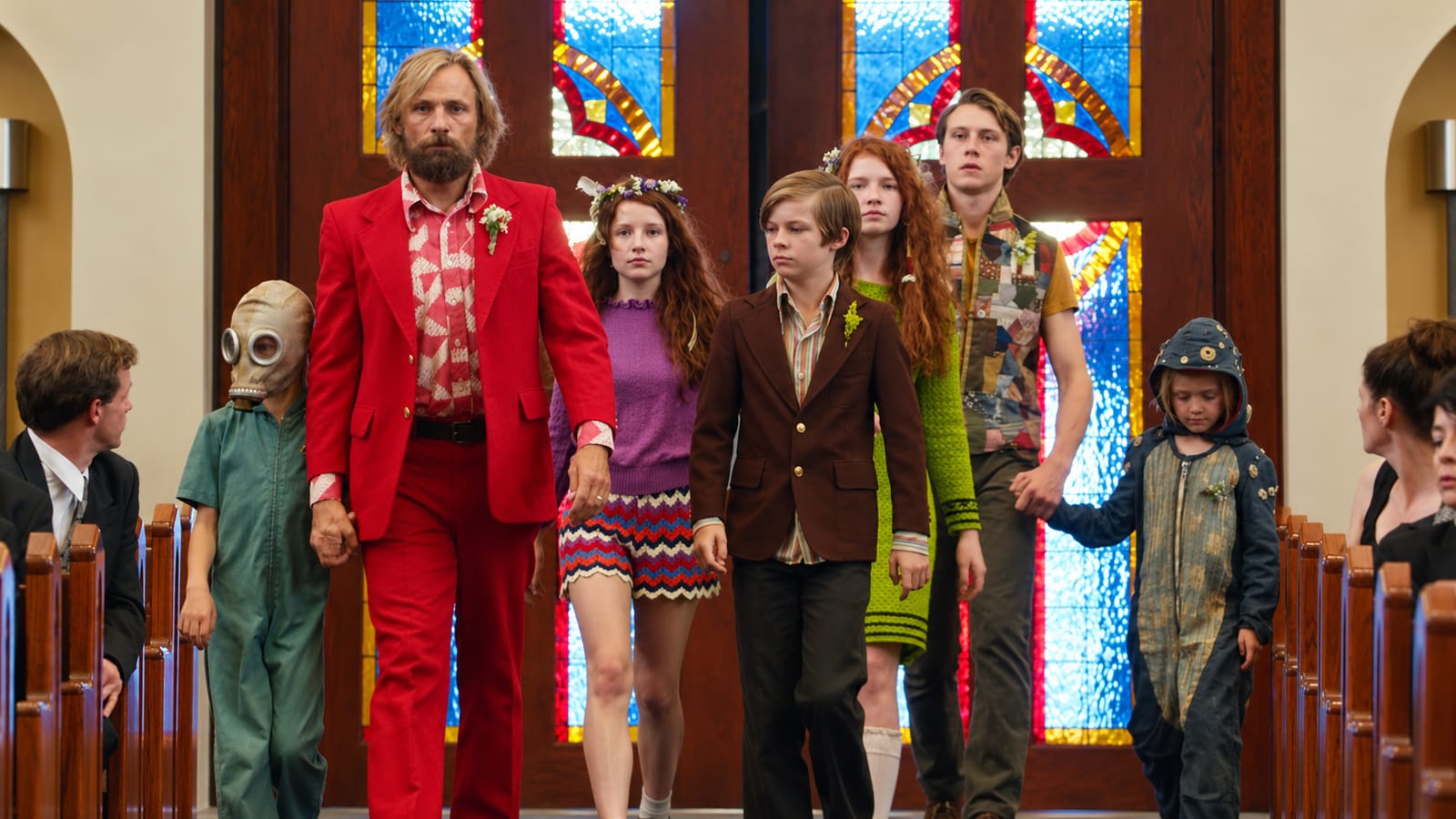
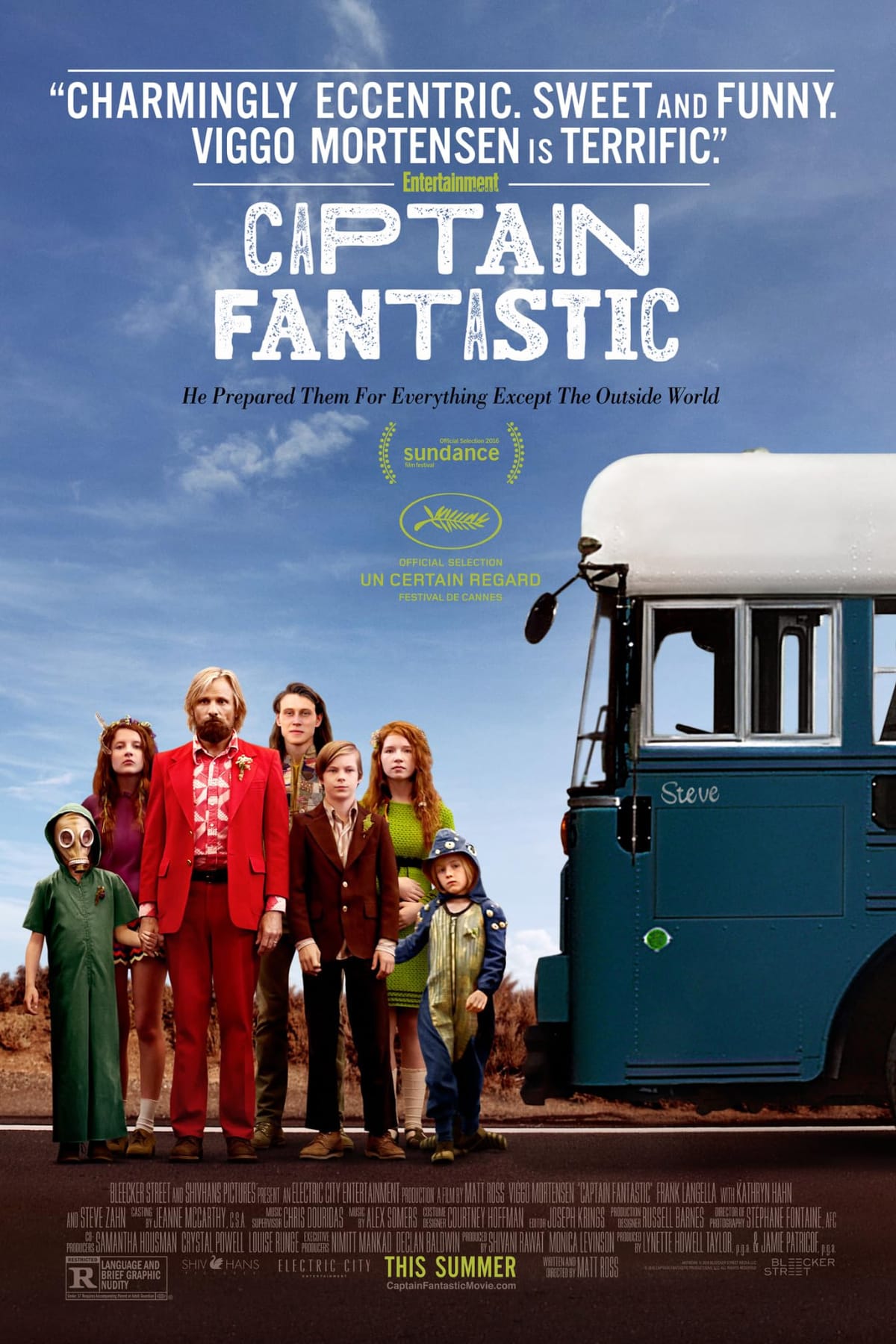
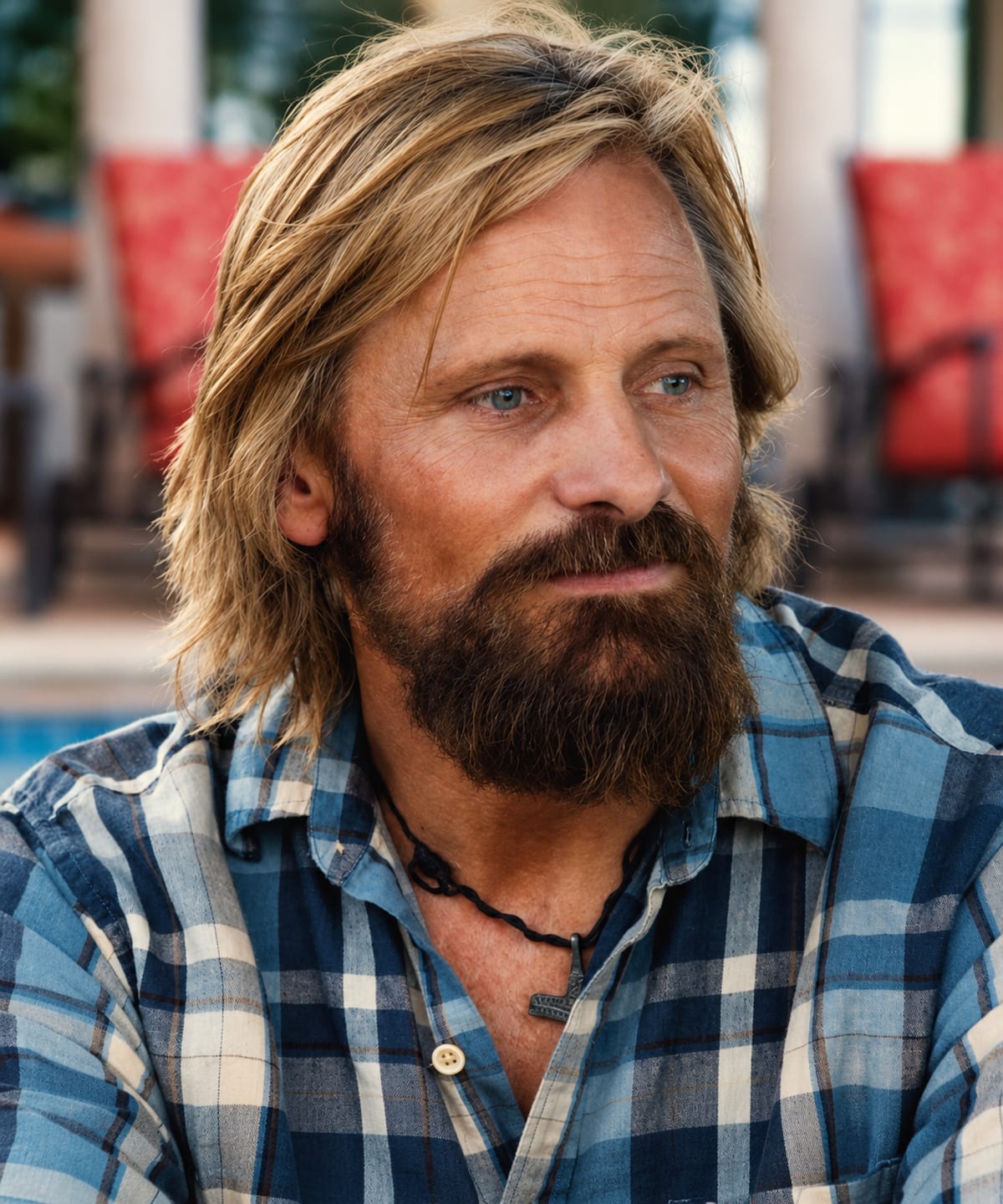
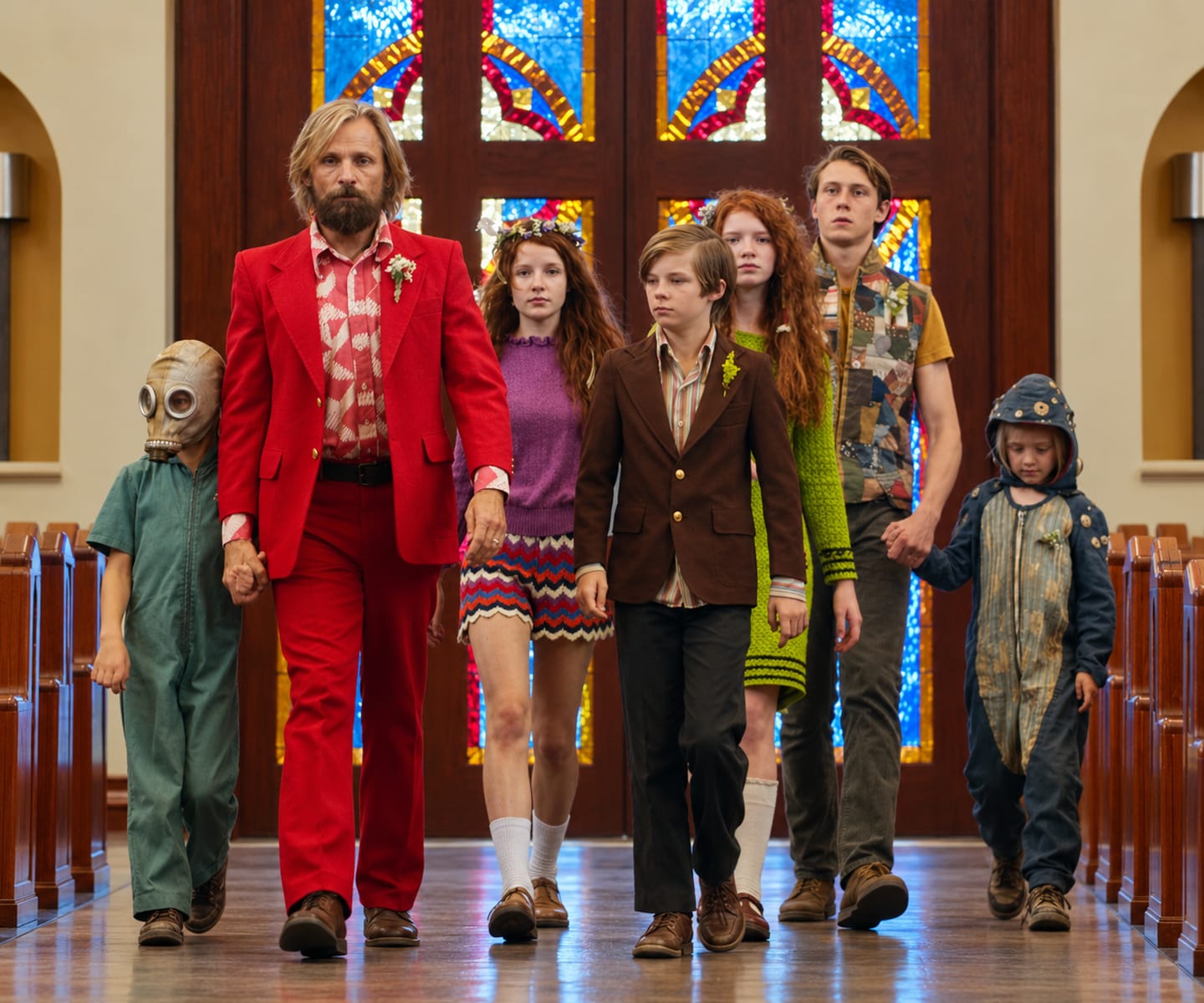
In Captain Fantastic, Viggo Mortensen plays Ben, a father raising six children deep in the Pacific Northwest. Their days combine demanding physical training with serious study, practical skills and very little patience for lazy thinking.
He doesn’t simply want them to repeat what they’ve read. He expects them to understand it, explain it and defend their conclusions. These are children who can have an actual conversation about a book.
There’s plenty to admire here. Ben spends time with his children. He knows them. He takes their questions seriously and expects more from them than sitting quietly while the adults talk. Whatever else you think of his approach, this is a father putting enormous effort into the job.
Mortensen makes that devotion believable. Ben can be warm, funny and encouraging, which matters because you need to understand why the children embrace this life. They’re a family with routines, jokes and affection, and much of what they do together looks rewarding.
You might even find yourself thinking he has a point.
Then the family leaves the woods.
The Outside World Wasn’t on the Lesson Plan
When their mother dies, Ben and the children travel to attend her funeral. Their relatives have concerns about how the children are being raised, and being around other families gives those concerns some weight.
The encounters are often funny because the children know so much and so little at the same time. They can handle difficult ideas, but ordinary conversations with people their own age are unfamiliar territory. Knowing how human beings work in theory turns out to be limited preparation for actually talking to one.
It’s easy to laugh at that gap. It’s harder to dismiss it.
Most children eventually have to learn how to deal with people who weren’t raised in their house. They encounter different expectations, develop friendships and discover interests their parents didn’t choose. Ben’s children have had relatively few opportunities to do any of that.
He has good reasons for disliking parts of modern life. But keeping his children away from its worst habits also means keeping them away from experiences they might value.
Whose Life Is He Preparing Them For?
Ben wants independent thinkers. The difficulty comes when independent thinking leads one of his children toward something he doesn’t approve of.
That’s familiar parenting territory, even if most families arrive there without hunting their own dinner. Captain Fantastic makes it harder to judge because so much of what Ben has taught his children is worth learning.
He’s taught them how to survive without the outside world.
Sooner or later, they get to decide whether they want to.
Ben’s children can hunt their dinner and debate difficult books. A family trip reveals the gaps in an education designed entirely by their father.
If somebody told you that joining the college rowing team would come with a job and a place to sleep, you might develop a sudden interest in rowing. Whether you knew anything about boats would probably be a secondary consideration.
That’s how The Boys in the Boat gets started. Joe Rantz isn’t looking for Olympic glory. He’s trying to stay in college, and a spot on the University of Washington crew offers a way to support himself.
The Olympics would be nice. Having somewhere to sleep would be nice sooner.
We’ve all seen the sports story about the team nobody believes in. We know there will be hard practices, setbacks and a coach who isn’t easily impressed. But this movie gives us a reason to care whether Joe even makes the team.
A Job With an Unusual Interview
Callum Turner plays Joe as a young man who doesn’t have much to say about his circumstances. He’s living in an abandoned car, trying to keep up with school and facing a tuition bill he can’t pay. Rowing becomes a practical decision.
You don’t need to know anything about the sport to understand needing a job. And you don’t have to care about college athletics to appreciate what an education might mean to somebody with very little else going for him.
Turner’s restraint helps. Joe doesn’t continually explain how hard his life has been. He looks like somebody trying to keep other people from noticing.
Joel Edgerton’s coach, Al Ulbrickson, still needs results. Having a difficult life doesn’t automatically make somebody a good rower. The opportunity gets Joe through the door. What he does with it is another matter.
A Bigger Future Than He Had in Mind
George Clooney directs this as a straightforward underdog story. You’ll recognize the route, and a little more time with the other men would have helped them feel as distinct as Joe. But that practical beginning gives the familiar journey some weight.
As the crew’s ambitions grow, you remember where Joe started. The distance that matters isn’t only between the beginning and end of a race. It’s between scraping together enough money to stay in college and discovering you might be capable of competing on an international stage.
Joe doesn’t have that journey mapped out when he tries for a place in the boat. He needs work, somewhere to stay and a chance to keep going.
For somebody in his position, staying in school is already an ambitious plan. Rowing gives him a reason to make a bigger one.
Joe Rantz has a practical reason to try out for the rowing team: it comes with work and somewhere to stay. That makes the familiar underdog story in The Boys in the Boat matter before the racing even begins.
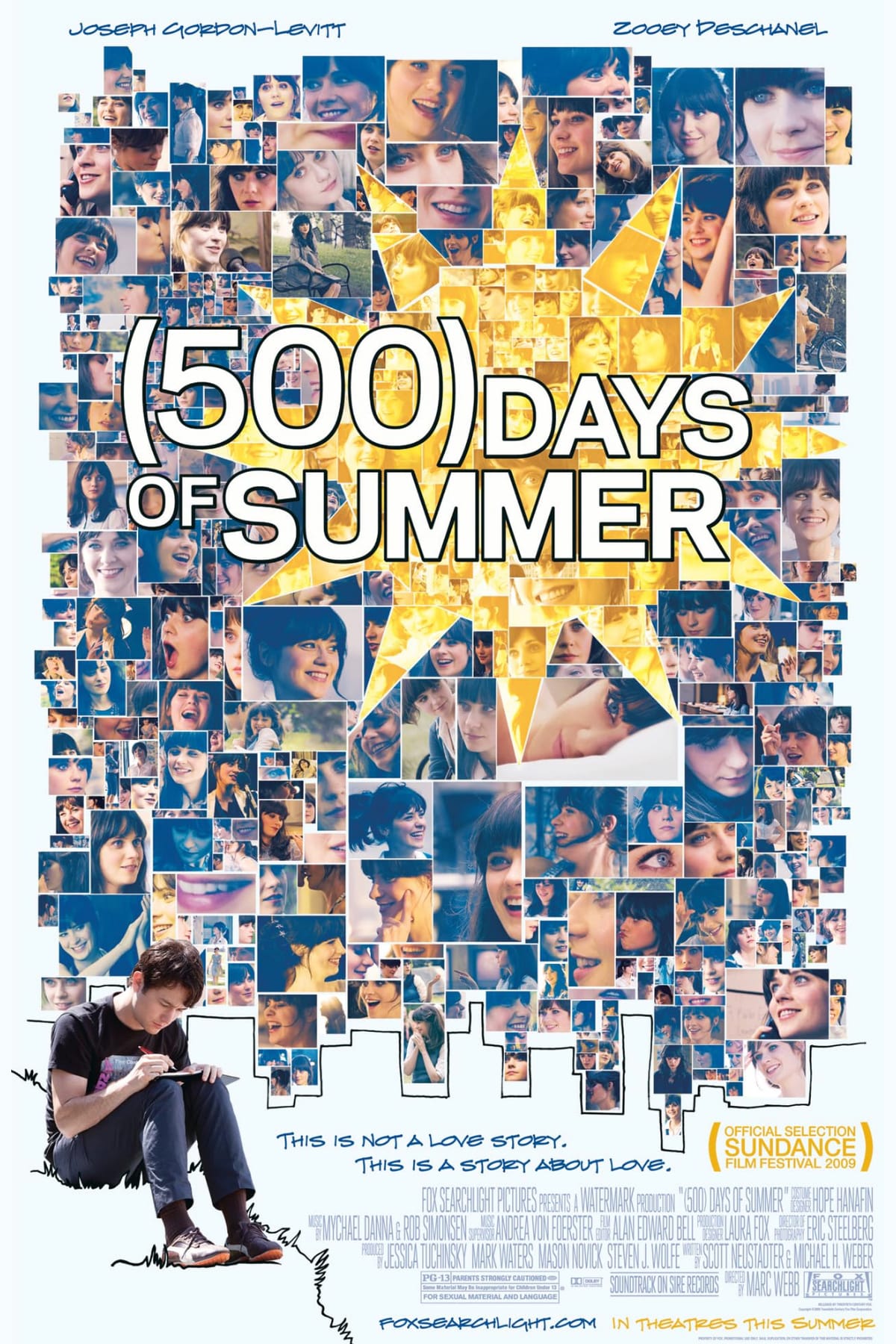
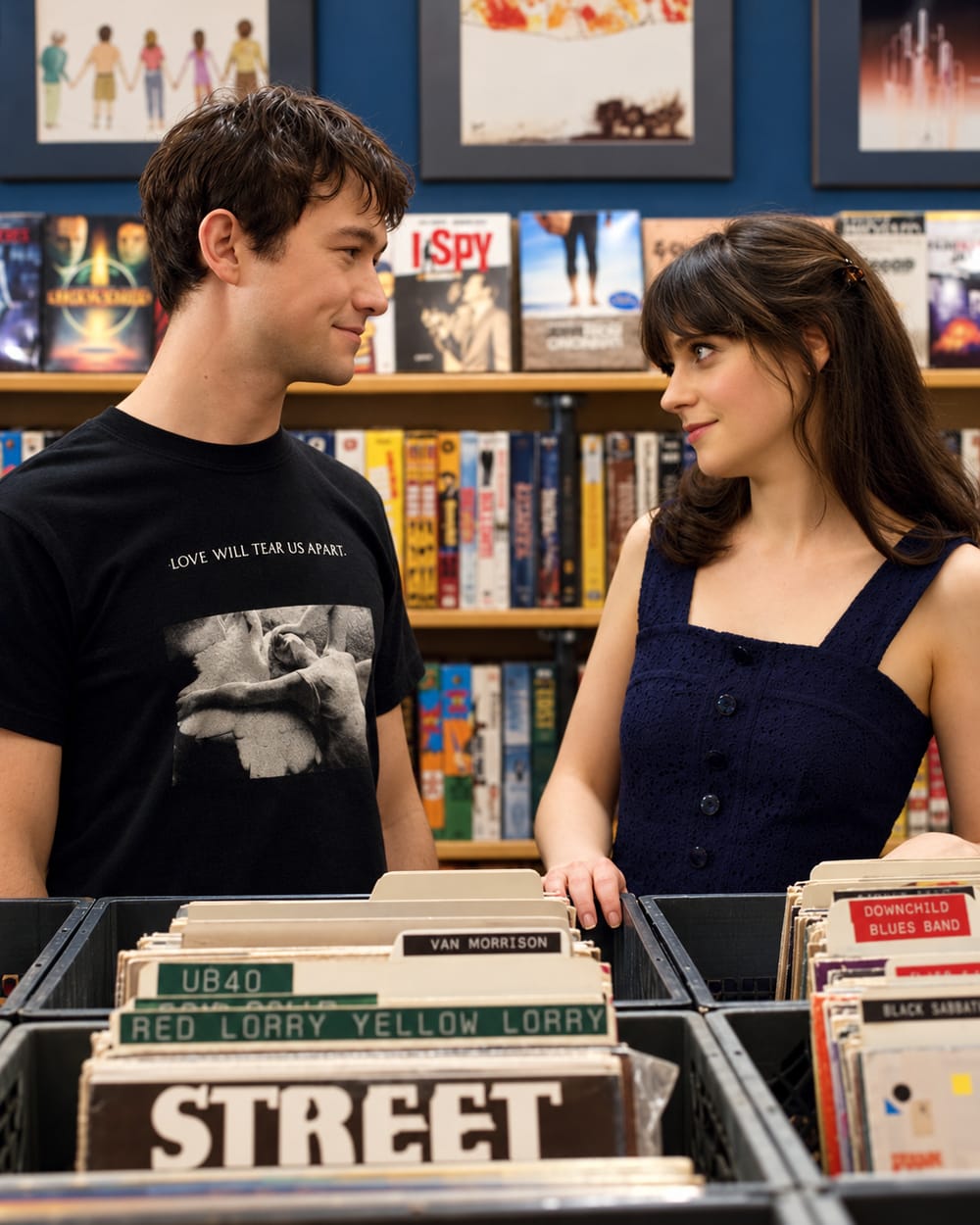
She likes the same music. She’s funny. You’re attracted to her, she seems attracted to you, and spending time together feels almost ridiculously easy. After enough disappointing dates, this seems like something worth getting excited about.
There’s just one small problem. She’s told you she doesn’t want a serious relationship.
Well, people say things. Maybe she hasn’t met the right person yet. Maybe she’s protecting herself. Maybe once she realizes how good you are together, she’ll change her mind.
That’s a lot of maybes to build a relationship on.
She’s Told Him. He’s Still Hopeful.
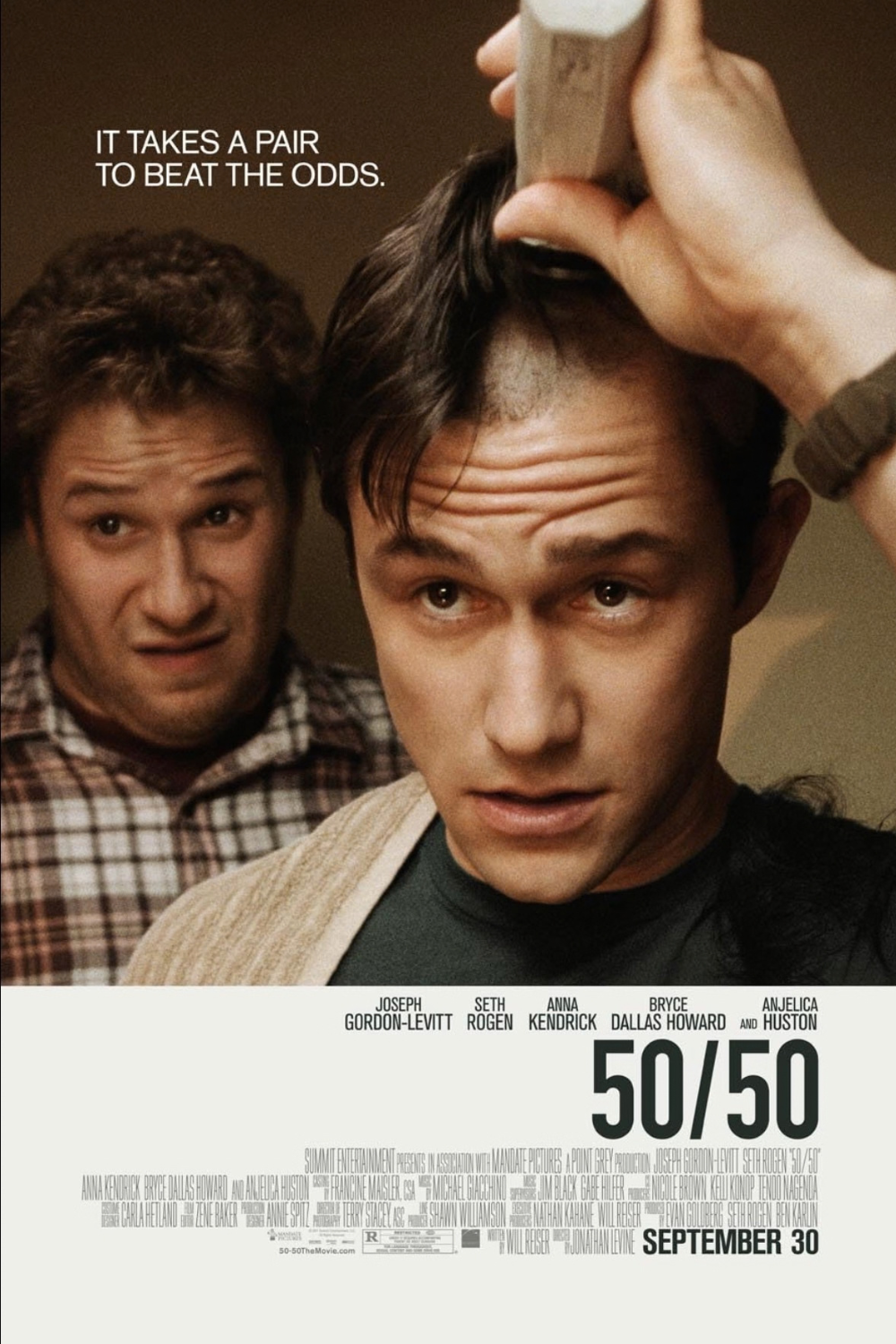
Joseph Gordon-Levitt plays Tom in 500 Days of Summer, a greeting-card writer who believes in the kind of love that makes everything else fall into place. When he meets Summer, played by Zooey Deschanel, it doesn’t take much for him to start imagining that she might be the person he’s been waiting for.
Summer is interested in him. She enjoys his company, and what develops between them gives him plenty of reasons to be happy. But she’s also clear that she isn’t looking for the commitment he wants.
Tom hears that. He just gives considerably more weight to everything that seems to contradict it.
And you can understand why. Being told somebody doesn’t want a serious relationship gets confusing when you’re spending time together doing things that certainly feel like one. There’s affection, intimacy and the comfortable little routines that make another person part of your life.
He’s waiting for her to catch up to a future he’s already started imagining.
The Good Days Make a Convincing Argument
The movie moves back and forth through their time together, which is a particularly effective way to tell this story. You see why Tom falls for Summer, but you also see the uncomfortable moments that don’t fit the version he prefers.
Gordon-Levitt makes Tom easy to sympathize with because he captures both the excitement and the embarrassment. You can enjoy watching him get carried away even while recognizing that he’s getting carried away.
Deschanel has a trickier job. We spend so much time with Tom’s feelings that Summer can seem unfair simply because she doesn’t share them. But wanting somebody badly doesn’t make their reluctance a character flaw.
That’s an uncomfortable thought when you’re the one doing the wanting.
You Can’t Be in Love for Both of You
What makes 500 Days of Summer interesting is that Tom’s mistake grows out of something most people would consider a good quality. He’s hopeful. He believes this connection matters, and he wants to give it a chance.
But hope becomes a problem when it starts answering questions for somebody else.
There’s nothing foolish about being excited when you meet a person you could love. The foolish part is deciding that the strength of your feelings settles the matter. Shared music, great afternoons and genuine affection can all mean something without meaning everything you want them to.
Tom thinks he’s in a love story. He has some lovely memories to support that conclusion.
He still needs to find out whether Summer thinks she’s in the same one.
Summer says she doesn’t want a serious relationship. Tom has plenty of reasons to believe they’re perfect together—and a growing habit of treating those reasons as her answer.
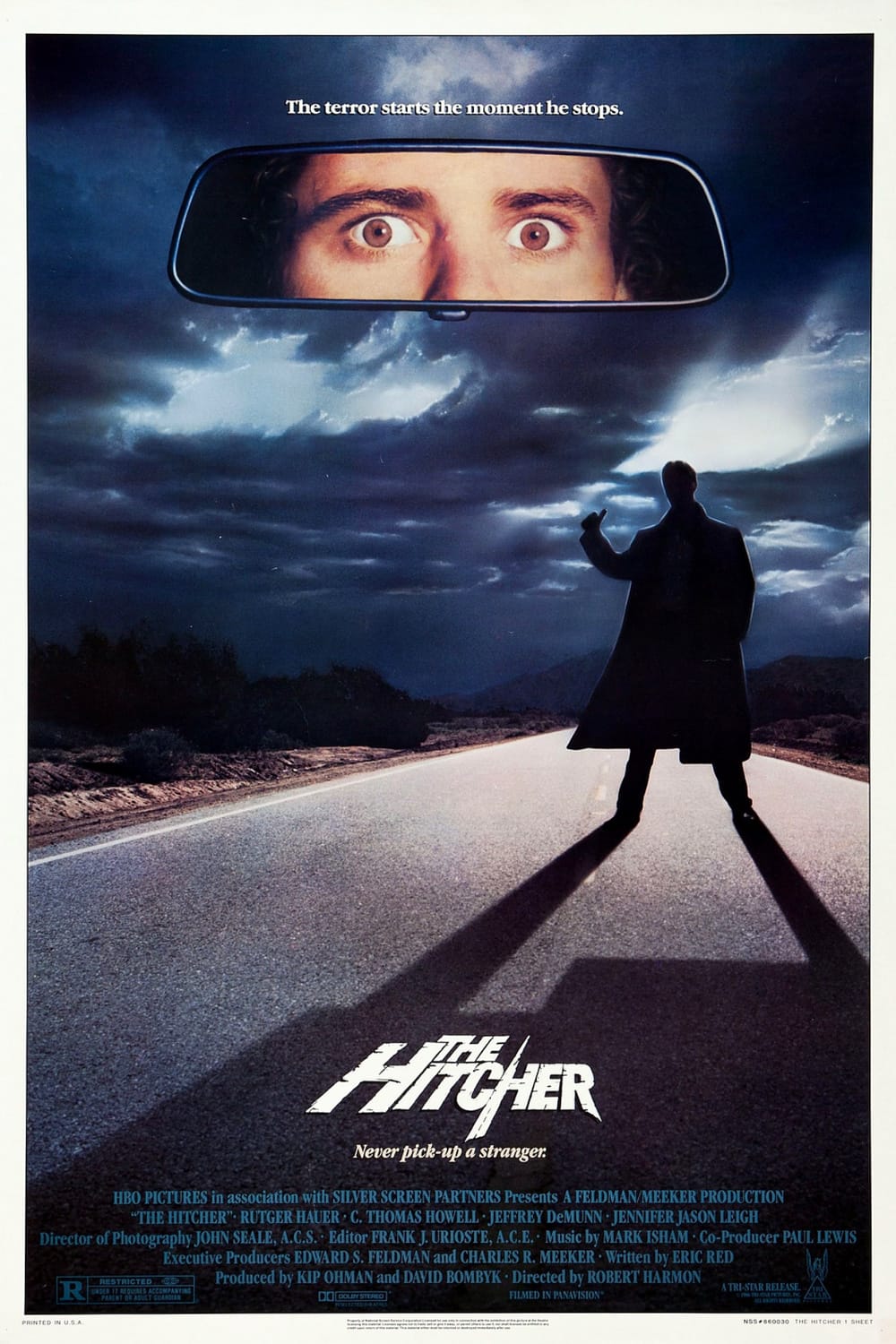
You're driving down a lonely highway in the middle of nowhere. There's not much to look at except miles of desert, and you haven't seen another car in quite a while.
Then you spot a man standing beside the road, looking for a ride.
You think about it for a second. You're going that direction anyway. Why not help the guy out? Besides, a little company might make this boring drive go faster.
Seems like a decent thing to do.
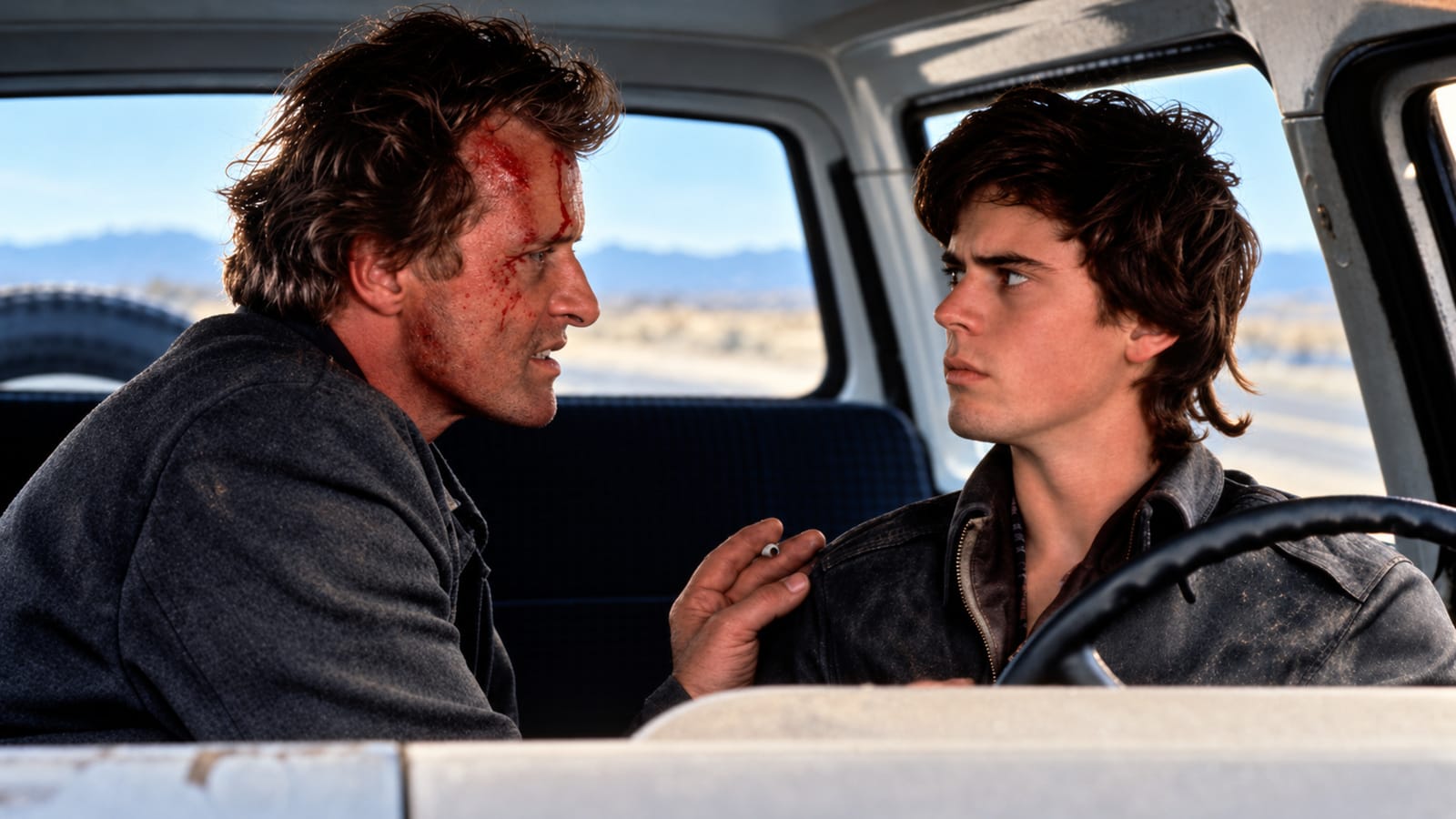
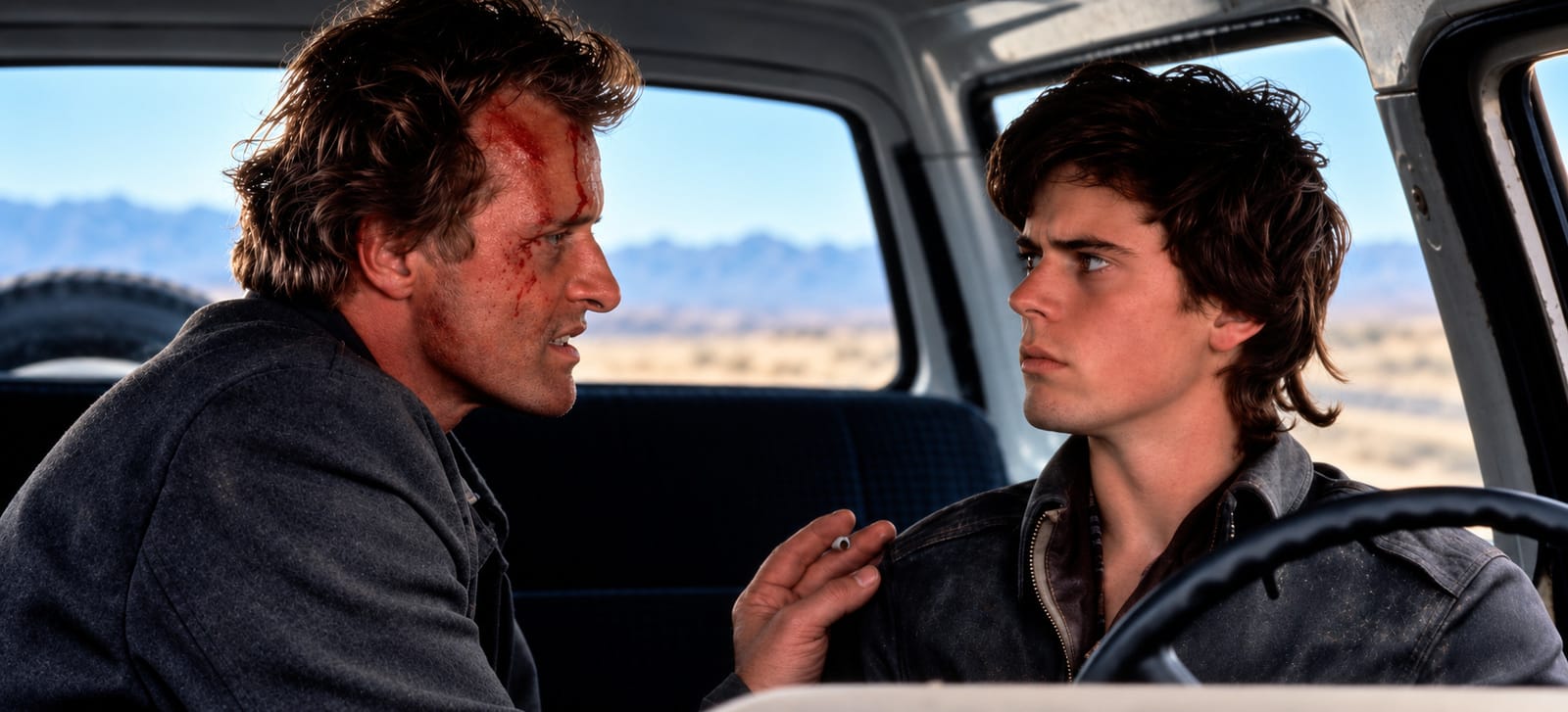
Watch The Hitcher, and you might never have that thought again.
The Worst Passenger You Could Possibly Pick Up
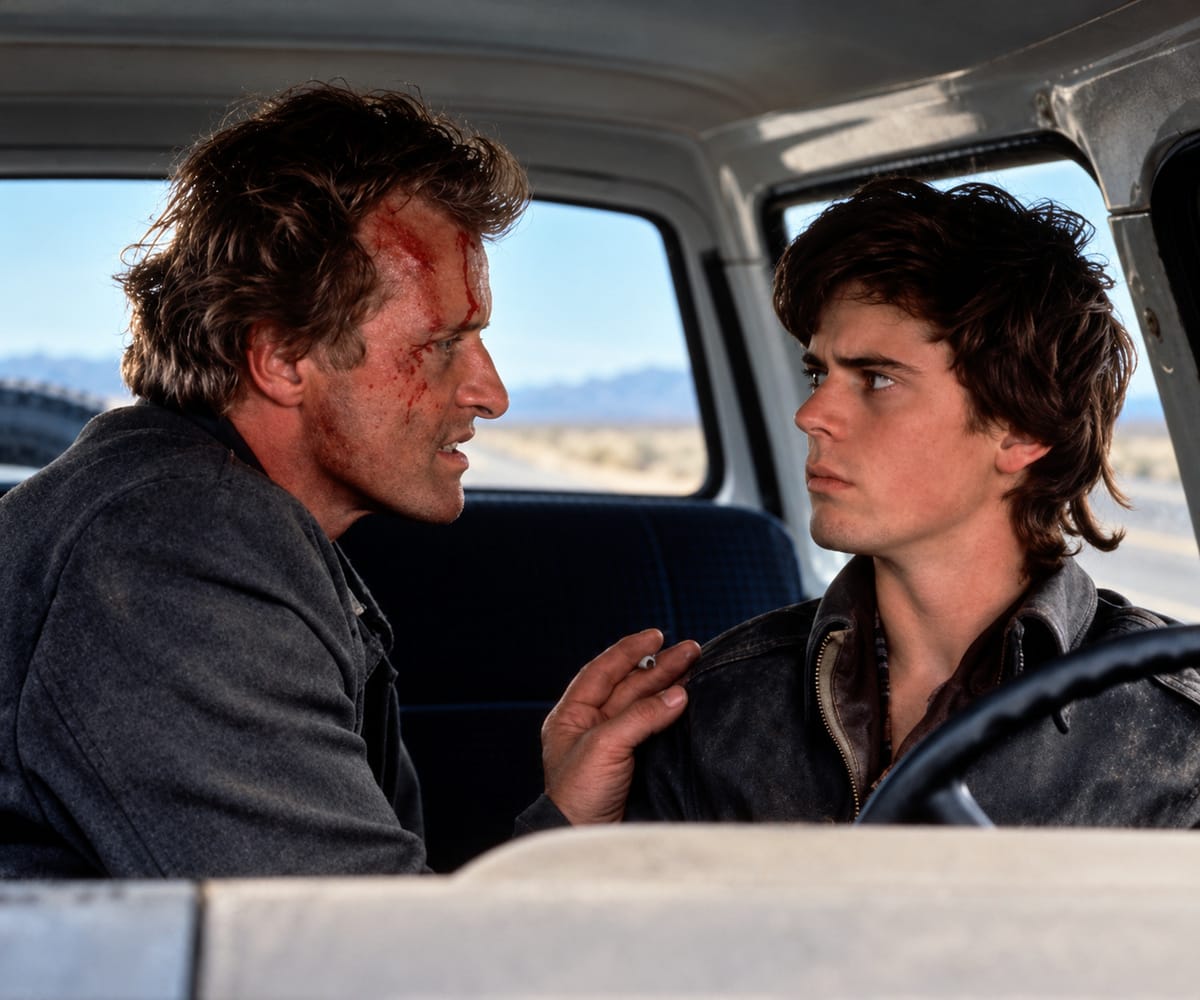
Jim Halsey (C. Thomas Howell) is a young man driving a car across the country. He's tired, the highway seems endless, and when he sees a hitchhiker standing in the rain, he pulls over.
The man's name is John Ryder, played by Rutger Hauer.
At first, Ryder doesn't seem especially threatening. He's quiet, a little strange, and not particularly interested in conversation. But it doesn't take long before Jim realizes he's made a terrible mistake.
Ryder isn't some harmless traveler looking to get to the next town. He's a killer, and he has something particularly unpleasant in mind for the young man who's just offered him a ride.
Jim eventually manages to get Ryder out of his car, and you'd think that would be the end of it.
Unfortunately, Ryder has other plans.
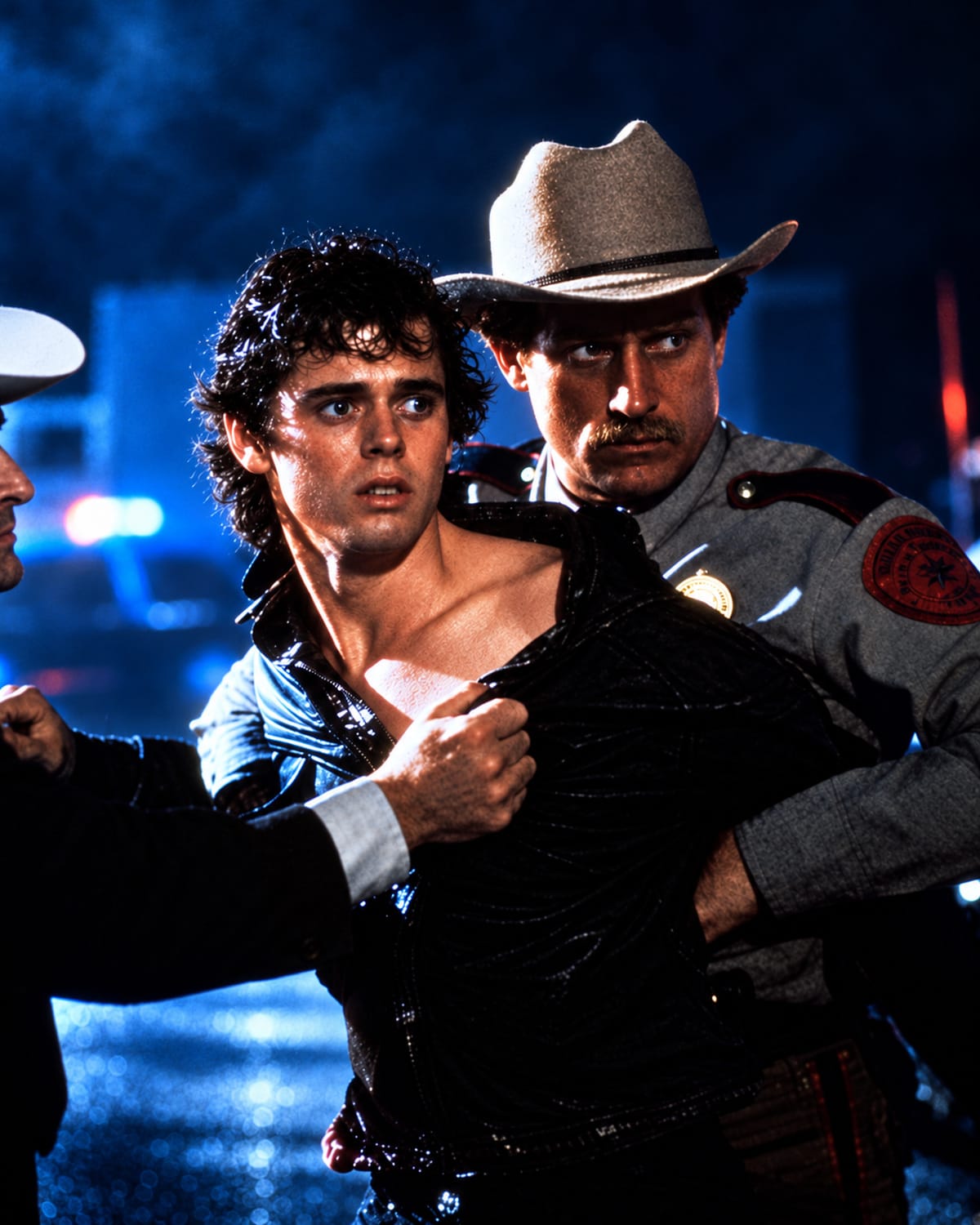
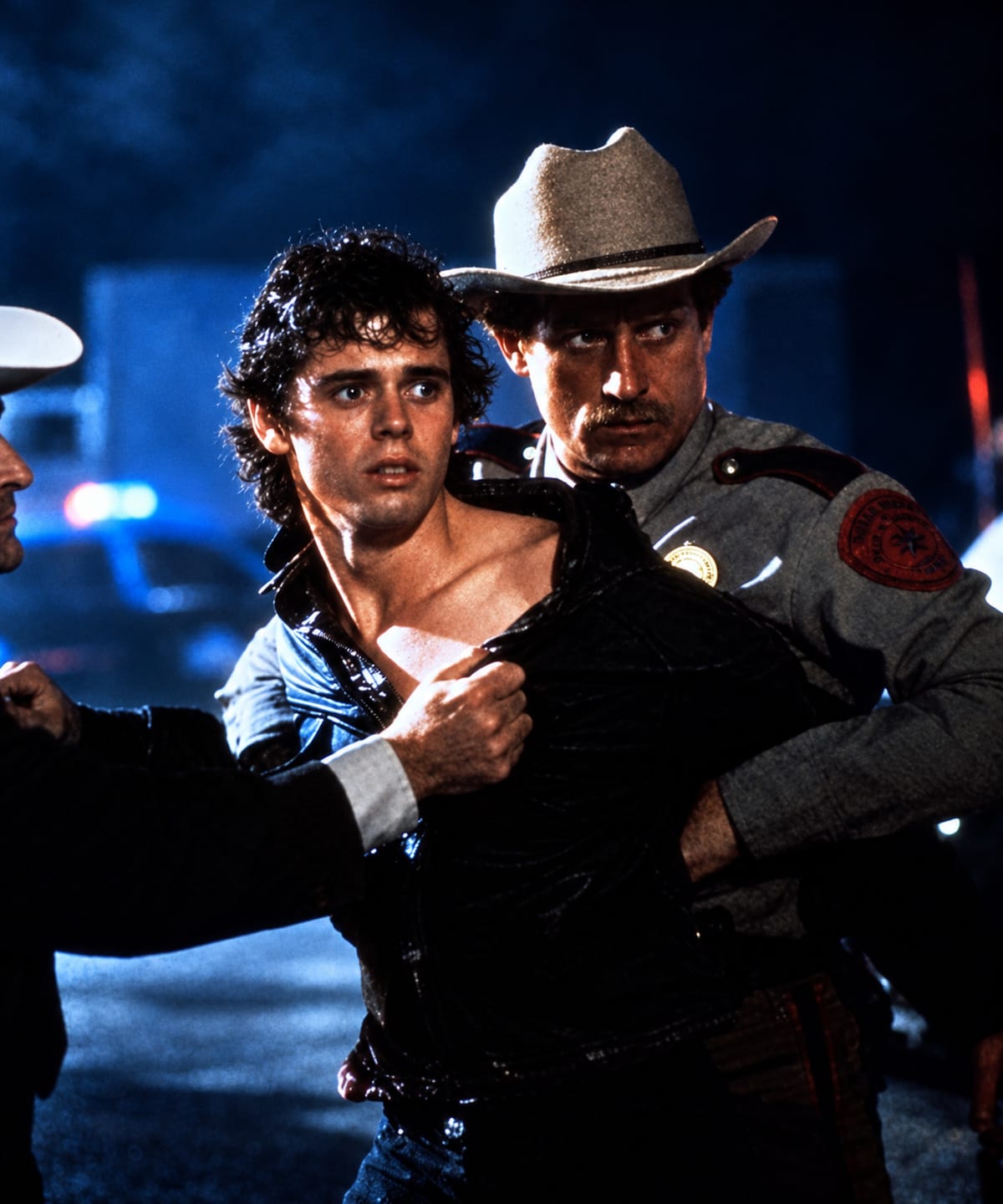
What follows is a nightmare that stretches across miles of empty Texas highway. Jim finds himself pursued by a man who seems to appear wherever he goes, leaving dead bodies behind and making sure the police have every reason to believe Jim is responsible.
All because he stopped to help somebody.
Rutger Hauer Is Absolutely Terrifying
What's especially disturbing about Ryder is how little effort he seems to put into being frightening.
He doesn't spend much time shouting or making elaborate threats. He doesn't need to. Hauer plays him with an almost casual indifference to human life. He can be sitting across from somebody having a perfectly ordinary conversation, and you still wouldn't be surprised if he suddenly pulled out a knife.
There's something deeply unsettling about a man who seems to have absolutely nothing to lose.
And Ryder doesn't appear particularly interested in getting away with his crimes. In fact, there are moments when you begin to wonder whether he's trying to get Jim to kill him.
That makes him even more frightening. How do you deal with somebody who doesn't seem especially concerned about his own survival?
Hauer is excellent in this role. He gives Ryder just enough personality to make him feel like an actual person, but never enough to make you comfortable around him.
C. Thomas Howell deserves some credit, too. Jim is young, frightened, and increasingly desperate. He's not an action hero who's prepared for this sort of thing. He's an ordinary guy who made a decision millions of people have probably made without giving it much thought.
And now he's paying a terrible price for it.
There's No Place to Hide on an Open Highway
One of the things I like most about The Hitcher is its setting.
Most horror movies give their characters somewhere to hide. A house, a basement, a dark building with an unfortunate number of unlocked doors.
Here, you've got hundreds of miles of open road.
You can see for miles in almost every direction, but that doesn't seem to help Jim. The gas stations are isolated. The towns are few and far between. And every time he thinks he's finally escaped Ryder, the man somehow turns up again.
Even finding the police doesn't solve his problem. Ryder is so good at manipulating the situation that Jim quickly discovers the people who should be helping him have become another threat.
Jennifer Jason Leigh enters the story as Nash, a waitress who becomes involved in Jim's desperate attempt to survive. She's one of the few people willing to believe him, which is fortunate because practically everybody else seems ready to put him in jail.
Or worse.
The movie has some terrific action sequences, but what really makes it work is that constant feeling of helplessness. Jim can't outrun his problem, he can't explain it away, and he certainly can't reason with the man who's causing it.
He just has to survive.
Would You Have Stopped?
That's the question I kept coming back to.
I don't pickup hitchhikers. Never have. But I've been tempted.
We generally want to help people in need of help, particularly if we were in a position to do so without much inconvenience.
And that's what makes the premise so effective. Jim doesn't do anything wrong. He isn't looking for trouble, showing off, or making some spectacularly stupid decision that any sensible person would avoid.
One lonely highway, one stranger looking for a ride, and one seemingly decent decision. The Hitcher turns a simple act of kindness into a nightmare you won't easily forget.
I knew You Can See Everything was going to be weird within minutes.
It's one thing to give a documentary crew complete access to your life. You're not hiding anything. You're being transparent. Good for you.
But does that include letting them film you taking a shower? Completely naked? And even if you do allow that, why would the filmmakers decide it belonged in the finished documentary?
There I was, watching a movie about Elizabeth Holmes, the convicted founder of Theranos, and suddenly I'm looking at her partner's genitals. It added absolutely nothing to the story. Nothing.
And this was just the beginning.
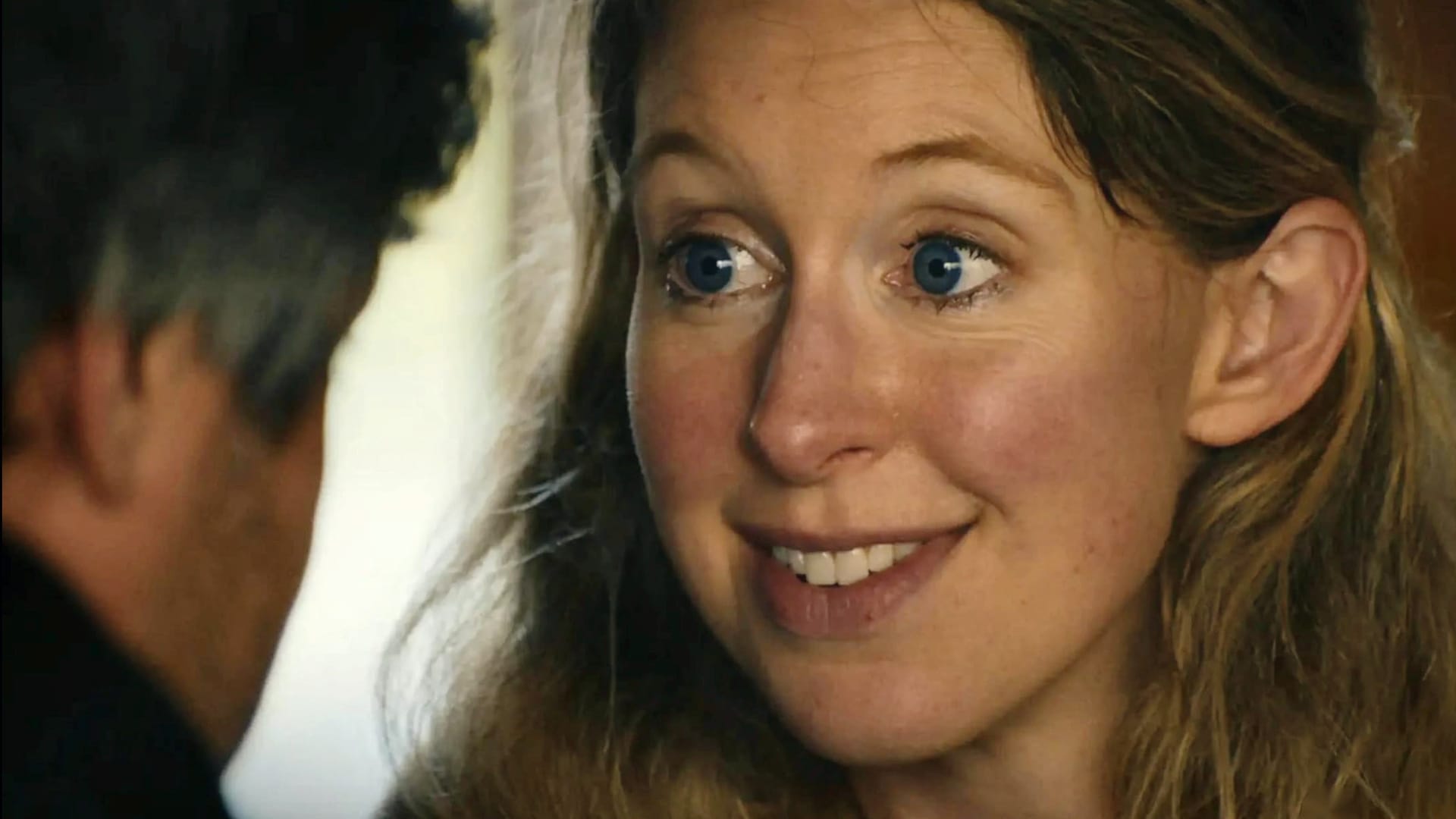
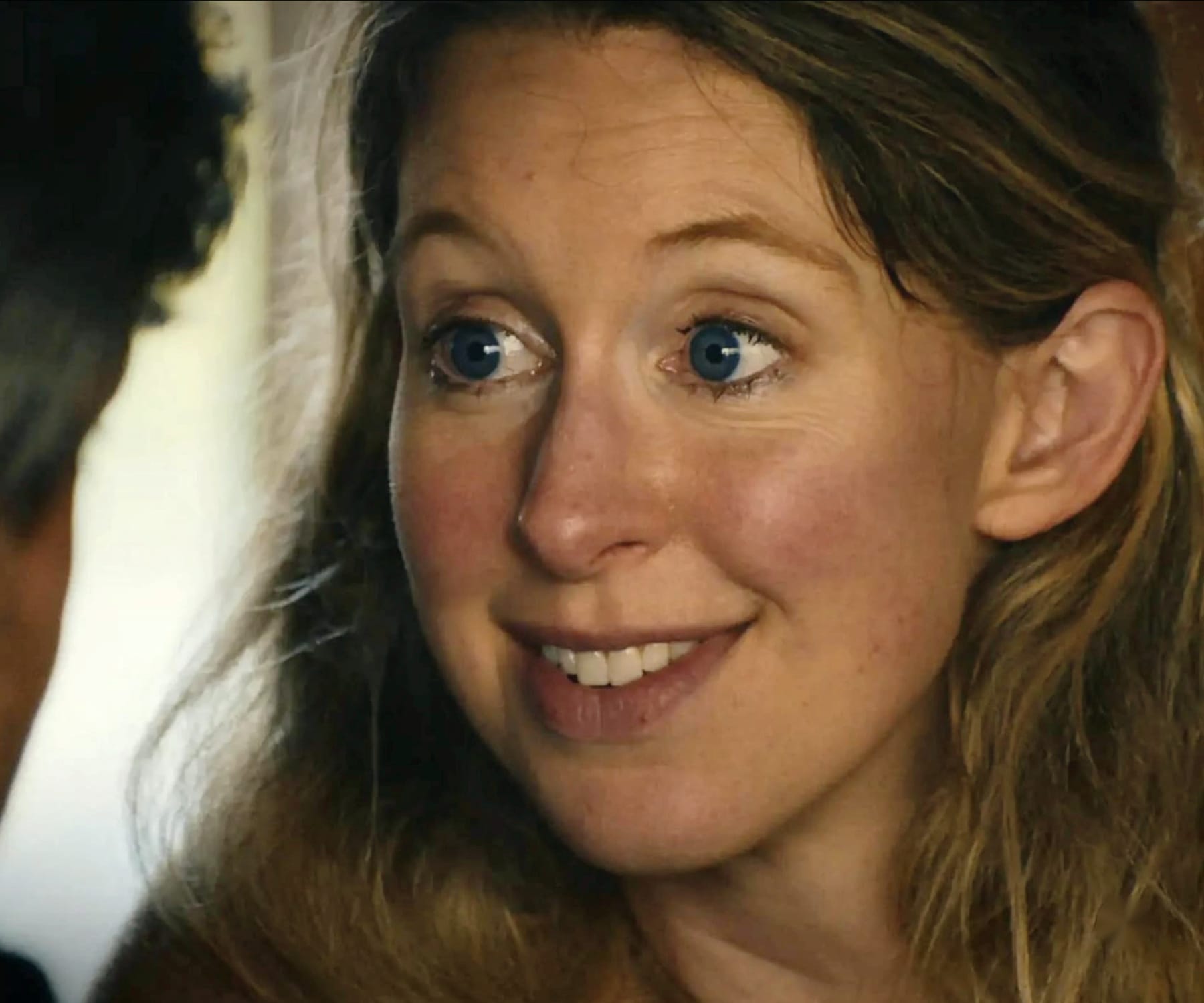
Is This Really Elizabeth Holmes?
The documentary begins about a month before Holmes is scheduled to report to prison. Filmmakers Nathan Fielder and Lance Oppenheim have been granted extraordinary access to her home and family, including her longtime partner, Billy Evans, and their two young children.
For a while, it's a relatively straightforward documentary. We're getting an unusually close look at someone who was once among the most celebrated entrepreneurs in America.
But here's what's strange.
This is the woman who founded Theranos, attracted enormous investments, became a billionaire on paper and convinced some extremely powerful people that her company was going to revolutionize medical testing.
You would never know it from watching her here.
She's soft-spoken, almost childlike at times, and seems genuinely confused by questions that shouldn't be particularly difficult to understand. There are moments when she comes across as surprisingly dense.
I'm not exaggerating. It's almost like watching an adult patiently trying to explain something to a child.
One of the documentary's early threads involves whether Holmes was simply misunderstood. Did she actually deceive people, or did she mean one thing while everybody else interpreted it differently?
That's quite an explanation for a fraud conviction.
Meanwhile, we're introduced to a version of Holmes that seems almost impossibly perfect. She's a devoted mother, loving partner, gentle, thoughtful and apparently without much of an ego.
At least that's the picture being presented.
I'm not saying those qualities aren't genuine. But reconciling this woman with the enormously ambitious CEO who built Theranos is difficult. It's almost like we're watching two completely different people.
And Then There's Billy
If Holmes is difficult to understand, Billy Evans is in a category of his own.
He genuinely seems to love his children and appears to be a devoted father. But he's also controlling, intensely protective of Holmes, and seems comfortable speaking for her in ways that made me increasingly uncomfortable.
At times, it almost feels as though he's taken over her identity.
Then there's Fielder himself.
He has a peculiar way of interacting with people, sometimes getting remarkably close to their faces or positioning himself in places that make perfectly ordinary conversations feel uncomfortable.
And, of course, let's not forget that shower scene.
Everybody involved seems a little strange. Some considerably stranger than others.
Then the Movie Takes a Turn
I think of You Can See Everything as two different movies.
The first half is a reasonably conventional documentary, although the people involved are anything but conventional.
The second half?
I don't even know how to describe it without spoiling something, and I'm not entirely sure I could explain it properly if I tried.
Let's just say the documentary heads in directions I wasn't expecting, including reenactments and some increasingly unusual questions about what's real and what isn't.
One interesting part of the discussion involves The Dropout, the Hulu series starring Amanda Seyfried as Holmes.
It's a dramatization of a real person's life. That means some events and conversations are recreated or invented for television. Yet there seems to be genuine surprise that the series might have negatively affected how people see Holmes.
Really?
You take an actual person, create a fictionalized version of her life, and then expect everyone watching to automatically recognize which parts are factual and which parts somebody made up?
Labeling something a dramatization doesn't mean audiences won't believe what they're seeing.
And without revealing where that discussion eventually leads, I'll just say it fits perfectly into an already very strange movie.
Interesting Isn't Necessarily the Same as Good
At nearly three hours, You Can See Everything is a considerable investment of time.
Was I bored? Not particularly. There's plenty here to keep you curious, even if that curiosity sometimes comes from wondering what on earth you're watching.
Did I love it? No.
Would I call it a particularly good documentary? I'm not sure I would.
But I also wouldn't call it bad.
It's interesting. Sometimes fascinating. Frequently uncomfortable. And almost relentlessly weird.
If you're interested in Elizabeth Holmes, or simply want to watch one of the more unusual documentaries you're likely to encounter, there's enough here to justify seeing it.
Would I spend the money to go so far as to buy it? Absolutely not. A rental is about as far as I'd go, and I'd be perfectly comfortable waiting until it's available on a streaming service I'm already paying for.
Nearly three hours later, I wasn't much closer to understanding Elizabeth Holmes. But I had learned something.
There are some people you can watch for three hours and still have absolutely no idea what to make of them.
Apparently, you can make an entire documentary out of that.
What starts as an unusually intimate documentary about Elizabeth Holmes turns into something much stranger. Nearly three hours of bizarre personalities, uncomfortable moments and questions that don't necessarily have answers.
Christmas is supposed to be about family. Going home, gathering around the dinner table, exchanging gifts, and spending time with the people who matter most to you.
But not everybody gets that Christmas.
Some people have to work. Others are too far from home, have nowhere to go, or have lost the people they used to celebrate with. For them, Christmas can be a pretty lonely time of year.
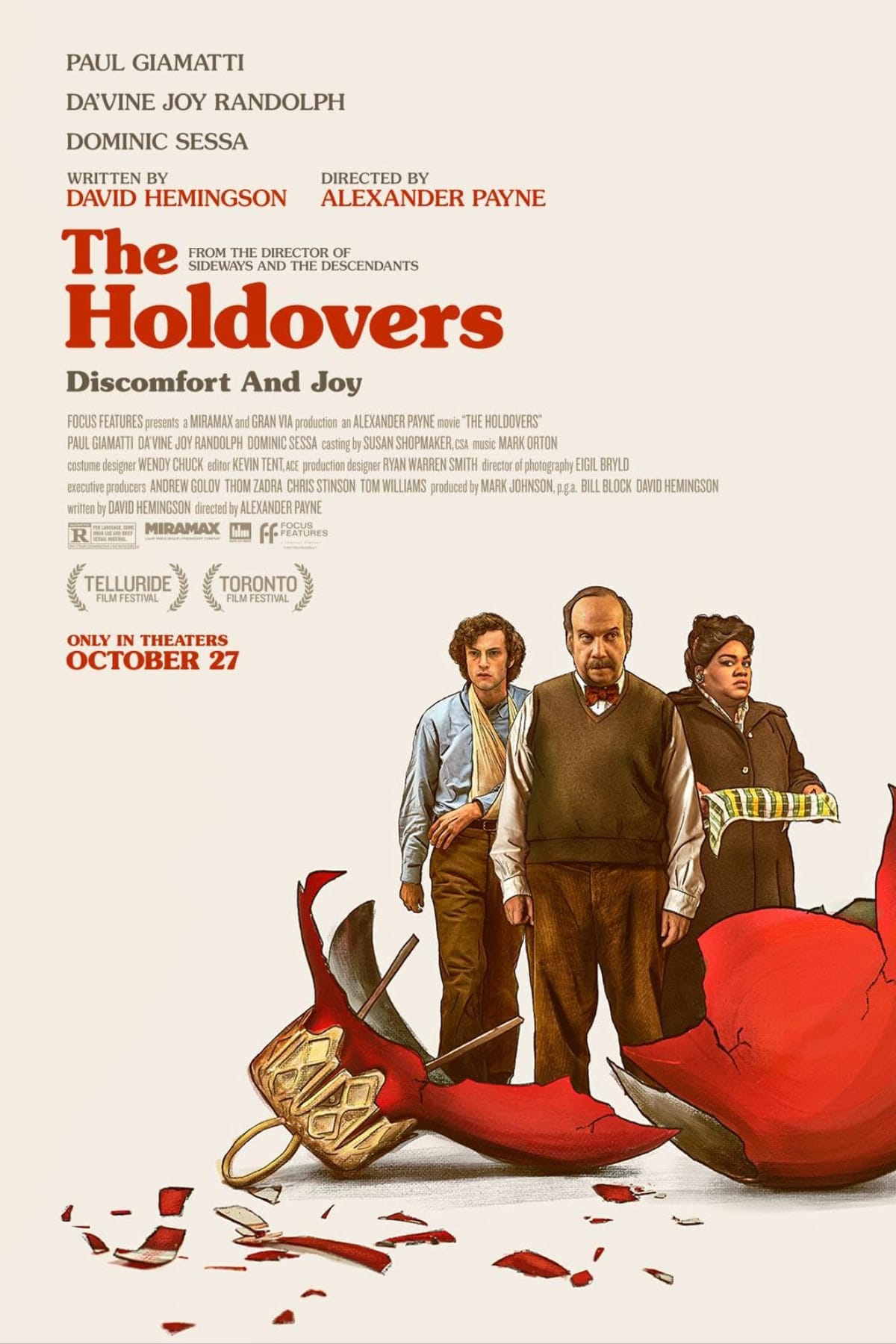
That's the Christmas we get in The Holdovers (2023).
Stuck at School for Christmas
It's 1970, and most of the students at Barton Academy, a prestigious New England boarding school, are heading home for the holidays. But a handful of boys aren't going anywhere. They're stuck at school, and somebody has to look after them.
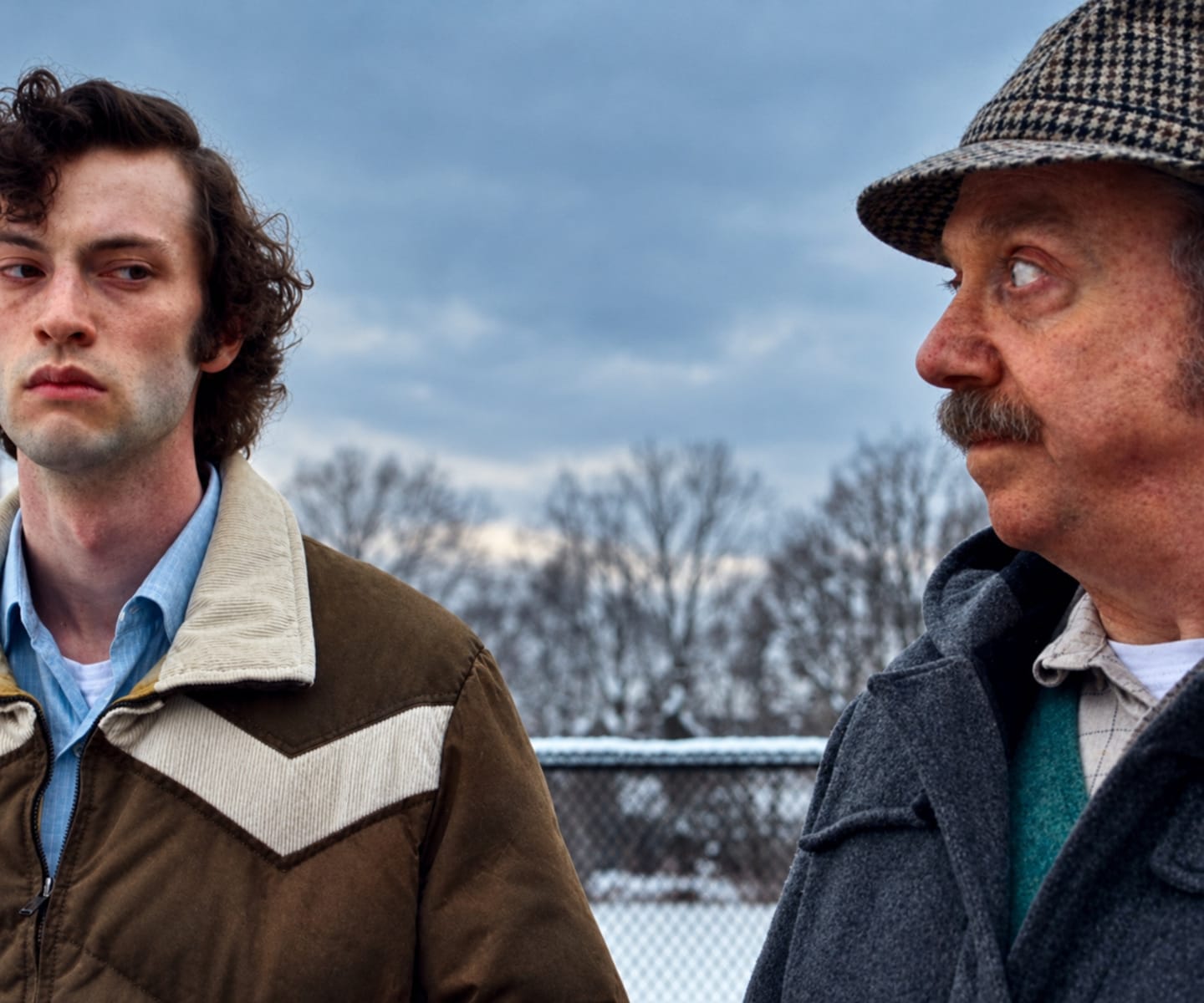
That unfortunate assignment falls to Paul Hunham, played by Paul Giamatti.
Hunham is an ancient history teacher who seems to have made it his life's work to be disliked by practically everyone he meets. He's arrogant, demanding, and not particularly interested in whether anybody enjoys his company.
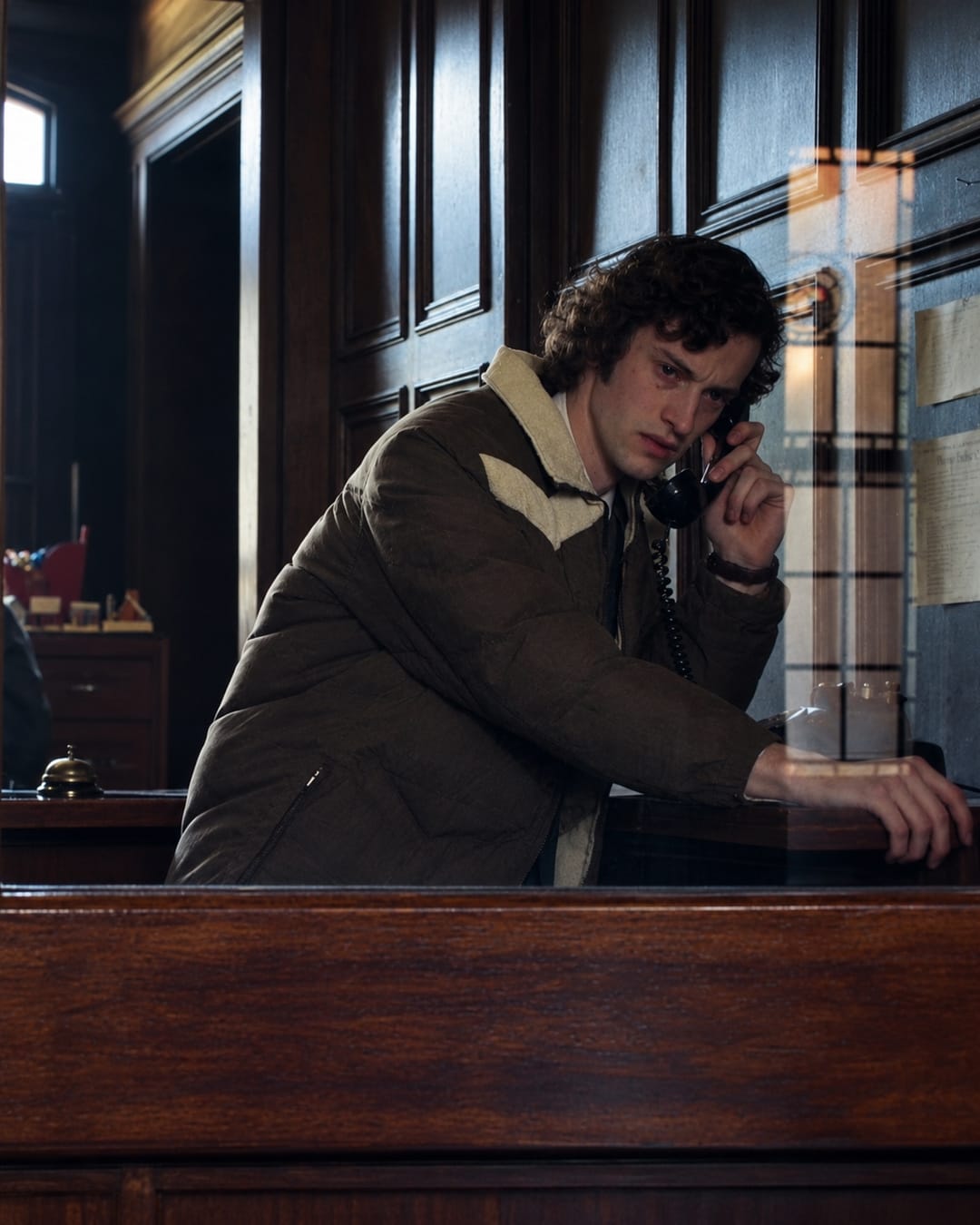
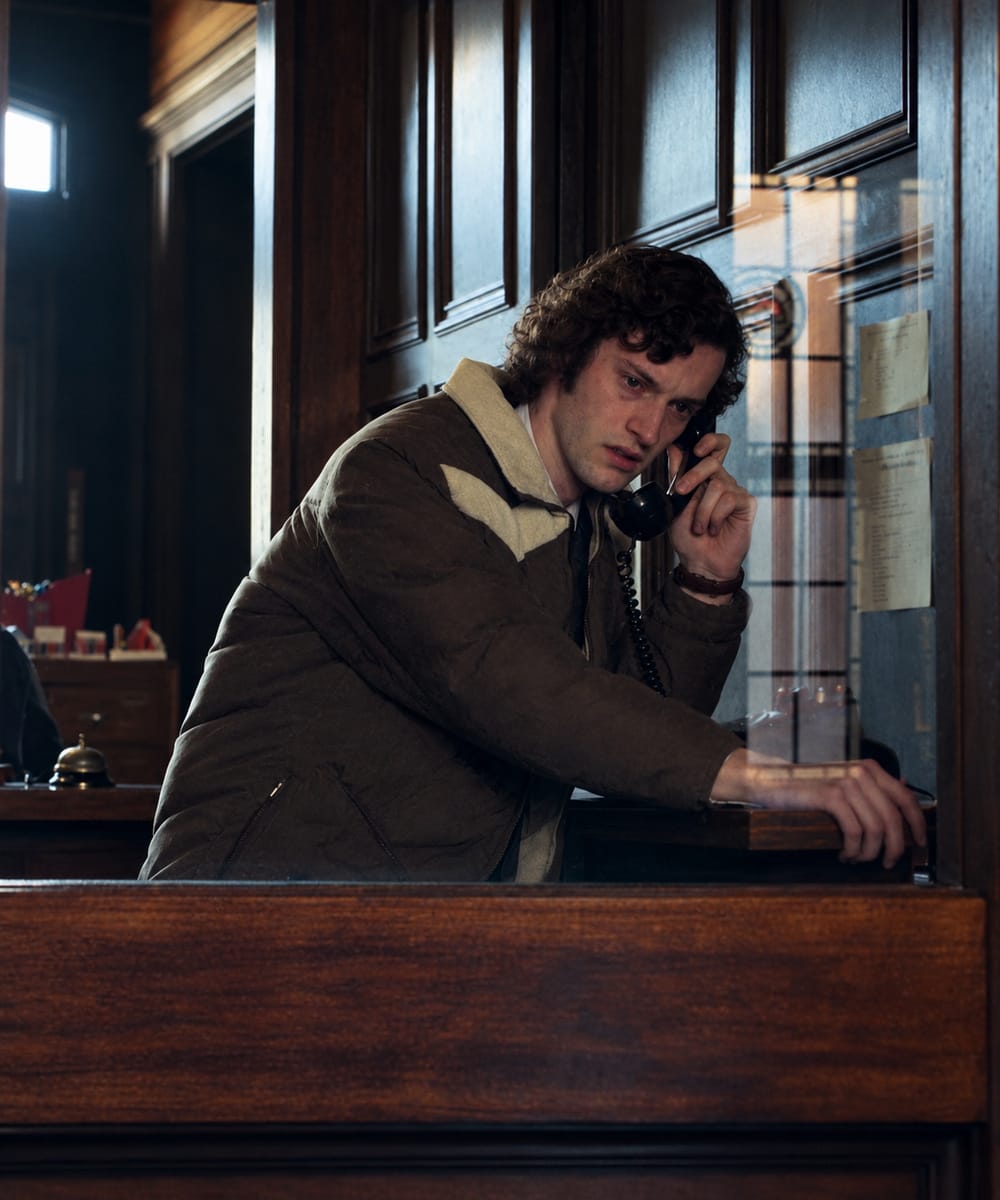
Eventually, only one student remains, Angus Tully (Dominic Sessa), a bright but troubled teenager whose family has other plans for Christmas.
Then there's Mary Lamb (Da'Vine Joy Randolph), the school's cook. She's staying at Barton too, although her reasons are considerably more heartbreaking. Her son was killed in Vietnam, and Christmas without him isn't something she's particularly looking forward to.
So there they are. Three people spending Christmas somewhere they don't want to be, with people they wouldn't ordinarily choose to spend time with.
Sounds like a wonderful holiday, doesn't it?
Making the Best of What You've Got
What makes The Holdovers work is that it doesn't try to turn these three into one big happy family overnight.
Hunham is still an irritating old grouch. Angus has a talent for getting himself into trouble, and Mary is dealing with grief that isn't going to disappear because somebody puts up a Christmas tree.
But as they spend time together, something begins to change. They start learning about one another, discovering that the people they've been stuck with might have a little more going on than they originally thought.
Giamatti is terrific, as you'd expect. Sessa holds his own remarkably well, and Randolph gives the movie much of its emotional weight. The three work beautifully together, especially when the movie allows them to be funny without making light of their circumstances.
And that's what I particularly like about this film. It understands that Christmas doesn't magically fix everything. People are still lonely. Families are still complicated. Whatever problems you had on December 24th are probably going to be there on December 26th.
But that doesn't mean you can't find something good in between.
The Holdovers is funny, touching, and occasionally a little sad. It's also a Christmas movie that recognizes something most holiday movies tend to overlook.
Not everybody gets to go home for Christmas.
Sometimes you have to make the best of where you are, with whoever happens to be there. And sometimes, that turns out to be enough.
Not everybody gets to go home for Christmas. *The Holdovers* tells the story of three people stuck together over the holidays who discover that an unexpected Christmas can still be a pretty good one.
The most frightening moment in a good sniper movie isn't necessarily when somebody pulls the trigger. It's the moment just before somebody moves.
You find yourself wanting to tell the guy to stay perfectly still. Don't raise your head. Don't look around. And whatever you do, don't assume the other guy isn't watching.
That's what makes Enemy at the Gates so good. I've seen plenty of movies featuring snipers, but I can't think of one that does a better job of showing what makes their particular kind of warfare so terrifying.
In fact, I think this may be the best sniper movie ever made.
The Most Dangerous Thing You Can Do Is Move
Enemy at the Gates takes place during the Battle of Stalingrad in 1942, when German and Soviet forces were fighting over a city that was rapidly being reduced to rubble.
And there is plenty of conventional warfare in this movie. Explosions, gunfire, enormous numbers of soldiers charging into battle, and some genuinely horrifying scenes showing just how expendable those soldiers could be.
But that's not what makes the movie special.
Jude Law plays Vassili Zaitsev, a Russian soldier whose extraordinary marksmanship attracts the attention of a political officer named Danilov, played by Joseph Fiennes. The Russians badly need a hero, and Danilov decides Vassili is going to be that hero.
Unfortunately, the Germans are paying attention, too.
They send their own expert sniper, Major König, played by Ed Harris, to eliminate him. And suddenly, in the middle of one of the largest battles of World War II, the movie becomes a contest between two men trying to kill each other.
What makes their confrontation so interesting is how little shooting is actually required to create suspense.
They're watching. Waiting. Trying to anticipate where the other man might be hiding. An abandoned building becomes a dangerous place to enter. A window becomes something you wouldn't dream of walking past. Even an apparently safe position might be exactly where the enemy wants you.
A single mistake could mean you're dead before you realize you've made it.
Jude Law and Ed Harris Are Outstanding
Jude Law is fantastic as Vassili. He's an exceptionally talented marksman, but Law never makes him seem like some invincible action hero who can casually dispatch anybody who gets in his way.
He's frightened, and understandably so. The better his reputation becomes, the more pressure he faces. Being celebrated as a national hero doesn't do much good when somebody equally talented has been sent specifically to kill you.
And then there's Ed Harris.
Harris has always been one of those actors who can dominate a scene without saying much of anything, and he's incredible here. His König is experienced, intelligent, methodical and almost unnervingly calm.
He doesn't need to act intimidating. You believe he's dangerous simply by watching him think.
That's a big part of why the movie works. You're not watching a talented young sniper fight some incompetent enemy who exists merely to be defeated. You're watching two exceptionally skilled men who know that the other guy is perfectly capable of killing them.
And both actors make you believe it.
The supporting cast is excellent, too. Rachel Weisz, Joseph Fiennes, Bob Hoskins and Ron Perlman all contribute to a movie that has quite a bit going on beyond the central confrontation. There are friendships, romantic complications, political maneuvering and the constant misery of a city being destroyed around its inhabitants.
But the movie is at its best when it returns to those two men and their rifles.
It's the Waiting That Gets You
Director Jean-Jacques Annaud understands something that a lot of action filmmakers seem to forget: suspense doesn't require constant action.
Sometimes it requires exactly the opposite.
The tension comes from not knowing what the other person is planning. Is he still there? Has he moved? Is that an opportunity, or is it a trap? Should you take the shot, or is somebody trying to make you reveal your position?
And perhaps the worst question of all: What if he's already figured out where you are?
There are plenty of war movies with bigger battles, more elaborate action sequences and spectacular explosions. There are also plenty of movies featuring remarkable shots made from extraordinary distances.
But Enemy at the Gates understands that the real skill of a sniper isn't simply being able to hit a target. It's having the patience, discipline and nerve to stay alive long enough to take the shot.
That's what separates this movie from the others for me.
You spend so much time worrying about somebody moving that when a rifle finally goes off, it's almost a relief.
*Enemy at the Gates* might be the best sniper movie ever made. Jude Law and Ed Harris turn patience, fear and the smallest movements into something every bit as suspenseful as a massive battle.
When a war ends, governments have a pretty straightforward way of announcing it. The fighting stops, agreements are signed, soldiers come home, and everybody starts talking about rebuilding.
But what if your three sons went off to fight and not one of them came home?
For Joshua Connor, the war isn't over. Not even close.
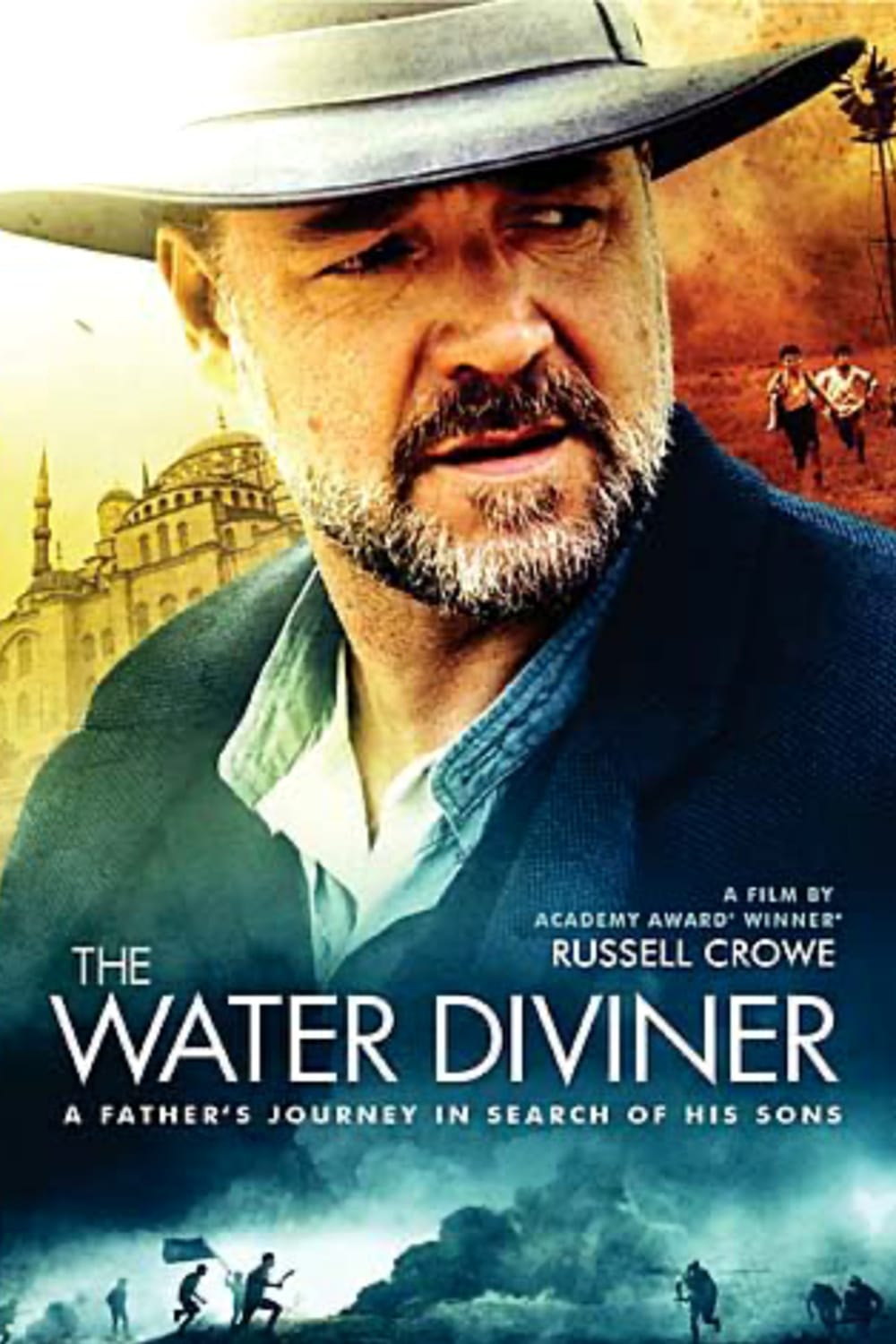
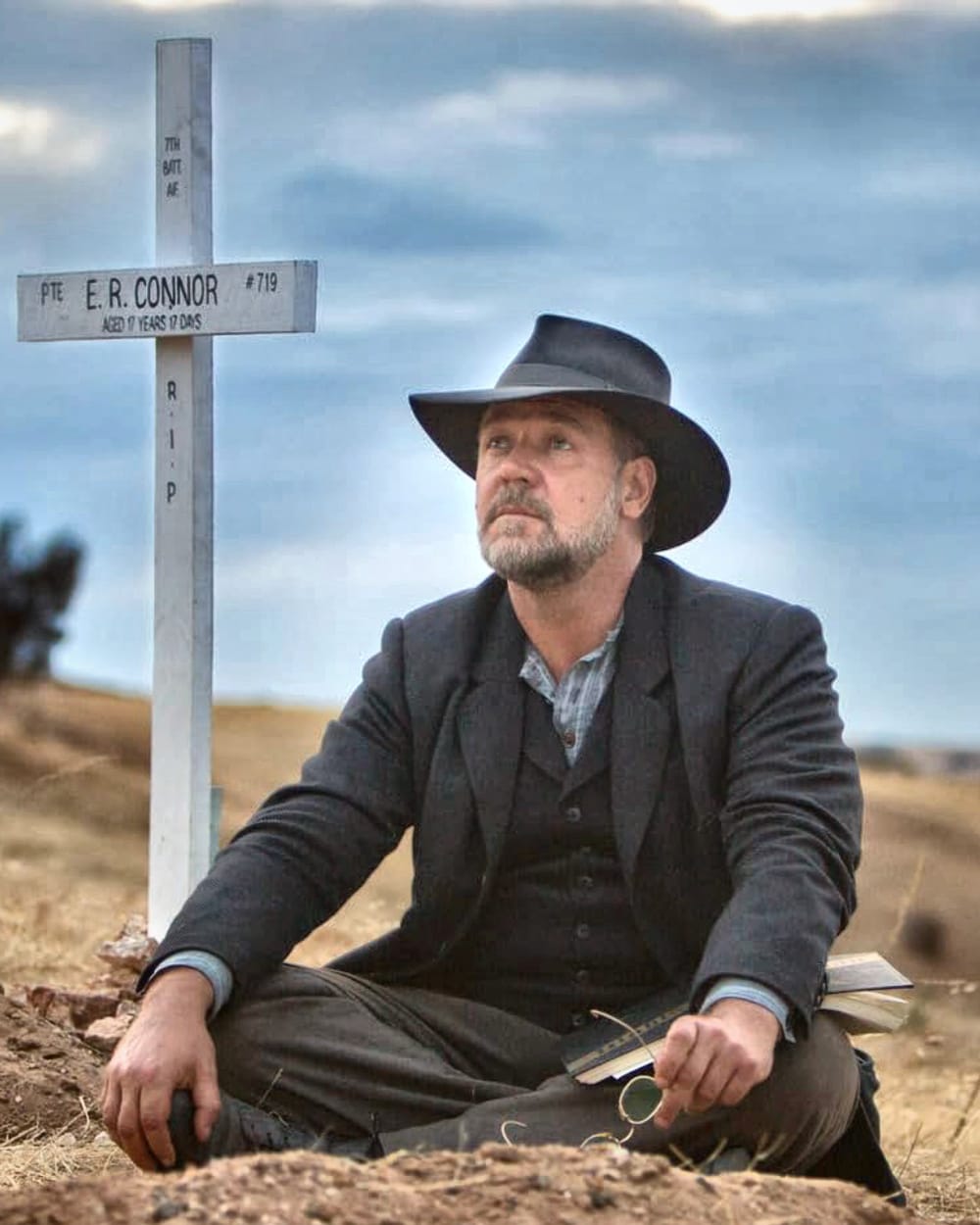
Russell Crowe plays an Australian father whose three sons disappeared during the Battle of Gallipoli in World War I. Four years later, he still doesn't know exactly what happened to them.
Some Questions Won't Leave You Alone
Connor is a farmer who has spent much of his life finding underground water. It's an unusual skill, locating something buried beneath the earth that nobody else can see.
Now he's determined to find something considerably more important.
He travels from Australia to Turkey in 1919, hoping to locate his sons' remains and bring them home. His wife has also died, and he wants to reunite his family in the only way he believes is still possible.
It's a remarkably simple motivation for a movie. He isn't trying to win a battle, stop another war, or accomplish something heroic. He just wants to find his boys.
But when he reaches Gallipoli, he discovers that wanting to find somebody and actually being allowed to look for them are two very different things.
The War Didn't End for the Other Side, Either
One of the more interesting developments comes when Connor receives help from Major Hasan, a Turkish officer played by Yılmaz Erdoğan.
Here's a man who fought on the opposite side of the same battle that took Connor's sons. Under different circumstances, these two men would have regarded each other as enemies.
But the fighting is over, and Hasan understands something that Connor's own military authorities seem to have difficulty appreciating.
This isn't really about the war anymore. It's about a father.
Connor also meets Ayshe, played by Olga Kurylenko, a Turkish woman who has suffered losses of her own. Through these encounters, the movie reminds us that ending a war doesn't magically put families back together, regardless of which side they were on.
And that's where The Water Diviner has something worthwhile to say.
We tend to measure wars in victories, defeats, territories won or lost, and numbers of casualties. Those are the things that make it into history books. They're also the things governments can count.
But how do you measure what happens afterward?
A Father's Refusal to Give Up
Crowe, who also directed the movie, gives Connor the kind of quiet determination that makes the character believable. He's not a particularly talkative man, and he doesn't spend much time explaining himself.
He doesn't need to.
A father arriving in a foreign country, standing on the ground where his children disappeared, and refusing to leave until somebody helps him. There's plenty of drama in that.
We know exactly when World War I ended. November 11, 1918. It's a date commemorated around the world.
But history books can't tell us when the war ended for Joshua Connor.
Or for the countless real families who waited for someone who never came home.
The fighting ended, but three sons never came home. Russell Crowe's The Water Diviner tells a father's story that no peace treaty could bring to an end.
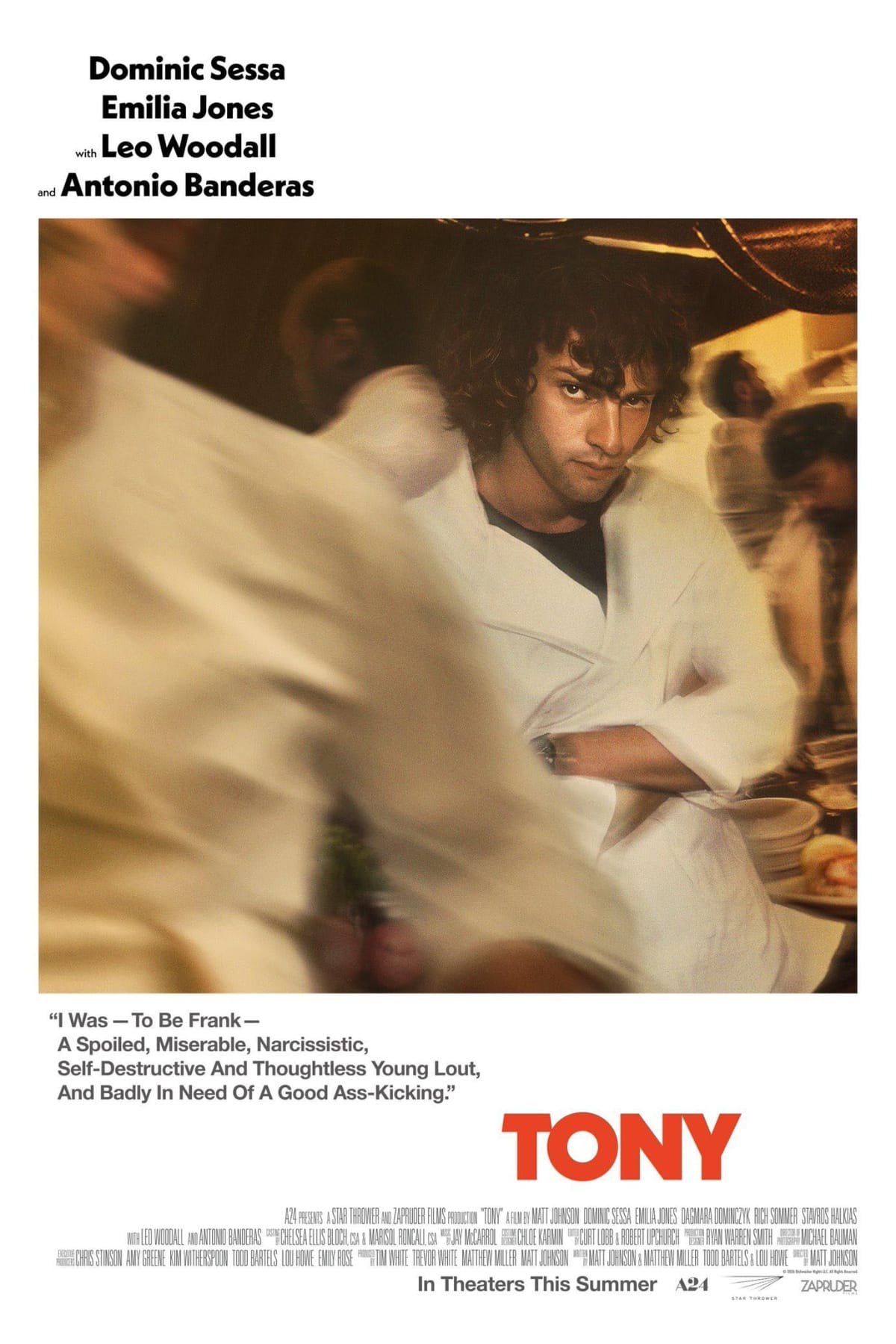
Anthony Bourdain built a career out of being somebody you wanted to listen to. The young man in Tony hasn’t quite earned that privilege yet.
He has opinions, ambitions and a fairly generous assessment of his own potential. What he doesn’t have is the writing fellowship he’s already told people he landed.
So he follows a girl to Provincetown, Massachusetts, where his plans eventually lead him to a restaurant kitchen and a job washing dishes. It’s an awkward beginning for a future culinary celebrity, which gives the movie somewhere interesting to start.
Sessa Gives You a Reason to Stick Around
Dominic Sessa plays the 19-year-old Bourdain, and the casting makes sense beyond his appearance. He’s good at playing a young man whose difficult behavior doesn’t entirely conceal how badly he wants somebody to like him.
Tony can be arrogant and insecure within the same conversation. He wants to impress people, particularly Nancy, played by Emilia Jones, but his efforts tend to create problems he then has to talk his way around.
Sessa makes that combination sympathetic without making Tony especially easy to deal with. You can understand his embarrassment and still think he’s doing an excellent job of making things worse.
Banderas Is the Best Reason to Visit
The restaurant gives the movie its strongest material, particularly once Antonio Banderas enters the picture as the chef who hires Tony.
Banderas brings authority to the role without making every interaction a demonstration of it. There’s warmth underneath the expectations, and his interest in Tony genuinely gives their relationship some weight. You understand why this young man might begin to care about earning his approval.
Leo Woodall’s Sal offers a more reckless example to follow. Between the work, the friendships and the excesses, the kitchen gives Tony several competing ideas about the person he could become.
The appeal is watching him respond to those people. Cooking gives the story a setting and a direction, but the relationships give you a reason to care.
Not (Entirely) Accurate
The romance is less engaging than the restaurant relationships. It helps get Tony to Provincetown and adds another dimension to the story, but the movie finds more interesting things for him to do once he’s there.
And this is a heavily fictionalized account of Bourdain’s early life. Treating it as a detailed explanation of the man he eventually became would be asking more of it than it delivers.
As a modest story about a difficult young man finding work and people who matter to him, though, it has plenty going for it. You won’t love it—but how many movies a year do you really love? You’ll like it, though, and you’ll be glad you saw it.
Dominic Sessa plays a young Anthony Bourdain in a familiar but engaging coming-of-age story. Antonio Banderas and the restaurant relationships make it worth renting.
Finding somebody you want to spend the rest of your life with sounds pretty good. Finding them when the rest of your life can be measured in days? That seems like a particularly cruel plot twist.
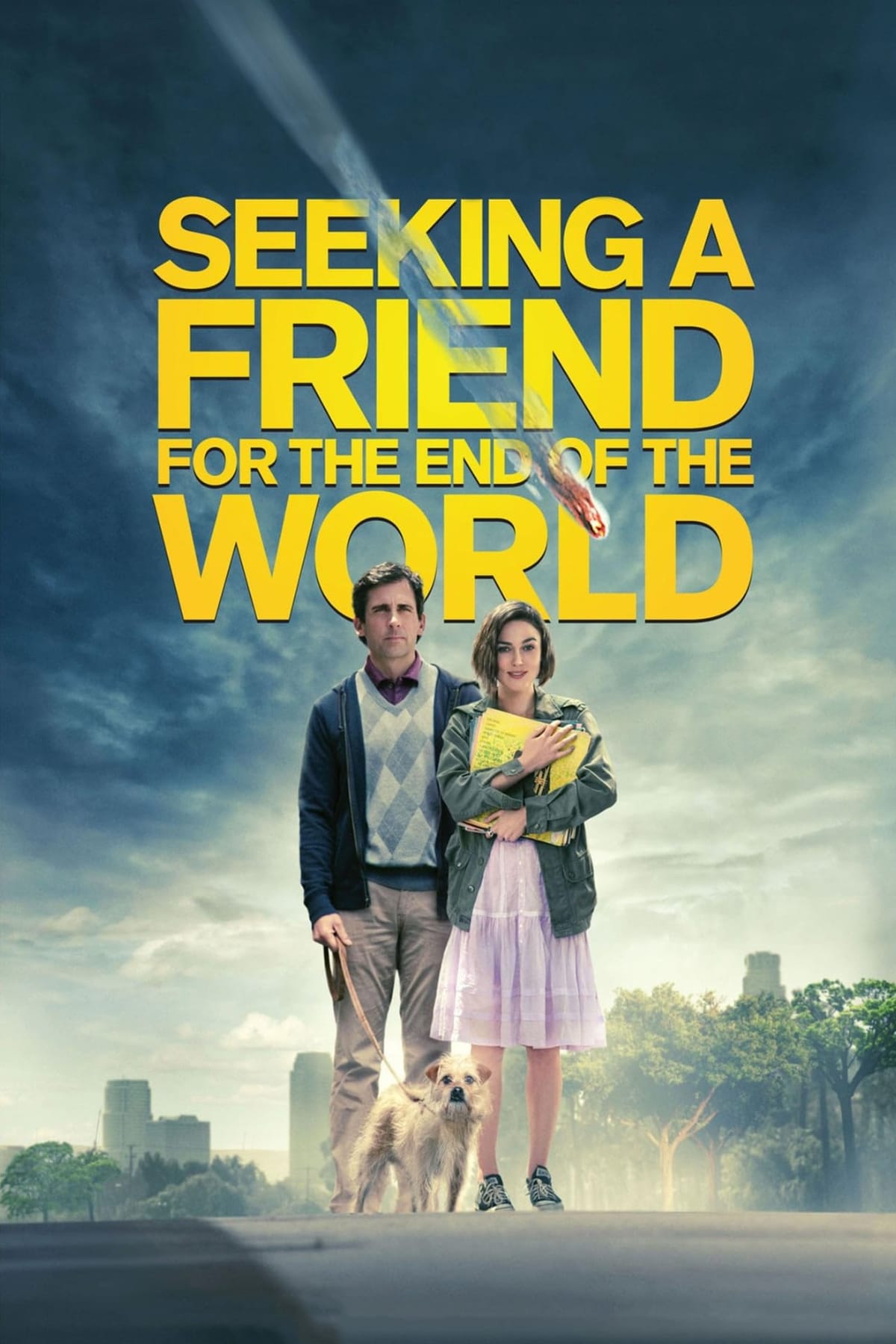
That’s what makes Seeking a Friend for the End of the World so interesting. There’s an asteroid coming, and the news isn’t encouraging. Whatever plans people had for retirement, next summer, or even next month have suddenly become irrelevant.
Steve Carell plays Dodge, a man whose wife responds to the announcement by leaving him. Apparently, if she only has a little time left, she’d prefer to spend it elsewhere.
That’s quite a performance review of your marriage.
The World Is Ending. Now What?
Most disaster movies give their characters something to do about the disaster. Find a scientist. Get to the bunker. Put Bruce Willis on a spaceship. There’s usually a plan, even if it requires several people to make speeches before anybody gets moving.
This movie is interested in the people who don’t have a plan. They’re still here, they’ve heard the news, and they have to decide what to do with themselves.
Some party. Some cling to their routines. Some behave as though consequences have been permanently discontinued. The early comedy comes from watching people respond to the same horrifying information in wildly different ways.
Dodge mostly seems lost. Carell is good at playing a man who can stand quietly in a room and somehow make you feel how uncomfortable it is to be him. Here, that discomfort comes with the realization that he may have spent his life waiting for something that never happened.
Now he’s nearly out of time to figure out what it was.
Two People With Somewhere Else to Be
Keira Knightley plays Penny, Dodge’s neighbor, who wants to get home to her family. Dodge wants to find a woman he loved years earlier. Their separate problems put them on the road together, traveling through a world that’s gradually losing interest in keeping things running.
Penny is more expressive, impulsive, and willing to throw herself into an experience. Dodge looks like he’d prefer to receive written instructions before having one.
They’re an unusual pairing, and the movie asks you to accept that these two people would find something in each other under extraordinary circumstances. For me, their quieter moments make the strongest case. Conversations, music, and time spent together start to matter more than the odd people they encounter.
Neither needs somebody to be impressive. A promising career isn’t much of a selling point anymore. They need someone they can talk to, trust, and sit beside when being alone becomes unbearable.
That gives their growing connection an urgency that a conventional romance would have to work much harder to create.
Is It Still Worth Starting?
The comedy can be broad, especially early on, and some of the roadside encounters feel like detours from the people you actually want to spend time with. If you arrive expecting a Steve Carell comedy that keeps the laughs coming, the movie’s increasingly tender direction may surprise you.
But that’s also where it becomes worth talking about.
Even knowing how little time they have, you still want them to find something together. You wouldn’t wish it away just to spare them the goodbye.
A good conversation doesn’t become worthless because it ends. Neither does the relief of being understood by somebody when you’ve spent a long time feeling otherwise.
Finding the right person this late would be lousy timing. Spending the remaining days wishing you’d met sooner would be an even worse use of it.
An asteroid is heading toward Earth, and Dodge’s wife has just left him. His unlikely connection with a neighbor gives this end-of-the-world movie something more interesting to explore than the disaster.
If you survived a train wreck that killed everybody else on board, you’d probably consider yourself lucky. So would everybody you know. You’d hug your family, answer a lot of questions, and wonder how you managed to walk away.
But without a scratch? No broken bones. No injuries at all.
At some point, “lucky” starts to seem like an inadequate explanation.
His Son Sees Somebody He Doesn’t
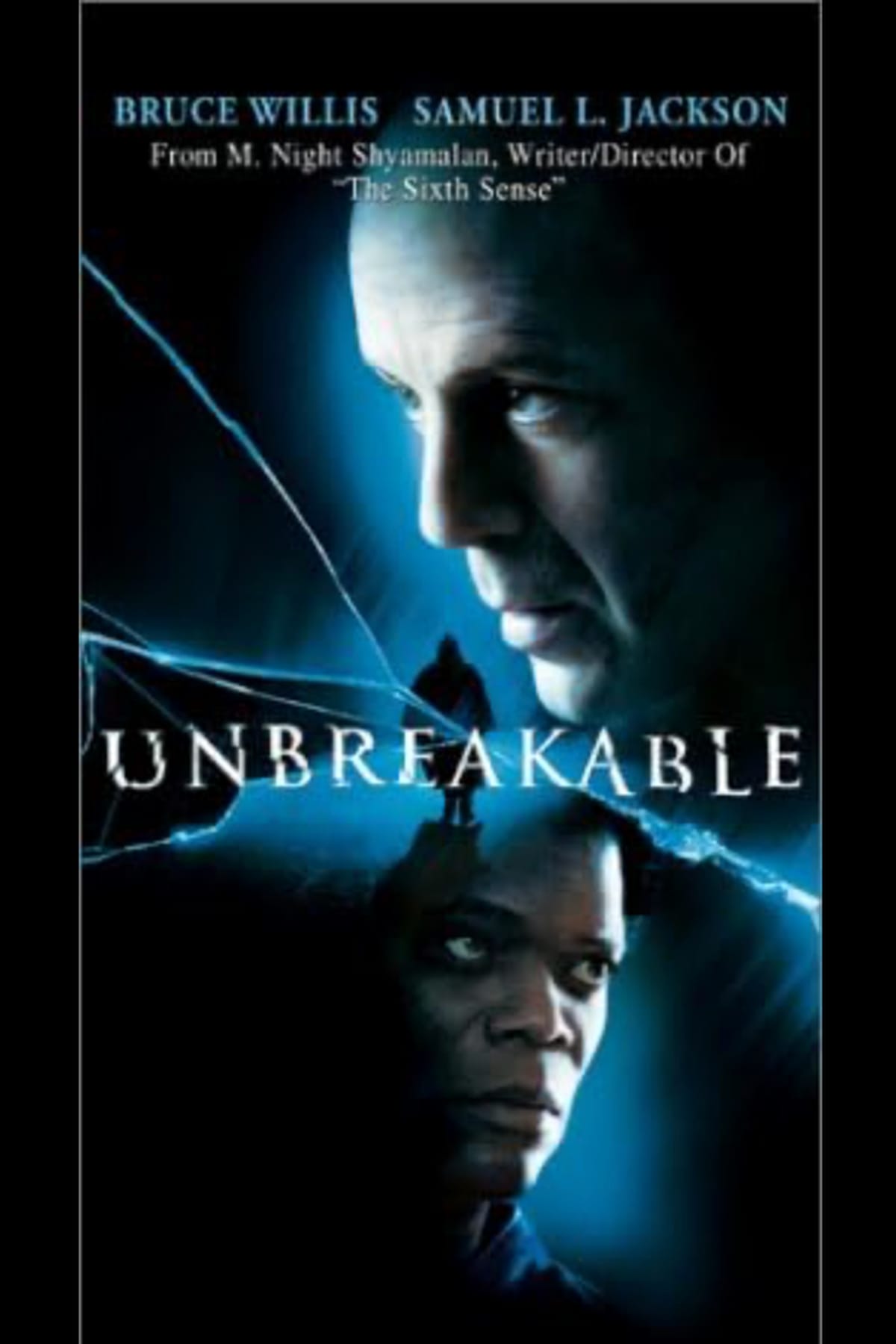
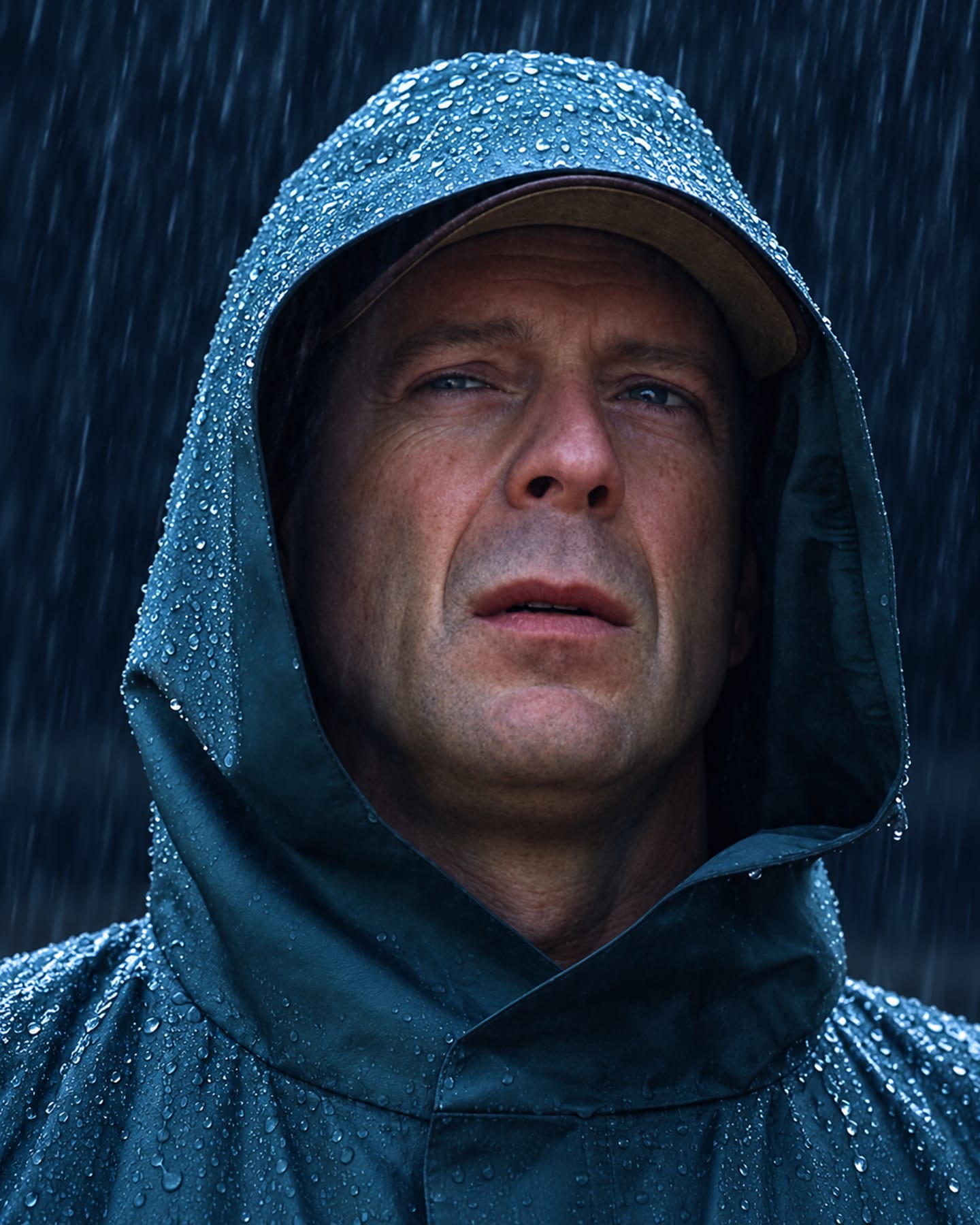
David Dunn, played by Bruce Willis, survives something he shouldn’t have survived, then meets a stranger who thinks there’s a perfectly reasonable explanation. Well, reasonable to him. Samuel L. Jackson plays Elijah Price, a man who believes comic books might have something to tell us about people like David.
David isn’t buying it. His son, on the other hand, doesn’t need much convincing.
David works as a security guard. His marriage is struggling, and he carries himself like a man who has gotten used to being disappointed with his life. Whatever he once expected things to look like, this apparently wasn’t it.
His son Joseph, played by Spencer Treat Clark, sees an entirely different person. He thinks his dad might be a superhero, and he wants David to recognize it, too.
David’s response is essentially what yours probably would be: let’s calm down.
But the questions keep getting harder to dismiss.
Elijah Has an Explanation for Everything
Jackson gives the movie a different kind of energy. Elijah is physically fragile and deeply invested in the possibility that somebody at the opposite extreme might exist. Where David hesitates, Elijah has theories. Where David sees coincidence, Elijah sees evidence.
He’s an interesting person to listen to, partly because Jackson makes him so certain of himself. You can understand why David keeps listening even when the sensible response would be to excuse himself and head home.
Writer-director M. Night Shyamalan lets these conversations do a lot of the work. Unbreakable takes its time, and that pace won’t work for everybody. If you’re expecting Bruce Willis to start throwing people through walls every ten minutes, you’ll spend a fair amount of the movie waiting.
I like that the possibility of David being extraordinary has consequences before it has much spectacle. His son’s excitement puts pressure on him. Elijah’s insistence becomes harder to ignore. Even a simple question about whether he’s ever been sick requires him to reconsider something he’s never thought much about.
He can barely make sense of the life he already has.
Now these two people expect him to believe he’s capable of something far beyond it.
David Dunn walks away from a deadly train wreck without a scratch. A stranger has an explanation, his son is ready to believe it, and David would prefer that everybody calm down.
If you were putting together a crew to rob somebody, a piano tuner probably wouldn’t be your first call. You’d want a driver, somebody who understands security systems, maybe a large individual who can discourage questions.
But a guy who can tell you what’s wrong with your Steinway? You’d probably let him finish working and show him out.
Its central character has unusually sensitive hearing, which turns out to be useful for opening things that don’t belong to him. It’s a clever connection between two occupations I’d never thought to put together, and it gives this crime story somebody interesting to build around.
Unfortunately for him, the criminals find him interesting, too.
Leo Woodall plays Niki, a young piano tuner working in New York with his mentor, Harry (Dustin Hoffman). Niki’s once-promising future as a pianist has been derailed by a sensitivity to sound that makes ordinary surroundings difficult to tolerate.
His work makes sense for him. It requires patience, concentration and an ear for tiny differences. There’s something satisfying about watching somebody do a specialized job well, even when you have no particular interest in doing it yourself. I don’t need to understand piano tuning to appreciate that this guy knows what he’s listening for.
Then somebody finds another use for that concentration.
The Wrong People Appreciate His Work
What I like about this setup is that Niki’s appeal to the criminals is very specific. They don’t need him to become intimidating or learn how to win a fistfight. They need him to listen.
That also makes his position uncomfortable. Being useful to people like this might sound preferable to being useless to them, but neither arrangement comes with much job security. Once they know what he can do, his talent stops being entirely his business.
And Tuner gives him a life outside that problem. Harry is his mentor, somebody with whom he shares a craft and a working relationship. Hoffman brings warmth to that part of the movie, giving us a reason to care about Niki’s days before the safes enter the picture.
There’s also Ruthie (Havana Rose Liu), a composition student with whom Niki begins a romance. Music gives them a connection that has nothing to do with his usefulness to criminals. The further he gets into safecracking, the more he risks bringing that trouble into something he actually wants.
Those relationships matter. Otherwise, we’re just waiting to find out whether a lock opens.
He Was Already Good at His Job
There’s an appealingly modest idea underneath all this. Niki doesn’t discover that he’s secretly capable of something. He already knows he’s good at something. The trouble begins when other people recognize how much money they might make from it.
That’s enough to give Tuner a personality of its own. The unusual occupation gets your attention, but the complications grow naturally out of the person doing it.
You want his talent to lead somewhere good. You’d just prefer that getting paid didn’t require somebody else’s safe to be empty.
A gifted piano tuner discovers that his ear for tiny details has a much riskier application. Being good at his new line of work may be the worst thing that could happen to him.
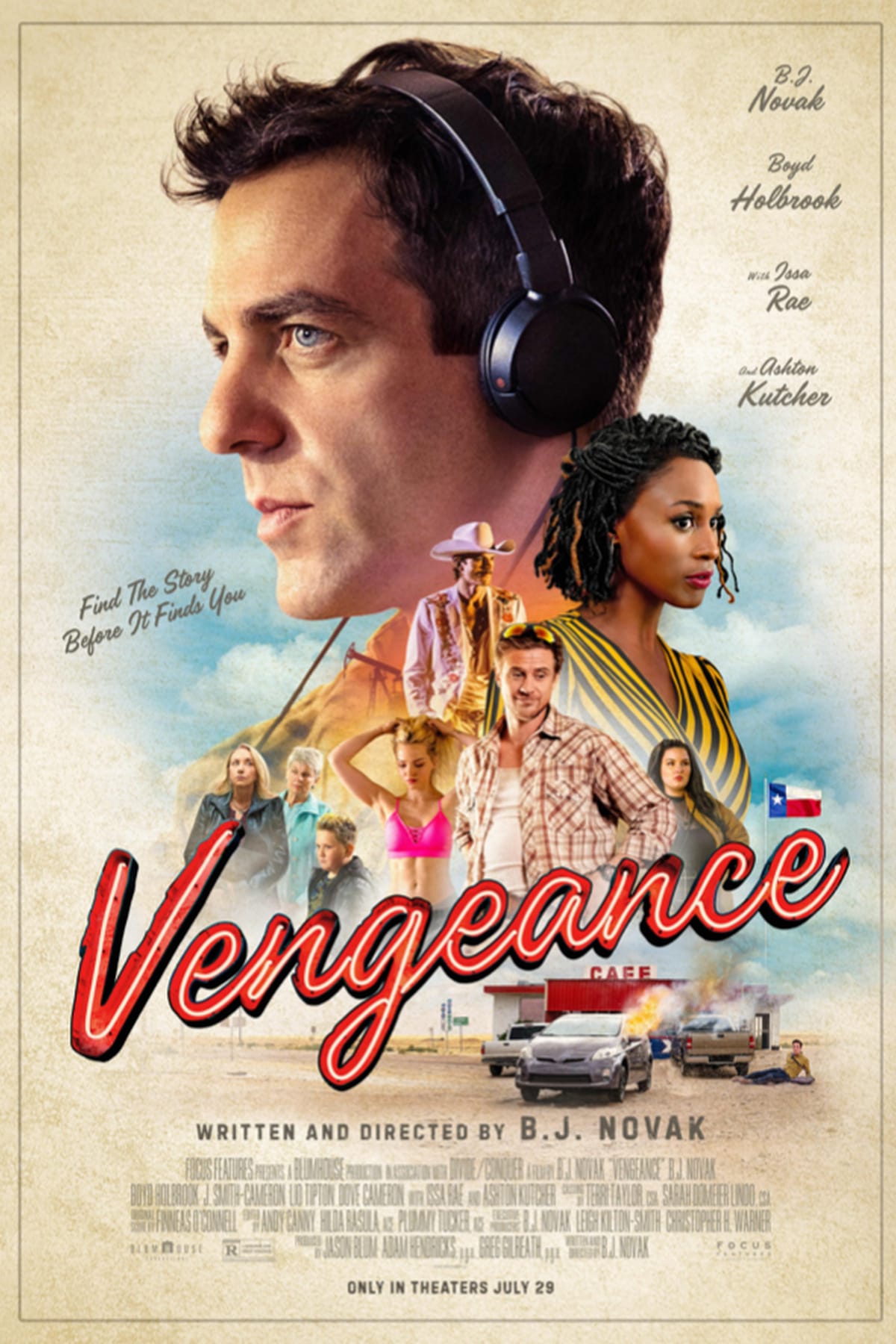
His girlfriend died. Except he didn’t have a girlfriend. At least he didn’t think so.
The truth is, he’d hooked up with her a few times. Apparently, that’s not what she told her family. Now her brother is calling, expecting him to come to Texas for the funeral.
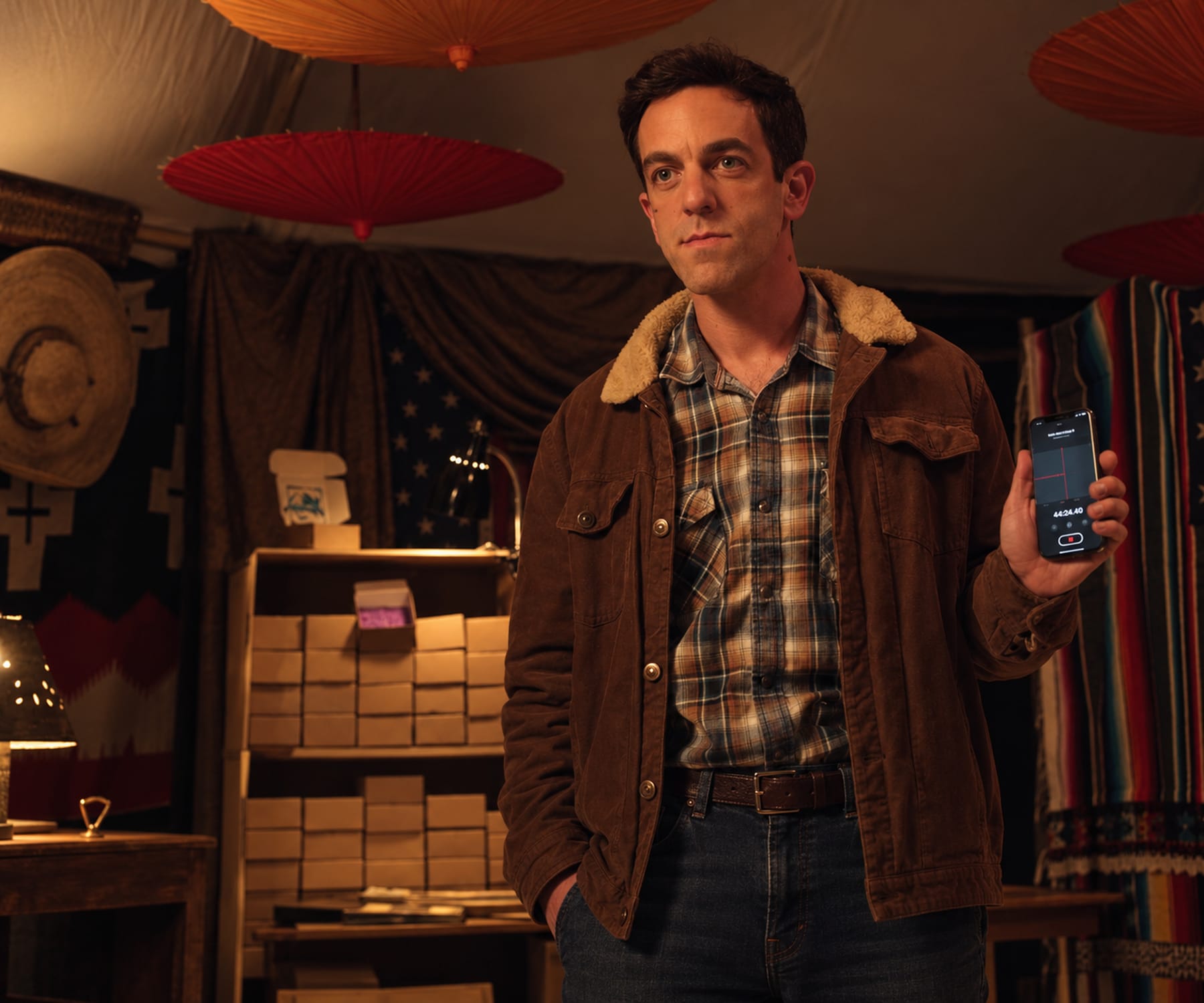
That would be awkward enough. But when Ben arrives, he discovers that her brother believes she was murdered—and wants his help finding whoever did it.
Ben isn’t convinced. But he’s a New York journalist looking for a story, and this grieving family might have just handed him one.
This Could Make a Great Podcast
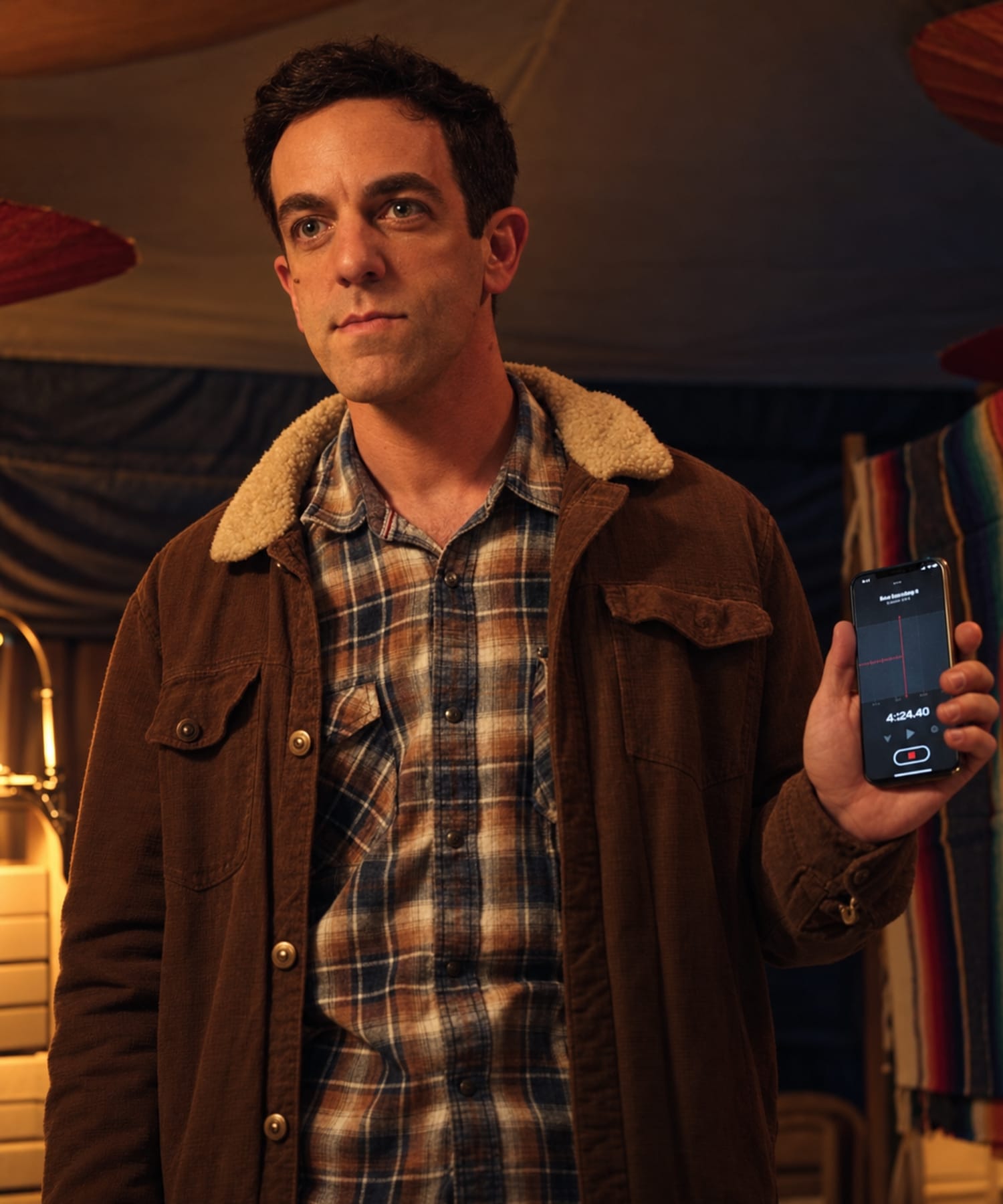
B.J. Novak (Ryan from The Office) wrote and directed Vengeance. He also plays Ben, a guy who starts seeing professional possibilities in a situation most of us would be trying to get out of.
He doesn’t necessarily need to solve a murder. A podcast about a family refusing to accept a death could be interesting, too. Either way, there’s something here he can work with.
There’s something uncomfortable about watching him mentally assemble a story while the people providing it are still grieving. He asks questions and listens, but you get the feeling he’s already deciding which parts will make good listening.
Boyd Holbrook plays Ty, the brother who wants answers. He can be stubborn, funny and completely convinced of something Ben finds difficult to believe. But Holbrook never lets you forget that this is a brother whose sister is dead. Ben can finish recording and go home. Ty still has to live with what happened.
And the family welcomes Ben. They make room for him in their lives, which makes his reasons for being there increasingly awkward.
Then Ashton Kutcher Starts Talking
Kutcher plays a local music producer, and he’s awfully good. He speaks calmly, takes his time and gives Ben something he wasn’t necessarily expecting to find: somebody who can make him stop talking and listen.
It’s the sort of performance that makes you wish he got more roles like this.
Those conversations are part of what makes Vengeance interesting. Ben arrives believing he has a pretty good understanding of these people. Spending time with them complicates the story he thought he was going to tell.
Meanwhile, there’s still a death to investigate. The mystery keeps things moving, and the humor keeps the movie from becoming one long discussion about everything wrong with America.
But the podcast gives it an uncomfortable problem that stays with you. These people are trusting Ben with their grief, their suspicions and their memories of somebody they loved.
He’s hoping to get a good story. They’re hoping they’ve found somebody who gives a damn.
They shouldn’t have to wonder whether those are the same thing.
A New York writer heads to West Texas with the makings of a podcast and a pretty good idea of who he’ll find there. Getting to know the people complicates things.
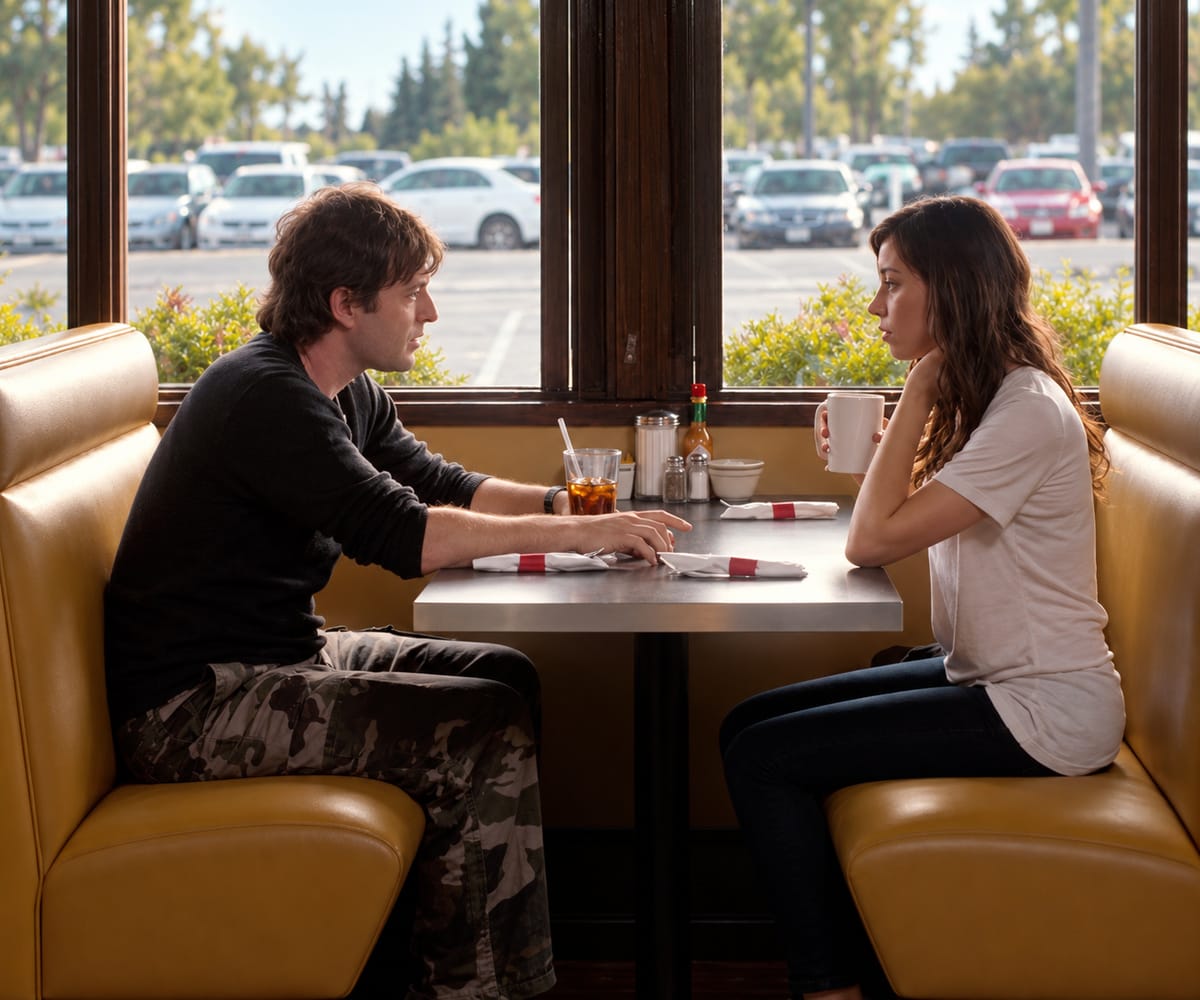
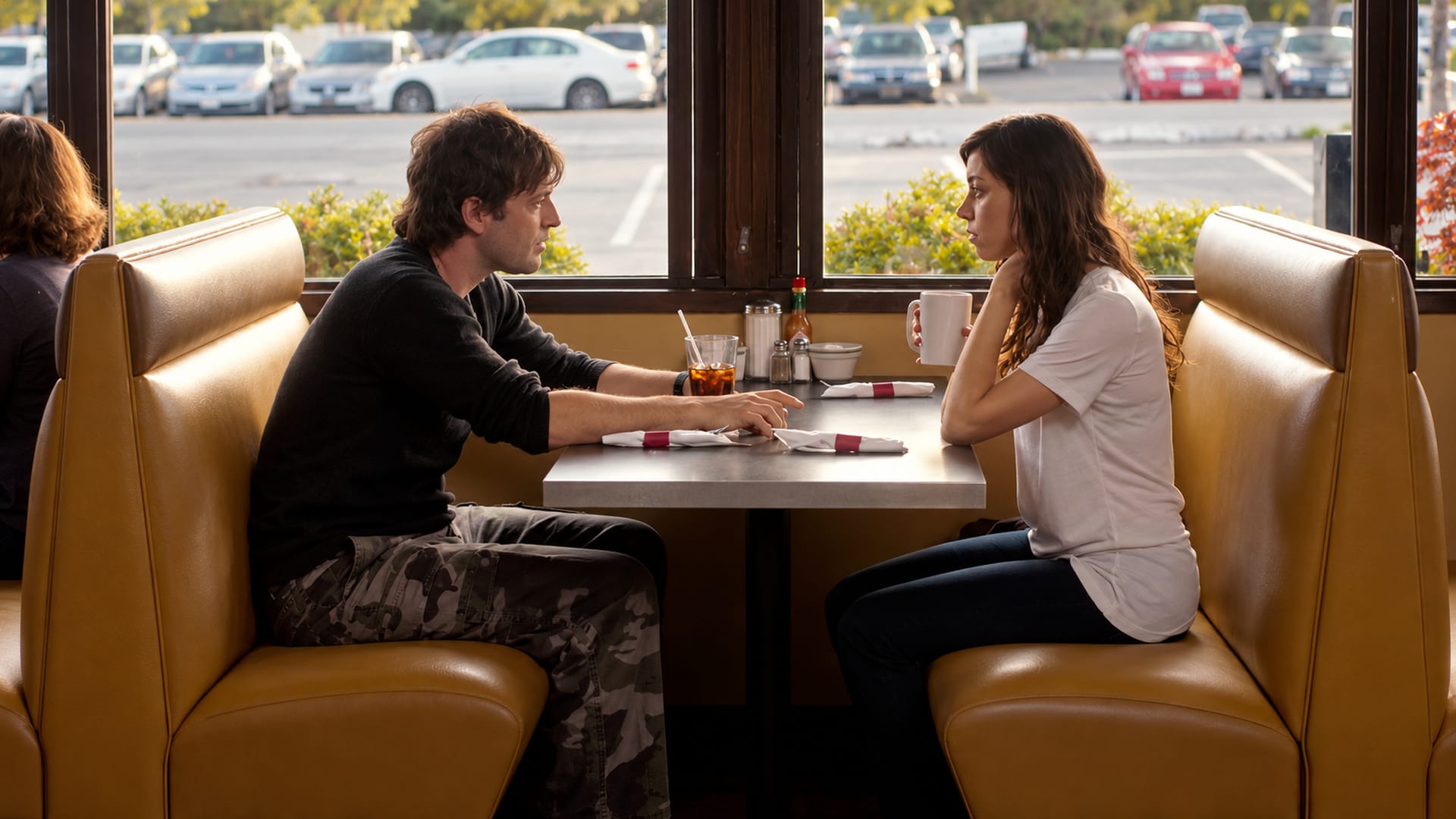
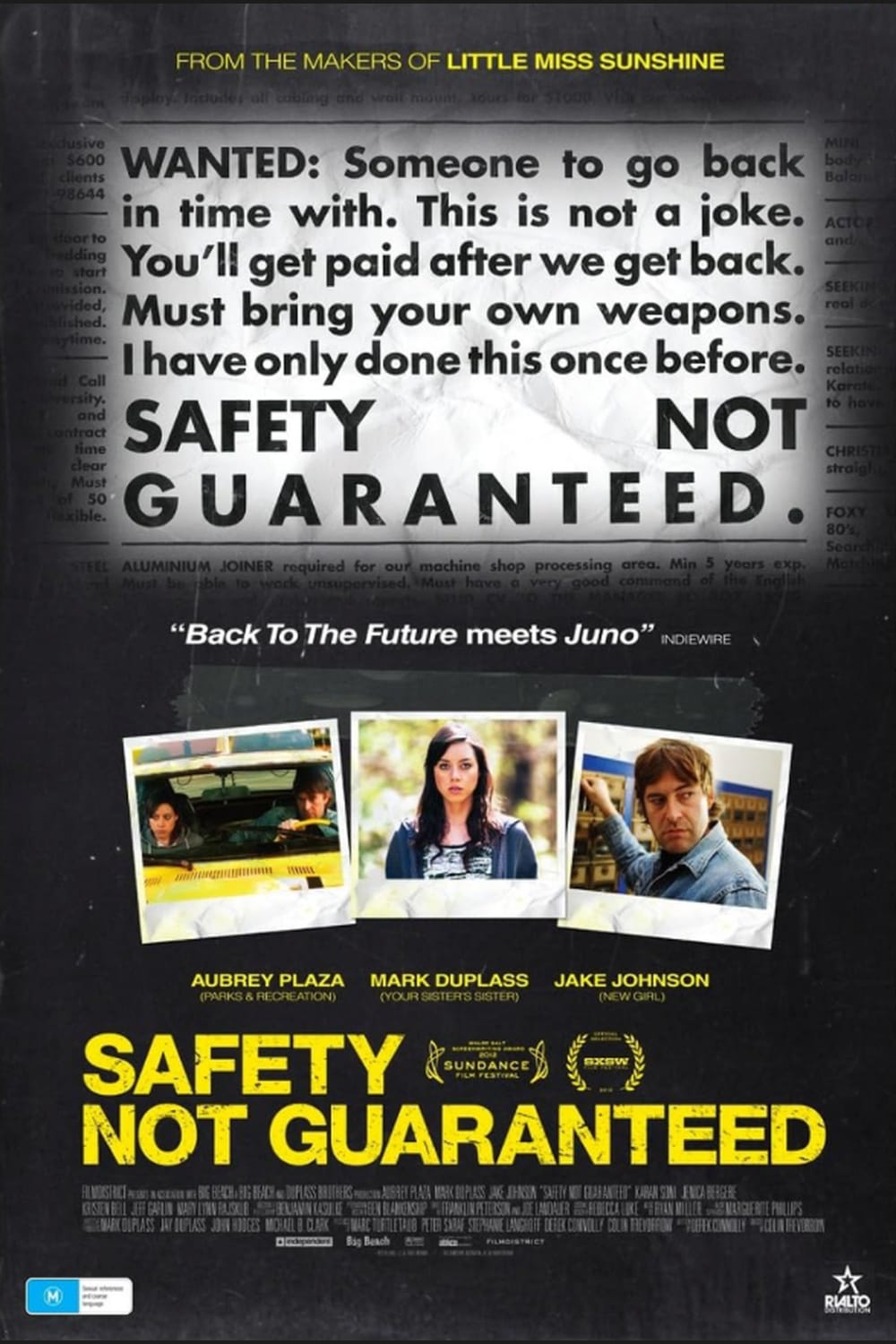
A man places a classified ad looking for somebody to travel through time with him. You probably don’t need to hear much more before reaching a conclusion.
He’s a crackpot.
Safety Not Guaranteed gives you plenty of reasons to think so. What makes it interesting is watching how your opinion changes once you spend some time with the guy. You don’t necessarily become convinced he can travel through time. But somewhere along the way, you realize you’re rooting for him.
And you’d rather not see him humiliated.
This Should Be an Easy Story The setup practically writes the magazine article for you. A man named Kenneth has placed an ad seeking somebody to accompany him on a trip through time. A Seattle magazine sends a writer and two interns to investigate. Kenneth, played by Mark Duplass, is a supermarket employee who takes his proposed expedition very seriously. Aubrey Plaza plays Darius, the intern who approaches Kenneth by pretending she wants to join him. She’s unimpressed with much of her own life, so you wouldn’t expect her to be especially receptive to whatever this stranger is selling. Kenneth doesn’t make it easy, either. He’s suspicious, demanding and concerned about preparations that seem excessive for a trip you doubt will ever happen. There’s training involved. Apparently, responding to the ad doesn’t automatically qualify you for departure. It’s funny because he’s so serious. But that seriousness also makes it increasingly difficult to dismiss him. Duplass Gives You Somebody to Care About Kenneth could have been an exhausting character. Duplass makes him much more watchable than that. Kenneth can be awkward and unreasonable, but there’s a sincerity underneath it that keeps the performance from becoming a collection of odd behaviors. He isn’t trying to entertain the people around him. He has something important to do, and he wants somebody he can trust beside him. You can laugh at the preparations while recognizing how much they mean to him. And once you recognize that, Darius’s deception starts to feel less comfortable. What initially seemed like a harmless way to get a story now involves a person who doesn’t know he’s part of the joke. Plaza handles that changing relationship well. Her dry delivery gives the early scenes their humor, but she also lets you see Darius becoming interested despite herself. Their conversations gradually feel less like an interview and more like two people finding somebody they actually want to talk to. You Still Want to Know Whether It Works Of course, the time machine matters. A movie can’t introduce that possibility and expect you to forget about it because the characters are getting along. But Safety Not Guaranteed gives you another reason to stay interested while you wait for answers. You start wondering what will happen to Kenneth if Darius lets him down, or if the expedition he’s invested so much in amounts to nothing. That’s a good position for a movie to put you in. Your curiosity gets you through the door; your concern for somebody keeps you there. Eventually, you’re hoping she doesn’t turn out to be one more person who laughs at him.
A magazine assignment sends three employees looking for a man who claims he can travel through time. Finding somebody to laugh at seems easy—until they get to know him.
You’d think the difficult part of making The Godfather would be finding somebody who could convincingly play a mob boss. Turns out, dealing with the actual mob bosses—shockingly—isn’t a walk in the park.
And when people like that object to your movie, you probably shouldn’t assume they’re going to leave a bad review and move on.
If only it were that easy.
That’s the part of The Offer that makes it such an interesting series. Making a major Hollywood movie already involves money, egos, arguments and people threatening to pull the plug. Add organized crime to the discussion, and suddenly a disagreement about casting seems like a relatively pleasant afternoon.
The 2022 limited series follows producer Albert S. Ruddy (Miles Teller) through the struggle to get The Godfathermade. It’s based on Ruddy’s experiences, with the battles inside Hollywood running alongside the trouble coming from outside it.
The Mob Would Like to Discuss Its Public Image
One of the central figures is Joe Colombo, played by Giovanni Ribisi. Colombo was a real New York crime boss whose Italian-American Civil Rights League opposed The Godfather over its portrayal of Italian Americans. The production faced threats, and Ruddy eventually negotiated with Colombo, agreeing to remove the word “Mafia” from the script.
Think about that for a minute. You’re trying to make a movie about organized crime, and organized crime has concerns about how you’re presenting organized crime.
There’s something almost funny about it. Until you remember who’s raising the concerns.
The series gets considerable mileage out of that uncomfortable combination. Colombo cares about respect, appearances and how his community is represented. He also brings a kind of power to the conversation that a producer can’t answer by pointing to his contract.
Ribisi makes that contradiction interesting to watch. His Colombo can be personable, even likable, without making you forget why Ruddy needs to choose his words carefully. Getting along with him offers possibilities. Getting on the wrong side of him offers possibilities, too (considerably less appealing ones).
Getting Him on Your Side Creates Another Problem
What makes the relationship work as a story is that Ruddy can’t simply win an argument and get back to making his movie. He has to find a way forward with somebody who has the ability to make his working life extremely difficult.
And securing Colombo’s support doesn’t neatly end the trouble. In the series, their developing relationship draws the mob further into the production, while a disastrous press conference creates another crisis for Ruddy. Getting past one obstacle leaves him standing in front of the next one.
Meanwhile, the Hollywood people still need managing. Francis Ford Coppola has a movie he wants to make. Paramount has opinions about the people he wants in it. Ruddy is caught between competing demands while trying to keep the whole thing moving.
We already know The Godfather gets made. The interest is in watching Ruddy try to reach that outcome while keeping the studio, the filmmakers and the men outside the studio sufficiently satisfied.
Most producers have to worry about whether people will show up to see their movie.
Ruddy also had to worry about who might show up if they do.
Note: You can watch The Offer on Paramount+, available directly through its own app and website or as a separate paid subscription within major platforms such as Prime Video and the Apple TV app.
Making The Godfather meant dealing with studio executives, casting battles and actual mobsters who wanted the production stopped. The Offer follows the man trying to keep all three from sinking his movie.
There’s something appealing about a Western that doesn’t feel obligated to reinvent the Western. Give me a gunslinger with a questionable past, a few dangerous men looking for trouble, and somebody worth changing for.
You’ve already got the makings of a decent movie.
Knowing the Setup Isn’t the Same as Watching the Movie
In Angel and the Badman, Zachary Levi plays Quirt Evans, a wounded outlaw who finds unexpected kindness when a rancher’s daughter, Penny (Meg Fraser), takes him into her care. Her family’s beliefs put him in unfamiliar territory: among people whose response to trouble is very different from his own.
Now, when an outlaw meets a kindhearted woman who sees something good in him, nobody needs to draw us a diagram. We understand the possibilities. There might be some romance. He might begin reconsidering a few things. And those dangerous men probably aren’t going to disappear just because he’s developed an interest in settling down.
But knowing the setup doesn’t tell you whether you’ll enjoy spending time with these people. That’s what the movie still has to earn.
A Good Woman Can Only Do So Much
What interests me about the romance is that Penny represents a life Quirt hasn’t been living. She offers kindness without requiring him to earn it first. For a man accustomed to dealing with threats, that creates a different sort of challenge.
What do you do with people who expect something better from you?
You can dismiss them as naive. You can decide their way of living would never work in your world. Or you can start wondering whether your world is the problem.
That gives the familiar romance something worth following. Being attracted to Penny is one thing. Accepting what a life with her would require is considerably more complicated. He can’t simply announce that he’s a changed man and expect everyone else to cooperate.
His past has people in it.
And people tend to be less accommodating than a fresh start requires.
I’m Fine With Familiar
I don’t need every movie to leave me stunned by its originality. Sometimes I want the pleasure of watching a story take shape, getting invested in the people, and hoping things work out even when the odds suggest they won’t.
That doesn’t mean familiar stories get a free pass. You still need a reason to care. A romance doesn’t work just because two attractive people occupy the same frame, and putting a hat on an actor doesn’t automatically make him an interesting cowboy.
But familiarity itself has never been the problem for me. I’ve watched enough movies to recognize a setup. I’d rather enjoy where a story is taking me than spend two hours waiting for a surprise that turns out to be the only thing it had going for it.
Angel and the Badman gives me a wounded outlaw, a woman who sees a possibility he hasn’t quite seen himself, and a reason to hope he figures it out before his old life catches up with him.
I could see where it was going. I still wanted him to get there.
A wounded outlaw gets a chance at a different life, provided his old one will leave him alone. Angel and the Badman makes a familiar Western setup easy to settle into.
When somebody tells you they've made a movie about two middle-aged people performing Neil Diamond songs in Wisconsin, your first reaction probably isn't, "I've got to see that!"
Think about it. How many movies have we seen about Elvis Presley, Johnny Cash, Elton John, Freddie Mercury, or some other musical legend? Hollywood loves telling us how famous people became famous. And we love watching those stories.
But what about the millions of people who spend their lives chasing a dream that never quite turns out the way they imagined?
That's why Song Sung Blue is so refreshing. It's a movie that tells the story of two musicians who never really became famous.
Not Exactly the Road to Stardom
Hugh Jackman plays Mike Sardina, a struggling musician who performs under the name Lightning. Kate Hudson plays Claire, another musician trying to make a living doing something she loves.
Neither is particularly successful. They're not young performers on the verge of being discovered, and nobody is knocking down their doors with recording contracts. They're ordinary people dealing with ordinary problems.
But they share something important.
They both love performing, and neither is quite ready to give up on the possibility that music might still have something to offer them. Eventually, they become a couple and form a Neil Diamond tribute act called Lightning and Thunder.
Yes, Lightning and Thunder.
It's a name that sounds like it belongs on the side of a van parked behind a bowling alley somewhere. But that's part of what makes the story interesting. These are people who aren't especially concerned with whether the rest of the world thinks their dream is impressive.
They just want to perform. And there's something appealing about that.
Hugh Jackman and Kate Hudson Make It Work
Of course, casting two major Hollywood stars as struggling musicians presents an interesting problem. You're asking us to believe that Hugh Jackman and Kate Hudson are ordinary people scraping together a living in the Midwest.
That's a fairly substantial leap.
But both actors are comfortable with musical performances, and the movie gives them an opportunity to do something besides stand around looking attractive and delivering dialogue.
Jackman brings plenty of enthusiasm to Mike, a man who might not have the career he wanted but certainly hasn't lost his appetite for performing.
Hudson is particularly important because Claire needs to be somebody we care about beyond her relationship with Mike. She's got her own ambitions, her own problems, and her own reasons for wanting something better.
Their relationship becomes the movie's real attraction. The music is entertaining, particularly if you like Neil Diamond, but it's the relationship between these two people that gives the story somewhere to go.
And it doesn't always go where you might expect.
I'm not going to get into the specifics because I think it's better to discover those developments while watching the movie. Just don't go into this expecting two hours of people singing "Sweet Caroline" and living happily ever after.
Success Doesn't Always Mean Stardom
One of the more interesting things about Song Sung Blue is how differently it treats success compared with the typical musical biography.
There's no shortage of movies about enormously talented people who become enormously successful. We know how those stories generally go, even when there are a few tragedies along the way.
Song Sung Blue is interested in something smaller and, in some ways, easier to relate to.
Most of us aren't going to become famous. Most of us aren't going to have our names on a theater marquee or thousands of people waiting to hear us sing. But that doesn't mean we stop wanting something out of life.
And maybe the best part of Mike and Claire's story is that they don't seem to need the entire world to appreciate what they're doing.
Sometimes a room full of people singing along is enough.
Hugh Jackman and Kate Hudson play a married couple chasing an unlikely second act as a Neil Diamond tribute band. *Song Sung Blue* sounds like a small story, but it has considerably more going on than the premise suggests.
You know those movies where you can pretty much figure out what's going to happen about halfway through? Maliceisn't one of them. In fact, the more confident you become that you've figured things out, the more likely you are to find yourself arguing with your television...or throwing your remote.
Malice is a 1993 thriller starring Alec Baldwin, Nicole Kidman, and Bill Pullman. It's one of those movies that's difficult to talk about because almost anything I tell you beyond the basic premise risks ruining something.
But I’ll do my best.
Everybody Seems to Have Something Going On
Bill Pullman plays Andy, a college administrator married to Tracy (Nicole Kidman). They're living in an old house that needs work, trying to build a life together, and dealing with the usual problems that come with marriage.
Then there's Dr. Jed Hill, played by Alec Baldwin.
Jed is a brilliant surgeon who also happens to be an arrogant SOB. He's the kind of guy who walks into a room and immediately lets everyone know he's the smartest person in it. Unfortunately, he might actually be.
Andy and Jed knew each other in high school, and when they reconnect, Andy eventually invites him to rent part of his house. Tracy isn't particularly thrilled about the arrangement.
Meanwhile, there's a series of violent attacks involving women at the college where Andy works. The police are investigating, and Andy finds himself drawn into that situation as well. So now you've got a marriage, an obnoxious surgeon living upstairs, a criminal investigation, and several people whose behavior might make you suspicious.
And we're just getting started.
Just When You Think You Know
Here's what works about Malice. Most thrillers give you a mystery and spend the rest of the movie letting you work toward the answer. Maybe there's a twist near the end, but you generally understand what kind of story you're watching. Malice doesn't follow that arrangement.
It gives you information, lets you draw some conclusions, and then introduces something that makes you reconsider those conclusions. Sometimes you realize you were looking at something the wrong way. Other times, you realize you weren't even asking the right questions.
That's when you start talking “with” your television. "Why would you do that?" "Are you kidding me?" "Oh, come on!"
And my personal favorite? "Wait…WHAT?" Get used to saying that one. A lot.
The cast deserves a lot of credit for making this work. Alec Baldwin is particularly good as Jed. I suspect he's especially good in this role because I'm not entirely convinced he's acting. He might just be playing himself.
Nicole Kidman has a role that requires more than you might initially expect, and Bill Pullman is a good choice for Andy. He comes across as a fairly ordinary guy surrounded by people and circumstances that are anything but ordinary. There's also an impressive supporting cast, including Anne Bancroft, George C. Scott, and Bebe Neuwirth.
Just Enjoy the Ride
I don't think Malice is a perfectly constructed thriller. I'm not even sure it would survive a particularly aggressive examination of every plot detail. But I also don't think that's the point of watching it.
Some movies are enjoyable because everything makes perfect sense. Others are enjoyable because you're never entirely sure what the hell is going on, and you can't wait to find out. Malice belongs firmly in that second category.
My advice? Don't read detailed plot descriptions. Don't go looking for explanations or spoilers. Just put the movie on and see how well you do at figuring things out.
And maybe put the remote somewhere safe.
Your television didn't do anything to deserve what's coming.
Alec Baldwin, Nicole Kidman, and Bill Pullman star in a thriller that keeps changing direction just when you think you've figured it out. Good luck keeping your opinions to yourself.
💡
Somehow, it’s both a great movie and hard to watch.
Leaving Las Vegas is not the kind of movie you throw on because you want to relax.
It is bleak, uncomfortable, emotionally exhausting, and populated by two people whose lives are already badly damaged when they find each other.
And somehow, it is also tender.
Nicolas Cage plays Ben Sanderson, a screenwriter who has come to Las Vegas to drink himself to death (literally). There he meets Sera, played by Elisabeth Shue. Her life is a mess too, though in a different way, and the two of them form a connection that neither seems to expect.
That sounds like a rough two hours. It is.
Why it works
The movie never pretends that Ben and Sera can fix each other. Ben isn’t suddenly going to stop drinking because he met the right person, and Sera has problems that a new relationship won’t solve either.
What they can do is give each other a little comfort. That may not sound like much, but it’s what makes the movie work.
Cage won the Academy Award for this role, and absolutely deserved it. Most actors are terrible at playing drunk. Cage is brilliant at it. He can be funny and charming one moment, then make you remember exactly where Ben is headed the next.
Shue is just as good. I’m a big fan of Elisabeth Shue and, without her, this could have become two hours of watching Nicolas Cage fall apart.
Should you watch it?
Yes, if you’re up for something heavy. I wouldn’t recommend putting it on after a long day when all you want is to unwind. It’s painful to watch, and it doesn’t let you off easy.
A devastating, unforgettable drama anchored by one of Nicolas Cage’s best performances — and the kind of great movie you may only want to watch once.
The Last Kingdom Is the Kind of Show That Steals a Week From You
Some shows are easy to watch.
The Last Kingdom is dangerous.
You start with one episode because you’ve heard it’s good. Then somebody betrays somebody, Uhtred makes a reckless decision, Alfred gives him another impossible job, and suddenly it’s midnight and Netflix is asking if you’re still watching.
Yes.
The Last Kingdom originally ran from 2015 to 2022, so this isn’t remotely a new series. But it still feels surprisingly current because it has something a lot of sprawling historical dramas struggle to maintain: momentum.
The setup is simple enough. Uhtred is born a Saxon nobleman, captured as a child and raised by Danes. By adulthood, he belongs completely to neither side. He’s Saxon by blood, Danish by upbringing and generally convinced that whatever Uhtred wants should probably take priority over everything else.
This creates problems. Lots of them.
Alexander Dreymon plays him as arrogant, funny, impulsive, loyal and periodically impossible to defend. Uhtred will spend three episodes earning your respect and then make one decision so obviously stupid that you want to reach through the screen and explain the situation to him.
It doesn’t matter.
That’s the trick. He isn’t interesting because he’s always right. He’s interesting because you never quite know what he’s going to do next, and even when you can see disaster coming, you still want to see how he gets himself out of it.
For all the battles, Viking raids and sword fights, the relationship that really makes The Last Kingdom work is between Uhtred and King Alfred. They are almost perfectly designed to irritate each other.
Alfred is disciplined, religious and obsessed with creating a unified England. Uhtred is impulsive, skeptical of authority and mostly obsessed with getting his ancestral home back.
Yet they repeatedly need each other.
Alfred understands Uhtred’s value better than he likes to admit. Uhtred understands Alfred’s importance better than he likes to admit. So they spend years arguing, negotiating, threatening each other and occasionally saving each other.
Every time the two of them end up in the same room, the show gets better.
Historical dramas can sometimes feel like they expect you to arrive prepared. The Last Kingdom doesn’t. You don’t need to know anything about ninth-century England, the Saxon kingdoms or the Danish invasions before starting.
The history gives the story scale.
There are shifting alliances, political marriages, battles, betrayals, revenge, succession fights and enough people switching sides that you occasionally have to remind yourself who hates whom this week. But the show rarely gets bogged down in the machinery of history.
More importantly, it rarely forgets that it’s supposed to be entertaining.
Once the show has you, those seasons disappear remarkably quickly because nearly every episode pushes directly into the next one. There’s always another battle coming, another betrayal, another political problem, another person Uhtred probably shouldn’t trust.
If you missed The Last Kingdom when it was current, that may actually be the best way to watch it now. No waiting between seasons. No wondering when the story will continue.
It’s all sitting there.
You just need to make the mistake of pressing play.
But there's a lot more meat on this bone than just laughs.
It's a coming-of-age story set during basic training in Mississippi in 1945, near the end of World War II, and loosely drawn from Neil Simon's own experience in the Army. A group of young men show up thinking they're there to learn how to become soldiers. What they really get is a fairly abrupt introduction to adulthood.
And if there's ever been someone perfectly cast for this kind of role, it's Matthew Broderick.
Which, somehow, can be said about a surprising number of roles Matthew Broderick has played. Ferris Bueller's Day Off immediately comes to mind. It's difficult to imagine anyone else as Ferris Bueller.
The same thing happens here.
Broderick plays Eugene Morris Jerome, an aspiring writer from Brooklyn who has been drafted into the Army.
Eugene isn't the toughest guy in the barracks — not even close (it's Matthew Broderick, after all). He's relatively soft-spoken, not particularly enthusiastic about Army life, and mostly interested in observing what's going on around him.
What he is, mostly, is watching.
He's watching the other guys. He's watching Sgt. Toomey (Christopher Walken, who's fantastic). He's watching this strange new world he's been dropped into and trying to make sense of it.
And that's really where Biloxi Blues starts becoming something other than the basic-training comedy you thought you were watching.
Basic Training Gets Complicated
The guys in Eugene's platoon initially look like the assortment of characters you'd expect in a military comedy. They're tired, hungry, uncomfortable, obsessed with women and doing everything they can to avoid attracting the attention of Toomey.
Then there's Arnold Epstein, played by Michael Dolan, who seems almost determined to make basic training harder on himself. And he succeeds.
He questions orders, argues with authority and refuses to accept that putting on a uniform means shutting off his brain.
Naturally, that puts him directly in Toomey's path.
Walken doesn't play Toomey as the standard screaming drill sergeant we've seen a hundred times. He's quieter, stranger and much harder to read. Sometimes he's funny. Sometimes he's genuinely unsettling.
The relationship between Epstein and Toomey is where the movie starts gaining some real weight. What begins as the usual recruit-versus-drill-sergeant conflict turns into something more interesting about authority, dignity and how much of yourself you're supposed to surrender simply because someone outranks you.
Eugene Is Growing Up Too
Eugene has his own concerns. He wants to become a writer, he wants to fall in love, and he would very much like to stop being a virgin.
Neil Simon gets plenty of comedy out of that, but Eugene is also discovering that adulthood is a lot messier than the checklist he has in his head.
He's exposed to prejudice, sex, friendship, humiliation and parts of other people's lives that he doesn't completely understand. Even his writing becomes part of that. Eugene is constantly watching people and writing things down, but he eventually learns that there's a difference between observing somebody and turning their life into material.
That's what Biloxi Blues does so well.
It never stops being a comedy in order to become something deeper. The comedy and the heavier stuff simply exist together.
Calling it a basic-training comedy is technically accurate. Calling it a coming-of-age story is accurate too.
But Biloxi Blues works because it's both at the same time...done brilliantly.
*Biloxi Blues* is legitimately funny. But beneath the basic-training comedy is a coming-of-age story with considerably more on its mind than just getting laughs.
Most thrillers need a bad guy. Someone has to be chasing you, hunting you, sabotaging the mission or generally making an already bad situation worse.
Last Breath doesn’t bother with any of that.
There’s no villain here. There doesn’t need to be. Put a man hundreds of feet below the surface of the North Sea, disconnect him from the equipment keeping him alive and suddenly Mother Nature has provided all the conflict you could possibly want.
And the fact that this is based on a true story makes it considerably more unsettling. Last Breath follows saturation divers Chris Lemons, Dave Yuasa and Duncan Allcock, played by Finn Cole, Simu Liu and Woody Harrelson. When something goes catastrophically wrong during a dive, Lemons ends up stranded on the ocean floor while the people above him desperately try to figure out how to get him back.
That’s the movie.
A lot of modern thrillers don’t trust the situation. There has to be another twist, another betrayal, another character with some secret agenda. Eventually you’re watching people fight each other instead of dealing with the thing that made the movie interesting in the first place.
Last Breath understands that being trapped at the bottom of the North Sea is enough.
What makes it even better is that these aren’t ordinary people who wandered into danger and have no idea what they’re doing. These are professionals. Saturation diving is an incredibly specialized job involving equipment and procedures most of us probably didn’t even know existed before watching the movie. The divers live under pressure for extended periods, descend to extraordinary depths and rely on an entire system above them to keep them alive.
So when that system starts failing, the movie doesn’t suddenly turn everyone into an idiot just to create suspense.
They work the problem.
That may not sound as exciting as a car chase, but there’s something very satisfying about watching competent people deal with a situation where the margin for error is essentially nonexistent. It’s one of the reasons movies like Apollo 13work so well. The suspense comes from watching people who know exactly what they’re doing slowly run out of options.
Woody Harrelson is particularly well suited to that kind of movie. He has enough presence that you immediately buy him as somebody who has been doing this for a long time, but Last Breath doesn’t turn him into some larger-than-life action hero. Simu Liu gets to be similarly restrained. These are guys doing an extremely dangerous job who suddenly find themselves dealing with something none of their training can easily fix.
Meanwhile, Finn Cole spends much of the movie in the worst possible place: alone.
The underwater scenes are what really separate Last Breath from a lot of other survival movies. There’s something uniquely unnerving about deep water because almost everything we normally associate with safety disappears. You can’t simply walk away. You can’t breathe. You can barely see. Even when somebody knows exactly where you are, reaching you can still be extraordinarily difficult.
The ocean doesn’t have to chase you. It can just wait.
If you like survival movies, rescue movies or stories about people trying to solve seemingly impossible problems, Last Breath is exactly the kind of thriller I’m always looking for. It doesn’t need a mastermind, a monster or somebody holding a gun.
A man stranded at the bottom of the North Sea is all the conflict Last Breath needs. No villain, no conspiracy—just one terrifying problem and very little time to solve it.
A man types a message. An operator reads it over the phone. The person on the other end answers, and the operator types the response back.
That doesn’t sound like much of a movie.
But Relay takes that exchange and makes it surprisingly tense. You start paying attention to the wording. The pauses. Who knows what, and whether someone has just said more than they should.
Suddenly, you’re leaning forward watching people communicate through a third party.
It works.
Riz Ahmed plays a fixer who arranges deals between corporations with secrets and people holding information that could hurt them. His job is to negotiate a way out—money changes hands, documents come back, and ideally everyone lives long enough to move on.
His own survival depends on keeping his identity hidden. One of his tools is a telephone relay service, designed to let people with hearing or speech disabilities communicate by phone. He uses it to keep his voice out of the conversation.
Then a woman played by Lily James needs his help, and an already delicate operation becomes considerably more dangerous.
That’s enough plot. The pleasure is watching him work.
There’s something satisfying about a movie that lets you follow a capable person through a complicated process. He has rules. He has precautions. He’s thought about things you haven’t thought about yet. You’re trying to understand the plan while wondering whether the people pursuing his client are catching on.
And Ahmed makes you believe he can do this.
He isn’t the prototypical Hollywood thriller lead—the imposing guy who enters a room and immediately looks like he can handle everyone in it. His character is watchful, reserved and someone you could plausibly pass on a crowded sidewalk without noticing.
For this particular movie, that’s a considerable advantage.
He needs to disappear into the city. You need to believe he survives by noticing trouble early and thinking his way around it. Ahmed gives him that credibility without having to announce how clever he is.
He pulls it off.
The relay service adds to the tension because nobody can rush it. Even an urgent message has to be typed, read aloud and answered. When someone’s safety depends on the next exchange, that wait starts to feel awfully long.
Apparently, I’m not alone in enjoying this one. Relay has 82% from critics and 89% from verified audiences on Rotten Tomatoes, along with a solid 7.0 out of 10 on IMDb.
If you’re in the mood for a clever thriller with a lead who keeps you interested without saying much, put Relay on your list.
You might be surprised how invested you get in the next phone call.
A thriller built around typed messages and telephone operators? Relay makes it work, with Riz Ahmed proving you don’t need to dominate a room to hold the screen.
Cancer is a dangerous subject for a movie. Push too hard and it becomes manipulative. Make it too light and it can feel completely wrong.
Joseph Gordon-Levitt plays Adam, a 27-year-old whose relatively normal life changes instantly when he learns that he has cancer. The movie doesn’t spend much time building toward the diagnosis. It happens, and from that point forward the story is less about the disease itself than about how Adam—and everyone around him—tries to deal with it.
That’s where the movie feels particularly believable.
Adam doesn’t suddenly become inspirational. He doesn’t know what to say, what to feel or how frightened he’s supposed to be. Joseph Gordon-Levitt plays all of that extremely well. There’s a restraint to the performance that keeps Adam from ever feeling like a character designed simply to make us cry.
He feels like a guy who has been handed something he has no idea how to carry.
That makes the moments when his fear and anger finally begin to come out much more effective. Gordon-Levitt never oversells it. The movie earns the emotional moments instead of forcing them.
Seth Rogen is, in many ways, still Seth Rogen here.
That works.
He plays Adam’s best friend Kyle, and a lot of his usual personality is intact—the crude humor, the inappropriate comments, the constant joking. But there’s more underneath it this time. Kyle jokes because that’s how he deals with something he doesn’t know how to fix, and he keeps trying to make sure Adam’s entire identity doesn’t suddenly become “the guy with cancer.”
Sometimes he goes too far. Sometimes he says exactly the wrong thing. But he’s there when Adam needs him, and as the movie goes along, that becomes increasingly important.
Rogen adds significantly more to 50/50 than comic relief. The humor gives the movie room to breathe. Instead of spending two hours trying to make you miserable, it allows these characters to act like actual people who still joke, laugh, get uncomfortable and say stupid things even when something very serious is happening.
Anna Kendrick may be my favorite part of the movie.
She plays Katherine, Adam’s young therapist, who is still learning how to do the job herself. Kendrick is fantastic because she never turns Katherine into the overly wise movie therapist who always knows exactly what to say. She’s awkward, sincere, funny and occasionally unsure of herself.
In some ways, she’s figuring this out right alongside Adam.
Their scenes together give the movie a warmth that it needs, and Kendrick manages to be funny without ever making the character feel unserious. She brings a lot to the movie without pushing herself to the center of it.
And that balance really describes 50/50 as a whole.
This is a drama first. Cancer is never treated casually, and the movie doesn’t pretend that everything becomes okay because somebody makes a joke. But it also understands that people don’t stop being people when something terrible happens.
They laugh. They get angry. They avoid uncomfortable conversations. They say the wrong thing. And sometimes the person who seems least equipped to help turns out to be the one who actually shows up.
A young man’s cancer diagnosis turns his life upside down, but what follows is a surprisingly human mix of fear, anger, friendship and humor that never gets in the way of the drama.
Moneyball came out in 2011 and made baseball analytics look like the future. One year later, Clint Eastwood showed up in Trouble With the Curve and basically said:
Not so fast.
The two movies were never really opposites in any official sense, but they might as well have been. Moneyball is built around the idea that baseball had spent decades trusting the wrong things. Scouts watched players, formed opinions, repeated conventional wisdom and missed value that was sitting right there in the numbers.
Trouble With the Curve comes at baseball from almost the exact opposite direction. Eastwood plays Gus Lobel, an aging Atlanta Braves scout who has spent his life watching players, listening to the sound of the bat and trusting instincts built over decades.
The front office has computers.
Gus has a folding chair.
You can probably guess which side the movie takes.
The prospect everyone wants looks terrific on paper. The statistics are there. The organization is convinced. Gus watches him and sees something else.
Actually, he hears it.
There’s something wrong with the sound of the bat, and eventually Gus realizes the kid has trouble with a breaking ball. That’s basically the entire philosophy of Trouble With the Curve in a few minutes.
Numbers can tell you what happened.
Gus believes a good scout can tell you why.
The movie absolutely stacks the deck. Its young analytics guy is written so broadly that he might as well walk around carrying a laptop and kicking puppies. The old-school-versus-new-school argument isn’t exactly subtle. But I also think that’s part of why the movie is enjoyable. It knows exactly what kind of baseball movie it wants to be.
Amy Adams gives the whole thing considerably more depth. She plays Gus’s daughter Mickey, who understands baseball almost as well as he does but has spent most of her life trying to understand something much harder:
Her father.
That creates a nice irony. Gus can sit in the stands, watch a hitter for five minutes and notice something everyone else missed, yet somehow spend years missing what was happening with his own daughter.
Justin Timberlake is a good addition to the mix too. He brings some lighter energy and gives Adams someone to play against who isn’t carrying decades of unresolved baggage.
None of this makes Trouble With the Curve a better baseball movie than Moneyball.
A year after *Moneyball* made analytics look like baseball’s future, Trouble With the Curve made the case for scouts, instincts and actually watching the game.
Hollywood is a strange business.
Every so often, completely different studios seem to decide at roughly the same time that what audiences really need is the exact same thing.
Volcano movies. Asteroid movies. Movies about the White House getting attacked.
Hollywood loves a good dogpile.
And apparently, for a few months there, the subject was penguins.
Two movies came along about men who form unlikely friendships with penguins: My Penguin Friend with Jean Reno and The Penguin Lessons with Steve Coogan.
The strange part isn’t that Hollywood somehow gave us two penguin movies at almost the same time.
The strange part is that both of them are worth watching.
Jean Reno plays João, a Brazilian fisherman who finds a penguin washed ashore, covered in oil and barely alive. He takes the bird home, cleans him up, nurses him back to health and eventually releases him back into the ocean.
Normally, that’s where the story ends.
Not with this penguin.
He finds his way back to João, and what follows is an unlikely friendship between a man who has withdrawn from much of the world and a bird that apparently has no intention of letting him stay that way.
The best part is that the basic story actually happened.
That matters because My Penguin Friend could very easily feel like somebody sat down and tried to manufacture the perfect heartwarming family movie.
Instead, knowing there really was a fisherman and a penguin that kept coming back makes the whole thing work considerably better than it probably should.
Then There’s The Penguin Lessons
The Penguin Lessons starts with almost the same elevator pitch—man meets penguin—but becomes a very different movie.
Steve Coogan plays Tom Michell, an English teacher working at a boarding school in Argentina during the 1970s. While traveling, he comes across a penguin covered in oil, rescues it and soon discovers that getting a penguin out of your life is considerably more difficult than getting one into it.
That sounds very close to My Penguin Friend.
It isn’t.
Coogan brings his usual dry humor, and The Penguin Lessons has more going on around the edges. The political situation in Argentina matters. The school matters. The people Tom meets matter.
The penguin becomes less the entire point of the movie and more the thing that starts pulling this detached guy into the lives of the people around him.
It’s funnier than My Penguin Friend, a little more eccentric and probably a little less emotionally direct.
I still preferred the Jean Reno movie.
But not by enough that I’d tell you to skip this one.
Two Penguins, Two Very Different Movies
My Penguin Friend is the warmer, simpler movie. It leans into the relationship between João and the penguin and lets that carry almost everything else.
The Penguin Lessons is more of a comedy-drama about a man being dragged back into the world around him, with the penguin acting as a wonderfully strange catalyst.
If you like animal movies, true stories or just smaller movies built around people you actually enjoy spending time with, I’d recommend both.
Start with My Penguin Friend.
And if that doesn’t completely scratch your penguin itch, Hollywood has you covered.
Hollywood somehow gave us two movies about men forming unlikely friendships with penguins within months of each other. Even stranger: *My Penguin Friend* and *The Penguin Lessons* are both worth watching.
Actors sometimes talk about their careers in terms of one for them, one for me.
One movie is for the audience. Big studio, big marketing budget, recognizable premise, hopefully a big box office return. Then they make one for themselves—something smaller, maybe less commercial. A movie they want to make because they like the script, the director, the other actors or simply think it would be fun.
She’s Funny That Way feels almost exactly like one of those movies. It opened in just 27 theaters in the U.S. and made only about $112,000 domestically. Even worldwide, it finished at roughly $6 million.
This was not a movie built to take over the multiplex.
But look at the cast: Owen Wilson. Jennifer Aniston. Kathryn Hahn. Will Forte. This is not a collection of people who needed to take whatever job came along, and yet there’s a decent chance you’ve never even heard of it.
That’s a shame, because She’s Funny That Way isn’t some inaccessible arthouse movie where everybody stares silently through windows for six minutes while you wonder whether you’re sophisticated enough to understand what’s happening.
That’s not really my beat anyway.
This is a comedy, and a genuinely clever one.
Imogen Poots plays Izzy, a young woman working as an escort in New York who gets hired by Arnold, a Broadway director played by Owen Wilson. Arnold has a habit of offering women money to leave the business and pursue whatever dream they actually have. Izzy wants to act, so he gives her the money.
That would probably be the end of the story if Izzy didn’t shortly thereafter walk into an audition for the Broadway play Arnold is directing. And if Arnold’s wife weren’t starring in it. And if the playwright didn’t immediately become interested in Izzy. And if several other people involved weren’t already sleeping with, dating, treating or lying to several of the other people involved.
You get the idea.
The movie spends the next hour and a half tightening the knot. People walk into rooms at exactly the wrong moment. Someone knows somebody they absolutely should not know. A conversation that would be completely harmless under normal circumstances suddenly becomes a disaster because of who happens to be standing ten feet away.
That’s harder to pull off than it looks, and the cast is really good at it. But Imogen Poots is the one who stands out.
She sits right in the middle of all this nonsense without becoming just another eccentric character in an already crowded movie. She’s funny, charming and just offbeat enough that Izzy feels completely at home in this increasingly ridiculous world.
Maybe that’s part of what makes She’s Funny That Way feel like a “one for me” movie. It feels like a bunch of talented people found a script they liked, enjoyed the people they were working with and decided to make something a little smaller and a little less obvious.
That doesn’t guarantee a good movie.
In this case, it worked.
Maybe they made this one for themselves, but more of us should have seen it.
A stacked cast including Owen Wilson and Jennifer Aniston, a clever script and barely any box office. *She’s Funny That Way* is the kind of overlooked comedy that makes you wonder how more people missed it.
This version is better. It gets to the core faster and keeps the whole piece centered on one idea: Missy should be unbearable, but somehow she’s hilarious.
I’d make only a few small rhythm edits:
Comedy is probably the hardest genre to recommend.
You can tell me a thriller is well made. You can tell me a drama has great performances. You can tell me an action movie has an incredible car chase.
That surprised me, because this is exactly the kind of comedy I usually expect to wear out its welcome. It’s crude. It’s broad. The characters are exaggerated. The entire movie is built around one person behaving so badly that every normal human being in the room should probably just leave.
Usually, that gets old.
Here, it somehow gets funnier.
David Spade plays Tim, a guy who meets a woman he really likes and decides to invite her on a company retreat to Hawaii. Unfortunately, he has two women named Melissa in his phone.
He invites the wrong one.
The wrong Melissa is Missy, played by Lauren Lapkus, a blind date Tim already knows is a complete disaster. She’s inappropriate, impulsive, aggressive, weirdly confident and apparently incapable of entering a normal social situation without immediately making it much, much worse.
That sounds like a character who should become unbearable about fifteen minutes into the movie.
She doesn’t.
A lot of that is Lapkus. Every time you think Missy has probably reached the limit of what she can reasonably do in public, she finds another gear.
I can absolutely understand someone finding Missy exhausting. In real life, five minutes with this woman might be enough to make you fake your own death.
But this isn’t real life.
It’s 90 minutes in Hawaii with David Spade desperately trying to contain a human tornado.
And I laughed through a surprising amount of it.
For a comedy, that’s enough.
I’d publish that. The “fake your own death” → “But this isn’t real life” sequence is especially good.
Lauren Lapkus plays a blind date so aggressively unhinged she should ruin the movie. Instead, *The Wrong Missy* somehow gets funnier the further she goes.
I never disliked Brad Pitt.
I always thought he was a good actor, and there are plenty of movies with Brad Pitt that I really like. But for whatever reason, I never really thought of them as Brad Pitt movies. They were movies with Brad Pitt in them, usually surrounded by other major actors and other significant characters.
Something has changed.
Maybe he’s gotten better as he’s gotten older. Maybe I’ve changed. Maybe the movies he’s making now are simply aimed more directly at people like me.
Whatever it is, between F1 and now Heart of the Beast, I suddenly find myself looking forward to Brad Pitt movies in a way I never really did before.
Pitt plays James Belmont, a former Special Forces soldier who heads into the Alaskan wilderness with Odin, the combat dog who served alongside him in the military.
Then their plane goes down.
What follows is, on paper, a pretty familiar survival story. James is injured. They’re a long way from civilization. The weather is bad, the terrain is worse, and the Alaskan wilderness has no shortage of ways to kill you.
None of that is particularly original.
A man trying to survive in the wilderness certainly isn’t. A man trying to survive in the wilderness with his dog probably isn’t either.
But strangely, almost nothing about Heart of the Beast feels recycled while you’re watching it.
A lot of that comes down to James and Odin.
This isn’t a guy who happens to own a really good dog. These two served together. They went through things together. They saw things and did things that both of them are still carrying around, and the movie establishes pretty quickly that their relationship goes well beyond owner and pet.
James loves Odin.
Odin loves James.
And more importantly, they trust each other.
That matters once the survival part of the movie really gets going, because Heart of the Beast never treats Odin like a furry sidekick who gets trotted out whenever the movie needs an emotional moment. He is James’ partner. Sometimes James is taking care of Odin. Sometimes Odin is taking care of James. There are stretches where one of them simply wouldn’t make it without the other.
That gives a fairly basic survival story considerably more weight than I expected.
The movie also understands that you don’t need to constantly manufacture bigger problems when the wilderness is already doing a perfectly good job. There are injuries, brutal conditions, wildlife and plenty of moments when a relatively small mistake could turn into a very large one.
It feels dangerous without feeling like the filmmakers are working through a checklist of disasters.
And Pitt is really good in it.
If you like survival movies, Brad Pitt, dogs or even Alaska, Heart of the Beast is easy for me to recommend. But the reason it works has less to do with whether James and Odin can survive the wilderness than with how quickly you care about the two of them surviving it together.
The plane crash, the injuries and the Alaskan wilderness give the movie its danger.
James and Odin give it a reason to matter.
I went into Heart of the Beast expecting a pretty straightforward Brad Pitt survival movie.
What I got was a movie about a man and his dog who have already been through hell together and aren’t particularly interested in leaving the other one behind.
Brad Pitt and a retired combat dog are stranded in the Alaskan wilderness in Heart of the Beast, a familiar survival story that somehow feels surprisingly fresh.
There’s a natural instinct to assume that movies made before you were born probably aren’t going to be very good. And to be fair, sometimes that instinct is right. I’m not sitting around watching movies from the 1940s, ’50s and ’60s every night. A lot of them feel old in ways that are hard to ignore.
The first few minutes may not convince you of that. There’s a missionary, there’s a lot of setup, and the movie takes its time getting where it’s going. It is very clearly a film made in 1964.
Be patient.
What the movie really needs is the arrival of its two central officers. One is an engineer (Stanley Baker), a bridge builder. The other is a career infantry officer (Michael Caine), polished and self-assured, and he carries himself like a man who has spent his life expecting people to follow orders without much discussion.
The contrast between them is what makes the setup so good.
The soldier looks like the obvious man to lead the coming battle. He knows military life, he knows how troops operate, and he carries himself like exactly the sort of officer you would expect to take command when several thousand Zulu warriors are moving toward a position defended by only a fraction of that number.
But this is the British Army, and that isn’t how it works.
The engineer is senior, so the engineer is in command. You might think that with roughly 4,000 warriors coming and about 150 men to stop them, basic survival instincts would override technicalities and the professional soldier would take over.
Not a chance.
Rank is rank, and the soldier knows it. He doesn’t have to be happy about it, and he isn’t. He’s a snot, but he’s British, so he’s a proper snot. That restrained irritation gives the relationship more personality than a big shouting match ever would. The engineer is calmer, more practical and less interested in proving himself, which only makes the contrast better.
Then the Zulus arrive, and the movie changes completely.
That’s the point where you stop thinking about when the film was made. The scale of the attack, the formations, the discipline on both sides and the sheer number of men moving across the landscape give the battle an immediacy that still works more than 60 years later.
There are no tanks, no bombers, no machine guns and none of the imagery we normally associate with World War II movies. It’s rifles, bayonets, barricades and a defensive position that suddenly looks impossibly small.
What makes Zulu so effective is that it doesn’t need modern effects or frantic editing to manufacture tension.
The situation does the work.
You know how badly outnumbered they are, you understand how little room they have for mistakes, and the movie gives the battle enough time to develop so that every change in position and every decision actually matters.
By the time it’s fully underway, you’re not watching an old movie anymore.
You’re just watching one of the best war movies ever made.
One practical note: Zulu is often available free on The Roku Channel, and you don’t need Roku hardware to watch it—the Roku Channel app is also available on Amazon Fire TV.
Far from Normandy and the usual World War II battlefields, *Zulu* is still one of the most gripping war movies I’ve seen. And, yes, it was made in 1964.
There are movies that feel like they were made for a Saturday afternoon.
You’re not looking for something complicated. You want a good actor, a big story and enough adventure to make you forget you’ve been sitting on the couch for two hours.
Viggo Mortensen plays Frank Hopkins, a long-distance rider with a reputation for being one of the best endurance racers around. Hopkins and his mustang, Hidalgo, eventually find themselves invited to compete in a massive race across the Arabian desert against riders who have spent their lives in exactly the kind of environment Hopkins has never seen.
That would already be enough movie for me.
Horse. Desert. Race.
How much more do you need?
But Hidalgo keeps adding things.
Sandstorms. Rival riders. Sabotage. Bad guys. Tribal politics. A few narrow escapes. The occasional reminder that riding thousands of miles across a desert on a horse was probably not one of humanity’s better recreational ideas.
Mortensen is a big reason it works.
He has a way of playing these kinds of characters without making them feel larger than life. Hopkins is clearly capable, but Mortensen doesn’t play him like some indestructible action hero.
And then there’s Hidalgo.
The movie understands something very important: if you're going to make a movie about a man and his horse, the audience has to care about the horse.
You do.
Their relationship gives the movie more heart than it would have had if this were simply a race from Point A to Point B. Hopkins doesn’t treat Hidalgo like equipment, and the movie doesn’t either. By the time the race really starts grinding both of them down, you’re invested in whether the horse makes it just as much as whether Hopkins does.
Maybe more.
The movie came out in 2004, but it feels like it belongs to an earlier era of Hollywood. It’s big without constantly trying to announce how big it is. The scenery does a lot of the work. You get deserts that actually look enormous, riders disappearing into the distance and stretches where the environment itself feels like the most dangerous thing in the movie.
Not every movie needs to reinvent the wheel. Sometimes all I want is a story with somebody worth rooting for, a challenge that seems impossible and a horse that has absolutely no idea he’s carrying most of the movie.
Viggo Mortensen, a mustang and a brutal race across the Arabian desert make *Hidalgo* exactly the kind of old-school adventure movie that still works.
There are TV shows with good premises, and then there are TV shows with premises that practically market themselves.
Brothers has the second kind.
Matthew McConaughey and Woody Harrelson play fictionalized versions of themselves as brothers, which would already be enough to get some attention. These are two legitimate movie stars doing a television comedy together, playing versions of themselves in something loosely built around their real-life friendship.
That’s a pretty good hook.
Then you add the part where McConaughey and Harrelson have actually wondered whether they might be related in real life.
Now you’ve got something.
Because there are absolutely going to be people who watch this show, pause it halfway through an episode and disappear down an internet rabbit hole trying to figure out whether Woody Harrelson and Matthew McConaughey are secretly brothers.
Have fun.
My suspicion is that the whole thing is probably closer to a very entertaining nothing burger than some enormous Hollywood family secret. But that almost doesn’t matter.
The possibility is real enough to make the joke work.
And from a marketing standpoint, it’s almost perfect. Hollywood spends millions of dollars trying to come up with hooks that aren’t this good. The clever part is that Brothers doesn’t depend entirely on the gimmick.
If McConaughey and Harrelson didn’t work together on screen, the whole thing would probably wear thin pretty quickly.
They do.
With Woody Harrelson, I’ve always gotten the sense that at least some version of Woody Harrelson is lurking somewhere inside a lot of the characters he plays. Maybe that’s completely wrong—we obviously don’t actually know these people—but there’s a looseness to him that often feels very natural. Like he could wander off script at any moment and somehow make the scene better.
McConaughey is different.
He disappears into characters more often, or at least gives you the sense that there’s a clearer line between Matthew McConaughey the actor and whoever he happens to be playing.
That makes Brothers fun because the line gets blurrier for both of them.
You’re watching fictionalized versions of Woody Harrelson and Matthew McConaughey, but because their real friendship is part of the premise, you inevitably start wondering how much of what you’re seeing is actually them.
That little bit of uncertainty makes the show more interesting than it probably has any right to be.
And it gives the comedy something extra.
The show is funny, easy to watch and just self-aware enough without constantly winking at the audience.
I like Brothers.
It’s funny, the chemistry is real, the premise is unusually good, and there’s something inherently entertaining about watching two famous actors play fictionalized versions of themselves while quietly encouraging the rest of us to wonder how fictional the whole thing really is.
It’s worth watching.
WHERE TO WATCH Apple TV Included with subscription
Matthew McConaughey and Woody Harrelson play versions of themselves in Brothers, an TV comedy built around the possibility that the longtime friends might actually be related.
You know how after you watch a movie you sometimes ask yourself: Was it worth it?
If The Gorge were bad, this would be easy. Give me my two hours back. If it were great, that would be easy too.
Instead, it spends almost the entire movie hovering somewhere between I’m glad I watched this and I probably could have skipped it.
Miles Teller and Anya Taylor-Joy play highly trained operatives stationed in towers on opposite sides of a massive gorge. They don’t really know what’s down there. They just know somebody has gone to an extraordinary amount of trouble to make sure whatever it is stays there.
That’s a good setup.
For a while, The Gorge understands that the mystery is more interesting than the answer. The two characters are isolated, they’re not supposed to communicate, and eventually they start doing exactly that.
What follows is basically a long-distance romance with sniper rifles.
And strangely enough, it works.
Teller and Taylor-Joy have chemistry, and the quieter scenes between them give the movie something it badly needs later: a reason to care about these two people once everything starts going sideways.
The problem is that eventually the movie has to go into the gorge.
And that’s where it gets less interesting.
The mystery starts turning into explanation. The suspense starts turning into creatures, action, conspiracy and science-fiction mythology. None of it is terrible, and some of it is genuinely entertaining, but the movie becomes more conventional the more it reveals.
Sometimes the thing you’re imagining is better than the thing the movie eventually shows you.
The Gorge is one of those movies.
Teller and Taylor-Joy deserve a lot of the credit. With two less interesting actors, I’m not sure the movie survives all of its genre-hopping.
By the end, I cared considerably more about them than I did about the gorge itself.
So, knowing what I know now, would I still press play?
Yeah.
Barely.
💡
A good setup, two leads worth watching and a mystery that gets less interesting the more it explains itself.
The Gorge spends almost its entire runtime somewhere between “I’m glad I watched this” and “I probably could have skipped it.” Somehow, it lands just barely on the right side.
There’s a version of Mayday that takes itself very seriously.
I’m glad they didn’t make that one.
Mayday figures out fairly quickly that Reynolds and Branagh are more interesting together than whatever geopolitical tension is happening around them, and it leans into it.
Good decision.
Ryan Reynolds plays a U.S. Navy pilot sent on a secret Cold War mission that goes very wrong, leaving him stranded behind enemy lines. His best chance of getting home comes from an ex-KGB agent played by Kenneth Branagh.
Reynolds does what Reynolds does. He talks. A lot. He jokes when he probably shouldn’t. He has that slightly panicked confidence that somehow makes it seem completely reasonable that he might talk his way out of something that should probably get him killed.
Branagh is the counterweight.
He’s older, calmer and considerably less impressed with Reynolds than Reynolds is with himself.
It works.
And that relationship is really the movie.
Reynolds and Branagh are an odd pairing, which is probably why they’re so much fun together. They’re not supposed to trust each other. They don’t particularly understand each other. And yet they’re stuck in a situation where working together becomes considerably preferable to the alternatives.
None of this is especially complicated. That’s also part of the appeal.
This isn’t the kind of movie that generates much discussion afterward.
But that’s okay.
Sometimes you just want two entertaining actors, a decent setup, some action and enough humor to keep things moving.
Ryan Reynolds and Kenneth Branagh turn a Cold War escape story into something lighter, funnier and a lot more entertaining than it probably had any right to be.
There was a stretch in the late ’80s and early ’90s when Arnold Schwarzenegger was basically king of the box office.
Predator. Twins. Total Recall. Kindergarten Cop. Terminator 2.
You put Arnie on the poster, preferably holding something large and dangerous, and people bought tickets.
But even Arnie wasn’t immune to the occasional disaster.
And in 1993, he had a big one.
Last Action Hero was supposed to be a monster hit. Columbia spent around $85 million making it—an enormous budget at the time—and marketed the living hell out of it. At one point they were even planning to put the movie’s logo on a NASA rocket.
Seriously.
They were apparently promoting movies in space now.
And you can see why the studio was confident. This thing had Arnie, Die Hard director John McTiernan, explosions, car chases, machine guns, ridiculous villains and enough property damage to keep an insurance adjuster busy for years.
Arnold plays Jack Slater, an indestructible movie cop living in a world where every woman is beautiful, every police captain is angry and every car eventually explodes. A movie-obsessed kid named Danny gets pulled into Slater’s world and immediately realizes something Jack doesn’t:
None of this makes any sense.
Bad guys can fire 400 rounds without hitting anything. Jack can get shot, punched and thrown through windows and be perfectly fine five minutes later.
Because he’s the hero.
That’s the joke.
And Arnold is the joke.
Which, looking back, is probably the smartest thing about the movie. Last Action Hero isn’t just an over-the-top Arnie action movie. It’s making fun of over-the-top Arnie action movies.
Strip away the insane expectations and there’s a really entertaining movie here. Charles Dance is terrific as Benedict, a movie villain who discovers that the real world is considerably easier for bad guys because there aren’t heroes conveniently showing up every eight minutes.
Arnold is clearly having fun with the whole thing, and the movie has a wonderfully ridiculous streak running through it.
Thirty-plus years later, it works.
Maybe audiences just weren’t ready for Arnold Schwarzenegger making fun of Arnold Schwarzenegger.
It doesn’t matter now.
One of Arnie’s most famous flops turned out to be considerably better than everyone remembered.
*Last Action Hero* was supposed to be another massive Arnold Schwarzenegger hit. Instead, it became one of the ’90s most famous flops—and one of the decade’s most misunderstood action movies.
Confession: If Mark Wahlberg is in it, I’m probably going to watch it. So no, I’m not exactly unbiased here.
That said, By Any Means gave me pretty much what I wanted from it. Wahlberg is right in his comfort zone, but he also has a strong partner in Yahya Abdul-Mateen II, and the movie is better because of the contrast between the two.
Wahlberg brings that familiar tough-guy energy, while Abdul-Mateen gives the story a different kind of weight. Their dynamic helps keep the movie from feeling like just another straightforward crime thriller.
The movie has a strong setup based on true events, a good sense of tension and enough going on to keep it from feeling flat. The story moves, the performances work and I was never sitting there wondering when it was going to get interesting.
Wahlberg is still a big part of why it worked for me. He has a very specific screen presence, and By Any Means leans into it instead of fighting it. There’s a familiarity to watching him in this kind of role, but for me, that’s part of the appeal.
At the same time, Abdul-Mateen keeps the movie from becoming too Wahlberg-y. The two of them give the story enough personality to carry the heavier material without making the whole thing feel overly serious.
It’s solid, entertaining and very easy to watch. Maybe I was always going to be an easy sell with Wahlberg involved, but By Any Means still gets the job done.
Inspired by true events, *By Any Means* pairs Mark Wahlberg and Yahya Abdul-Mateen II in an unlikely alliance shaped by racism, violence and a turbulent moment in 1960s Mississippi.
The Weight Wasn’t Worth the Wait
There’s quite a bit about The Weight that I liked.
The acting is good across the board. It’s beautifully shot at times, with some genuinely impressive scenery, and the whole production has a polished, expensive feel to it. This isn’t one of those movies where you can immediately point at something and say, “Well, there’s the problem.”
The problem is that I never really cared what happened.
And I kept waiting to.
The Weight starts with a premise that already feels a little concocted, and the movie never quite convinced me otherwise. Instead of disappearing into the story, I was always somewhat aware of the machinery underneath it.
Movies are obviously constructed. We know that.
The good ones make you forget.
The Weight never did that for me.
At times, the movie seems to lean heavily on sound design to generate tension.
And somewhere along the way I started wondering whether this is becoming a modern movie tell.
When the story isn’t creating enough tension on its own, turn up the sound engineering and let the speakers do some of the work.
That’s probably unfair as a universal rule. Plenty of great movies have aggressive sound design. But here, I became unusually aware of it, and once I noticed it, it was difficult not to notice it again.
Ultimately, all that craftsmanship never managed to pull me into the story.
Which is a shame, because The Weight certainly isn’t a bad movie.
It looks good. It’s well acted. Ethan Hawke, in particular, is superb. There’s clearly talent behind the camera and in front of it.
But when it ended, that was pretty much it.
Sometimes a movie can do almost everything competently and still never quite come alive.
Neal McDonough plays Joe Wainright, a retired rodeo star who has absolutely no business climbing back onto a bull.
Which, of course, is exactly what he does.
Joe’s grandson needs help, and the quickest way to get it involves entering a high-stakes bull-riding competition years after Joe walked away from the sport. It’s not exactly a unique setup, but this is one of those movies where familiarity isn’t really a problem.
A family that still has a few things to work through.
And one very bad idea that Joe knows is a bad idea.
But family comes first.
McDonough is the reason it works. He has spent years being the guy you recognize from somewhere, usually playing someone intense, dangerous, unpleasant, or some combination of the three. Here he gets to carry the movie, and he fits the role almost suspiciously well.
Joe is old enough to know exactly what getting back on that bull could cost him.
He does it anyway.
Rotten Tomatoes has it at 69% from critics and 94% from verified audiences, which feels about right for this kind of movie. I’m much closer to the audience on this one.
Neal McDonough plays a retired rodeo star who gets back on the bull for one very good reason: family.
Bob Odenkirk (Breaking Bad, Better Call Saul, Nobody) has somehow become one of the more convincing late-career action stars working today.
Nobody changed the equation, turning Odenkirk getting beaten half to death before methodically destroying everyone around him into a surprisingly legitimate movie genre.
Normal takes that formula and changes it just enough to keep things interesting.
Odenkirk plays Ulysses, an interim sheriff sent to the small Minnesota town of Normal after the previous sheriff dies under unusual circumstances. What initially looks like a sleepy temporary assignment gets considerably less sleepy after a botched bank robbery exposes the fact that basically nothing — and I do mean nothing — about Normal is normal.
That setup is probably all you need to know.
This is one of those movies that benefits from letting the weirdness reveal itself rather than reading a detailed synopsis beforehand. What starts as a slightly off-kilter small-town mystery eventually turns into something much louder, bloodier and more ridiculous.
It also hits the sweet spot in length at about an hour and a half. Normal doesn't try to convince you that any of this is terribly important. It establishes the town, lets you know something isn't right, and then the normal world starts to disintegrate and chaos ensues.
If you're looking for something grounded and plausible, skip Normal. This isn't that movie.
Rotten Tomatoes currently has it at 77% from critics and 76% from verified audiences — which, if nothing else, tells you the critics and the audience are unusually close on this one.
It opened in April, hit streaming in May, and has already largely disappeared from the conversation. That's a shame.
Normal isn't some undiscovered masterpiece. It's compact, violent and funny. It won't be the best movie you'll ever watch, but it'll be far, far from the worst.
Apple describes the show as “the most miserable person on Earth must save the world from happiness,” and for once, the marketing line gets pretty close to what makes the show interesting.
Pluribus comes from Vince Gilligan, creator of Breaking Bad and co-creator of Better Call Saul, and stars Rhea Seehorn as Carol Sturka, a successful romance novelist who isn’t exactly overflowing with joy even before the world changes.
And “changes” is probably underselling it.
An alien species effectively converts humanity, turning virtually everyone into happy, agreeable, cooperative drones — basically happy Borgs, for you Star Trek: The Next Generation fans out there. Everyone except Carol and a handful of others.
If you watched Better Call Saul, you already know Seehorn can carry a scene without doing very much at all. A look. A pause. She can make you feel like there’s an entire argument happening inside her head before she says a word.
That makes Carol perfect for this world, where she spends much of the show surrounded by people who are relentlessly reasonable, cheerful and accommodating while she becomes increasingly irritated by all of them.
And somehow, she’s the one you understand.
That’s where Pluribus gets interesting, because happiness is supposed to be good. People getting along is good. No fighting. No cruelty. No selfishness. Everyone working together. Sounds pretty great.
Except Pluribus keeps asking an uncomfortable question: what if getting all of that required giving up the thing that makes you you?
Now we have a television show.
If you need a major revelation every twelve minutes, Pluribus may drive you nuts. There are stretches where the show is perfectly happy letting Carol wander around, test the boundaries of what has happened and argue with people who refuse to argue back.
I can understand why that won’t work for everyone.
This is a weird show. It takes its time, doesn’t rush to explain itself, and sometimes seems more interested in the idea behind the story than moving the story forward.
But that’s also why it sticks with you.
And if you’re anything like me, it will stick with you long after the episode ends.
Rhea Seehorn stars in Vince Gilligan’s very strange new series about a world where almost everyone becomes happy, agreeable and connected. Which turns out to be much creepier than it sounds.
If you watched Longmire, you’ll recognize the face at the center of Dark Winds.
Mathias.
Yes, the Cheyenne tribal police chief who could make it pretty clear he wasn’t pleased with Walt without raising his voice. The actor behind him, Zahn McClarnon, gets the lead here. And he’s a good reason to watch.
Dark Winds isn’t a Longmire spinoff, though it’s clear there’s a natural audience overlap. It has the open country, complicated loyalties and lawmen dealing with problems that a badge doesn’t necessarily help them solve. But the mood is darker, and the story takes us back to the 1970s.
A familiar face gets his own investigation
McClarnon plays Joe Leaphorn, the head of a Navajo Tribal Police office in the American Southwest. The series opens with a double murder, but investigating the deaths means dealing with more than evidence. There are personal wounds, community ties and federal authorities whose priorities don’t always match his.
Leaphorn is watchful and measured, but you don’t mistake that for having nothing going on underneath. This is a man you believe has spent years listening to people leave out the important part.
Should you watch it?
Don’t go in expecting a fresh case neatly wrapped up every episode like early Longmire. This is a continuing mystery, with room for suspicion to build and for a conversation to become uncomfortable before anyone reaches for a gun.
If you like Western settings, patient crime stories and a lead actor who doesn’t need to shout to hold your attention, this belongs on your list.
Longmire fans have an obvious reason to give it a look. But you don’t need to know Mathias—or Walt—to get into this one.
A moody 1970s crime drama set in Navajo Nation, with great characters, terrific scenery, and a mystery-driven story that feels unlike almost anything else on TV.
Mystery, Alaska has almost everything you want from a sports movie.
An underdog team. A tiny town with an outsized sense of pride. Personal grudges. Family problems. A big game nobody expects them to win.
It’s all there.
Oh yeah, and hockey.
The premise is wonderfully simple: the amateur hockey players of Mystery, Alaska suddenly get the chance to play an exhibition game against the New York Rangers.
On their own ice.
It sounds ridiculous, but the movie takes the idea seriously enough that you don’t even think about it.
Pre-Gladiator Russell Crowe leads a strong ensemble cast, with Burt Reynolds, Hank Azaria and Mary McCormack giving the town enough personality that the movie feels bigger than the game itself.
The hockey matters, but Mystery, Alaska is really about a community being handed one improbable moment.
It’s funny without being a comedy, a little sentimental, and not entirely predictable.
It’s not for everyone, but if you love hockey, Russell Crowe, Burt Reynolds or sports movies in general... this one is for you.
A small Alaskan town, a hockey team with something to prove, and a surprisingly warm sports movie that deserved a much bigger audience.
💡
Somehow, it’s both a great movie and hard to watch.
Leaving Las Vegas is the kind of movie I hesitate to recommend even though I think it’s excellent.
Ben Sanderson, played by Nicolas Cage, is a Hollywood screenwriter whose life has collapsed under his alcoholism. He goes to Las Vegas with one goal: drink until he dies. There he meets Sera, played by Elisabeth Shue, a prostitute with plenty of damage of her own.
Cage is extraordinary. This is the performance that won him the Oscar, and he earns it. But Shue is just as important. Without her, this could easily become two hours of watching a man destroy himself. She gives the movie its heart.
I wouldn’t recommend putting it on after a long day when all you want is to unwind.
It’s painful to watch, and it doesn’t let you off easy.
Leaving Las Vegas is devastating, unforgettable, and almost impossible to casually recommend. It’s also one of the best performances Nicolas Cage ever gave.
Critics aren’t useless. No, seriously.
But they watch movies differently than most people do.
If you watch several movies for a living, predictable plots become irritating, sentimentality can get punished, and a movie that simply delivers two entertaining hours may not seem particularly impressive when you’ve watched three other variations of it that month.
The rest of us have a very simple, but different question:
Was it good?
More specifically: did we enjoy it, would we recommend it, and would we watch it again?
Sometimes the answers to those questions look very different from the reviews.
Here are a few movies where I think the critics missed what mattered.
Last Action Hero (1993)
I remember when Last Action Hero came out, the press savaged it. It was so pervasive, I almost believed it… until I saw it.
Genuinely one of my favorite Arnold Schwarzenegger movies.
Here’s the plot: A young movie fan gets pulled into the world of his favorite fictional cop, Jack Slater, where the kid understands the rules better than the people living by them.
Of course the bad guy is hiding there. Of course that explosion didn’t kill anybody important. Has nobody in this movie seen a movie?
Schwarzenegger is a big part of why it works. He’s willing to make fun of the screen persona that made him famous while still delivering the action you came for. And Charles Dance is terrific as the villain.
Some of the jokes land better than others, and it could stand to be shorter. But there’s considerably more imagination here than in another movie where Arnold simply shoots his way through a warehouse.
Although, to be fair, I’d watch that too.
BEN’S VERDICT
WORTH PAYING FOR
The Ghost and the Darkness (1996)
Val Kilmer and Michael Douglas hunting man-eating lions… do I need to say more?
Kilmer plays an engineer overseeing a railway bridge in East Africa when two lions begin killing the workers. Douglas arrives as the hunter brought in to help. Finishing the bridge becomes somewhat less important than surviving the night.
The Ghost and the Darkness builds a nasty sense of vulnerability. There’s tall grass everywhere, darkness is coming, and being inside something doesn’t necessarily mean you’re safe.
The setting, the cast, and the suspense make this an easy recommendation from me.
Just perhaps not the night before a camping trip.
BEN’S VERDICT
WORTH PAYING FOR
The Guardian (2006)
I think the Tomatometer is broken. The Guardian has a 37%.
On what planet does that make sense? Kids making movies in high school can get 37%.
Thankfully, the audience gets it: 80% with more than 250,000 ratings.
Kevin Costner plays a veteran Coast Guard rescue swimmer, while Ashton Kutcher is the cocky young recruit who thinks talent is enough. You know where this is going.
Doesn’t matter.
Costner is perfect for this kind of role, Kutcher is better than I expected, and the training gives their relationship enough time to matter once the rescues start. There’s also something compelling about watching people whose job it is to jump into conditions everyone else is desperately trying to escape.
Veteran and rookie. Check. Huge waves. Check. Cocky young guy gets humbled. Check.
What more do you want?
BEN’S VERDICT
MUST WATCH
For Love of the Game (1999)
Apparently I have two Kevin Costner movies to defend. Fine with me.
Costner plays Billy Chapel, an aging Detroit Tigers pitcher looking back on his career and his relationship with Jane, played by Kelly Preston, while pitching against the Yankees.
The baseball and the love story split the movie. If you only care about one, the other may test your patience.
But together they give Billy something more interesting to deal with than the next batter.
What does his life look like when baseball is over?
That’s a good subject for a sports movie, especially one about a guy who’s been doing this long enough to know the end is coming.
And to be fair, that 47% Tomatometer score isn’t completely crazy. I’d probably put this one in the Watch If Free category.
That doesn’t mean I didn’t enjoy it. I did.
I like a sports movie that understands there’s a life waiting outside the stadium.
Even if the athlete hasn’t quite figured out what to do with it.
BEN’S VERDICT
WATCH IF FREE
Country Strong (2010)
Country Strong is a messy movie about people making a mess of their lives.
That's it.
Maybe critics don’t like that. That might help explain the 23% Tomatometer score.
To be fair, some of that mess belongs to the screenplay, so I’m not going to pretend every criticism is unfair.
Gwyneth Paltrow plays Kelly Canter, a country star trying to make a comeback after rehab. Tim McGraw is her husband and manager, while Garrett Hedlund and Leighton Meester play younger performers joining the tour.
There’s ambition, drinking, romance, and a collection of decisions you’d probably advise everyone involved not to make.
But the music gives you a reason to care about these people as performers, even when you’re frustrated with them as people. Hedlund is a particular draw as Beau, and his scenes with Meester give the movie some needed warmth.
Don’t expect a cheerful concert movie. It gets heavy.
Still, the songs, the performances, and the relationships all worked.
I enjoyed it, flaws included.
BEN’S VERDICT
WATCH IF FREE
A bad review isn’t a veto
I’m not arguing that these five movies are flawless. But I am recommending them.
Some are Watch If Free. Others are Worth Renting. Last Action Hero probably gets pretty close to Must Watch territory.
There are fair criticisms of every one, and some will bother you more than they bother me.
Big Tomato has had its say, but I say these are worth a look.
Critics have a different job than the rest of us. Sometimes they dismiss exactly the things that make a movie fun, memorable, and worth watching again twenty years later.
I don’t generally like serial-killer movies. I just don’t usually enjoy spending two hours inside that particular kind of story.
Switchback is different. It doesn’t feel like a typical serial-killer movie.
It feels more like a thriller that happens to have a serial killer in it.
And that is a big part of why I like it.
Dennis Quaid plays Frank LaCrosse, an FBI agent whose pursuit of the killer has become deeply personal. His investigation takes him through small towns and cold, isolated stretches of the American West.
Meanwhile, Danny Glover plays Bob Goodall, a railroad worker who crosses paths with a young drifter played by Jared Leto.
Goodall is friendly, talkative, funny, and yet slightly odd. Glover plays him with exactly the kind of warmth that makes you want to trust him — while giving you just enough reason not to.
The movie spends a lot of time on highways, trains, diners, snowy landscapes, and remote towns. That setting matters.
Instead of constantly rushing from murder to clue to confrontation, the movie has room to breathe. Characters talk. Relationships develop.
You are watching these people move toward each other without always knowing exactly what is going to happen when they finally collide.
That makes Switchback feel much more human than most movies in this genre.
Danny Glover is excellent. Dennis Quaid gives the movie weight. The locations are terrific. And the suspense builds gradually instead of being manufactured every five minutes.
There are dozens of better-known serial-killer movies from the 1990s.
I usually avoid serial-killer movies. Switchback is the exception — a tense, atmospheric ’90s thriller with a great Danny Glover performance and far more personality than most movies in the genre.
Most love triangles want you to pick a side. The Sun Never Sets makes that almost impossible from the start.
Dakota Fanning plays Wendy, who finds herself caught between Jack, her older boyfriend played by Jake Johnson, and Chuck, a younger ex played by Cory Michael Smith. Set in Alaska, it sounds like the kind of setup where you can see the “right” choice coming pretty quickly.
And, at first, I thought I did.
Chuck seems like the obvious person to root for. He represents the possibility of the life Wendy wants, including having children, and there’s an easy pull toward the idea that maybe this is the path she was supposed to take all along.
Then the movie starts making things a lot less comfortable.
The more time you spend with both Jack and Chuck, the harder it becomes to feel confident about either one. My sympathies kept shifting, and that was easily the part I enjoyed most. Just when I thought I knew who I was rooting for, something would make me question it.
More importantly, I never really knew what Wendy was going to do.
That uncertainty gives the movie its tension. It doesn’t need some giant twist or overly dramatic reveal to keep things moving. The suspense comes from watching her weigh two very different futures while neither choice ever feels completely clean or obvious.
A lot of love triangles are only complicated for the character in the middle. The audience usually knows exactly who they want to win. The Sun Never Sets is more interesting because it keeps that uncertainty on both sides of the screen.
It’s well done, enjoyable, and surprisingly hard to predict. By the end, I wasn’t just wondering who Wendy would choose. I was still trying to figure out who I wanted her to choose.
A familiar love triangle gets a lot more interesting when neither choice feels obvious. The Sun Never Sets keeps shifting your loyalties right along with its main character.
Michael Keaton has had one of the strangest and most interesting careers in Hollywood.
He was Batman before superhero movies became a factory. He was Beetlejuice. He disappeared for stretches, came back, and eventually reminded everyone just how good he was.
Keaton plays Bob Jones, a successful man who learns he has terminal cancer just as his wife is expecting their first child. Knowing he may never get the chance to know his son, he begins recording videos so the child can someday know who his father was.
That premise could have become manipulative very quickly.
It didn’t.
Instead, My Life works because Keaton keeps Bob incredibly human. He is scared, angry, funny, stubborn, and not always especially graceful about what is happening to him.
Bob starts looking backward at his family, his choices, the things he has avoided, and the people he has kept at a distance. The recordings begin as a practical project for his unborn son, but they become something more — an attempt to make sense of his own life while there is still time.
And when the movie finally lands emotionally, it does so because you have spent enough time with Bob to feel what he is losing.
My Life is not subtle. It wants something from you. It is designed to hurt.
But it earns that emotion.
For all the larger and more famous movies in Keaton’s career, this may be the one that shows the most of what he can do as an actor.
Michael Keaton has played Batman, Beetlejuice, and plenty of memorable oddballs. But *My Life* may be the most moving performance of his career.
Movie: Enemy at the Gates (2001)
Recommendations, reviews, and editorial picks from Ben’s Movie Guide.
One of the best things about Enemy at the Gates is the deadly game of cat and mouse between Jude Law and Ed Harris. Two expert snipers hunting each other through the ruins of Stalingrad, knowing that one mistake could get them killed.
It's a terrific premise for a movie. But did it actually happen?
Well, half of it certainly did.
The Real Vassili Zaitsev
Jude Law's character, Vassili Zaitsev, was a real Soviet sniper who became famous during the Battle of Stalingrad in 1942. He was credited with killing numerous German soldiers, and the Soviet government used his accomplishments to boost morale during one of the most desperate battles of World War II.
So the movie's central character wasn't invented, and neither was his reputation.
But what about Major König, the German sniper played so convincingly by Ed Harris?
That's where things get interesting.
Was Major König a Real Person?
According to the story, the Germans sent an expert sniper named Major Erwin König to Stalingrad specifically to eliminate Zaitsev. The two men supposedly spent several days hunting each other before their confrontation ended.
Zaitsev himself described such a duel in his memoirs.
The problem is that historians have never found convincing German records establishing that König existed. Historian Antony Beevor, who extensively researched the Battle of Stalingrad, concluded that the famous duel was likely a Soviet propaganda invention.
That doesn't absolutely prove Zaitsev never fought another skilled German sniper. It does mean there's no reliable independent evidence confirming the particular confrontation depicted in the movie.
And there's something rather ironic about that.
Enemy at the Gates tells the story of a government turning a talented soldier into a national hero through propaganda. Yet the movie's central confrontation may itself have originated in that same propaganda.
Does that make the movie any less entertaining?
Not to me. Jude Law and Ed Harris make the confrontation so believable that I'm perfectly happy to accept it as a great piece of filmmaking, even if history can't back it up.
The Soviet sniper played by Jude Law really existed. But what about the German sharpshooter portrayed by Ed Harris? The historical answer is considerably less certain.
The most frightening moment in a good sniper movie isn't necessarily when somebody pulls the trigger. It's the moment just before somebody moves.
You find yourself wanting to tell the guy to stay perfectly still. Don't raise your head. Don't look around. And whatever you do, don't assume the other guy isn't watching.
That's what makes Enemy at the Gates so good. I've seen plenty of movies featuring snipers, but I can't think of one that does a better job of showing what makes their particular kind of warfare so terrifying.
In fact, I think this may be the best sniper movie ever made.
The Most Dangerous Thing You Can Do Is Move
Enemy at the Gates takes place during the Battle of Stalingrad in 1942, when German and Soviet forces were fighting over a city that was rapidly being reduced to rubble.
And there is plenty of conventional warfare in this movie. Explosions, gunfire, enormous numbers of soldiers charging into battle, and some genuinely horrifying scenes showing just how expendable those soldiers could be.
But that's not what makes the movie special.
Jude Law plays Vassili Zaitsev, a Russian soldier whose extraordinary marksmanship attracts the attention of a political officer named Danilov, played by Joseph Fiennes. The Russians badly need a hero, and Danilov decides Vassili is going to be that hero.
Unfortunately, the Germans are paying attention, too.
They send their own expert sniper, Major König, played by Ed Harris, to eliminate him. And suddenly, in the middle of one of the largest battles of World War II, the movie becomes a contest between two men trying to kill each other.
What makes their confrontation so interesting is how little shooting is actually required to create suspense.
They're watching. Waiting. Trying to anticipate where the other man might be hiding. An abandoned building becomes a dangerous place to enter. A window becomes something you wouldn't dream of walking past. Even an apparently safe position might be exactly where the enemy wants you.
A single mistake could mean you're dead before you realize you've made it.
Jude Law and Ed Harris Are Outstanding
Jude Law is fantastic as Vassili. He's an exceptionally talented marksman, but Law never makes him seem like some invincible action hero who can casually dispatch anybody who gets in his way.
He's frightened, and understandably so. The better his reputation becomes, the more pressure he faces. Being celebrated as a national hero doesn't do much good when somebody equally talented has been sent specifically to kill you.
And then there's Ed Harris.
Harris has always been one of those actors who can dominate a scene without saying much of anything, and he's incredible here. His König is experienced, intelligent, methodical and almost unnervingly calm.
He doesn't need to act intimidating. You believe he's dangerous simply by watching him think.
That's a big part of why the movie works. You're not watching a talented young sniper fight some incompetent enemy who exists merely to be defeated. You're watching two exceptionally skilled men who know that the other guy is perfectly capable of killing them.
And both actors make you believe it.
The supporting cast is excellent, too. Rachel Weisz, Joseph Fiennes, Bob Hoskins and Ron Perlman all contribute to a movie that has quite a bit going on beyond the central confrontation. There are friendships, romantic complications, political maneuvering and the constant misery of a city being destroyed around its inhabitants.
But the movie is at its best when it returns to those two men and their rifles.
It's the Waiting That Gets You
Director Jean-Jacques Annaud understands something that a lot of action filmmakers seem to forget: suspense doesn't require constant action.
Sometimes it requires exactly the opposite.
The tension comes from not knowing what the other person is planning. Is he still there? Has he moved? Is that an opportunity, or is it a trap? Should you take the shot, or is somebody trying to make you reveal your position?
And perhaps the worst question of all: What if he's already figured out where you are?
There are plenty of war movies with bigger battles, more elaborate action sequences and spectacular explosions. There are also plenty of movies featuring remarkable shots made from extraordinary distances.
But Enemy at the Gates understands that the real skill of a sniper isn't simply being able to hit a target. It's having the patience, discipline and nerve to stay alive long enough to take the shot.
That's what separates this movie from the others for me.
You spend so much time worrying about somebody moving that when a rifle finally goes off, it's almost a relief.
*Enemy at the Gates* might be the best sniper movie ever made. Jude Law and Ed Harris turn patience, fear and the smallest movements into something every bit as suspenseful as a massive battle.
Being an excellent sniper is one thing. Having your government make sure the entire enemy army knows just how excellent you are is another.
That's the situation Vassili Zaitsev finds himself in during Enemy at the Gates. He's become a hero to the Russian people, but his growing reputation has also made him a target. And the Germans have decided to do something about it.
What It’s About
It's 1942, and the Germans are trying to take Stalingrad. The Russians are fighting desperately to hold the city, sending soldiers into battle under circumstances that make survival seem almost impossible.
Jude Law plays Vassili Zaitsev, a young Russian soldier whose remarkable shooting ability catches the attention of Danilov (Joseph Fiennes), a political officer who recognizes an opportunity.
The Russian army needs something to celebrate, and Danilov gives them a hero. Soon, Vassili's exploits are being reported throughout the city, providing a badly needed boost to morale.
Unfortunately, the Germans notice. They send Major König (Ed Harris), an experienced sniper whose assignment is simple: find Vassili and kill him.
What follows is a deadly game of patience and deception, with two skilled marksmen trying to outthink one another in the ruins of Stalingrad.
There's also Tania (Rachel Weisz), a young Soviet soldier who becomes romantically involved with Vassili, complicating his friendship with Danilov.
Who It’s For
If you enjoy war movies, particularly those that focus on individual soldiers rather than grand military strategy, Enemy at the Gates has plenty to offer.
The sniper confrontations are the main attraction. These aren't typical action sequences with everybody shooting at everybody else. Sometimes the characters spend more time waiting than firing, knowing that one careless movement could be their last.
Jude Law is convincing as a capable but increasingly vulnerable young soldier, while Ed Harris makes König a particularly intimidating opponent. He's quiet, calculating, and never seems especially worried about the man he's been sent to kill.
Some of the most gripping moments involve two men doing almost nothing. That's no small achievement for a war movie, and it makes this a must-watch.
Two expert snipers hunt each other through the ruins of Stalingrad, where patience can be just as deadly as a well-placed bullet.
During the Battle of Stalingrad, a celebrated Soviet sniper becomes the target of an elite German marksman. Jude Law and Ed Harris face off in a tense World War II drama where one mistake can be fatal.