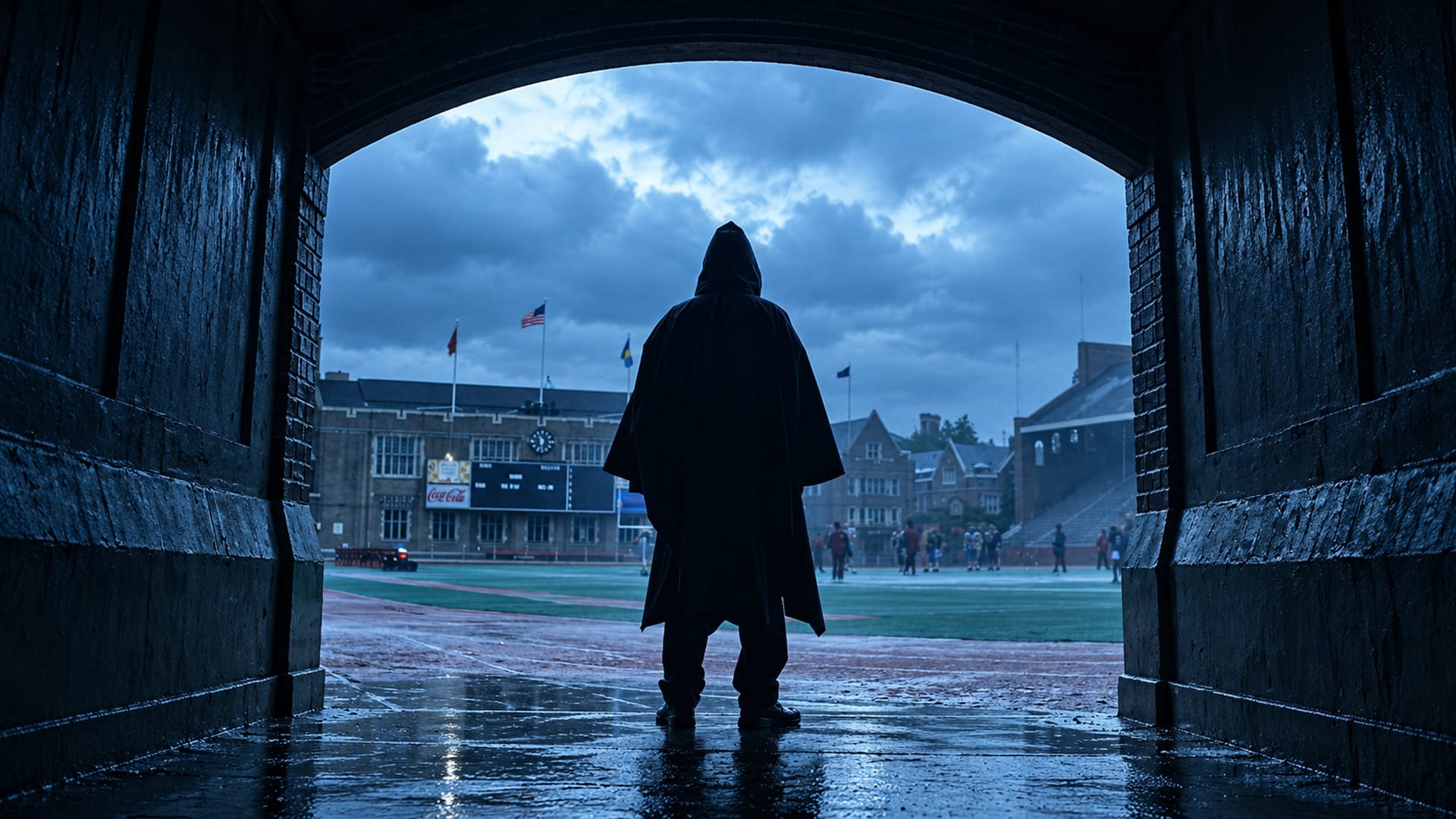
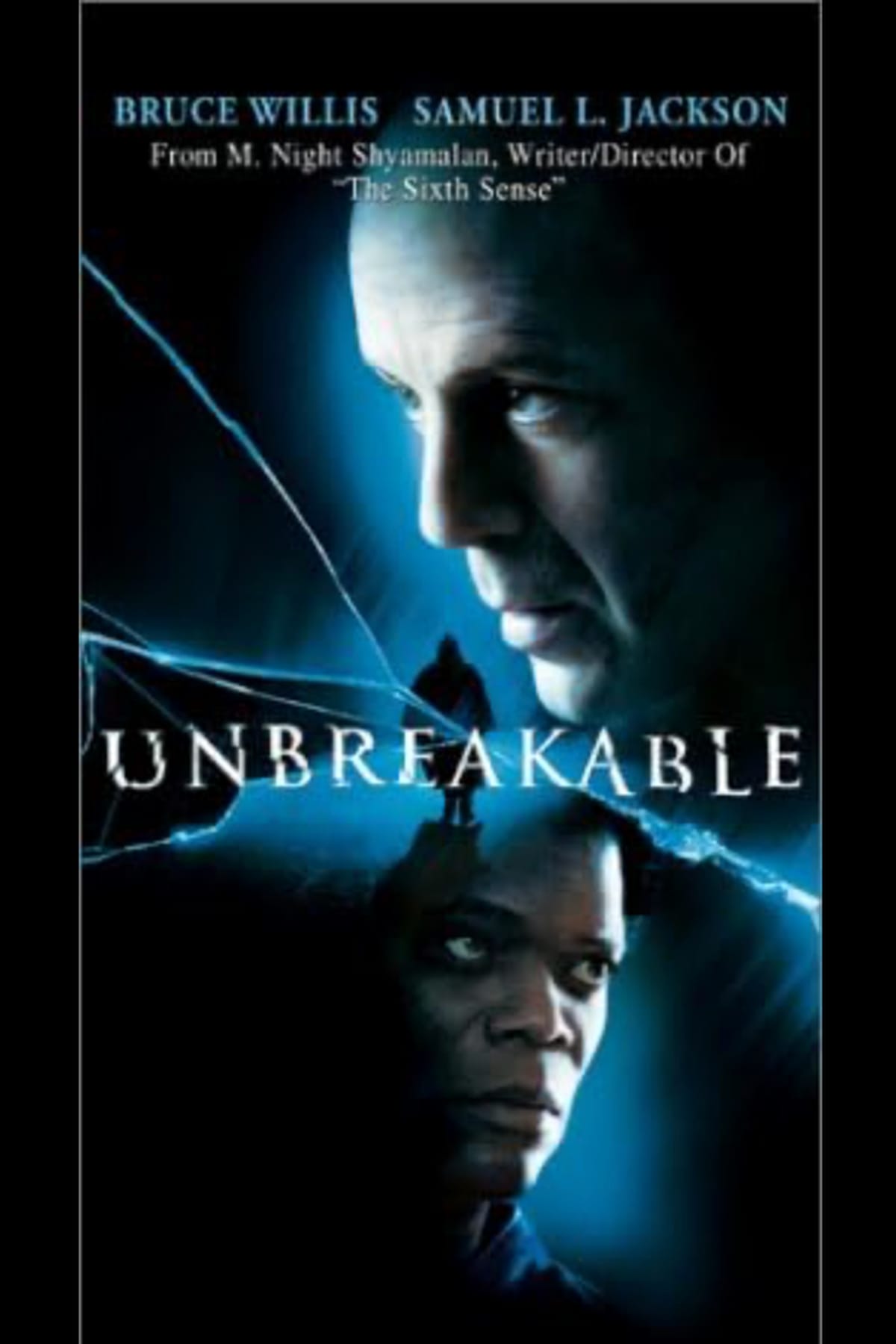
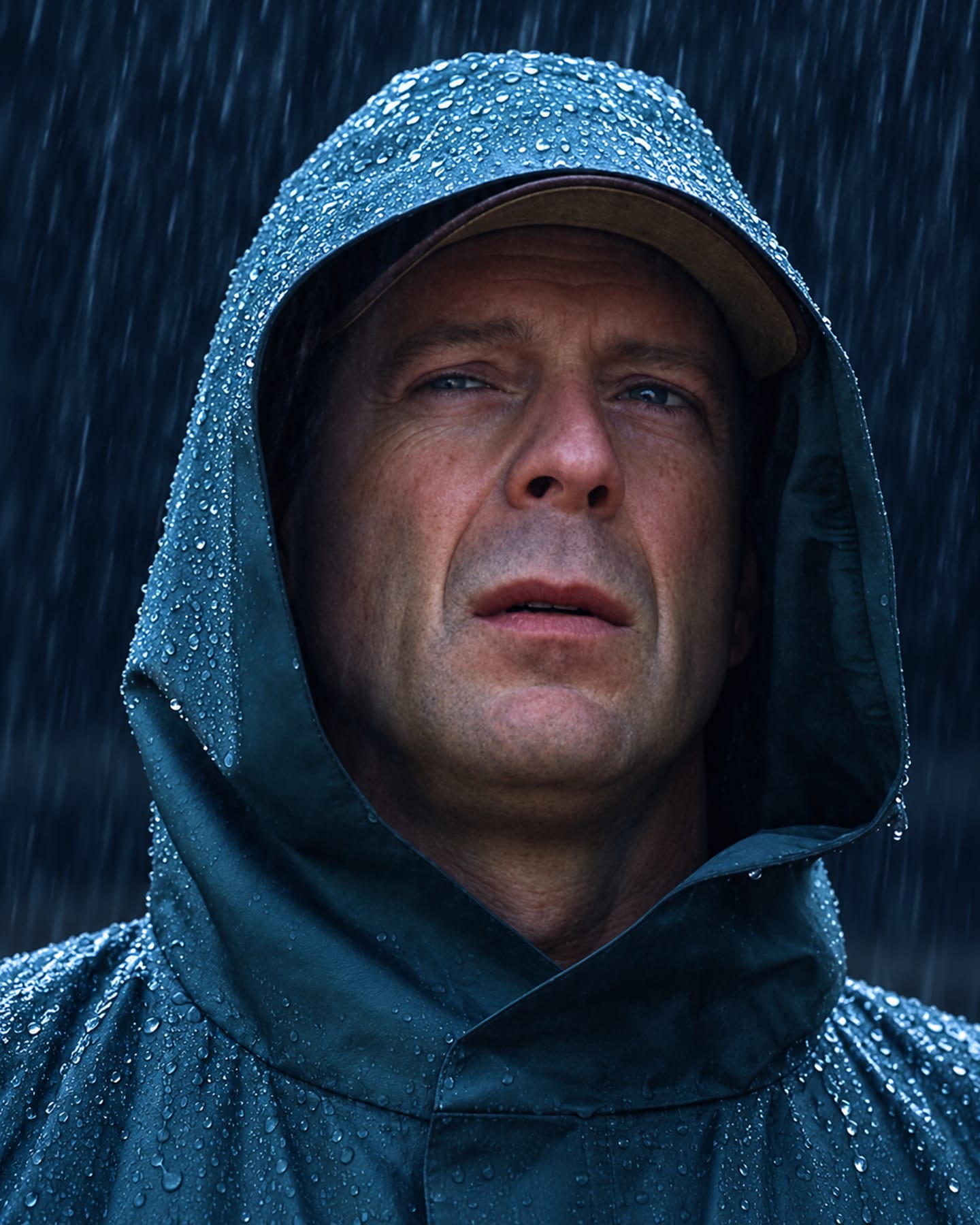
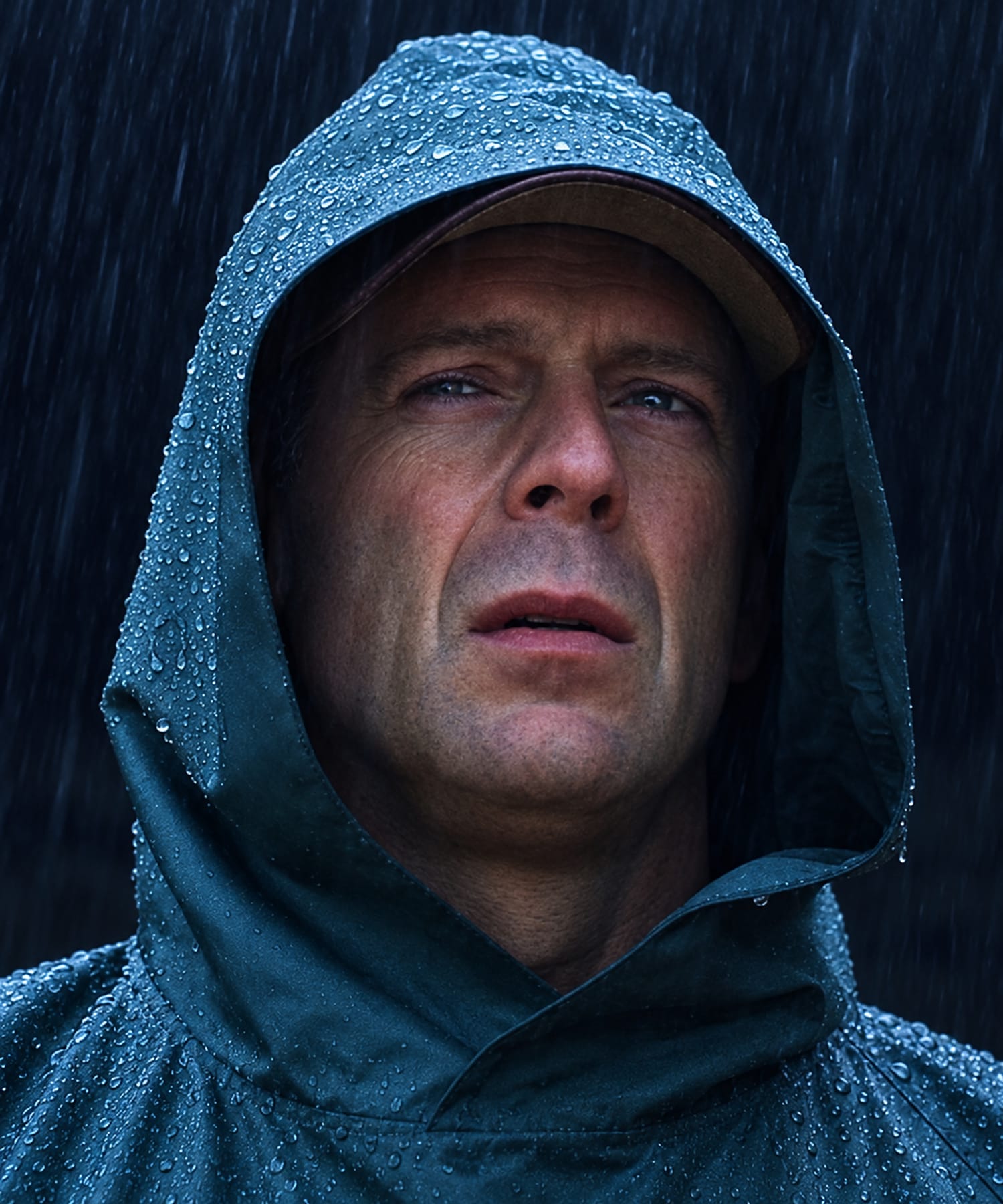
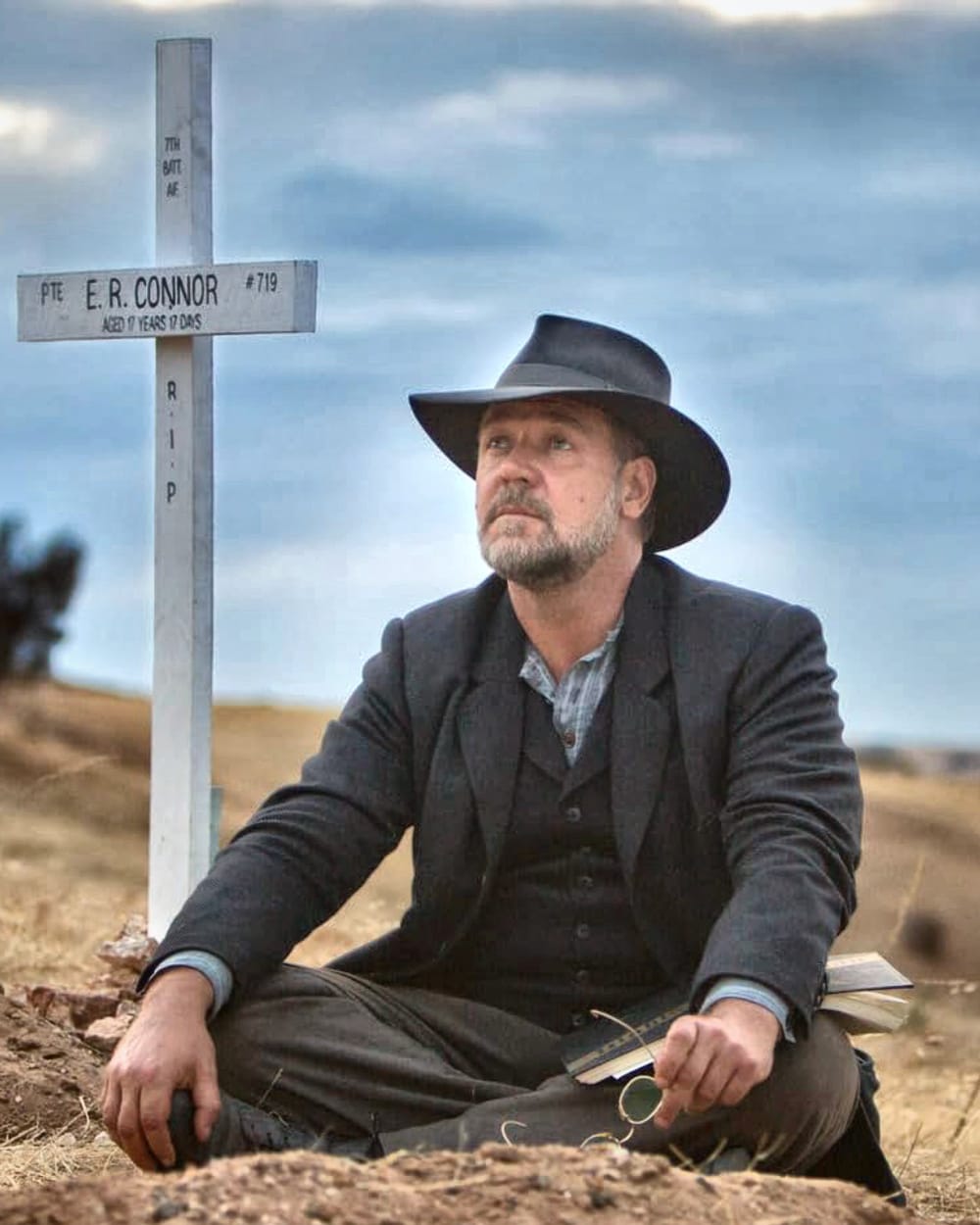
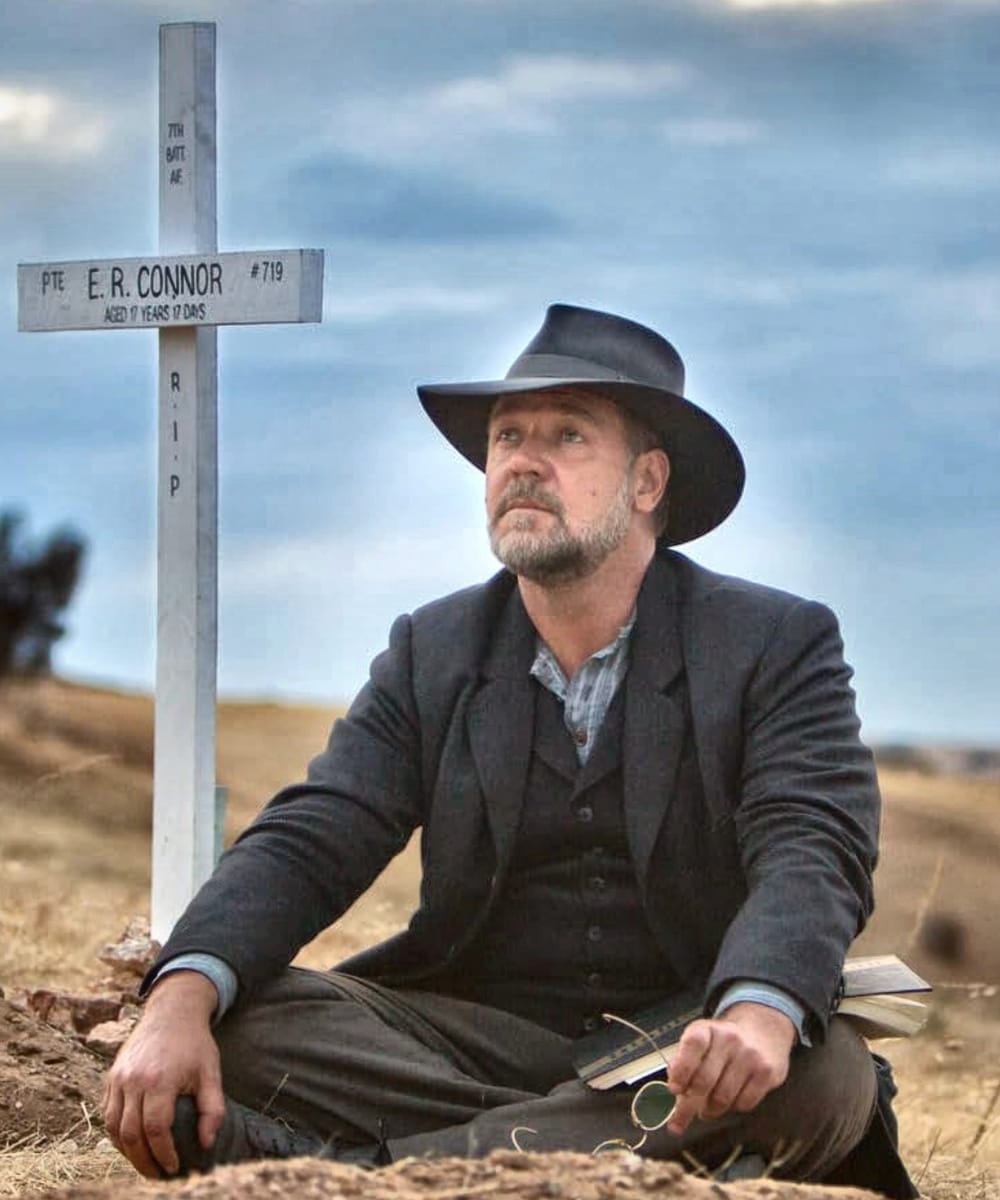
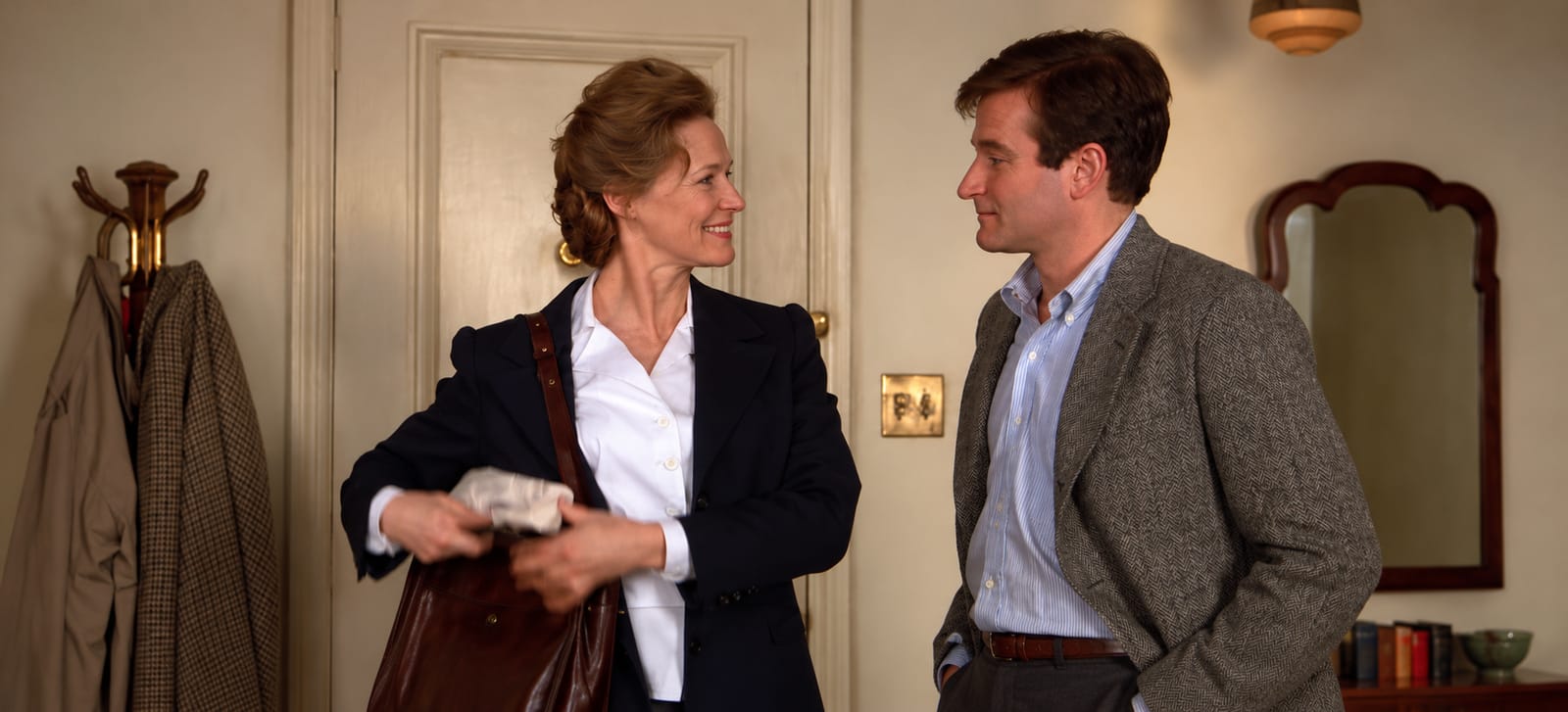
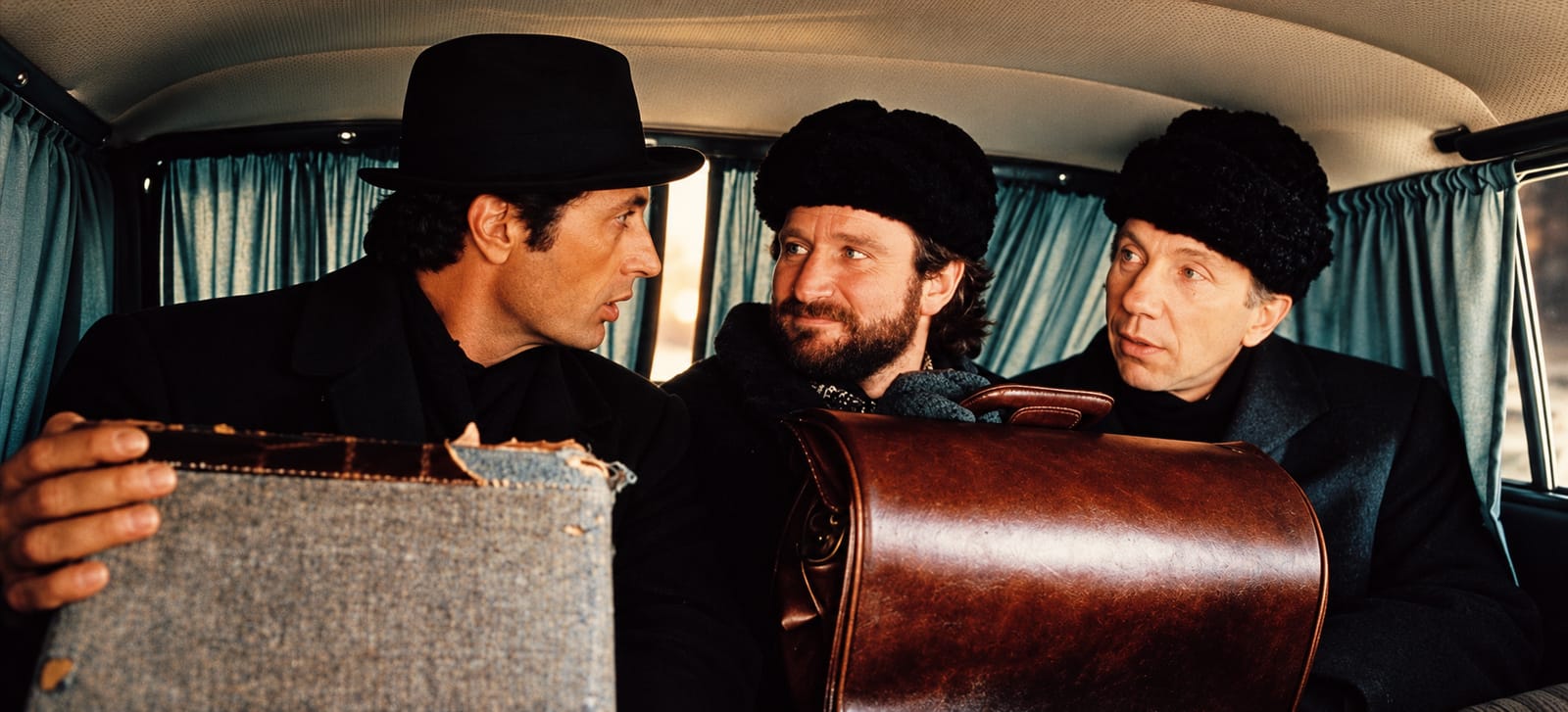
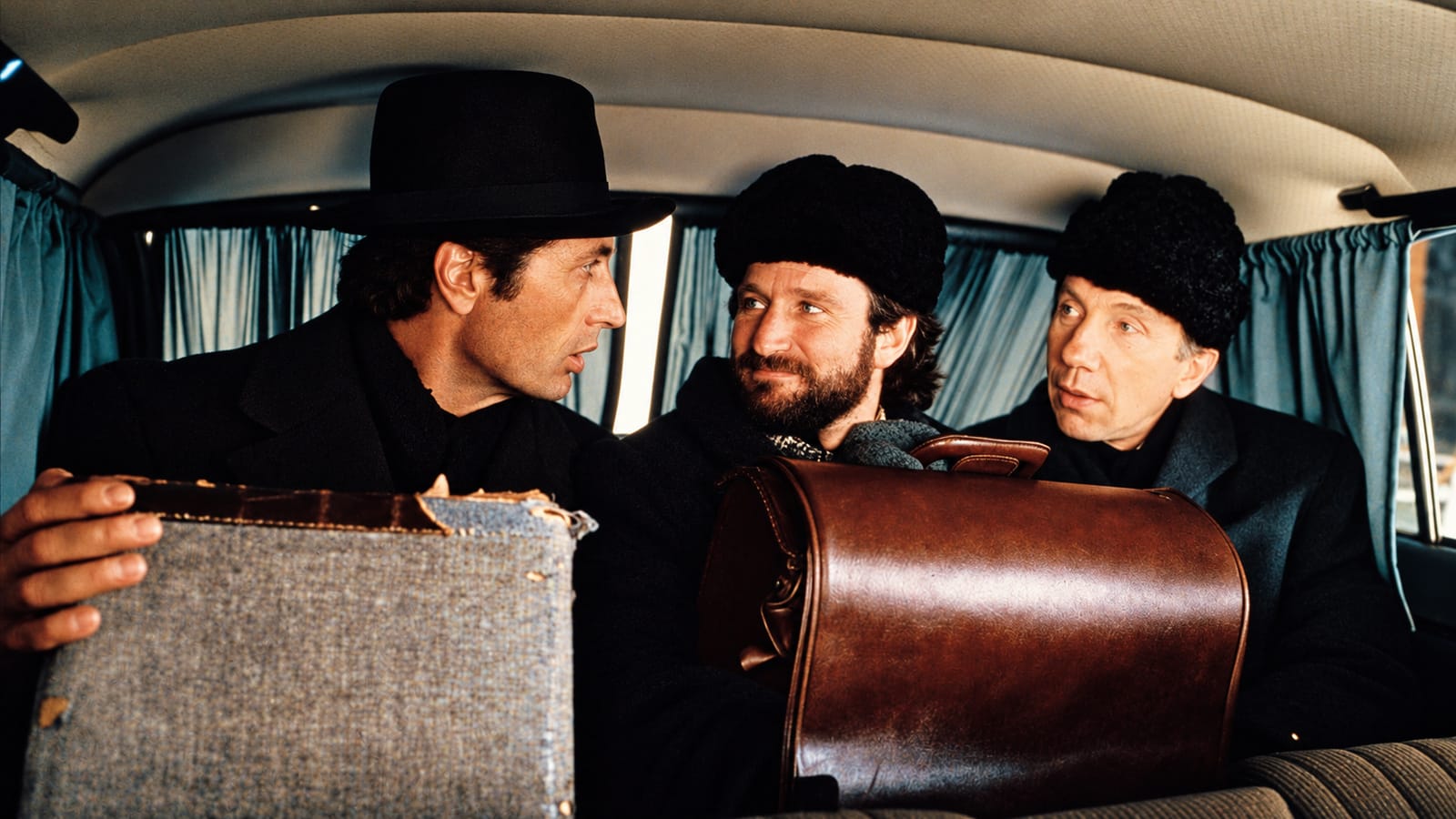
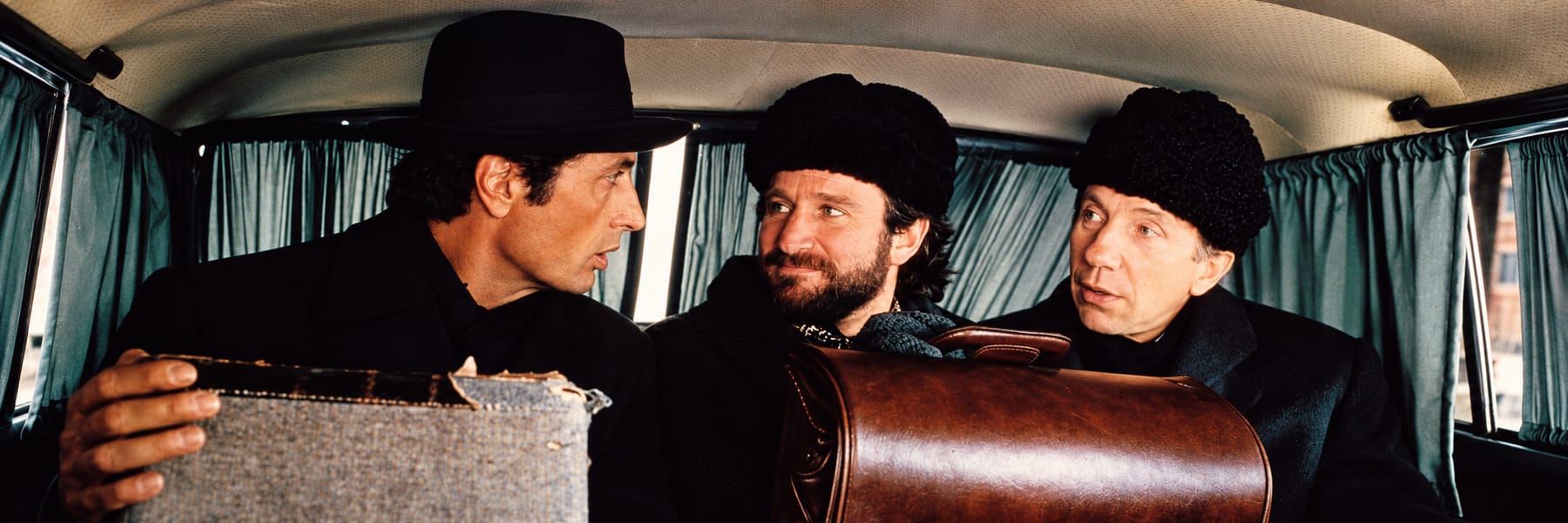
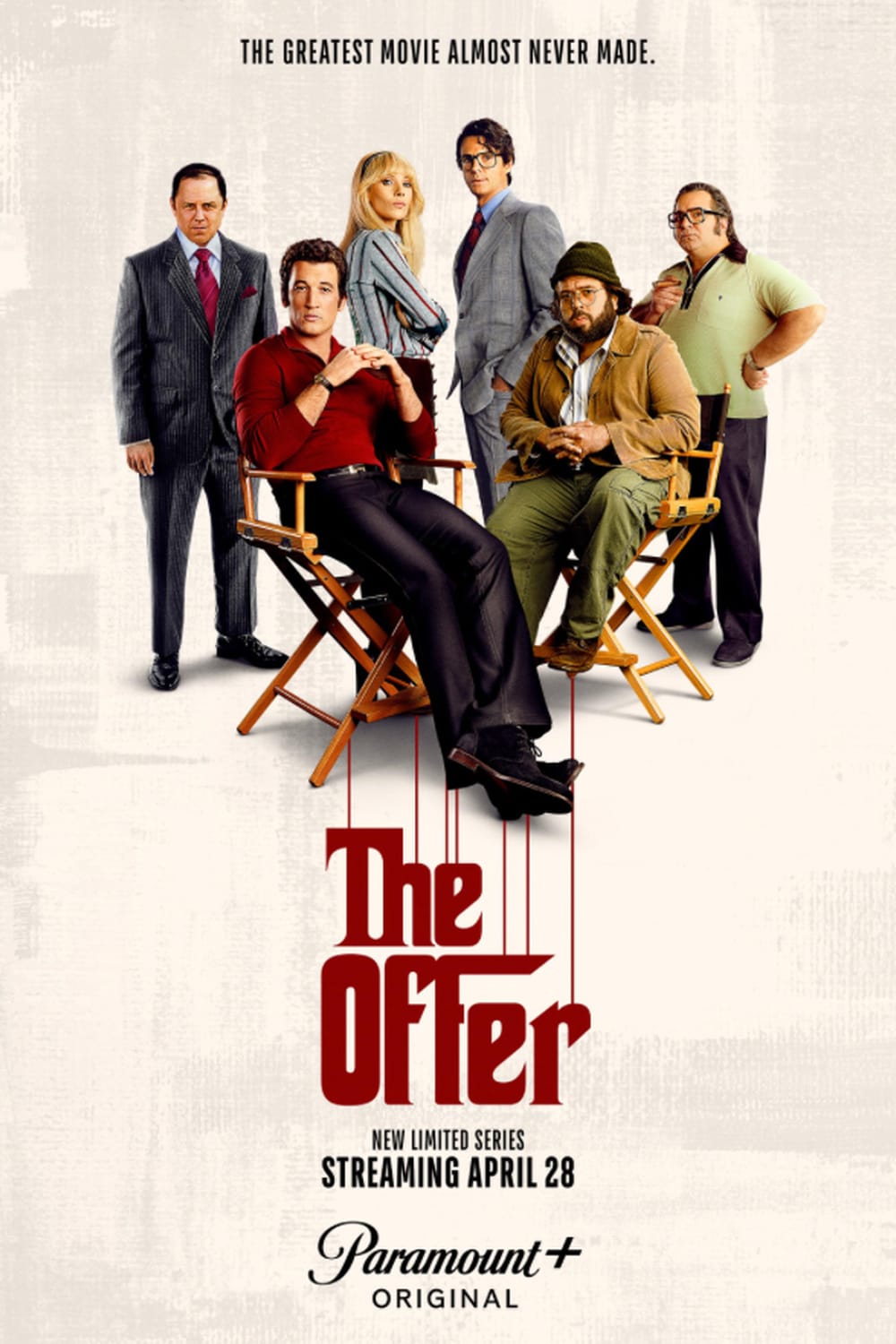
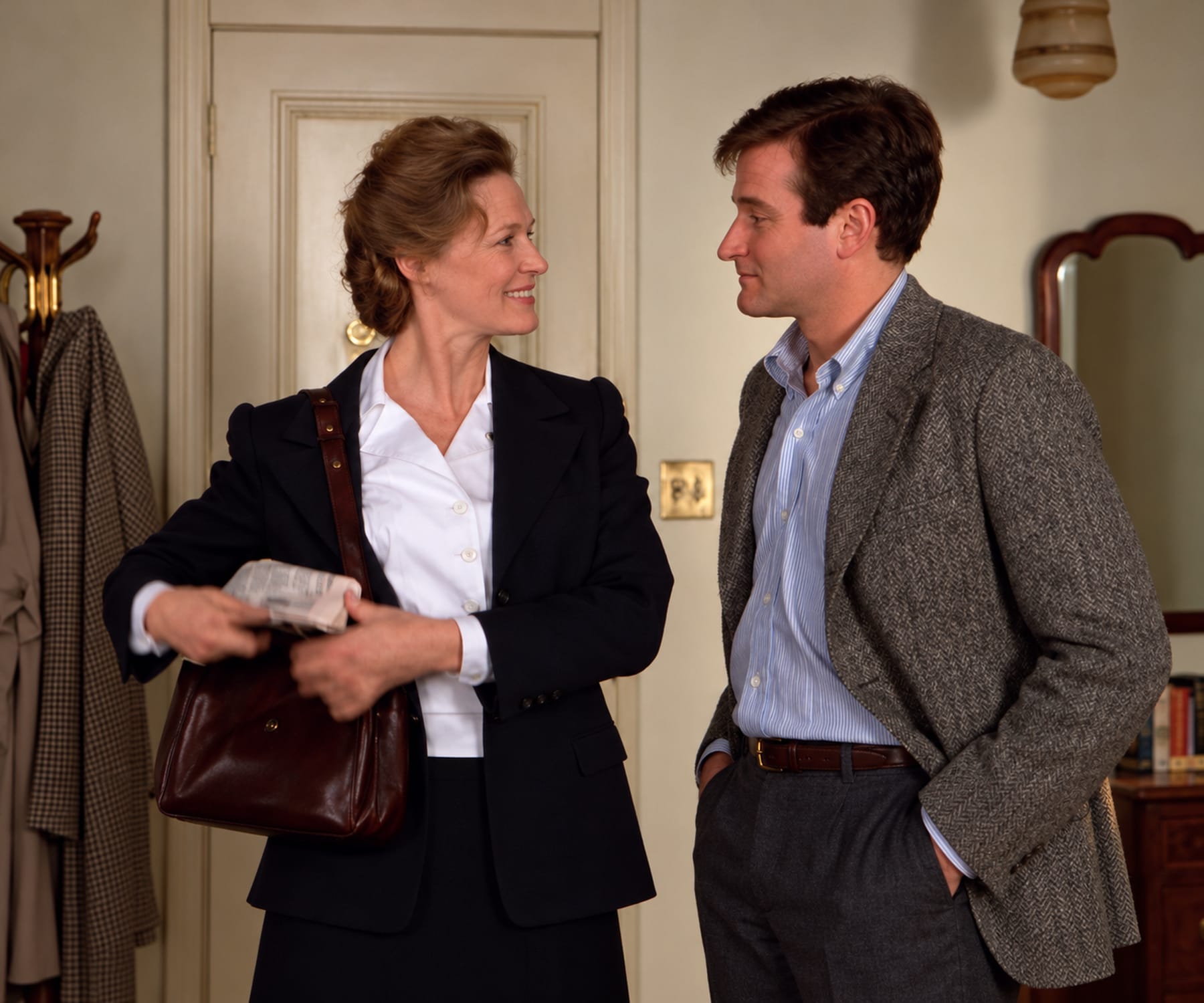
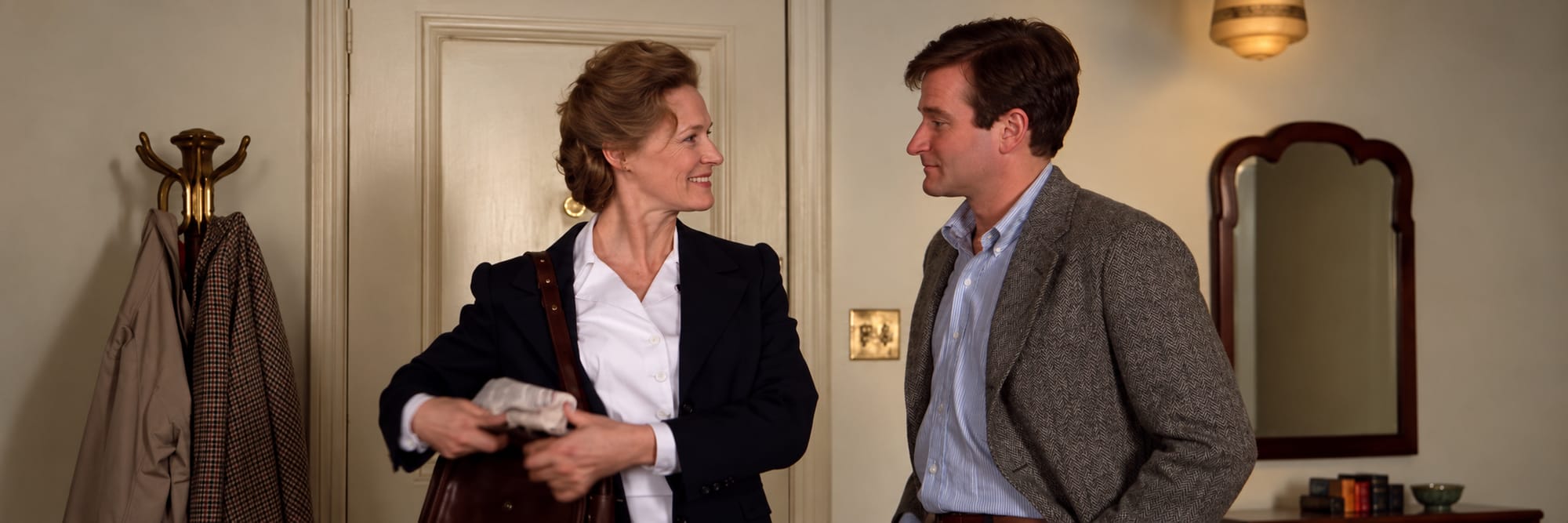
After surviving a train wreck without an injury, a security guard meets a stranger with an extraordinary explanation. Bruce Willis and Samuel L. Jackson lead a patient, unsettling mystery about discovering what you might be capable of.
Everybody else on the train is dead. David Dunn doesn’t have a scratch.
Surviving would be enough for most people. You’d go home, hug your family and spend the rest of your life avoiding trains. But somebody wants David to consider a possibility that sounds ridiculous: maybe surviving wasn’t luck.
What It’s About
Bruce Willis plays David, a Philadelphia security guard whose life already feels stuck before the accident. His marriage to Audrey (Robin Wright) is in trouble, and his young son Joseph (Spencer Treat Clark) wants a closeness that David struggles to give him.
Then he meets Elijah Price (Samuel L. Jackson), a comic book art dealer whose fragile bones have made injury a constant part of his life. Elijah believes David’s remarkable survival might be evidence of something extraordinary.
David understandably has questions. So does the audience.
As Elijah encourages him to examine things he’s always taken for granted, David begins wondering whether this stranger’s theory could explain more than the train wreck. Joseph, meanwhile, is considerably more willing to believe his father might be special.
Who It’s For
Unbreakable suits viewers who enjoy a mystery that takes its time and gives them something to think about along the way. M. Night Shyamalan lets conversations, silences and small discoveries build the tension. There’s relatively little action, and the mood stays somber.
Willis makes David’s reluctance believable. He seems tired, unhappy and uncomfortable with the attention, which makes the possibility of an extraordinary ability surprisingly awkward. Jackson gives Elijah a certainty that keeps drawing David back into the conversation, even when his ideas sound far-fetched.
The family story matters, too. Joseph’s faith in his father gives David something to live up to, while Audrey’s presence reminds us that surviving an accident doesn’t automatically fix a marriage.
The deliberate pace will be a drawback for some viewers. But if you’re willing to settle into its mood, Unbreakable makes an unusual premise feel personal and convincing. It’s worth renting.
Bruce Willis survives a disaster, and Samuel L. Jackson has a theory about why. What follows is a quiet, unsettling mystery that makes discovering a superpower feel like something you might actually have trouble accepting.
RELATED:
Imagine being a parent who knows your child's school isn't doing a good job. You know your child is falling behind, and you're worried about what that means for their future.
Now imagine discovering there's a much better school nearby. Better teachers, better results, a genuine opportunity for your child to succeed.
There's just one problem. You can't simply enroll your child. You have to enter a lottery and hope their name gets picked.
Think about that for a second. Your child's future is determined randomly.
Meanwhile, the people running the school your child is trying to escape have jobs, contracts, administrators, unions and politicians looking out for their interests.
Who's looking out for your kid?
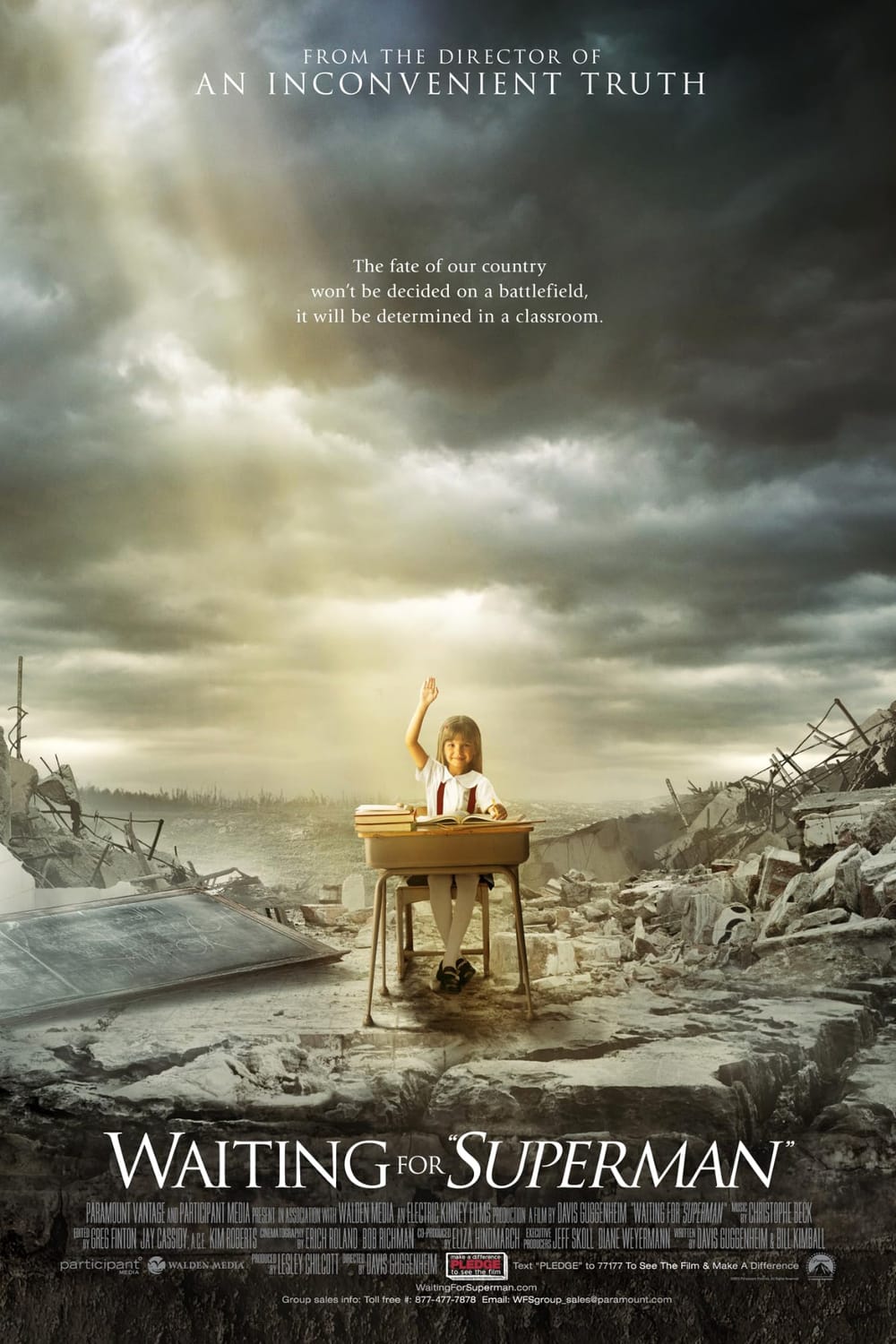
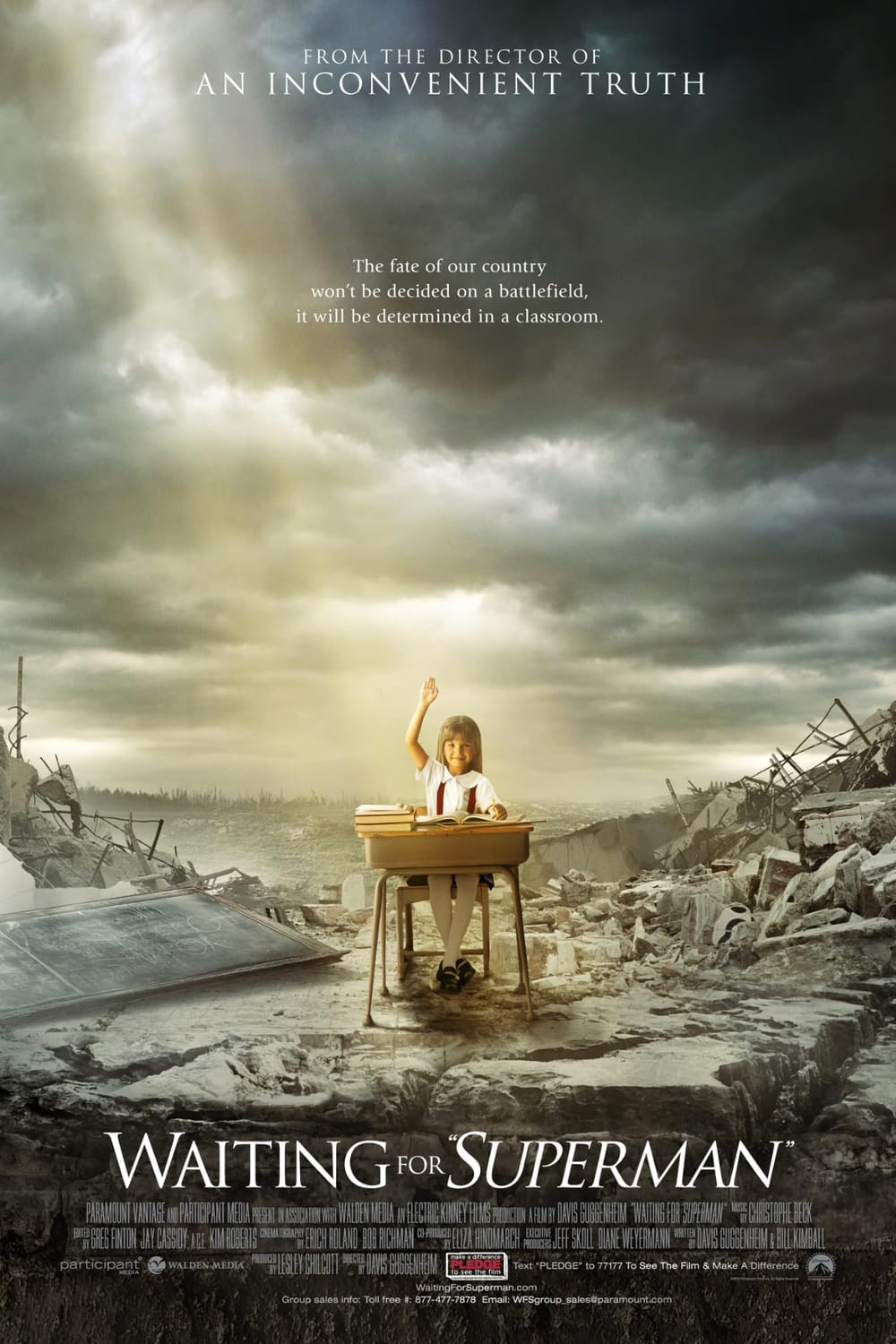
That's the uncomfortable question running through Waiting for "Superman", Davis Guggenheim's 2010 documentary about the failures of American public education.
A System Built to Protect Itself
The documentary follows five children and their families as they try to secure a better education. These aren't parents who don't care. They're doing exactly what we tell parents they should do: getting involved, paying attention and trying to give their children every possible advantage.
But the film spends just as much time examining the enormous educational bureaucracy standing between these families and the schools they want.
One of its biggest targets is teacher tenure and the extraordinary difficulty of removing ineffective teachers from classrooms.
Now, there's nothing wrong with teachers having job protections. Good teachers deserve fair treatment, reasonable security and protection from arbitrary decisions. Teaching isn't an easy profession, and plenty of teachers work extremely hard under difficult circumstances.
But there's a difference between protecting good teachers and creating a system that makes it nearly impossible to get rid of bad ones.
The film illustrates that problem with New York City's infamous "rubber rooms," where teachers removed from classrooms could spend extended periods collecting pay while their cases worked through the system.
Think about that for a moment. A school system could find itself paying teachers not to teach while children continued attending schools that desperately needed effective teachers.
How did we arrive at a point where that made sense?
Everybody Has Someone Fighting for Them
One of the documentary's most interesting figures is Michelle Rhee, then chancellor of Washington, D.C., public schools. She arrives determined to change a struggling system and encounters enormous resistance.
Rhee's approach was controversial, and it's reasonable to question some of her methods. But watching the institutional battles unfold raises a question that goes beyond whether she was right about every proposed reform.
Who is actually supposed to be in charge?
Teachers' unions exist to represent teachers. That's their job. They negotiate compensation, working conditions, job protections and other employment matters. There's nothing surprising about that.
But unions aren't the only adults with interests to protect. Administrators have careers, school boards have political considerations, and elected officials have constituencies they don't want to upset.
None of these groups necessarily has bad intentions. The problem is that their interests don't always align with what children need.
And children don't have a union.
They don't negotiate contracts. They don't vote in school board elections. They can't threaten to strike, and most can't simply transfer to a better school when things aren't working.
Their parents can complain, organize and advocate, but that doesn't necessarily give them the power to change anything.
The Lottery Says Everything
The documentary builds toward several school admission lotteries, and these scenes are difficult to watch.
By this point, we've gotten to know the children. We've heard their ambitions and watched their parents struggle to find opportunities for them.
Now their futures appear to depend on whether someone pulls the right number or calls the right name.
It's an absurd situation when you think about it.
These families aren't asking for special privileges. They're asking for a decent education, something public schools are supposed to provide every child.
The documentary clearly favors successful charter schools, and that's one area where its argument deserves some skepticism. Not every charter school is successful, and changing how a school is managed doesn't automatically make it better. Poverty, family circumstances, funding and countless other factors also affect educational outcomes.
But those complications don't erase the central problem.
When parents are desperate to get their children out of one publicly funded school and into another, something has gone seriously wrong.
And when the system makes it easier to defend its existing arrangements than to respond to those families, its priorities deserve to be questioned.
Waiting for "Superman" isn't a perfectly balanced examination of every problem in American education. It has an argument to make, and it isn't particularly shy about making it.
But it asks a question that shouldn't be controversial at all.
If public education exists for the benefit of children, shouldn't their interests come first?
The remarkable thing is that we apparently still need to ask.
Teachers have unions, administrators have careers, and politicians have constituencies. But when public schools fail, who is fighting for the children? Waiting for "Superman" asks an uncomfortable question about America's educational priorities.
Most parents assume that sending their children to school means they'll receive an education. It's a reasonable expectation, considering how much money we spend making that happen.
But what happens when the school assigned to your child isn't doing its job? And what if the only realistic chance of getting into a better school comes down to having your name drawn out of a hat?
That's the uncomfortable situation at the center of Waiting for Superman.
What It’s About
Director Davis Guggenheim examines America's public education system through the experiences of five children whose families are trying to give them something better.
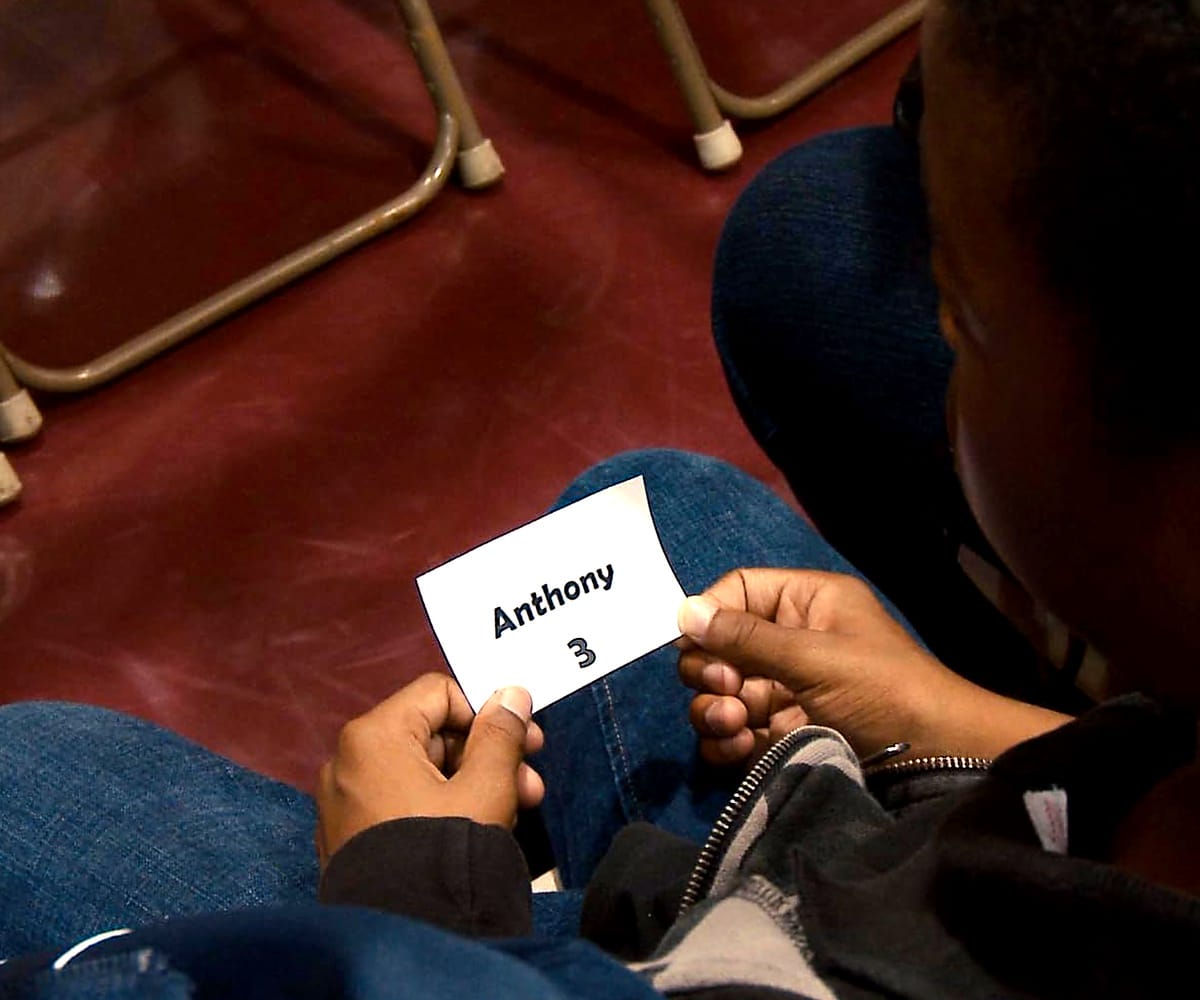
Anthony, Bianca, Daisy, Emily and Francisco come from different backgrounds, but their families share the same concern: the schools available to them aren't providing the opportunities they need.
The documentary explores some of the reasons American schools struggle, including ineffective teachers, bureaucratic resistance to reform and a system that can make it extraordinarily difficult to remove poor performers.
We also meet education reformers like Geoffrey Canada, founder of the Harlem Children's Zone, and Michelle Rhee, who challenged established practices while leading Washington, D.C.'s public schools.
But the film keeps returning to the children. Their families have identified alternative schools they believe can provide a better education. Unfortunately, there are far more applicants than available seats.
Admission comes down to a lottery.
Who It’s For
Waiting for Superman is for anyone interested in education, government accountability or what happens when large institutions lose sight of the people they're supposed to serve.
Guggenheim makes a complicated subject surprisingly accessible. Statistics and policy arguments are part of the story, but watching parents hope their child's name gets called makes the consequences of a failing system much harder to dismiss.
The documentary has a definite point of view. It's sympathetic to charter schools and education reformers, while taking a particularly critical look at teachers unions and the protections afforded to ineffective teachers. There are reasonable arguments that the film oversimplifies some of these issues.
And because it was released in 2010, it shouldn't be mistaken for an up-to-date assessment of American education.
Still, the central question remains worth considering: Why should a child's chance at a decent education depend so heavily on luck?
It's an engaging, sometimes frustrating documentary that gives viewers plenty to think about, whether they agree with its conclusions or not.
Five children want a better education. Whether they get one may come down to a lottery. Waiting for Superman puts a human face on the failures of America's public education system.
Five children, five families and a public education system that isn't meeting their needs. Waiting for Superman examines America's struggling schools and the desperate hope parents place in lotteries for a better education.
If you make your living picking pockets, you probably spend a fair amount of time worrying about getting caught. Somebody grabs your wrist. A cop sees something. An otherwise productive afternoon ends in handcuffs.
Those are reasonable occupational concerns. But there’s another question worth considering before you reach into a stranger’s pocket.
What if this particular person is considerably more dangerous than you are?
That’s the problem facing Harry Lehman in The Only Living Pickpocket in New York. He steals something valuable, sells it, and then discovers that its owners expect him to get it back. They aren’t interested in having him arrested. They’re interested in having their property returned, and Harry would be wise to understand the difference.
Business Was Already Bad
John Turturro plays Harry, an aging thief trying to earn a living in a city that has made his particular skill considerably less useful. People still carry wallets. Unfortunately for Harry, those wallets increasingly contain cards their owners can cancel.
You can appreciate the inconvenience without feeling especially sorry for his business model.
But Harry also cares for his disabled wife, Rosie, and that gives his financial problems weight beyond his own comfort. He has someone depending on him. Whatever judgment you make about how he earns his money, the responsibilities waiting at home are real.
Then he makes a mistake that turns all those existing problems into background concerns.
The Wrong Person to Rob
The item causing the trouble is a valuable USB stick Harry unwittingly steals and fences. What he treats as something to sell turns out to belong to people with considerably more power than the average pickpocket. A crime family wants it returned.
Unfortunately, returning stolen property becomes complicated once you’ve already sold it.
That’s the part of the setup I like. Harry has successfully done what he normally does, and doing it successfully has created the problem. He got away with the theft. He found a buyer. Under ordinary circumstances, that would qualify as a decent day at work.
Now he has to undo it.
He Has Something to Get Home To
The danger matters more because Harry’s life extends beyond the stolen goods. Getting himself into trouble also threatens his ability to care for Rosie. He can’t consider what happens next as though he’s the only person affected.
That gives the premise somewhere to go beyond watching a criminal try to escape the consequences of being a criminal. We can recognize that Harry created this mess and still want him to find a way through it. Having someone depend on you doesn’t excuse a bad decision. It can make that decision considerably more painful.
For years, his success has depended on walking away before somebody realizes what’s missing.
This time, walking away was only the beginning of his trouble.
John Turturro plays an aging pickpocket whose latest theft leaves him owing a crime family something he’s already sold. Getting caught is only the beginning.
Having your brother beside you for every important moment sounds pretty good. Someone who understands you, backs you up and knows when you need a little help.
Having him there for every date might take some getting used to.
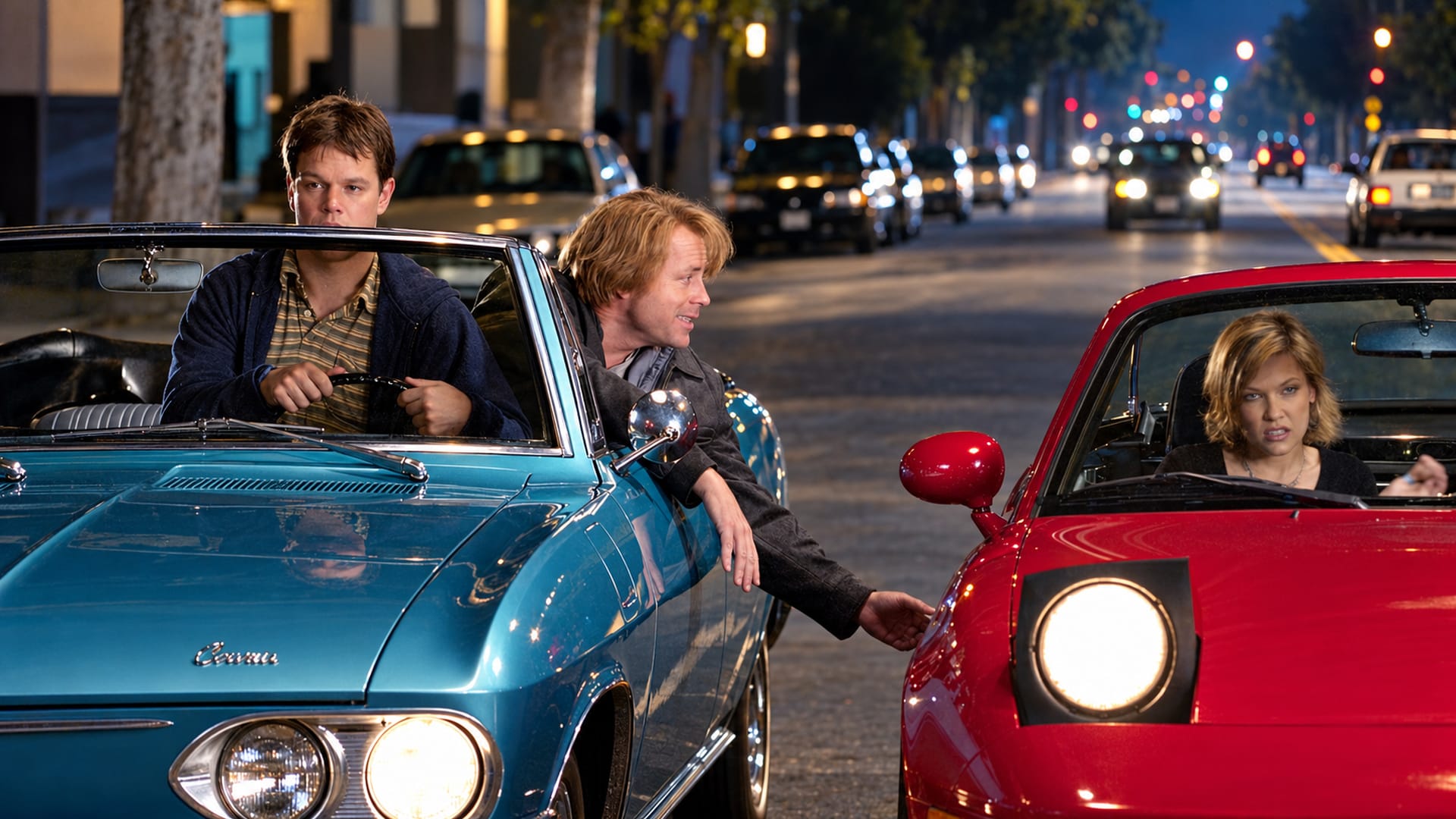
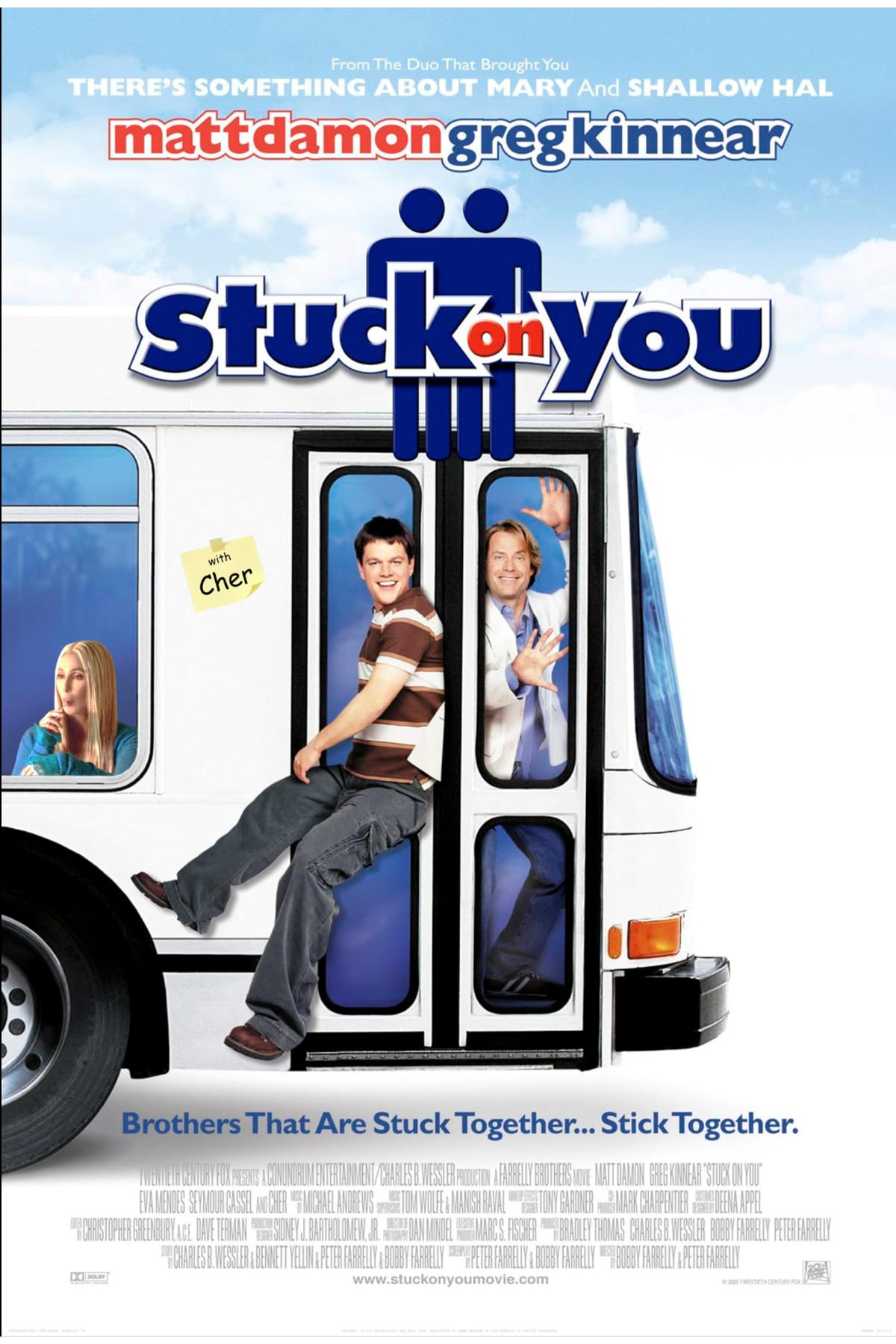
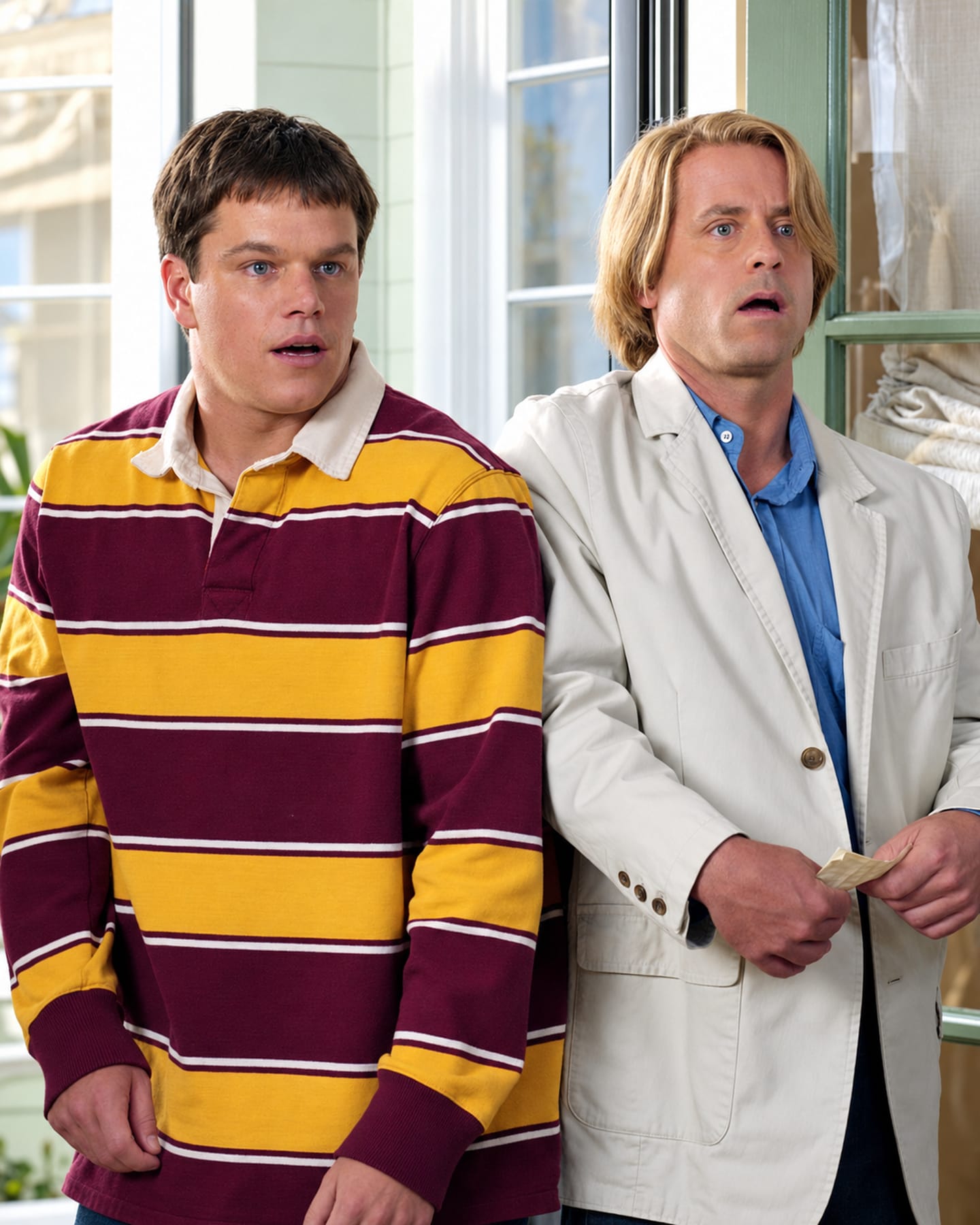
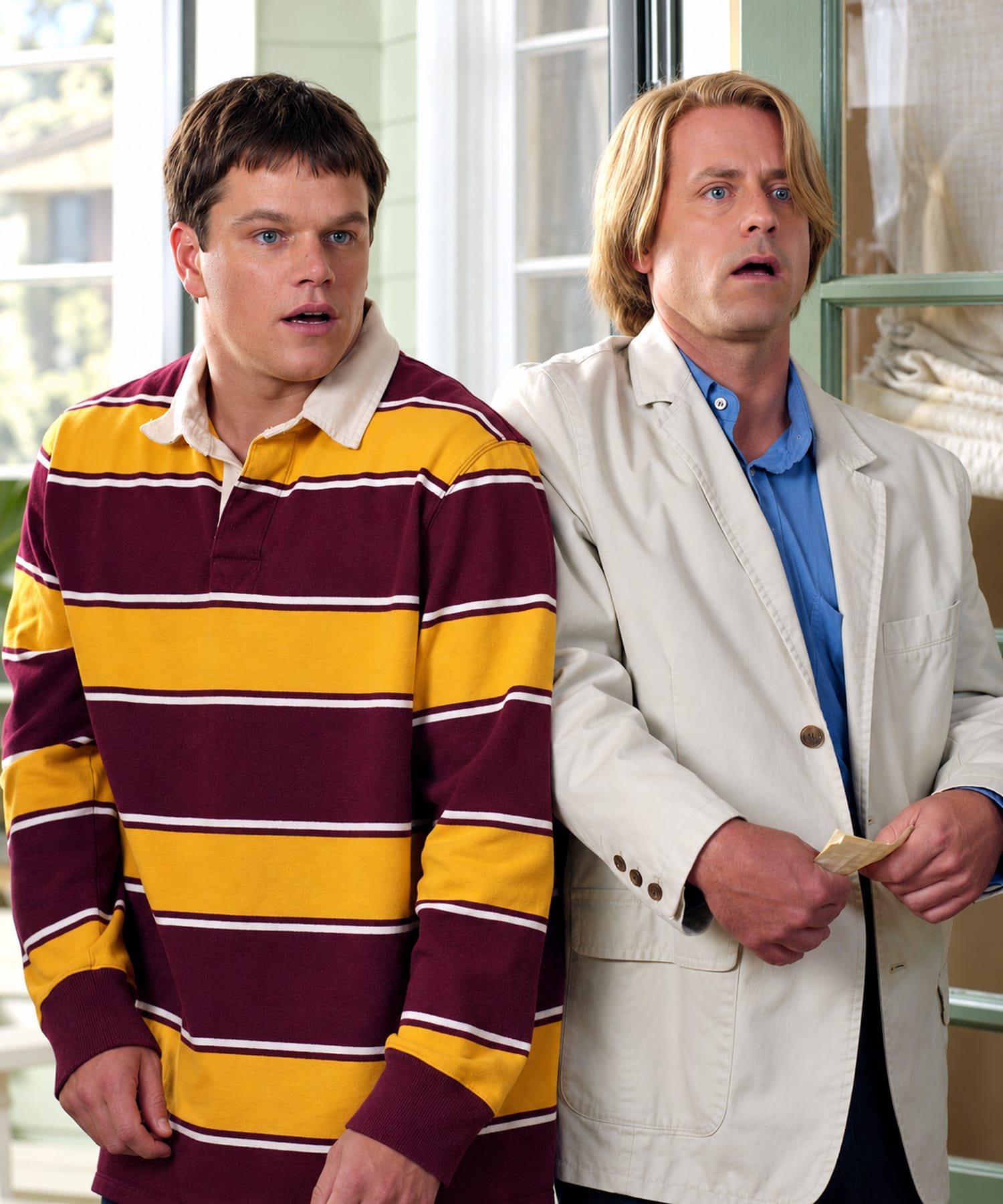
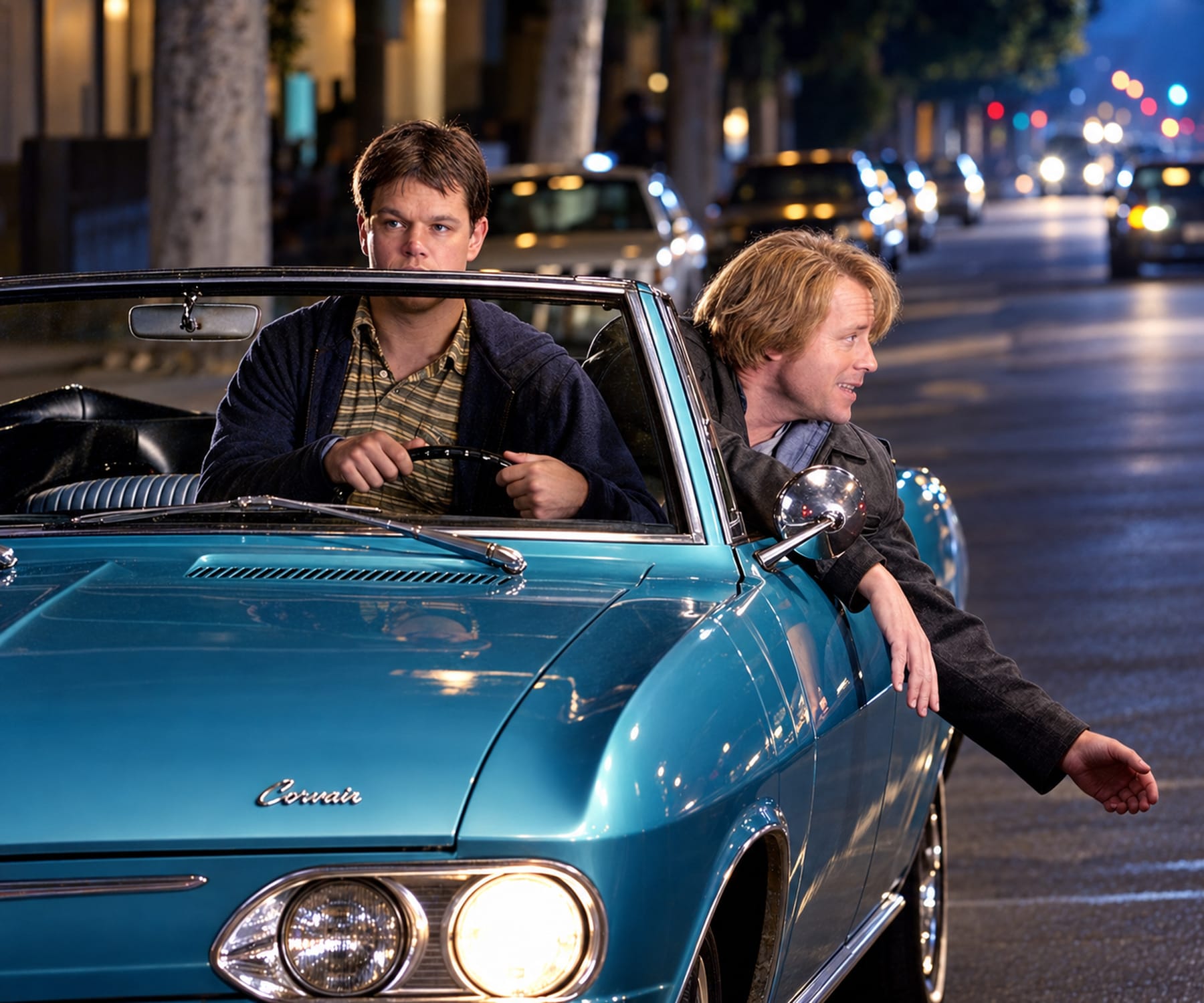
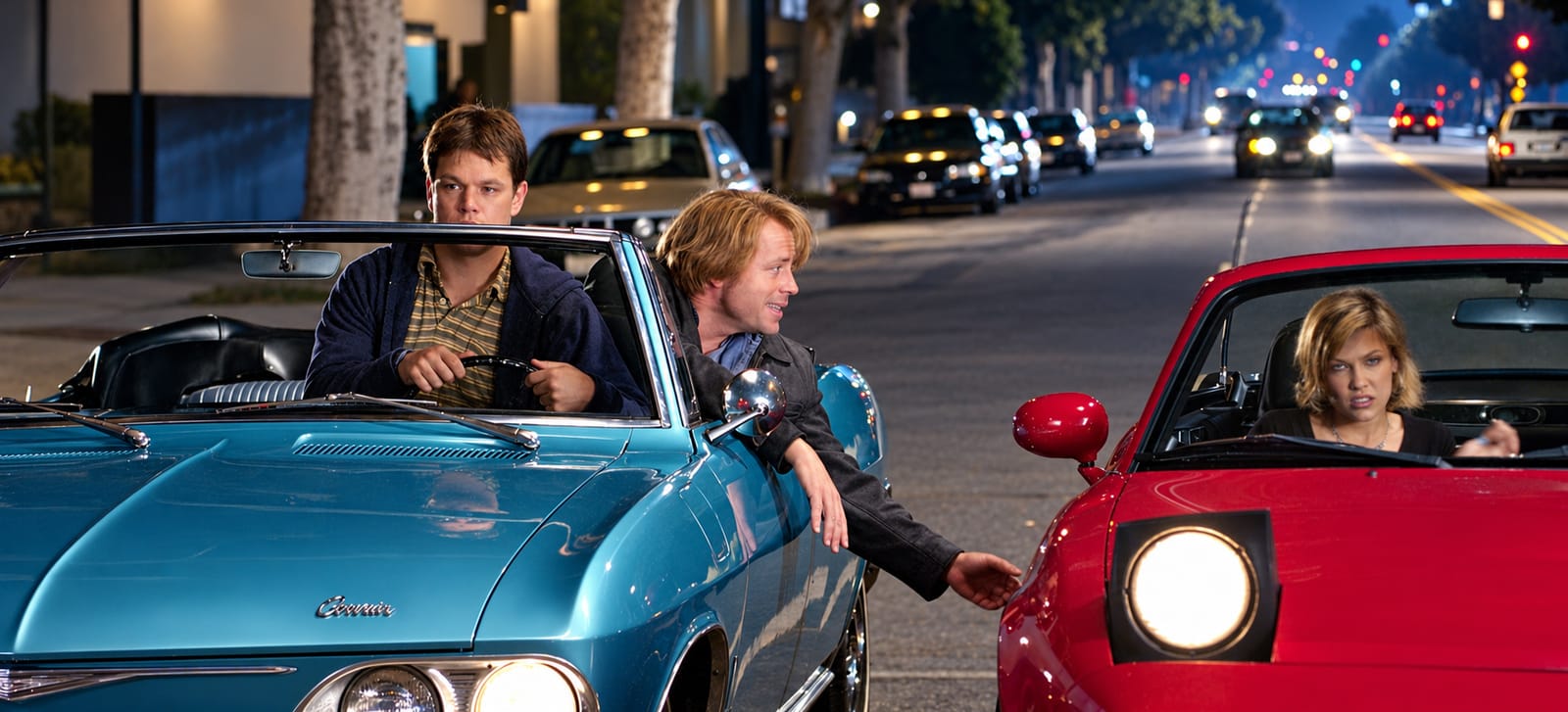
Bob and Walt don’t have much choice. The brothers in Stuck on You are conjoined twins, which means neither gets to leave the other at home. They’ve built a life around that arrangement, and much of it works surprisingly well. The complications really start when they want different things.
Walt wants to become an actor. Bob would be perfectly happy if Walt wanted to keep running their restaurant.
It’s difficult to wish somebody luck in Hollywood when you have to move there with him.
They Already Know How to Be Together
Matt Damon plays Bob, the quieter brother, while Greg Kinnear plays Walt, who has considerably fewer reservations about being the center of attention. You can see how this arrangement has lasted. Walt supplies the push. Bob supplies some brakes.
Their everyday life is full of accommodations they barely seem to notice anymore. Working together, moving together and making room for each other’s preferences are ordinary parts of the day. What looks impossibly complicated to everybody else is familiar territory to them.
That familiarity gives the movie something useful beneath the physical comedy. These men have a functioning life. They work, have ambitions and get irritated with each other. Neither spends every waking moment contemplating his unusual circumstances.
You start to understand why Bob would hesitate to trade that life for an uncertain one. He knows where he belongs. Walt sees possibilities somewhere else.
Both positions are reasonable, which makes the disagreement harder.
One Brother’s Adventure Is the Other Brother’s Ordeal
Walt’s acting ambitions create plenty of opportunities for ridiculous situations, but the move also exposes an imbalance. He’s pursuing something he wants. Bob is accepting the disruption required to help him get it.
That’s a recognizable problem, even if most families can negotiate it without sharing a doorway.
How much do you owe someone you love? At what point does supporting his dream mean indefinitely postponing your own comfort? And if he has spent his entire life beside you, how do you even begin explaining that you need some room?
Walt isn’t wrong to want more. Bob isn’t wrong to be anxious about what “more” might involve.
A Little Independence Can Feel Like a Loss
The obvious assumption is that these brothers would benefit from greater independence. But independence involves giving something up, too: the reassurance of having someone close who already understands what you need.
Learning to live together took them a lifetime. They’ve become good at it.
Now comes the uncomfortable business of discovering which parts of that life they still want to share—and which parts they’ve never had the chance to choose.
Bob and Walt have spent their lives making room for each other. When one brother wants something different, Stuck on You finds an unexpectedly thoughtful problem beneath its outrageous premise.
Picking pockets was probably never a sensible retirement plan. It’s an even tougher business when people stop carrying cash.
Harry Lehman knows how to lift a wallet. Unfortunately, knowing your trade doesn’t help much when the contents are worth less than the trouble of stealing them. Then he takes something valuable, and his problems get considerably worse.
What It’s About
John Turturro plays Harry, an aging New York pickpocket struggling to earn a living in a city that’s moving on without him. Credit cards can be canceled in minutes, and the skills he’s spent a lifetime developing aren’t paying what they used to.
At home, his wife Rosie needs care. Whatever Harry’s shortcomings (and stealing for a living certainly qualifies), he has responsibilities that don’t disappear after a disappointing day’s work.
When he steals and sells a USB drive belonging to a dangerous crime family, Harry discovers that he’s passed along something its owners very much want back. Now he has to retrace his steps and recover it before they lose patience.
His knowledge of the city becomes essential as he works his way through its neighborhoods and criminal connections. Steve Buscemi and Giancarlo Esposito are among the supporting cast, but Harry’s predicament keeps the story centered on one man with increasingly limited options.
Who It’s For
The Only Living Pickpocket in New York suits viewers who enjoy crime stories built around people, places and difficult conversations. The tension comes from watching an experienced man navigate trouble that experience alone may not get him out of.
Turturro gives Harry a useful combination of professional competence and personal vulnerability. He can understand a stranger well enough to steal from him while badly misjudging what that theft will mean.
There’s also an appealing sadness to the setup: Harry is trying to preserve a way of life that was precarious even before the world changed around him.
Expect an intimate, character-focused film with an older New York crime-movie sensibility. If watching Turturro work his way through a bad situation sounds like an evening well spent, this belongs on your list.
John Turturro gives this small-scale crime story its human stakes: a thief trying to recover something he stole while holding together the life it helps support.
An aging pickpocket steals a USB drive belonging to a dangerous crime family, then has to get it back. John Turturro anchors a New York crime story about dwindling options and one costly mistake.
Supporting your brother’s dreams is a nice idea. Having to accompany him to every audition makes it a considerably bigger commitment.
Stuck on You gives one brother a desire to become a Hollywood actor and the other a perfectly reasonable preference for staying home. Since they’re conjoined twins, this requires some negotiation.
What It’s About
Matt Damon and Greg Kinnear play Bob and Walt Tenor, brothers running a burger restaurant on Martha’s Vineyard. They’ve built a comfortable life together and work remarkably well as a team, although their personalities don’t always line up.
Bob is shy and happy with the life they have. Walt enjoys performing and wants to find out whether he can make it beyond the local stage.
Bob reluctantly agrees to a move to Los Angeles, where Walt begins pursuing acting work. Getting a part is difficult enough for anybody. Getting one when your brother will also need to be in the room presents additional complications.
Their new surroundings bring romantic possibilities, uncomfortable explanations and an encounter with Cher, playing a decidedly unflattering version of herself. As Walt gets closer to the career he wants, the brothers have to consider how much each should be expected to sacrifice for the other.
Who It’s For
Stuck on You is for viewers who enjoy an absurd comedy that takes its characters’ feelings seriously. The Farrelly brothers supply physical jokes, sexual humor and awkward situations, but Bob and Walt are people you get to know beyond the premise.
Damon gives Bob a hesitant sweetness, while Kinnear makes Walt’s confidence both appealing and occasionally exhausting. Their easy familiarity makes the everyday cooperation believable, which helps when the situations become ridiculous.
Not every gag lands, and the Hollywood detour stretches a fairly simple story. Some viewers will also find the mix of crude humor and sentiment uneven.
Still, the affection between these brothers gives the movie a reason to keep going after the initial joke. If you like your silliness with a little warmth, they’re good company.
Matt Damon and Greg Kinnear make an unlikely comedy pairing work by making the brotherhood believable. The jokes can be crude, but there’s considerable affection underneath them.
Conjoined brothers Bob and Walt head to Hollywood so Walt can pursue acting—with Bob necessarily along for the ride. Matt Damon and Greg Kinnear give this sometimes crude comedy a warm, believable relationship at its center.
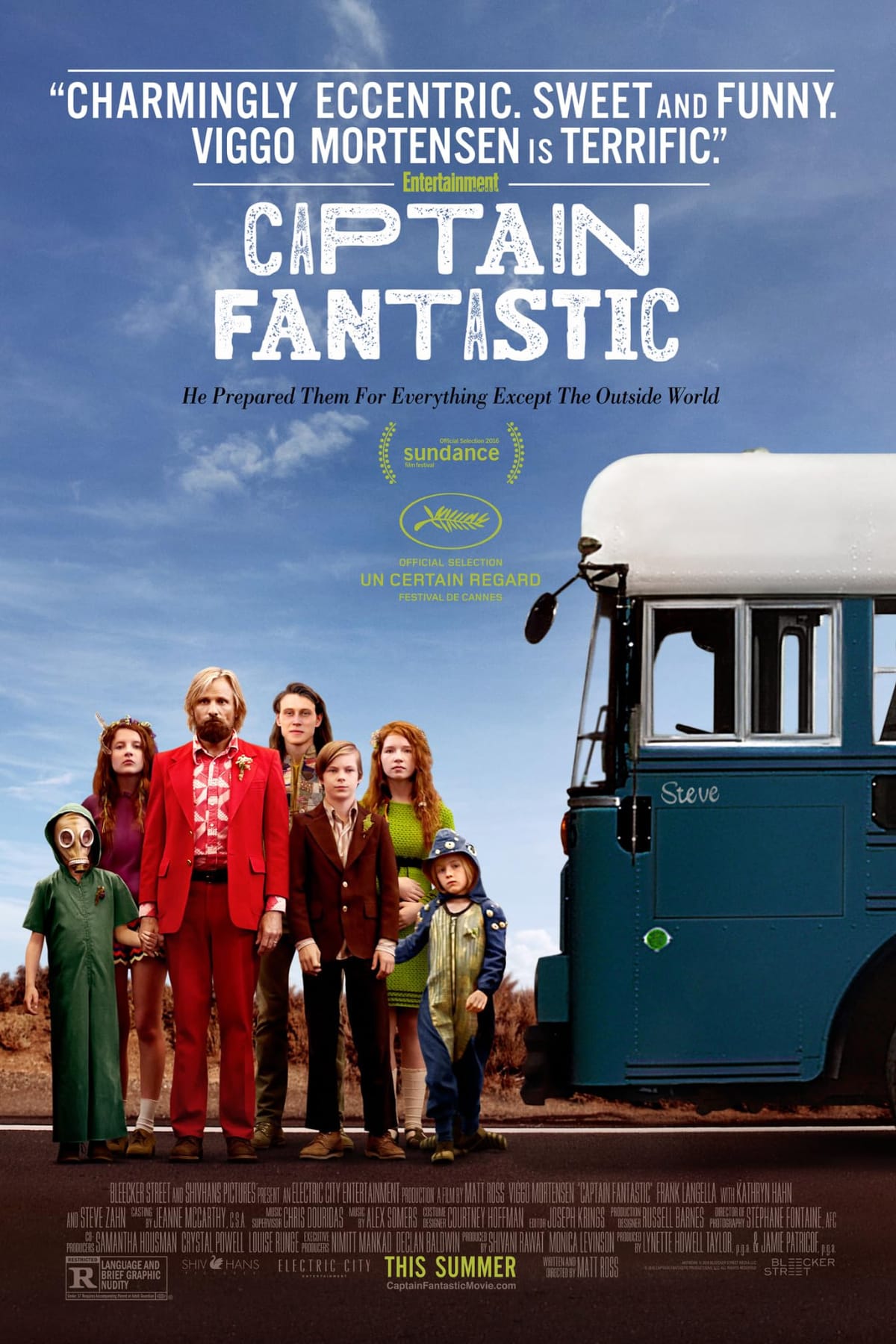
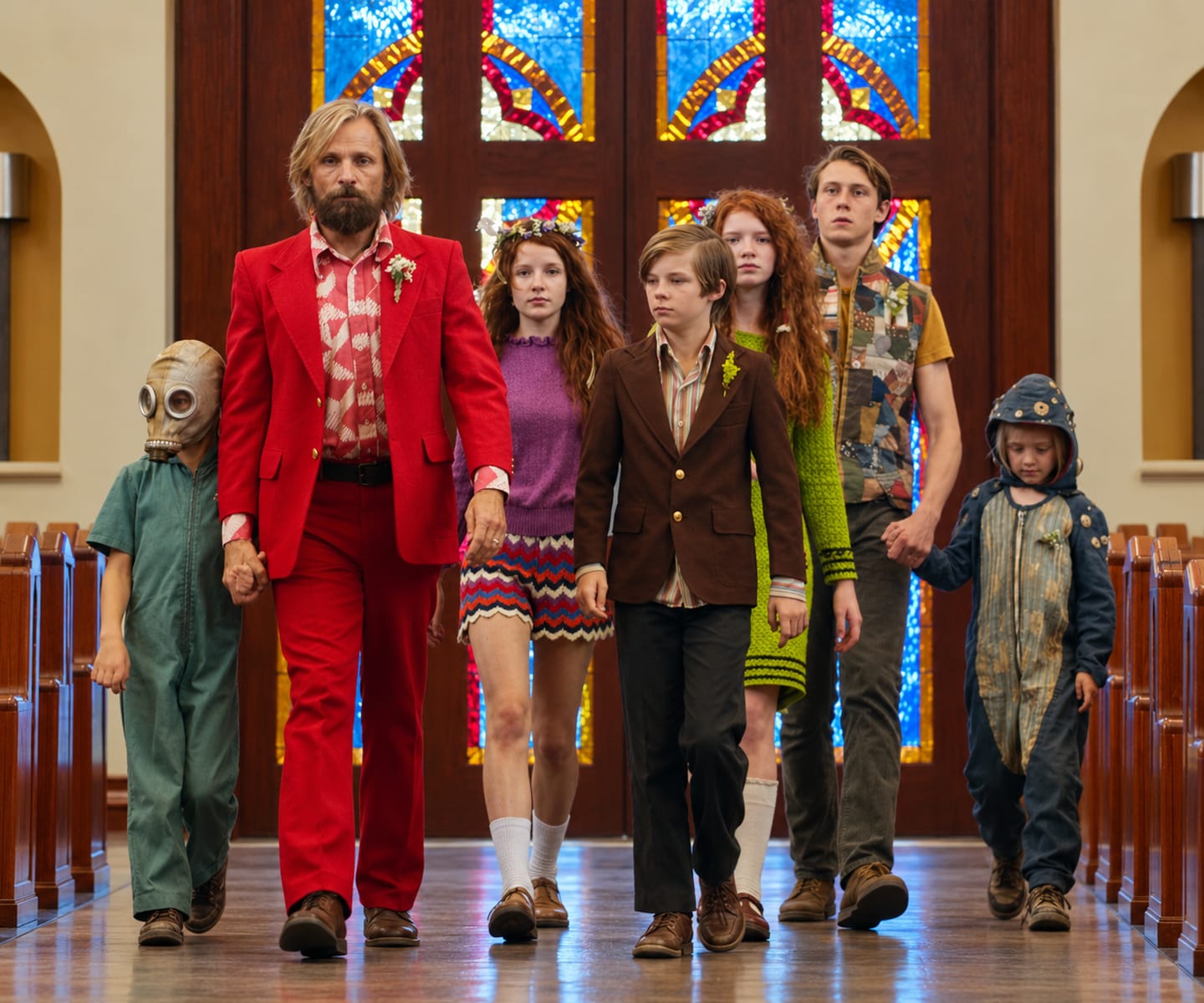
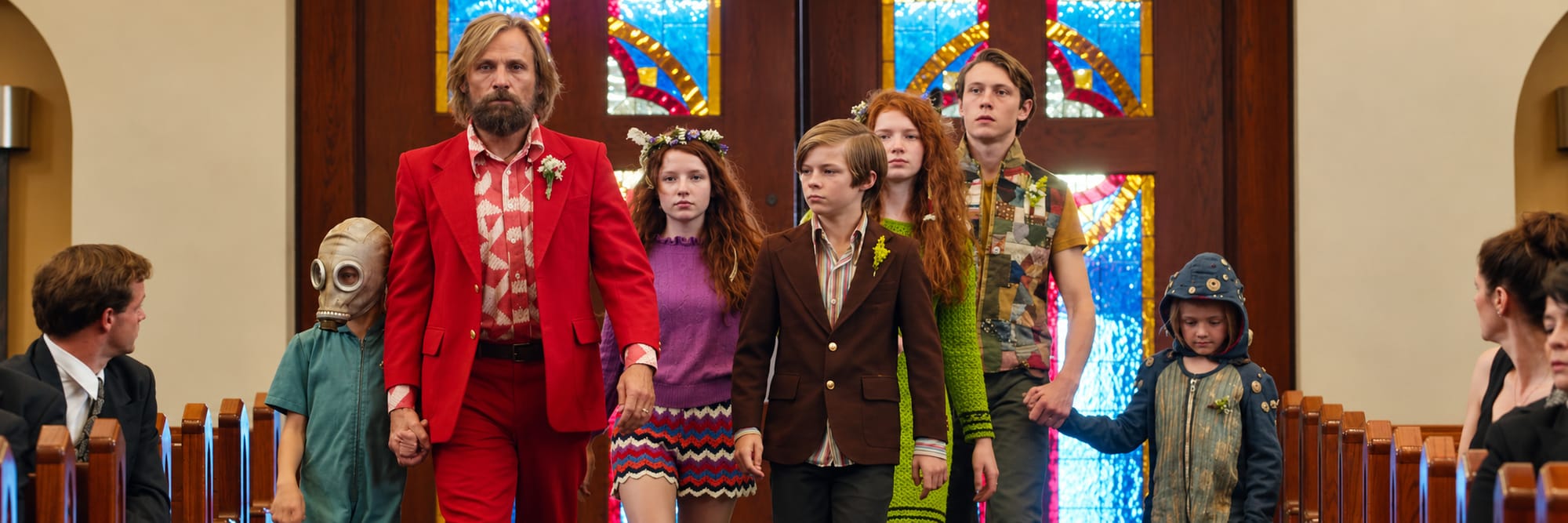
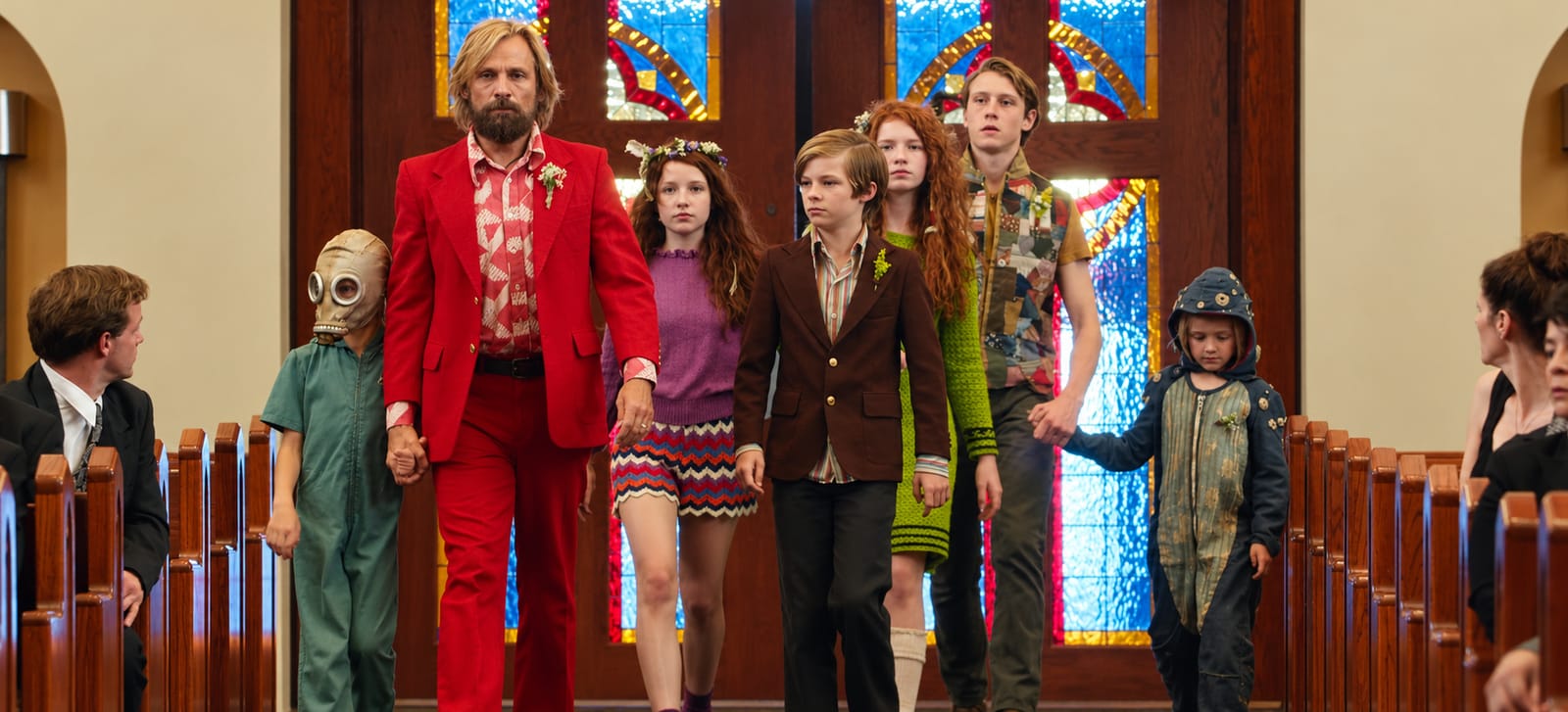
Most parents want their kids to spend a little less time staring at screens. Ben has his kids living in the forest.
They hunt their dinner, climb rock faces and discuss books that plenty of adults would struggle to finish. Nobody needs to remind them to get some exercise or find something constructive to do. As parenting accomplishments go, that’s a pretty impressive list.
Then they spend some time around other people, and you start noticing what isn’t on it.
An Education Most Parents Would Envy
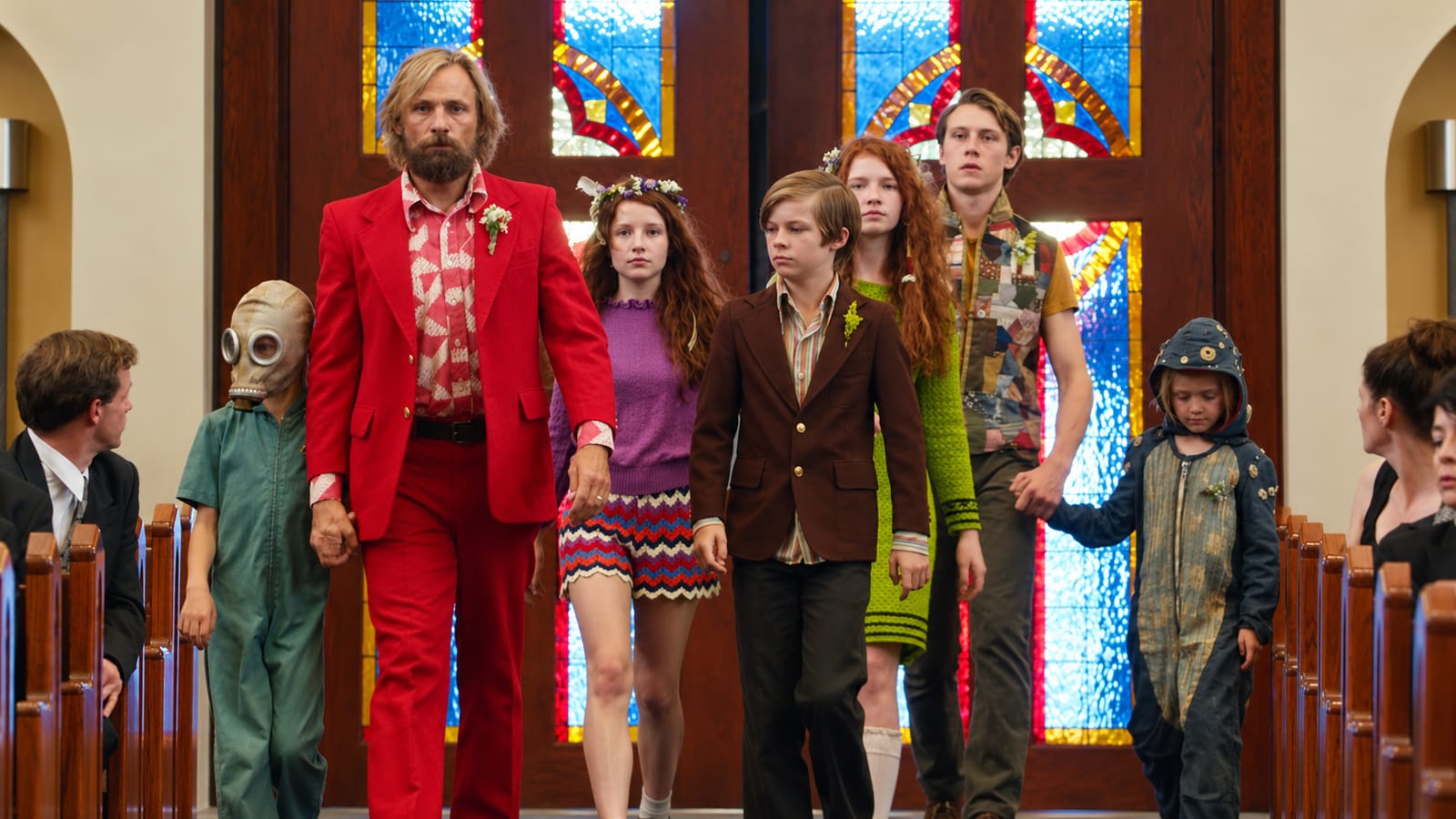
In Captain Fantastic, Viggo Mortensen plays Ben, a father raising six children deep in the Pacific Northwest. Their days combine demanding physical training with serious study, practical skills and very little patience for lazy thinking.
He doesn’t simply want them to repeat what they’ve read. He expects them to understand it, explain it and defend their conclusions. These are children who can have an actual conversation about a book.
There’s plenty to admire here. Ben spends time with his children. He knows them. He takes their questions seriously and expects more from them than sitting quietly while the adults talk. Whatever else you think of his approach, this is a father putting enormous effort into the job.
Mortensen makes that devotion believable. Ben can be warm, funny and encouraging, which matters because you need to understand why the children embrace this life. They’re a family with routines, jokes and affection, and much of what they do together looks rewarding.
You might even find yourself thinking he has a point.
Then the family leaves the woods.
The Outside World Wasn’t on the Lesson Plan
When their mother dies, Ben and the children travel to attend her funeral. Their relatives have concerns about how the children are being raised, and being around other families gives those concerns some weight.
The encounters are often funny because the children know so much and so little at the same time. They can handle difficult ideas, but ordinary conversations with people their own age are unfamiliar territory. Knowing how human beings work in theory turns out to be limited preparation for actually talking to one.
It’s easy to laugh at that gap. It’s harder to dismiss it.
Most children eventually have to learn how to deal with people who weren’t raised in their house. They encounter different expectations, develop friendships and discover interests their parents didn’t choose. Ben’s children have had relatively few opportunities to do any of that.
He has good reasons for disliking parts of modern life. But keeping his children away from its worst habits also means keeping them away from experiences they might value.
Whose Life Is He Preparing Them For?
Ben wants independent thinkers. The difficulty comes when independent thinking leads one of his children toward something he doesn’t approve of.
That’s familiar parenting territory, even if most families arrive there without hunting their own dinner. Captain Fantastic makes it harder to judge because so much of what Ben has taught his children is worth learning.
He’s taught them how to survive without the outside world.
Sooner or later, they get to decide whether they want to.
Ben’s children can hunt their dinner and debate difficult books. A family trip reveals the gaps in an education designed entirely by their father.
Most parents want their kids to spend a little less time staring at screens. Ben has his kids living in the forest.
They hunt their dinner, climb rock faces and discuss books that plenty of adults would struggle to finish. They’re exceptionally well prepared for life in the woods, but dinner with the relatives is an entirely different matter.
What It’s About
Viggo Mortensen plays Ben, a father raising six children deep in the Pacific Northwest. Their days combine demanding physical training with an education that leaves little room for television, junk food or accepting an answer without questioning it.
Ben loves his children, and he takes preparing them for adulthood seriously. He also has firm opinions about almost everything, including how little the outside world has to offer them.
When their mother dies, the family leaves the forest to attend her funeral. Traveling together in an old bus, they encounter relatives who have serious concerns about Ben’s parenting.
His father-in-law, Jack (Frank Langella), is particularly unwilling to accept that this is a reasonable way for his grandchildren to grow up. Meanwhile, the children begin discovering experiences and possibilities their father’s carefully constructed world hasn’t provided.
Who It’s For
Captain Fantastic is for viewers who enjoy unusual characters and family stories with something worth arguing about afterward. There’s humor in watching these articulate, capable children navigate ordinary social situations, but the family’s grief keeps those encounters from becoming a string of jokes.
Mortensen makes Ben’s devotion believable without smoothing away his arrogance. You can admire the attention he gives his children and still wonder what happens when one of them wants a life he wouldn’t choose.
Some encounters make conventional life look conveniently foolish, and a few of the family’s eccentricities feel exaggerated for effect. But the disagreements matter because the children have to live with the decisions. If you enjoy movies that give you reasons to sympathize with a parent while questioning his judgment, this family is worth spending an evening with.
Viggo Mortensen makes a convincing case for a very different kind of childhood, while giving us plenty of reasons to question the man providing it.
A father raising six children in the wilderness takes them into a world he’s taught them to distrust. Viggo Mortensen anchors an unusual family story about grief, independence and the limits of a parent’s certainty.
Yes. The Boys in the Boatis based on the real University of Washington rowing crew that represented the United States at the 1936 Berlin Olympics. The movie adapts Daniel James Brown’s nonfiction book, following a team of young men from working-class families during the Great Depression.
Joe Rantz, played by Callum Turner, was a real member of that crew. His difficult upbringing wasn’t invented to give the movie an emotional backstory. His mother died when he was young, and his father later left him to fend for himself at 15. Rowing became a way to help afford college, rather than the pursuit of an Olympic dream from the outset.
The biggest thing to understand is that the movie speeds up the journey considerably. Joe began rowing at Washington in 1933, three years before the Berlin Games. The film compresses that development into 1936, making the crew’s progress from inexperienced recruits to Olympic contenders seem much faster than it actually was.
The central achievement, however, is real: Washington’s eight rowers and coxswain won Olympic gold in Berlin. Hollywood shortened the road, but it didn’t invent the finish.
Joe Rantz and Washington’s Olympic crew were real. But The Boys in the Boat makes one major change to how their story unfolds.
If somebody told you that joining the college rowing team would come with a job and a place to sleep, you might develop a sudden interest in rowing. Whether you knew anything about boats would probably be a secondary consideration.
That’s how The Boys in the Boat gets started. Joe Rantz isn’t looking for Olympic glory. He’s trying to stay in college, and a spot on the University of Washington crew offers a way to support himself.
The Olympics would be nice. Having somewhere to sleep would be nice sooner.
We’ve all seen the sports story about the team nobody believes in. We know there will be hard practices, setbacks and a coach who isn’t easily impressed. But this movie gives us a reason to care whether Joe even makes the team.
A Job With an Unusual Interview
Callum Turner plays Joe as a young man who doesn’t have much to say about his circumstances. He’s living in an abandoned car, trying to keep up with school and facing a tuition bill he can’t pay. Rowing becomes a practical decision.
You don’t need to know anything about the sport to understand needing a job. And you don’t have to care about college athletics to appreciate what an education might mean to somebody with very little else going for him.
Turner’s restraint helps. Joe doesn’t continually explain how hard his life has been. He looks like somebody trying to keep other people from noticing.
Joel Edgerton’s coach, Al Ulbrickson, still needs results. Having a difficult life doesn’t automatically make somebody a good rower. The opportunity gets Joe through the door. What he does with it is another matter.
A Bigger Future Than He Had in Mind
George Clooney directs this as a straightforward underdog story. You’ll recognize the route, and a little more time with the other men would have helped them feel as distinct as Joe. But that practical beginning gives the familiar journey some weight.
As the crew’s ambitions grow, you remember where Joe started. The distance that matters isn’t only between the beginning and end of a race. It’s between scraping together enough money to stay in college and discovering you might be capable of competing on an international stage.
Joe doesn’t have that journey mapped out when he tries for a place in the boat. He needs work, somewhere to stay and a chance to keep going.
For somebody in his position, staying in school is already an ambitious plan. Rowing gives him a reason to make a bigger one.
Joe Rantz has a practical reason to try out for the rowing team: it comes with work and somewhere to stay. That makes the familiar underdog story in The Boys in the Boat matter before the racing even begins.
Trying out for a college team is one thing. Trying out because you need a job and somewhere to sleep gives the selection process a little more urgency.
That’s where The Boys in the Boat begins. Before anyone can think about competing against the world’s best, there’s the more immediate problem of getting through college during the Great Depression.
What It’s About
Callum Turner plays Joe Rantz, a University of Washington student barely scraping by. When he learns that making the rowing team comes with paid work, he tries out despite having little reason to think he belongs in a racing shell.
He’s hardly the only applicant who needs the money.
Coach Al Ulbrickson (Joel Edgerton) has to turn these young men into a crew capable of competing against established programs with greater resources. Physical strength helps, but eight men pulling hard won’t accomplish much unless they learn to move together.
Based on a true story, the movie follows their unlikely push toward the 1936 Berlin Olympics. For Joe, that means learning to depend on other people after spending much of his life getting by on his own.
Who It’s For
If you enjoy sports movies about overlooked people earning their opportunity, this is comfortably in your territory. You don’t need to know anything about rowing. The movie makes the effort, coordination and pressure understandable enough to give you a reason to care when the boats line up.
The storytelling is conventional, and several teammates remain less developed than Joe. Anyone hoping for a detailed portrait of the entire crew may find it a little thin.
But the races provide momentum, and the Depression setting gives the opportunity real value. For an evening when you want a straightforward story about perseverance and teamwork, The Boys in the Boat is an easy film to settle into.
An old-fashioned underdog story about young men who need more than a win. The familiar sports-movie formula works best when it lets their circumstances give the races meaning.
A struggling college student joins a rowing crew for the paid work and finds an opportunity far beyond staying in school. The Boys in the Boat follows an unlikely team’s push toward the Olympics with familiar but engaging underdog storytelling.
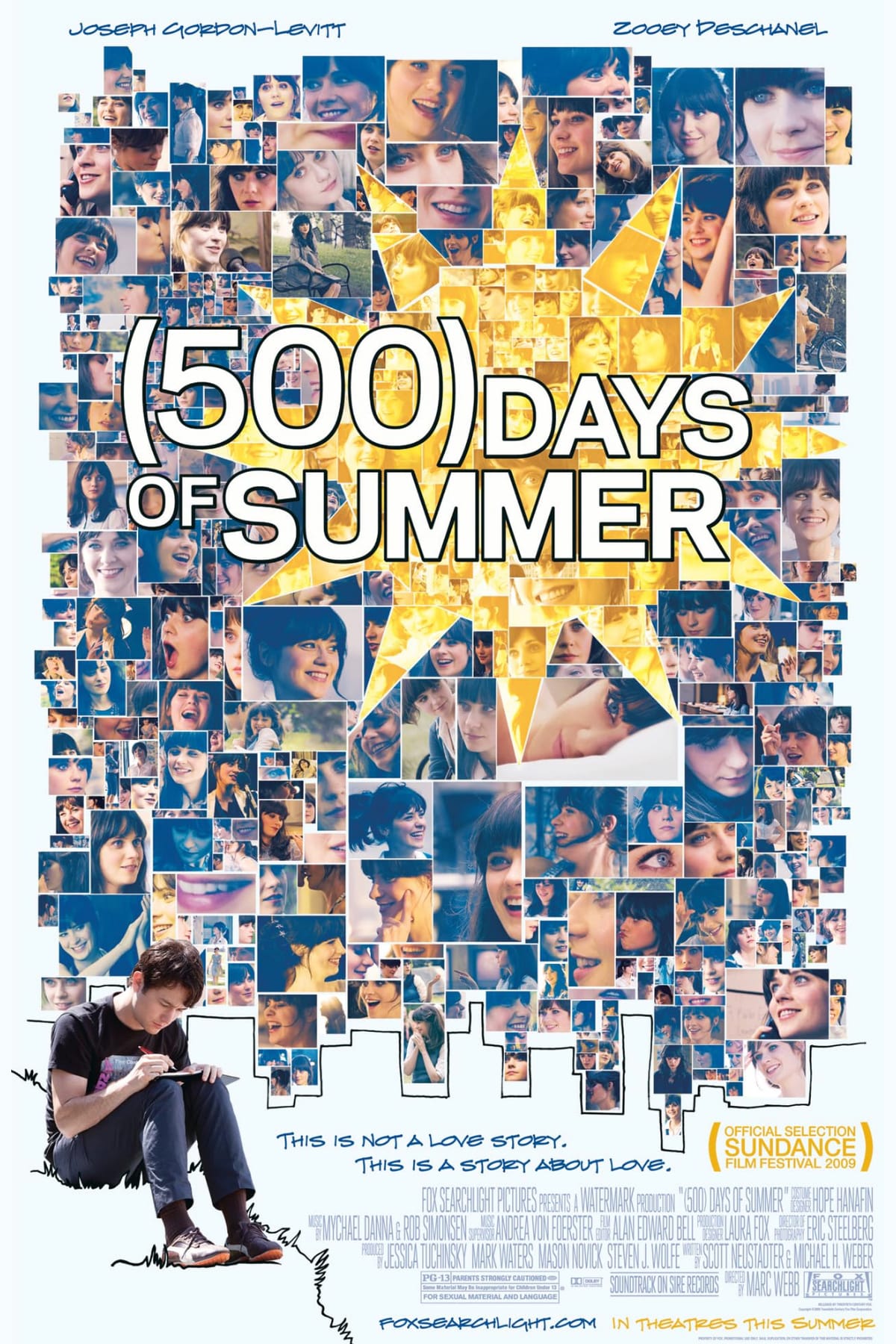
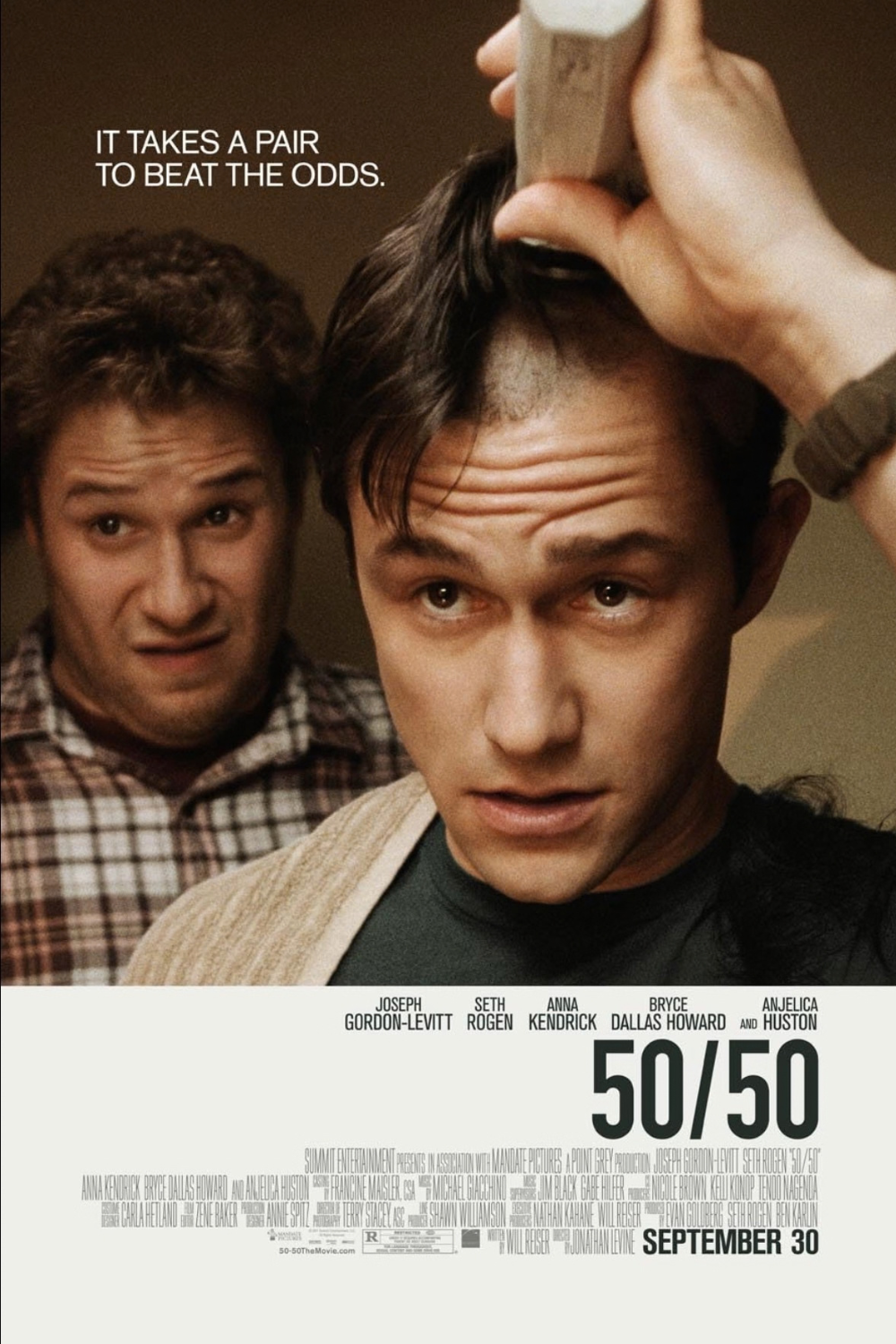
Yes—500 Days of Summer was heavily inspired by a relationship experienced by co-writer Scott Neustadter. Tom and Summer are fictional characters, but much of what happens between them came from his own life.
In a 2009 interview, Neustadter explained that he and writing partner Michael H. Weber began working on the screenplay after he was dumped. Writing became a way to work through the experience and eventually find some humor in it. He said that even certain musical choices came directly from moments in the real relationship.
That doesn’t make the finished movie a literal record of everything that happened. The writers shaped those experiences into a fictional story. But the confusion of thinking you’ve found your person, only to discover they don’t feel the same way? That part was personal.
Tom and Summer are fictional, but much of their relationship came from co-writer Scott Neustadter’s own experience. Here’s the real-life inspiration behind *500 Days of Summer*.
She likes the same music. She’s funny. You’re attracted to her, she seems attracted to you, and spending time together feels almost ridiculously easy. After enough disappointing dates, this seems like something worth getting excited about.
There’s just one small problem. She’s told you she doesn’t want a serious relationship.
Well, people say things. Maybe she hasn’t met the right person yet. Maybe she’s protecting herself. Maybe once she realizes how good you are together, she’ll change her mind.
That’s a lot of maybes to build a relationship on.
She’s Told Him. He’s Still Hopeful.
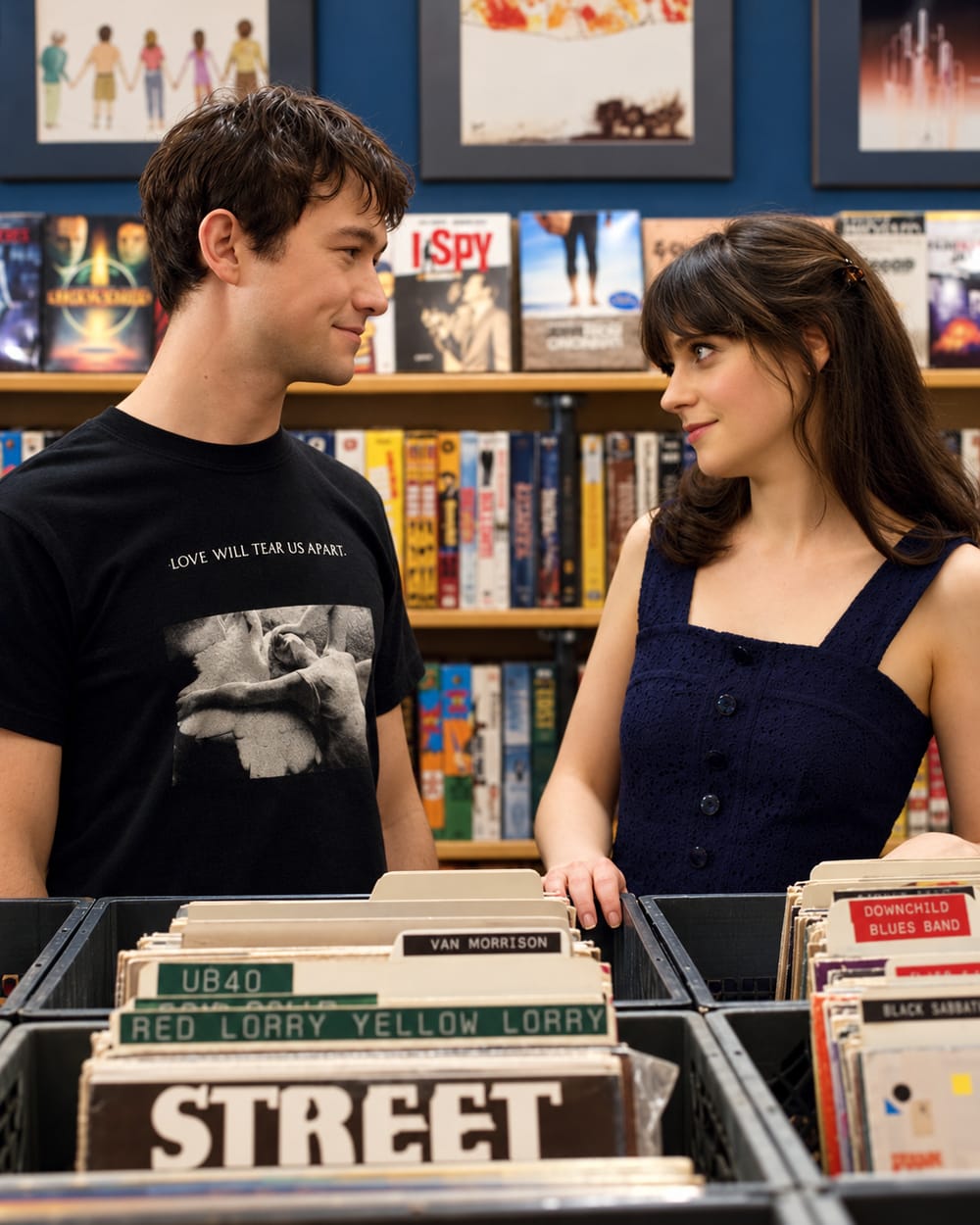
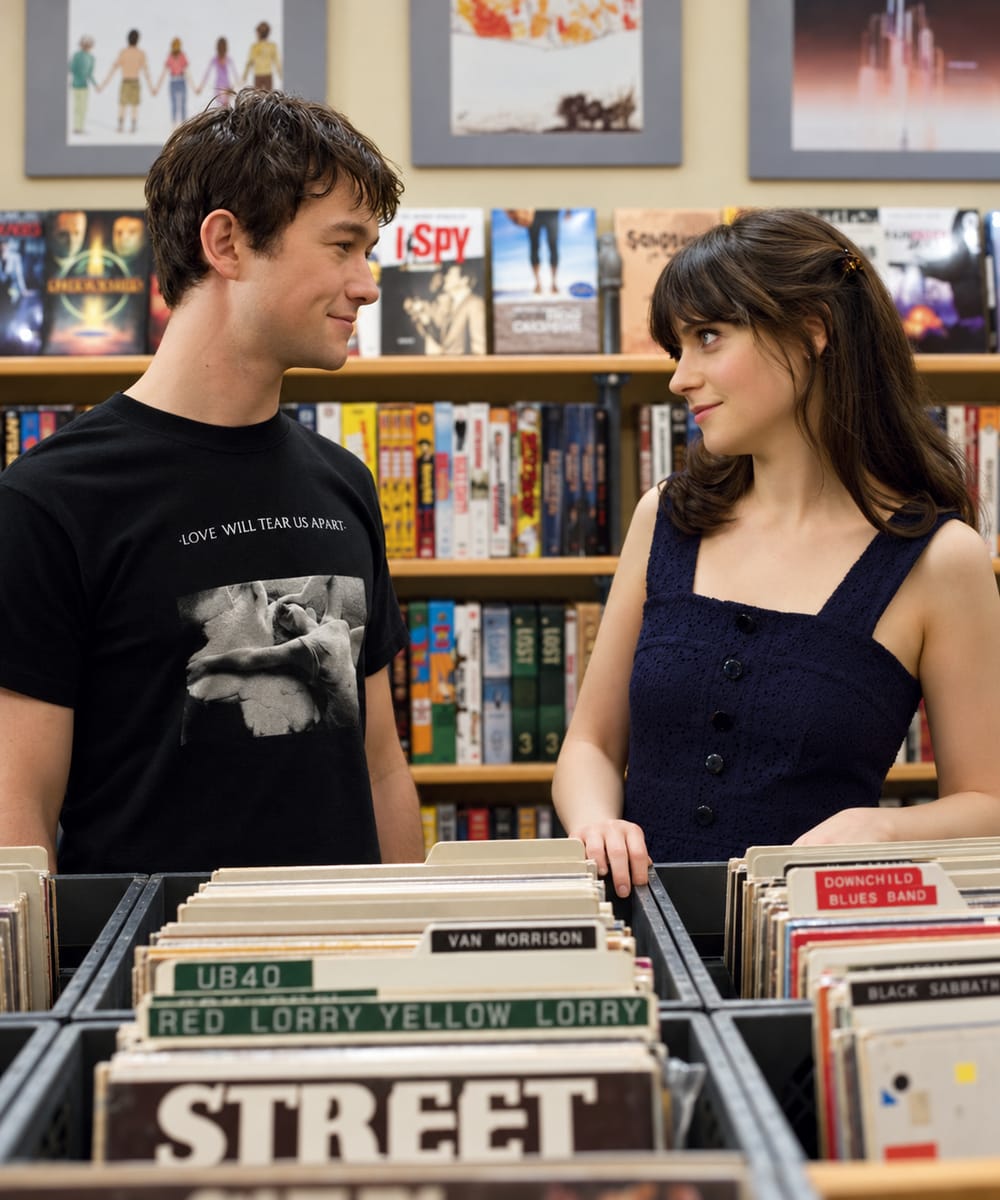
Joseph Gordon-Levitt plays Tom in 500 Days of Summer, a greeting-card writer who believes in the kind of love that makes everything else fall into place. When he meets Summer, played by Zooey Deschanel, it doesn’t take much for him to start imagining that she might be the person he’s been waiting for.
Summer is interested in him. She enjoys his company, and what develops between them gives him plenty of reasons to be happy. But she’s also clear that she isn’t looking for the commitment he wants.
Tom hears that. He just gives considerably more weight to everything that seems to contradict it.
And you can understand why. Being told somebody doesn’t want a serious relationship gets confusing when you’re spending time together doing things that certainly feel like one. There’s affection, intimacy and the comfortable little routines that make another person part of your life.
He’s waiting for her to catch up to a future he’s already started imagining.
The Good Days Make a Convincing Argument
The movie moves back and forth through their time together, which is a particularly effective way to tell this story. You see why Tom falls for Summer, but you also see the uncomfortable moments that don’t fit the version he prefers.
Gordon-Levitt makes Tom easy to sympathize with because he captures both the excitement and the embarrassment. You can enjoy watching him get carried away even while recognizing that he’s getting carried away.
Deschanel has a trickier job. We spend so much time with Tom’s feelings that Summer can seem unfair simply because she doesn’t share them. But wanting somebody badly doesn’t make their reluctance a character flaw.
That’s an uncomfortable thought when you’re the one doing the wanting.
You Can’t Be in Love for Both of You
What makes 500 Days of Summer interesting is that Tom’s mistake grows out of something most people would consider a good quality. He’s hopeful. He believes this connection matters, and he wants to give it a chance.
But hope becomes a problem when it starts answering questions for somebody else.
There’s nothing foolish about being excited when you meet a person you could love. The foolish part is deciding that the strength of your feelings settles the matter. Shared music, great afternoons and genuine affection can all mean something without meaning everything you want them to.
Tom thinks he’s in a love story. He has some lovely memories to support that conclusion.
He still needs to find out whether Summer thinks she’s in the same one.
Summer says she doesn’t want a serious relationship. Tom has plenty of reasons to believe they’re perfect together—and a growing habit of treating those reasons as her answer.
Having the same taste in music is a good start. Whether it means you’re supposed to spend the rest of your lives together is a different matter.
(500) Days of Summer follows a man who gets a bit ahead of himself on that second part. It’s funny, occasionally uncomfortable, and particularly good at showing how we can turn a promising connection into a whole future the other person hasn’t agreed to.
What It’s About
Joseph Gordon-Levitt plays Tom Hansen, a greeting-card writer who believes there’s one person out there who will make everything fall into place. When Summer Finn (Zooey Deschanel) starts working at his office, he begins to think he’s found her.
Summer enjoys his company, but she doesn’t share his enthusiasm for serious relationships. Tom hears that. Whether he actually accepts it is another matter.
The movie jumps around their 500-day history, moving between the excitement of getting close and the confusion of trying to understand what happened. A happy afternoon can sit right beside an unhappy conversation, giving us a chance to compare the relationship Tom remembers with the one unfolding onscreen.
Who It’s For
You'll love 500 Days if you like romantic comedies that leave room for people to misunderstand each other without making either person a complete idiot or an obvious villain.
The quirkiness can feel a little calculated, and seeing everything largely through Tom’s perspective leaves Summer harder to know. But that limited perspective also gives the movie something worth examining. Watch it for the humor, the chemistry, and the gap between liking someone and understanding them.
Being perfect for someone in your head doesn’t necessarily make them perfect for you in real life. This movie finds plenty of humor (and some uncomfortable recognition) in that distinction.
A hopeless romantic falls for a coworker who has very different expectations. Joseph Gordon-Levitt and Zooey Deschanel give this funny, bittersweet relationship story its appeal, while a shuffled timeline lets us question the romance its leading man remembers.
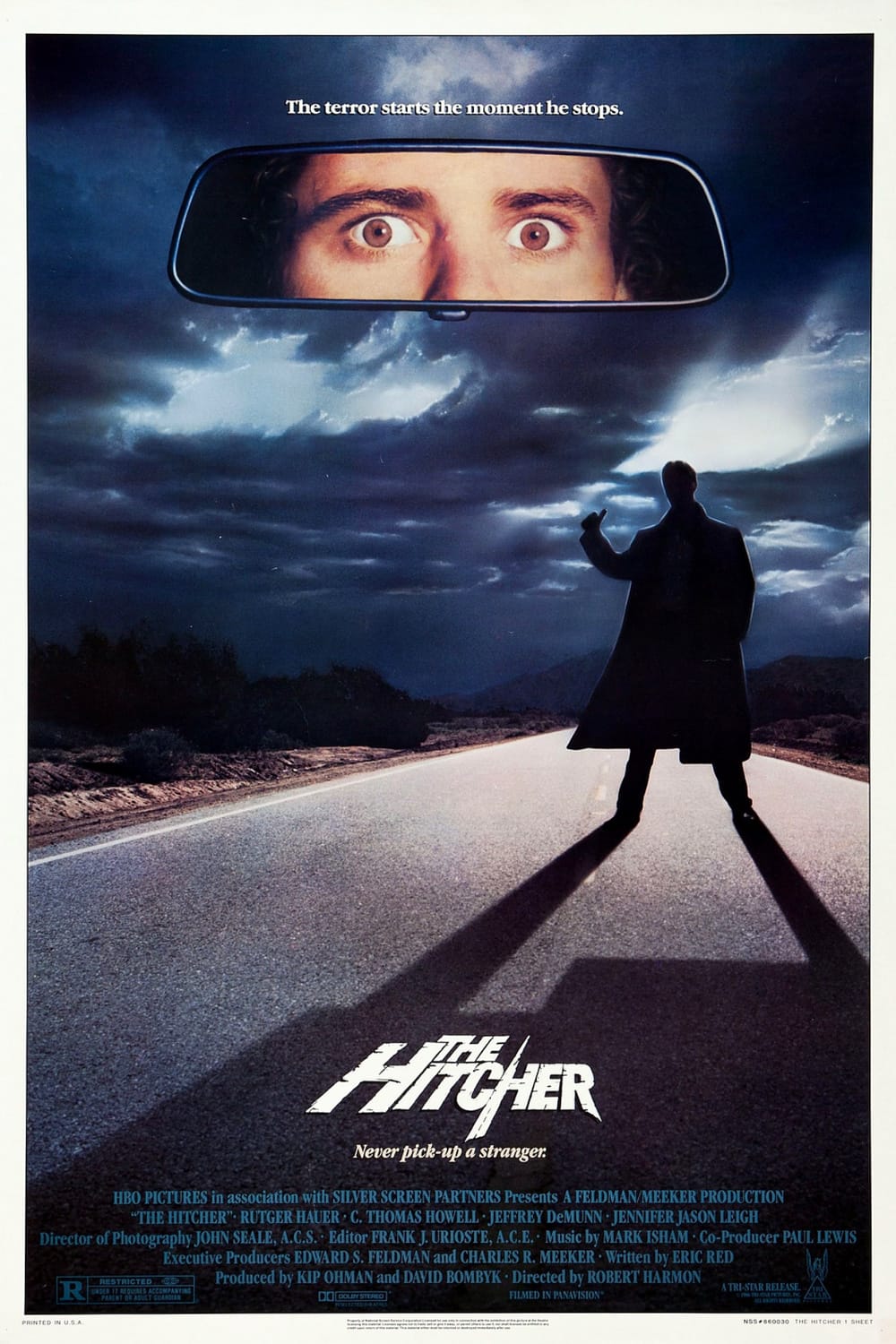
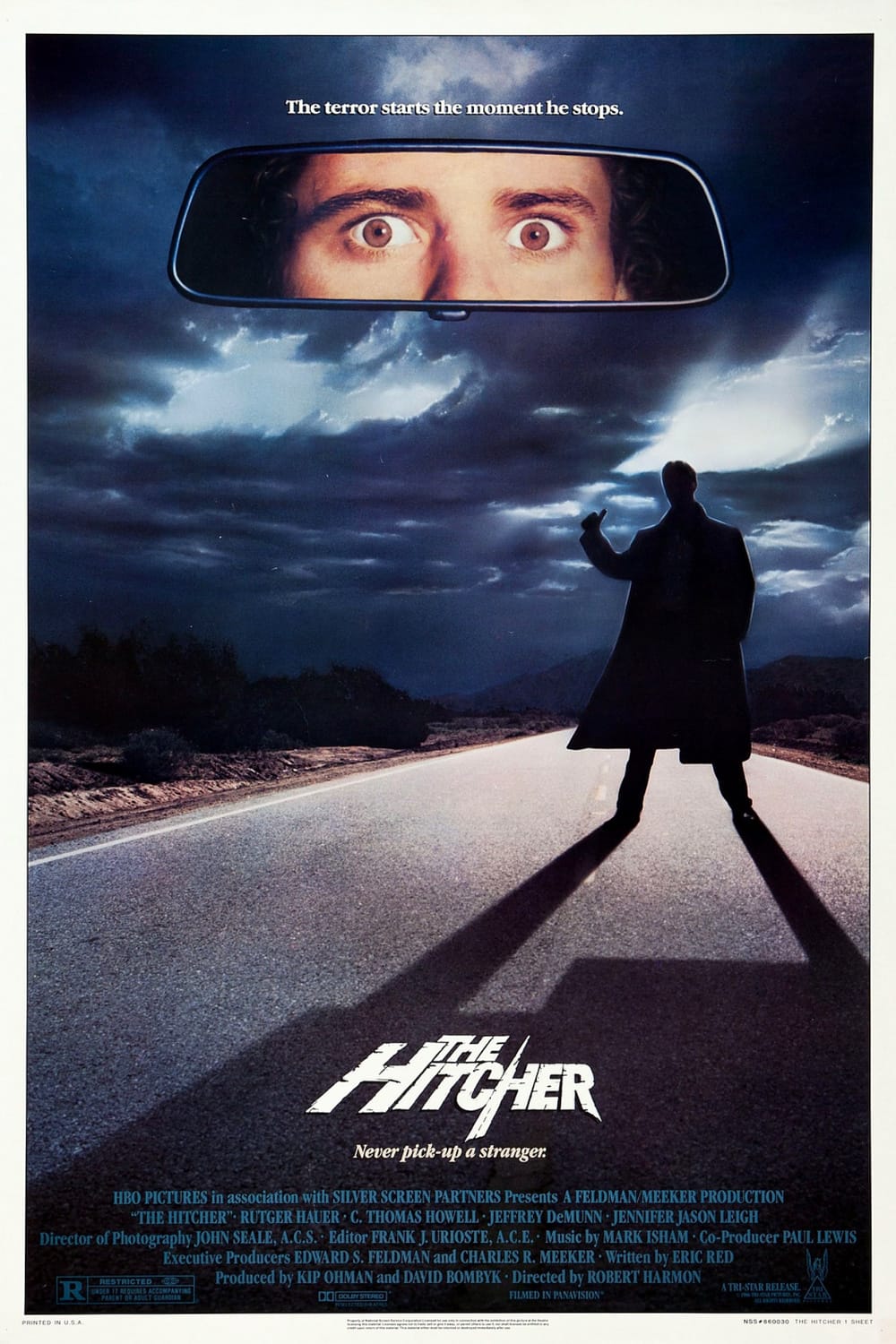
You're driving down a lonely highway in the middle of nowhere. There's not much to look at except miles of desert, and you haven't seen another car in quite a while.
Then you spot a man standing beside the road, looking for a ride.
You think about it for a second. You're going that direction anyway. Why not help the guy out? Besides, a little company might make this boring drive go faster.
Seems like a decent thing to do.
Watch The Hitcher, and you might never have that thought again.
The Worst Passenger You Could Possibly Pick Up
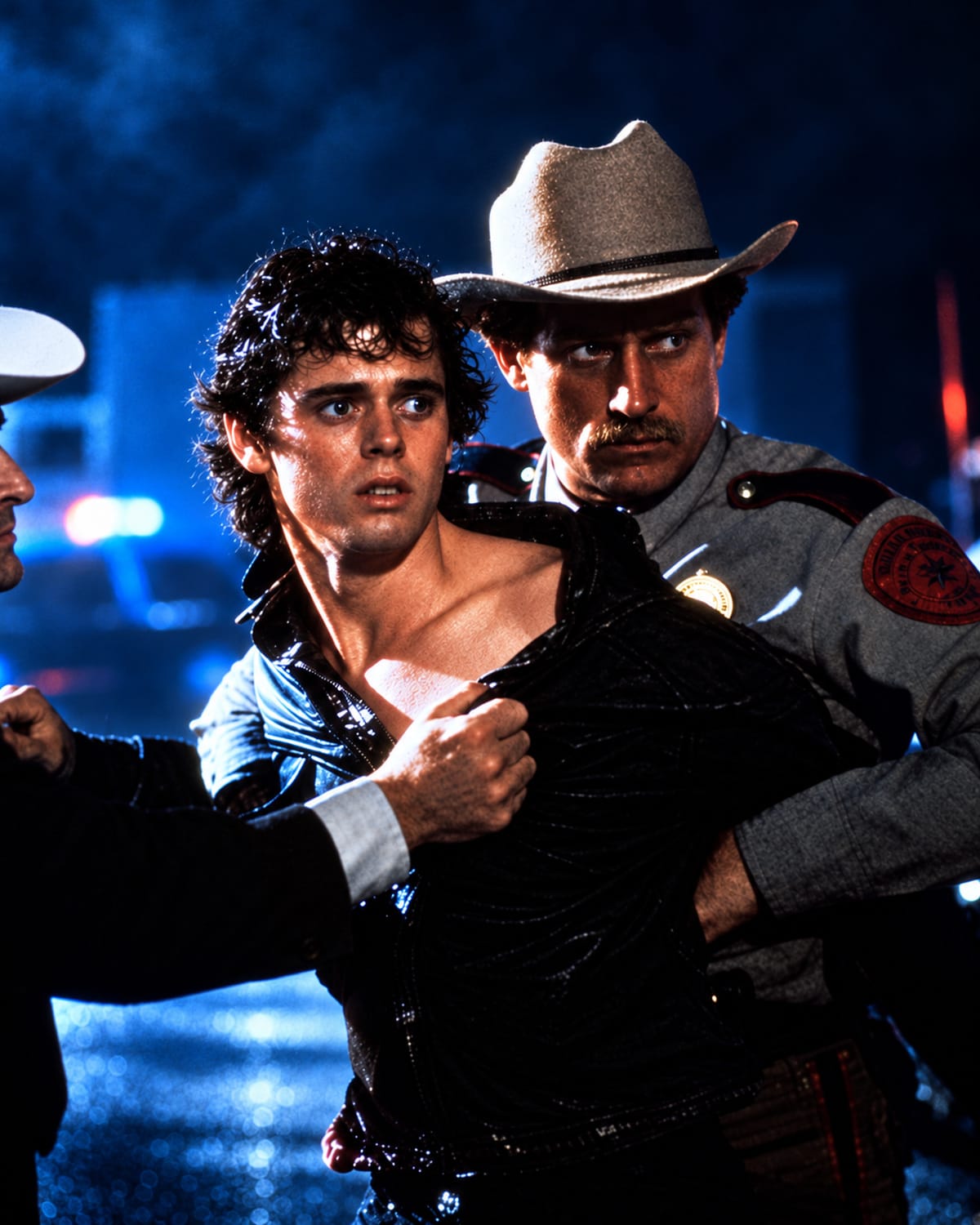
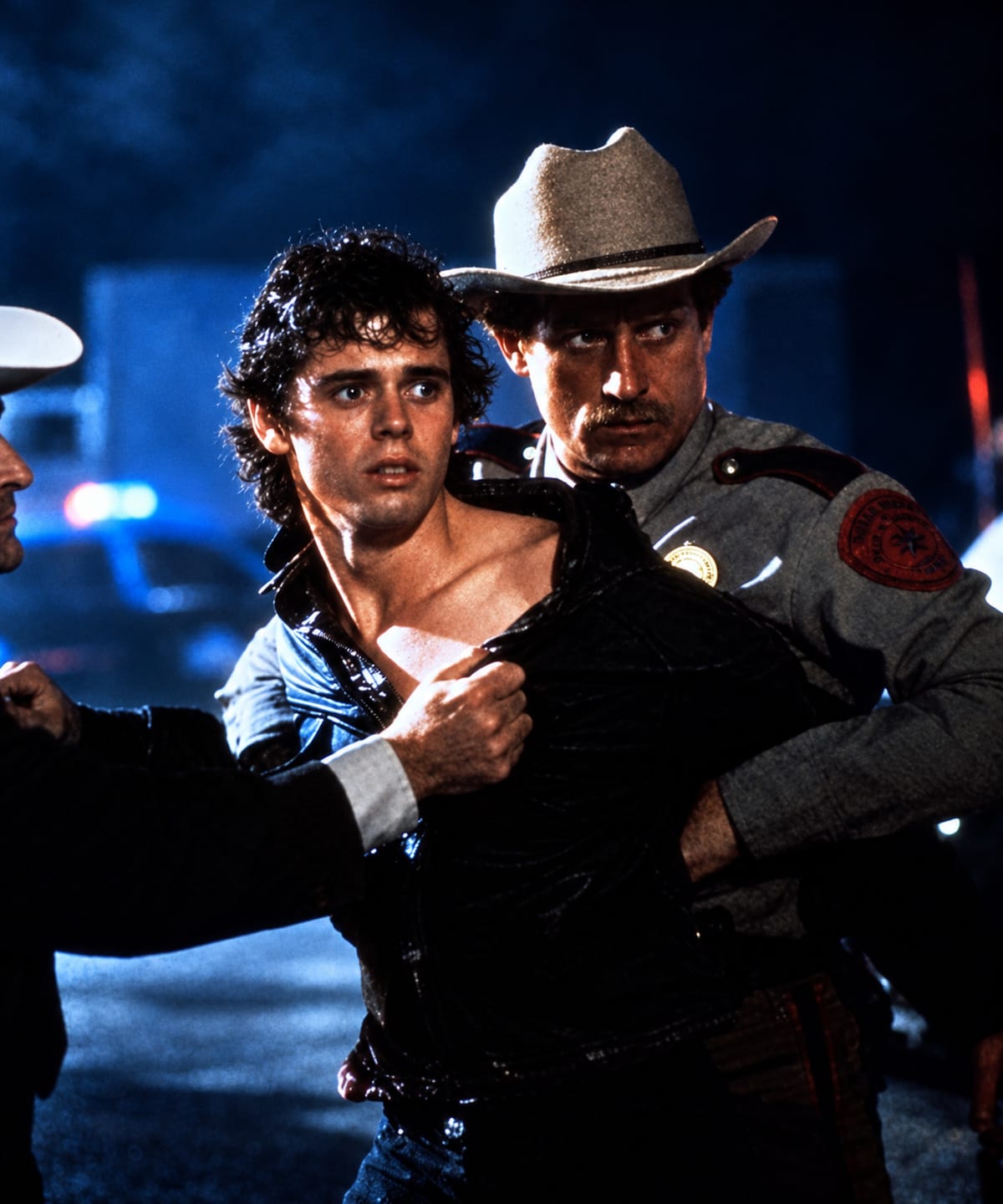
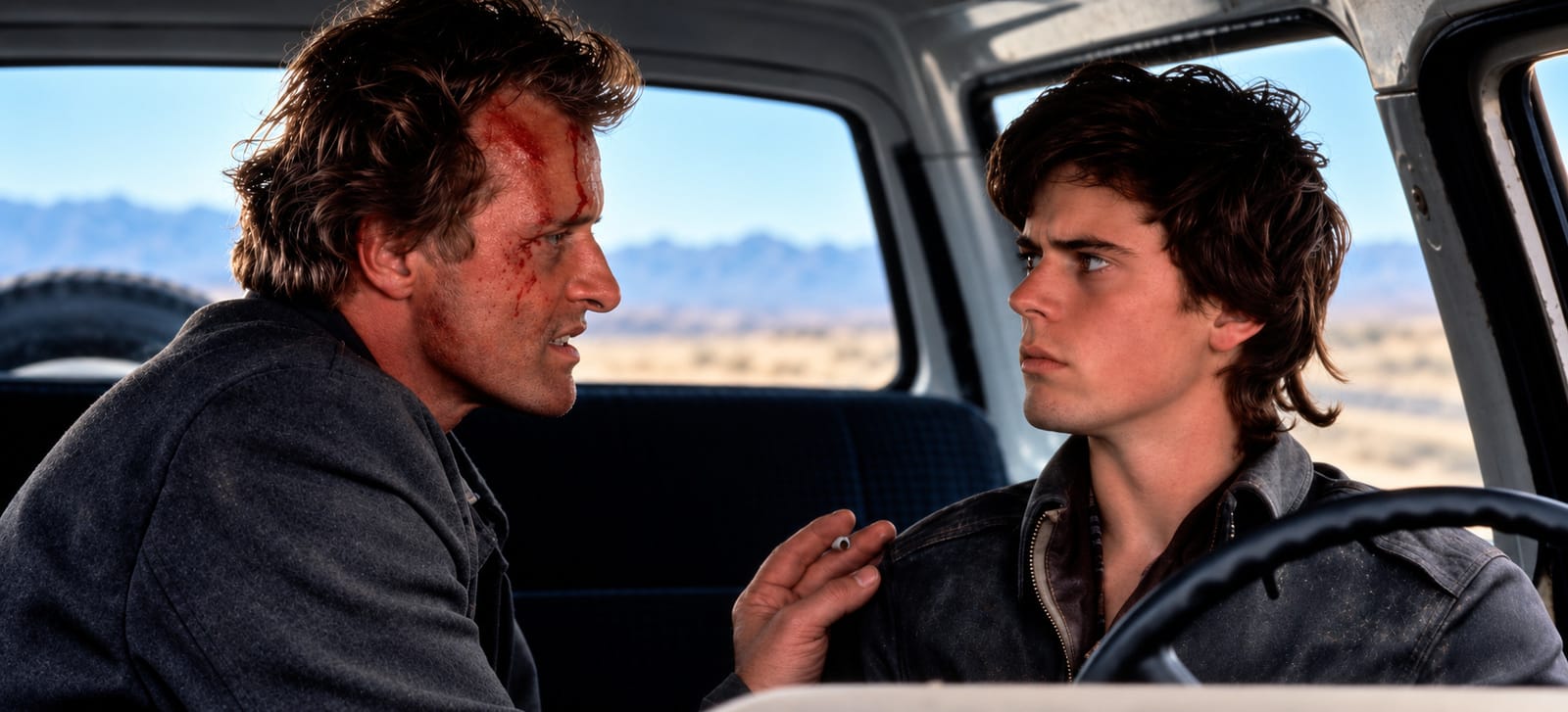
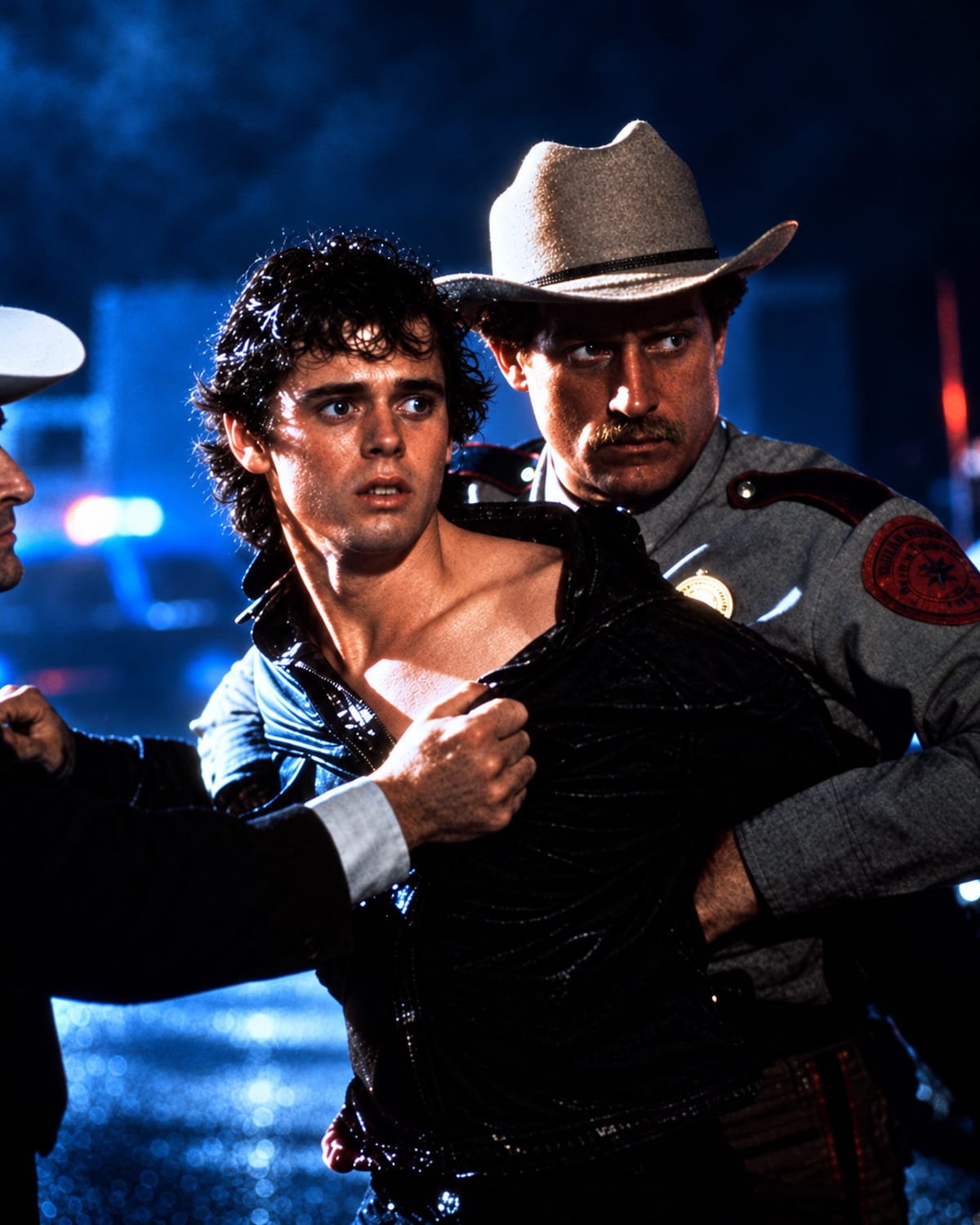
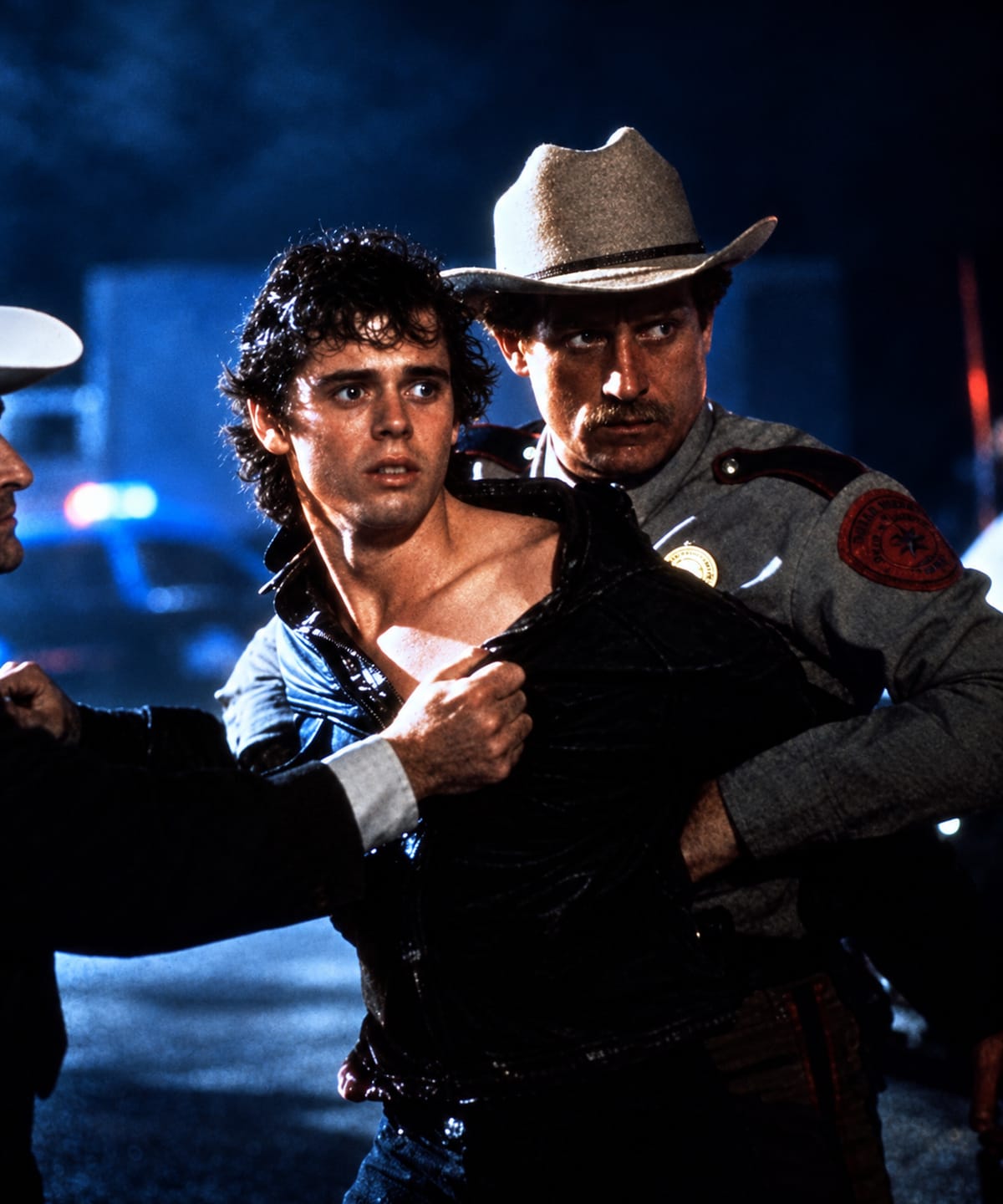
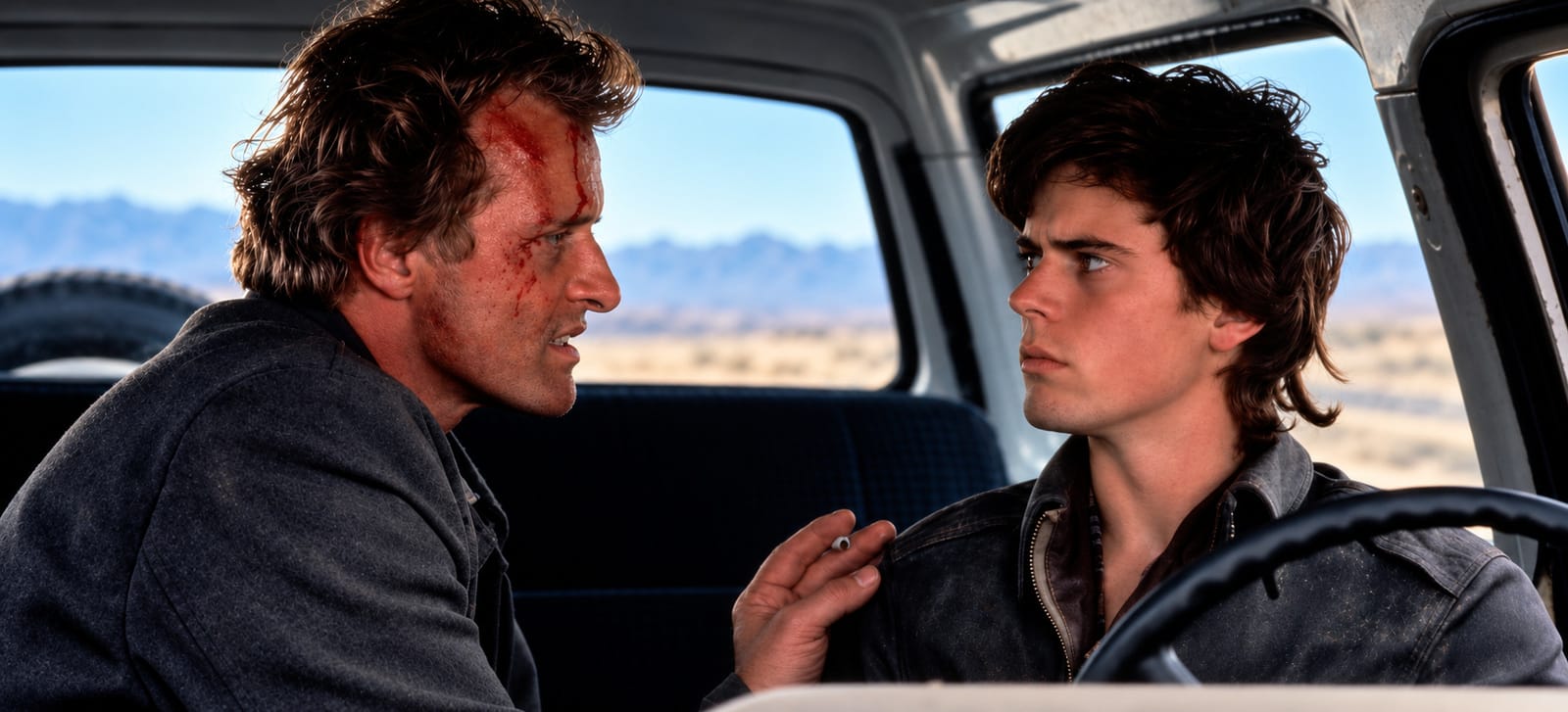
Jim Halsey (C. Thomas Howell) is a young man driving a car across the country. He's tired, the highway seems endless, and when he sees a hitchhiker standing in the rain, he pulls over.
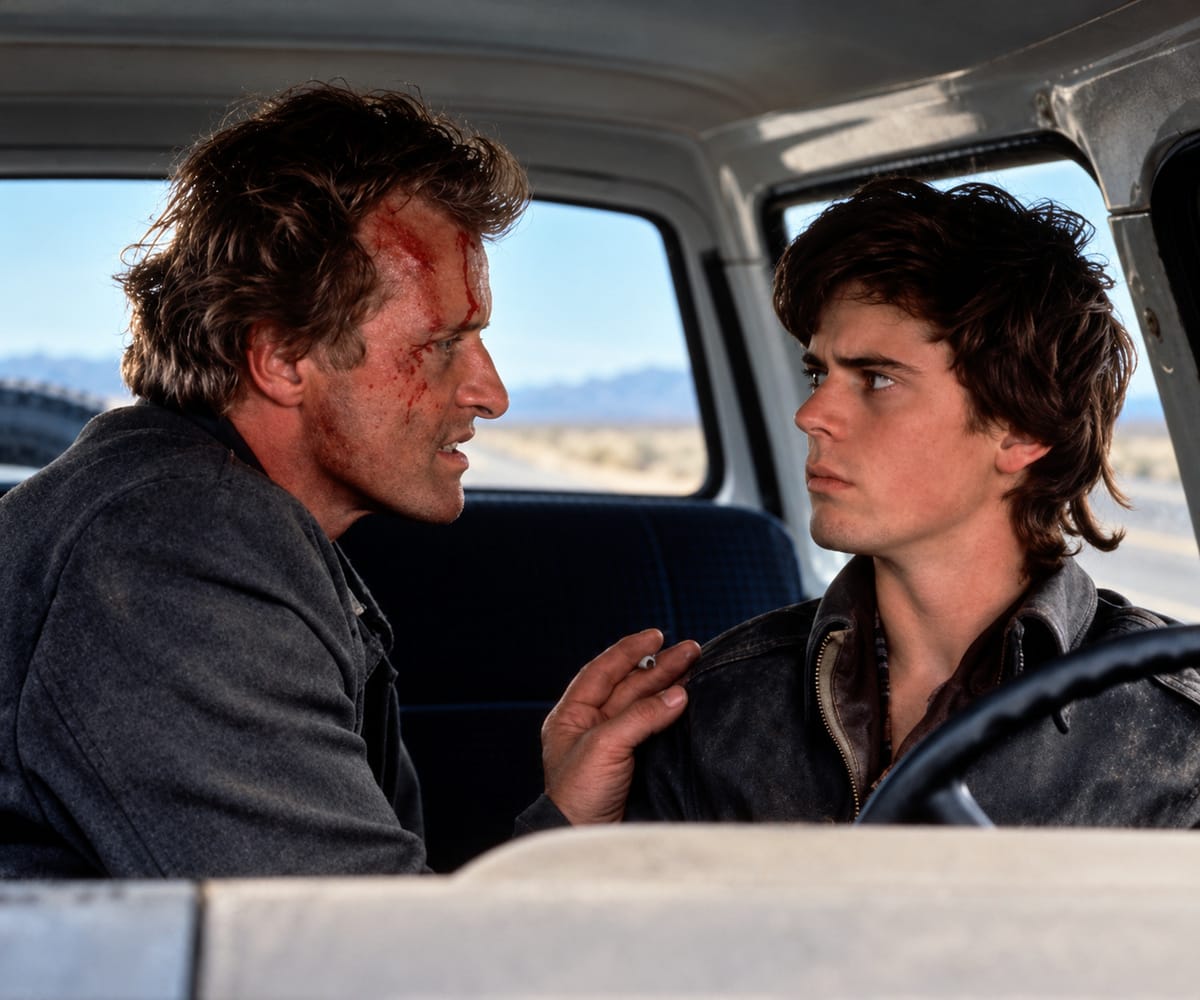
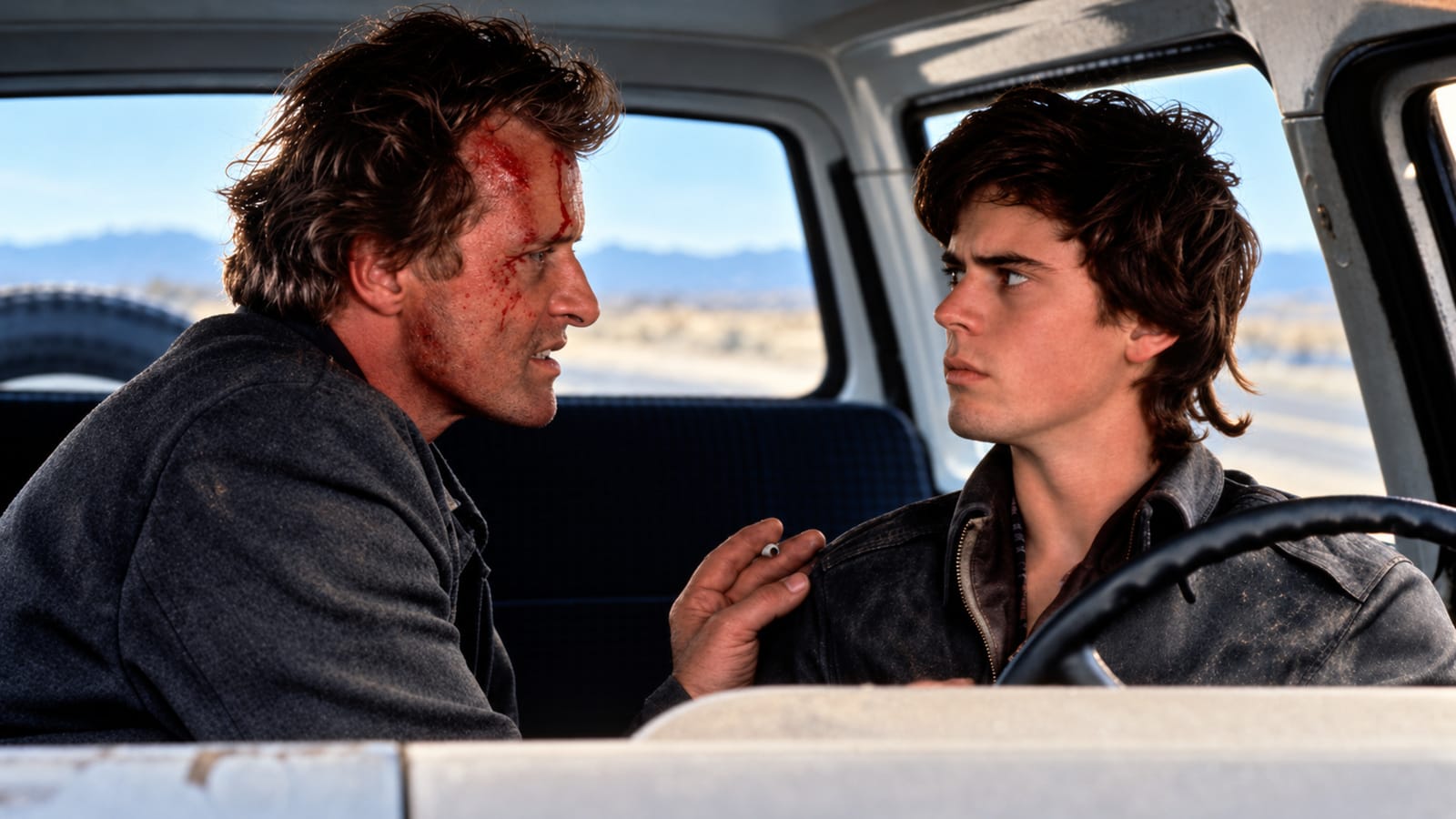
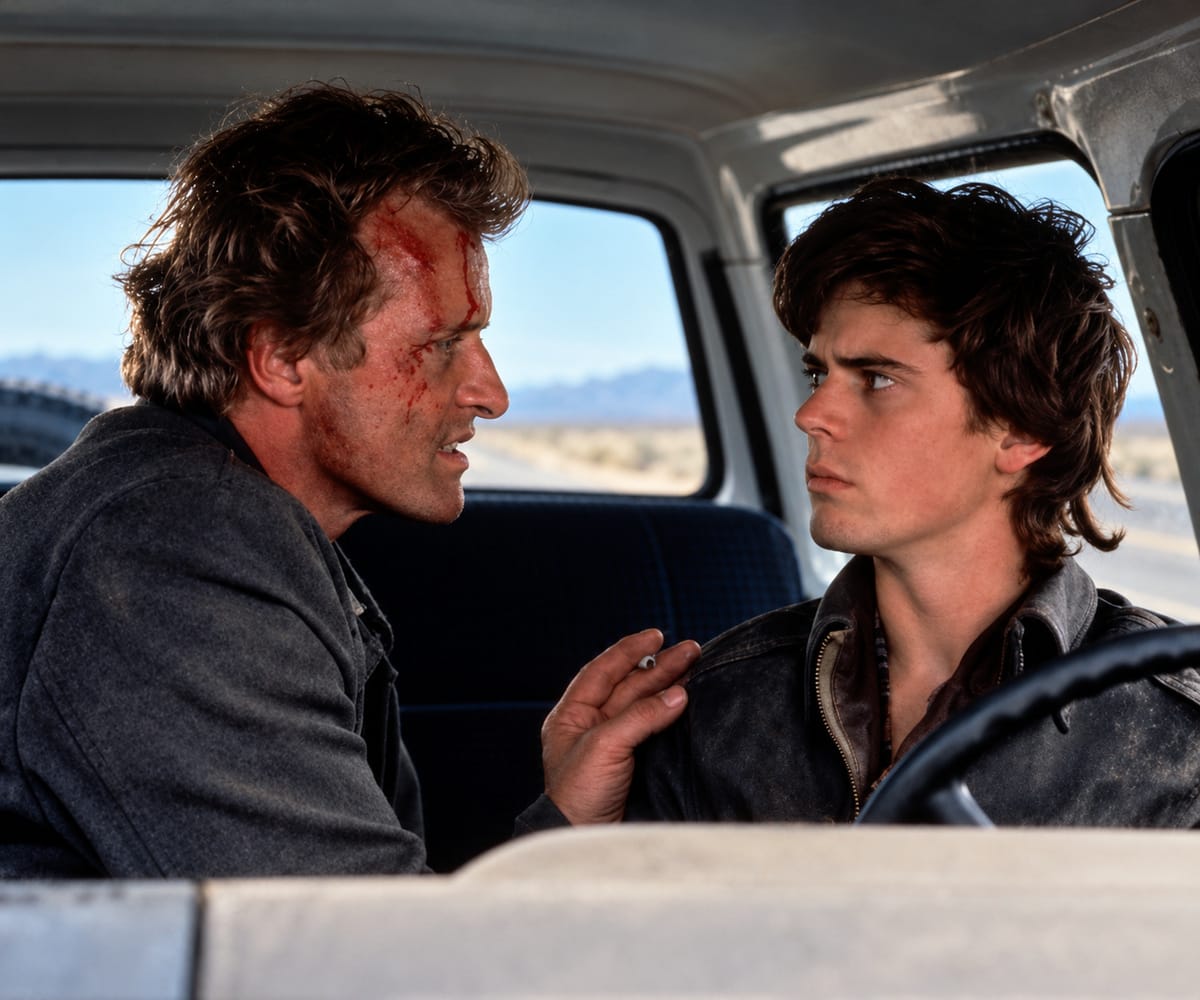
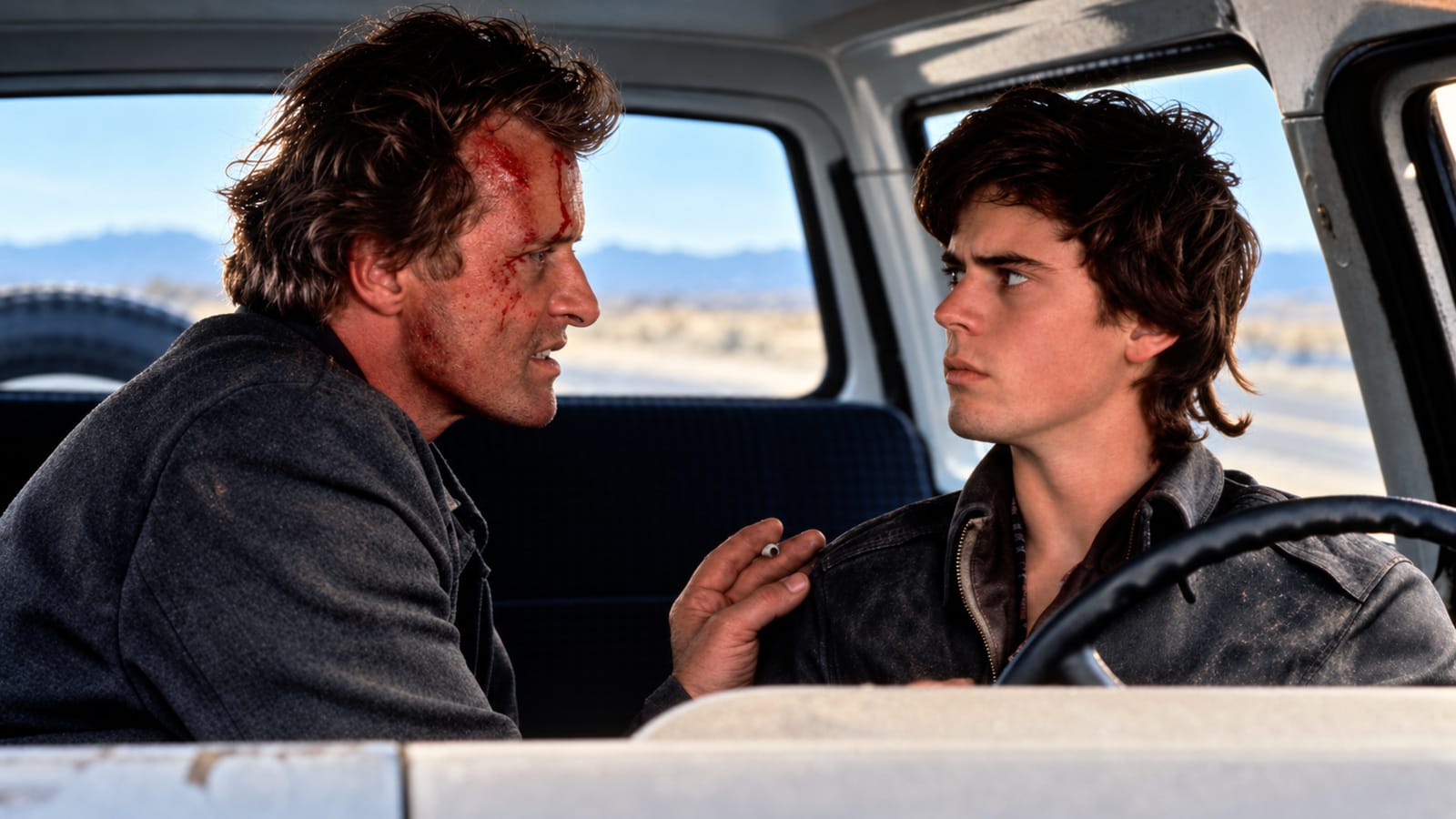
The man's name is John Ryder, played by Rutger Hauer.
At first, Ryder doesn't seem especially threatening. He's quiet, a little strange, and not particularly interested in conversation. But it doesn't take long before Jim realizes he's made a terrible mistake.
Ryder isn't some harmless traveler looking to get to the next town. He's a killer, and he has something particularly unpleasant in mind for the young man who's just offered him a ride.
Jim eventually manages to get Ryder out of his car, and you'd think that would be the end of it.
Unfortunately, Ryder has other plans.
What follows is a nightmare that stretches across miles of empty Texas highway. Jim finds himself pursued by a man who seems to appear wherever he goes, leaving dead bodies behind and making sure the police have every reason to believe Jim is responsible.
All because he stopped to help somebody.
Rutger Hauer Is Absolutely Terrifying
What's especially disturbing about Ryder is how little effort he seems to put into being frightening.
He doesn't spend much time shouting or making elaborate threats. He doesn't need to. Hauer plays him with an almost casual indifference to human life. He can be sitting across from somebody having a perfectly ordinary conversation, and you still wouldn't be surprised if he suddenly pulled out a knife.
There's something deeply unsettling about a man who seems to have absolutely nothing to lose.
And Ryder doesn't appear particularly interested in getting away with his crimes. In fact, there are moments when you begin to wonder whether he's trying to get Jim to kill him.
That makes him even more frightening. How do you deal with somebody who doesn't seem especially concerned about his own survival?
Hauer is excellent in this role. He gives Ryder just enough personality to make him feel like an actual person, but never enough to make you comfortable around him.
C. Thomas Howell deserves some credit, too. Jim is young, frightened, and increasingly desperate. He's not an action hero who's prepared for this sort of thing. He's an ordinary guy who made a decision millions of people have probably made without giving it much thought.
And now he's paying a terrible price for it.
There's No Place to Hide on an Open Highway
One of the things I like most about The Hitcher is its setting.
Most horror movies give their characters somewhere to hide. A house, a basement, a dark building with an unfortunate number of unlocked doors.
Here, you've got hundreds of miles of open road.
You can see for miles in almost every direction, but that doesn't seem to help Jim. The gas stations are isolated. The towns are few and far between. And every time he thinks he's finally escaped Ryder, the man somehow turns up again.
Even finding the police doesn't solve his problem. Ryder is so good at manipulating the situation that Jim quickly discovers the people who should be helping him have become another threat.
Jennifer Jason Leigh enters the story as Nash, a waitress who becomes involved in Jim's desperate attempt to survive. She's one of the few people willing to believe him, which is fortunate because practically everybody else seems ready to put him in jail.
Or worse.
The movie has some terrific action sequences, but what really makes it work is that constant feeling of helplessness. Jim can't outrun his problem, he can't explain it away, and he certainly can't reason with the man who's causing it.
He just has to survive.
Would You Have Stopped?
That's the question I kept coming back to.
I don't pickup hitchhikers. Never have. But I've been tempted.
We generally want to help people in need of help, particularly if we were in a position to do so without much inconvenience.
And that's what makes the premise so effective. Jim doesn't do anything wrong. He isn't looking for trouble, showing off, or making some spectacularly stupid decision that any sensible person would avoid.
One lonely highway, one stranger looking for a ride, and one seemingly decent decision. The Hitcher turns a simple act of kindness into a nightmare you won't easily forget.
Jeff Bridges plays a lot of different characters, but I can't think of many he's made more believable than Bad Blake in Crazy Heart. He's a country singer whose better days are well behind him. He's drinking too much, playing small gigs in bowling alleys, and generally making a mess of his life. When we meet him, he's pretty much at rock bottom. And Bridges is so convincing that you almost forget you're watching an actor.
What I particularly enjoyed was watching Blake slowly find his way back. Colin Farrell plays Tommy Sweet, a younger country star who owes some of his success to Blake and hasn't forgotten it. Their relationship is an important part of the story, and Farrell is very good in the role. I also really liked Maggie Gyllenhaal as Jean, a journalist who becomes romantically involved with Blake. Their relationship gives the movie some genuine warmth, but it also makes you wonder whether a guy who's made this many mistakes can really change.
The music is good, too, and Bridges looks and sounds like someone who's been performing these songs his entire life. Crazy Heart isn't an especially fast-moving movie, and it's not going to surprise you with a lot of twists. But it doesn't need to. It's a good story about a talented man who's spent years getting in his own way, and what happens when he finally has a reason to do something about it. If you missed this one, it's worth going back for.
Jeff Bridges is terrific as a washed-up country singer trying to put his life back together. With good music, a believable romance, and a strong supporting cast, Crazy Heart is well worth rediscovering.
By the time we meet Bad Blake, his career has gone from concert halls to bowling alleys. The talent is still there. Unfortunately, so is the drinking, and it's doing a pretty good job of ruining whatever he has left.
Crazy Heart isn't a complicated story. What makes it worth watching is how believable Jeff Bridges makes the man at its center.
What It’s About
Bad Blake (Jeff Bridges) was once a respected country singer. Now he's driving from one small gig to another, playing bars and bowling alleys, drinking too much and taking terrible care of himself. He's not just down on his luck. He's helped put himself there.
He meets Jean Craddock (Maggie Gyllenhaal), a journalist and single mother who interviews him for a story. A romance develops, and Bad has something to look forward to beyond his next show.
There's also Tommy Sweet (Colin Farrell), a younger country star whose career took off after learning from Bad. Tommy hasn't forgotten that, and his willingness to help gives Bad a possible way back into the music business. Robert Duvall plays Wayne, an old friend who knows how far Bad has fallen.
But none of them can fix Bad's life for him.
Who It’s For
Jeff Bridges is excellent here. Bad looks like a mess, sounds like a man who's been singing and drinking for decades, and carries himself like someone who's wasted a lot of chances. There's nothing polished about the performance, which is why I believed it.
I also really liked Maggie Gyllenhaal. The romance works because Jean isn't just there to rescue him. She's interested in Bad, but she has her own life and good reasons to be careful. Farrell's character gives the story an unexpectedly generous side, too; he's successful without treating his old mentor like a nobody.
The music is good, and the movie takes its time. If you need big surprises, this probably isn't your movie. But if you enjoy stories about people trying to climb out of holes they dug themselves, Crazy Heart is well worth renting.
Jeff Bridges is completely believable as a country singer who's hit rock bottom. The music, the romance and a few people who haven't given up on him make his attempt at a comeback worth watching.
Jeff Bridges plays a washed-up country singer whose career has taken him from concert halls to bowling alleys. With a convincing performance, a good romance and plenty of country music, Crazy Heart tells a familiar comeback story remarkably well.
The short answer is both. You Can See Everything is a real documentary about Elizabeth Holmes, but it also includes scripted reenactments. And the distinction becomes increasingly important as the movie goes along.
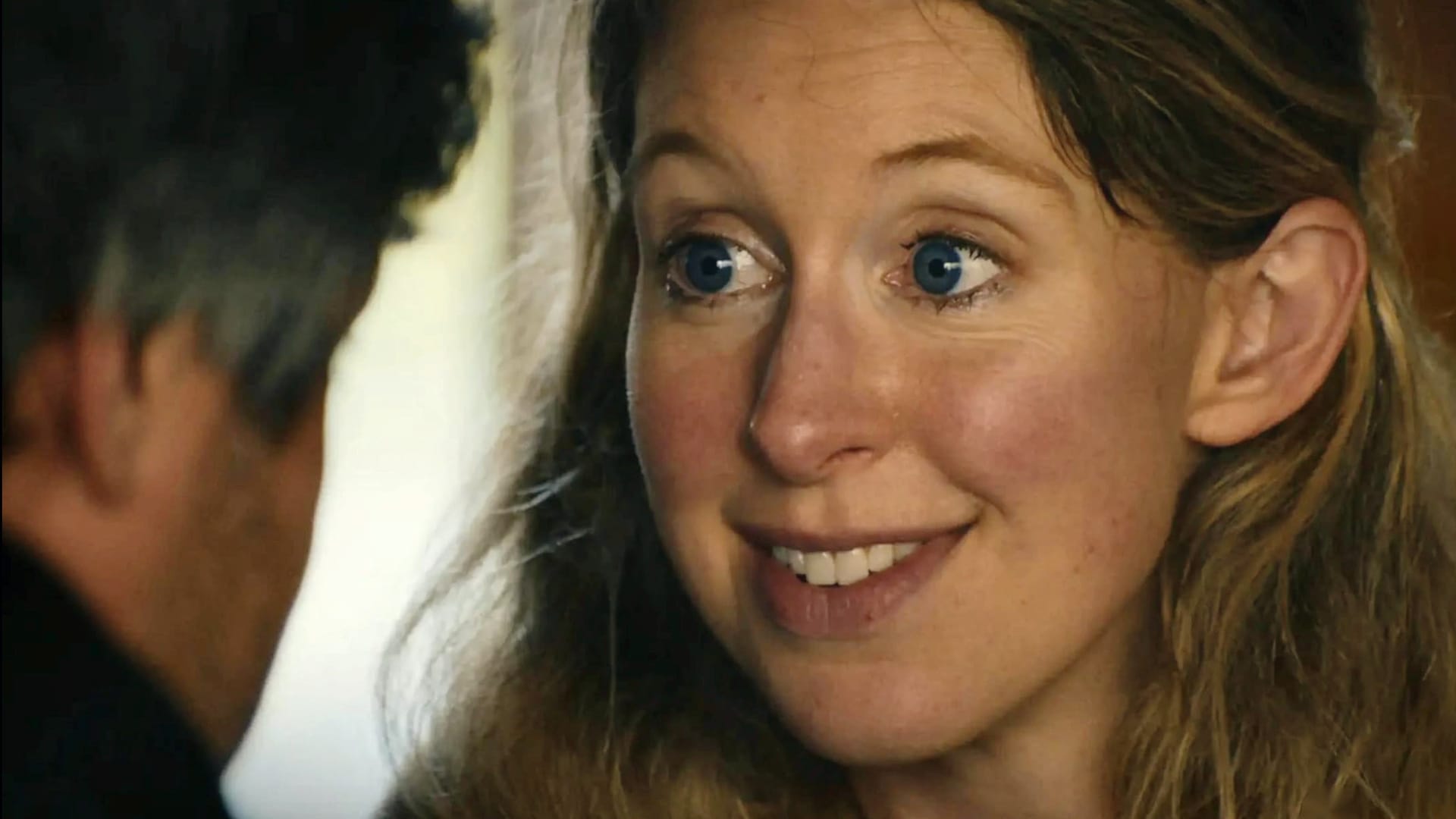
Filmmakers Nathan Fielder and Lance Oppenheim were given extraordinary access to Holmes, her partner Billy Evans, and their children during the 34 days before Holmes reported to prison in 2023.
That footage is genuine documentary material. The filmmakers spent considerable time inside the family's home, recording conversations and everyday activities.
But the movie doesn't remain a conventional documentary.
As the story progresses, Fielder begins using actors to recreate conversations and events that weren't captured by the original cameras. These sequences are dramatizations of what the filmmakers say happened, not actual recordings of those events.
The movie also raises some interesting questions about the documentary footage itself. Are people behaving naturally when they know they're being filmed? Are they trying to influence how they'll be portrayed? And how much can filmmakers really know about what happened when the cameras weren't there?
Without spoiling the film's more unusual developments, the important thing to understand is that You Can See Everything deliberately mixes documentary footage with recreations.
It's a real documentary. It just doesn't always use documentary footage to tell its story.
Is You Can See Everything a genuine Elizabeth Holmes documentary or partly scripted? Here's what's real, what's recreated, and why the distinction matters.
I knew You Can See Everything was going to be weird within minutes.
It's one thing to give a documentary crew complete access to your life. You're not hiding anything. You're being transparent. Good for you.
But does that include letting them film you taking a shower? Completely naked? And even if you do allow that, why would the filmmakers decide it belonged in the finished documentary?
There I was, watching a movie about Elizabeth Holmes, the convicted founder of Theranos, and suddenly I'm looking at her partner's genitals. It added absolutely nothing to the story. Nothing.
And this was just the beginning.
Is This Really Elizabeth Holmes?
The documentary begins about a month before Holmes is scheduled to report to prison. Filmmakers Nathan Fielder and Lance Oppenheim have been granted extraordinary access to her home and family, including her longtime partner, Billy Evans, and their two young children.
For a while, it's a relatively straightforward documentary. We're getting an unusually close look at someone who was once among the most celebrated entrepreneurs in America.
But here's what's strange.
This is the woman who founded Theranos, attracted enormous investments, became a billionaire on paper and convinced some extremely powerful people that her company was going to revolutionize medical testing.
You would never know it from watching her here.
She's soft-spoken, almost childlike at times, and seems genuinely confused by questions that shouldn't be particularly difficult to understand. There are moments when she comes across as surprisingly dense.
I'm not exaggerating. It's almost like watching an adult patiently trying to explain something to a child.
One of the documentary's early threads involves whether Holmes was simply misunderstood. Did she actually deceive people, or did she mean one thing while everybody else interpreted it differently?
That's quite an explanation for a fraud conviction.
Meanwhile, we're introduced to a version of Holmes that seems almost impossibly perfect. She's a devoted mother, loving partner, gentle, thoughtful and apparently without much of an ego.
At least that's the picture being presented.
I'm not saying those qualities aren't genuine. But reconciling this woman with the enormously ambitious CEO who built Theranos is difficult. It's almost like we're watching two completely different people.
And Then There's Billy
If Holmes is difficult to understand, Billy Evans is in a category of his own.
He genuinely seems to love his children and appears to be a devoted father. But he's also controlling, intensely protective of Holmes, and seems comfortable speaking for her in ways that made me increasingly uncomfortable.
At times, it almost feels as though he's taken over her identity.
Then there's Fielder himself.
He has a peculiar way of interacting with people, sometimes getting remarkably close to their faces or positioning himself in places that make perfectly ordinary conversations feel uncomfortable.
And, of course, let's not forget that shower scene.
Everybody involved seems a little strange. Some considerably stranger than others.
Then the Movie Takes a Turn
I think of You Can See Everything as two different movies.
The first half is a reasonably conventional documentary, although the people involved are anything but conventional.
The second half?
I don't even know how to describe it without spoiling something, and I'm not entirely sure I could explain it properly if I tried.
Let's just say the documentary heads in directions I wasn't expecting, including reenactments and some increasingly unusual questions about what's real and what isn't.
One interesting part of the discussion involves The Dropout, the Hulu series starring Amanda Seyfried as Holmes.
It's a dramatization of a real person's life. That means some events and conversations are recreated or invented for television. Yet there seems to be genuine surprise that the series might have negatively affected how people see Holmes.
Really?
You take an actual person, create a fictionalized version of her life, and then expect everyone watching to automatically recognize which parts are factual and which parts somebody made up?
Labeling something a dramatization doesn't mean audiences won't believe what they're seeing.
And without revealing where that discussion eventually leads, I'll just say it fits perfectly into an already very strange movie.
Interesting Isn't Necessarily the Same as Good
At nearly three hours, You Can See Everything is a considerable investment of time.
Was I bored? Not particularly. There's plenty here to keep you curious, even if that curiosity sometimes comes from wondering what on earth you're watching.
Did I love it? No.
Would I call it a particularly good documentary? I'm not sure I would.
But I also wouldn't call it bad.
It's interesting. Sometimes fascinating. Frequently uncomfortable. And almost relentlessly weird.
If you're interested in Elizabeth Holmes, or simply want to watch one of the more unusual documentaries you're likely to encounter, there's enough here to justify seeing it.
Would I spend the money to go so far as to buy it? Absolutely not. A rental is about as far as I'd go, and I'd be perfectly comfortable waiting until it's available on a streaming service I'm already paying for.
Nearly three hours later, I wasn't much closer to understanding Elizabeth Holmes. But I had learned something.
There are some people you can watch for three hours and still have absolutely no idea what to make of them.
Apparently, you can make an entire documentary out of that.
What starts as an unusually intimate documentary about Elizabeth Holmes turns into something much stranger. Nearly three hours of bizarre personalities, uncomfortable moments and questions that don't necessarily have answers.
Elizabeth Holmes convinced some very smart, very wealthy people that her company had developed a revolutionary blood-testing machine. That didn't end well.
Now, with a prison sentence approaching, she's inviting a documentary crew into her home to show the world who she really is. Given how the Theranos story turned out, that's an interesting decision.
What It’s About
In the final 34 days before entering prison, Holmes agrees to let filmmaker Nathan Fielder and his crew live with her and her partner, Billy Evans. She wants a chance to tell her side of the story, away from the headlines and the people who have already decided what to think of her.
Fielder, working with co-director Lance Oppenheim, is willing to listen. But listening isn't the same as believing.
He asks questions Holmes doesn't always answer convincingly, and the more time the crew spends inside her home, the harder it becomes to know what anyone is really revealing. The film starts as a portrait of a disgraced entrepreneur, then heads in directions that are better left unexplained.
Who It’s For
If you're interested in the Theranos scandal, there's plenty here to hold your attention. But You Can See Everything isn't simply another documentary explaining how Holmes fooled investors. It's more interested in the way people present themselves, particularly when they know they're being watched.
Fielder's awkward, almost painfully direct questions make for some uncomfortable exchanges, and there's a strange humor running through much of it. You may find yourself laughing, then wondering whether you should be.
There are reservations. At nearly three hours, this asks for some patience, and anyone expecting a straightforward investigation with tidy conclusions may find the whole thing frustrating. It frequently makes you question not just Holmes, but the people making the movie.
That's also what makes it different. You Can See Everything is an unusual choice for movie night, but if you enjoy documentaries that leave you thinking and arguing afterward, it's well worth considering.
Elizabeth Holmes opens her home to the cameras, hoping they'll help tell her side of the story. What follows is a strange, funny, increasingly uncomfortable documentary about just how difficult it can be to recognize the truth.
Convicted Theranos founder Elizabeth Holmes invites a documentary crew into her home just weeks before entering prison. What begins as her chance to explain herself becomes a strange, sometimes funny examination of truth, deception and the people behind the cameras.
If you've watched The Holdovers (2023), you might have wondered whether Barton Academy, the prestigious New England boarding school where Paul Giamatti's character teaches, is a real place.
The answer is no. Barton Academy is fictional.
But the buildings are very real. In fact, director Alexander Payne used five different Massachusetts schools to create the fictional campus.
Rather than relying on studio sets, the filmmakers found actual schools that had the appearance they wanted for a movie set in 1970. One school might have the right dining hall, another the perfect chapel, and another the sort of old-fashioned hallways that make you feel like you've stepped back in time.
Five Schools Became Barton Academy
The schools used in the production were:
· Groton School in Groton, Massachusetts, where the filmmakers used the chapel.
Barton Academy from *The Holdovers* isn't real, but the filmmakers used five actual Massachusetts schools to create it. Here's where those familiar buildings are located.
Christmas is supposed to be about family. Going home, gathering around the dinner table, exchanging gifts, and spending time with the people who matter most to you.
But not everybody gets that Christmas.
Some people have to work. Others are too far from home, have nowhere to go, or have lost the people they used to celebrate with. For them, Christmas can be a pretty lonely time of year.
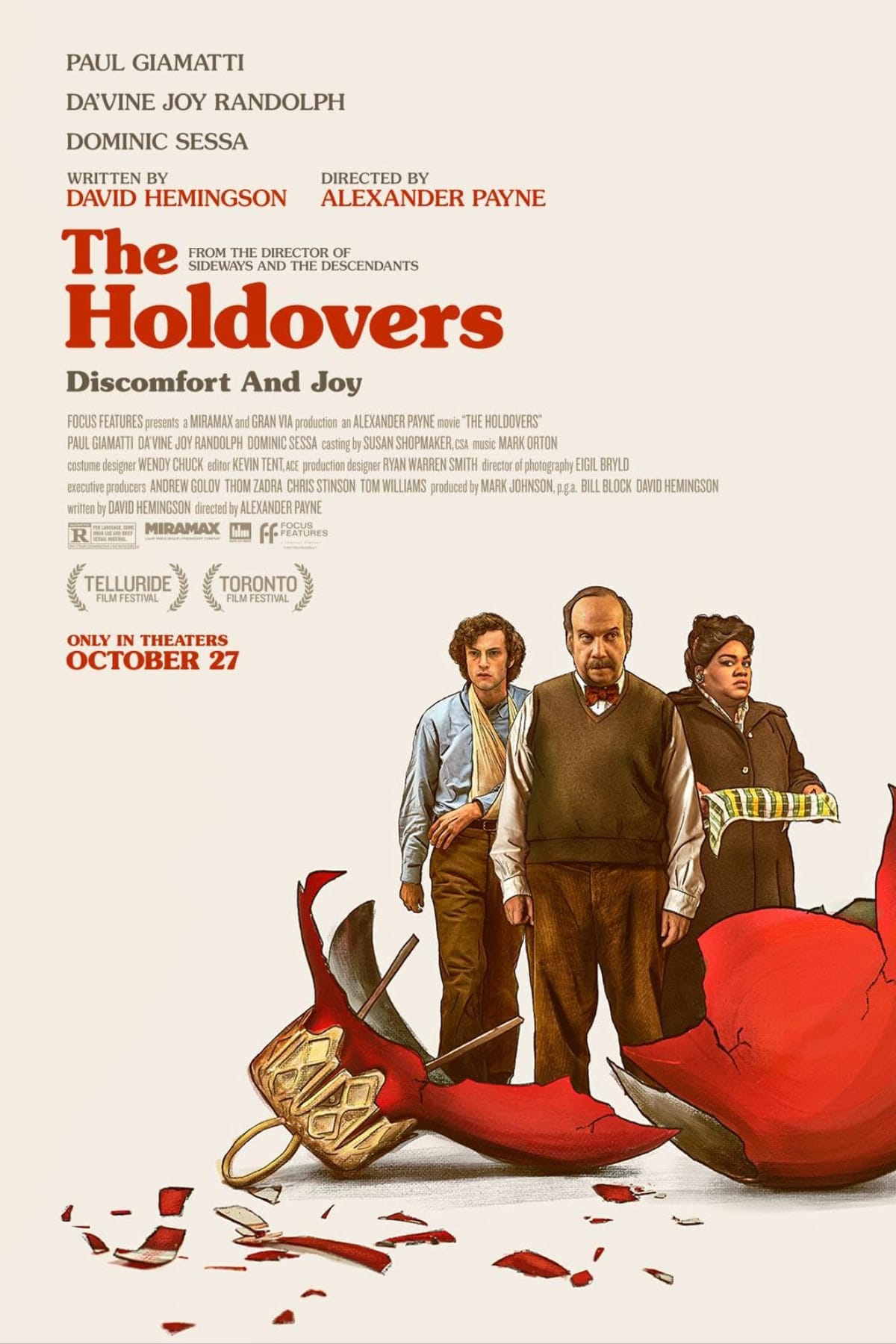
That's the Christmas we get in The Holdovers (2023).
Stuck at School for Christmas
It's 1970, and most of the students at Barton Academy, a prestigious New England boarding school, are heading home for the holidays. But a handful of boys aren't going anywhere. They're stuck at school, and somebody has to look after them.
That unfortunate assignment falls to Paul Hunham, played by Paul Giamatti.
Hunham is an ancient history teacher who seems to have made it his life's work to be disliked by practically everyone he meets. He's arrogant, demanding, and not particularly interested in whether anybody enjoys his company.
Eventually, only one student remains, Angus Tully (Dominic Sessa), a bright but troubled teenager whose family has other plans for Christmas.
Then there's Mary Lamb (Da'Vine Joy Randolph), the school's cook. She's staying at Barton too, although her reasons are considerably more heartbreaking. Her son was killed in Vietnam, and Christmas without him isn't something she's particularly looking forward to.
So there they are. Three people spending Christmas somewhere they don't want to be, with people they wouldn't ordinarily choose to spend time with.
Sounds like a wonderful holiday, doesn't it?
Making the Best of What You've Got
What makes The Holdovers work is that it doesn't try to turn these three into one big happy family overnight.
Hunham is still an irritating old grouch. Angus has a talent for getting himself into trouble, and Mary is dealing with grief that isn't going to disappear because somebody puts up a Christmas tree.
But as they spend time together, something begins to change. They start learning about one another, discovering that the people they've been stuck with might have a little more going on than they originally thought.
Giamatti is terrific, as you'd expect. Sessa holds his own remarkably well, and Randolph gives the movie much of its emotional weight. The three work beautifully together, especially when the movie allows them to be funny without making light of their circumstances.
And that's what I particularly like about this film. It understands that Christmas doesn't magically fix everything. People are still lonely. Families are still complicated. Whatever problems you had on December 24th are probably going to be there on December 26th.
But that doesn't mean you can't find something good in between.
The Holdovers is funny, touching, and occasionally a little sad. It's also a Christmas movie that recognizes something most holiday movies tend to overlook.
Not everybody gets to go home for Christmas.
Sometimes you have to make the best of where you are, with whoever happens to be there. And sometimes, that turns out to be enough.
Not everybody gets to go home for Christmas. *The Holdovers* tells the story of three people stuck together over the holidays who discover that an unexpected Christmas can still be a pretty good one.
Some people look forward to Christmas all year. Others would just as soon skip the whole thing.
In The Holdovers, three people find themselves stuck at a nearly empty boarding school over the holidays, and none of them is particularly happy about it.
It doesn't sound like much of a Christmas celebration, but it turns out to be the beginning of a pretty good story.
What It’s About
It's December 1970 at Barton Academy, an exclusive New England boarding school where the students are preparing to head home for Christmas.
Unfortunately, not everyone gets to leave.
Paul Giamatti plays Paul Hunham, a history teacher who's about as popular with his students as a surprise exam. He's demanding, sarcastic, and apparently incapable of making himself agreeable to anyone.
When he's assigned to supervise the students who can't go home for Christmas, he's no happier about the arrangement than they are.
One of those students is Angus Tully (Dominic Sessa), a bright but rebellious teenager whose mother has decided to spend the holidays with her new husband instead of her son.
Also staying behind is Mary Lamb (Da'Vine Joy Randolph), the school's cook, who's grieving the loss of her son in Vietnam.
As the holiday break unfolds, these three very different people begin to discover that they have more in common than they might have imagined.
Who It’s For
If you enjoy movies built around interesting characters rather than elaborate plots, The Holdovers is worth your attention.
Giamatti is excellent as a thoroughly unpleasant man who gradually reveals there's more to him than his disagreeable personality. His exchanges with Sessa are particularly entertaining, and the young actor holds his own remarkably well.
Randolph brings something different to the movie. Her character's grief is never far from the surface, even during the lighter moments, and she gives the story much of its emotional weight.
The movie takes its time, and there's a slightly old-fashioned quality to it that suits the 1970 setting. The humor comes naturally from the characters, while the more serious moments generally avoid becoming overly sentimental.
Don't expect a traditional Christmas comedy. This is a quieter, more thoughtful movie about loneliness, disappointment, and the unexpected connections people sometimes make.
It's the kind of movie that doesn't need much to happen to keep you interested.
Three people who would rather be somewhere else find themselves spending Christmas together. Paul Giamatti leads a terrific cast in a movie that's funny, occasionally sad, and surprisingly touching.
When a miserable history teacher, a rebellious student, and a grieving school cook spend Christmas together at an empty boarding school, an unlikely friendship develops. Paul Giamatti leads this funny, thoughtful, and surprisingly touching holiday story.
Picking up a hitchhiker is one of those things that seems like a decent thing to do, provided you don't spend too much time thinking about what could go wrong.
The Hitcher offers a pretty convincing argument for never doing it again.
What begins as an ordinary drive across the country turns into a nightmare, thanks to a stranger who seems determined to make one young man's life miserable. And miserable doesn't begin to cover it.
What It’s About
Jim Halsey (C. Thomas Howell) is driving a car across the country when he spots a hitchhiker standing along a lonely stretch of highway. It's raining, Jim's tired, and giving the guy a lift seems harmless enough.
Unfortunately, the stranger is John Ryder (Rutger Hauer), and it doesn't take long for Jim to realize he's made a terrible mistake.
After a frightening encounter, Jim manages to get Ryder out of his car. That should be the end of it.
It isn't.
Ryder begins appearing wherever Jim goes, leaving a trail of violence behind him and somehow managing to make Jim look responsible. Before long, Jim isn't just running from a murderer. He's running from the police, too.
Jennifer Jason Leigh plays Nash, a young waitress who becomes caught up in Jim's increasingly desperate attempt to survive.
Who It’s For
If you enjoy suspense movies that put an ordinary person in an extraordinary situation and then refuse to give him a break, The Hitcher is worth your attention.
Rutger Hauer is the reason this movie works as well as it does. He doesn't need to shout, threaten constantly, or explain himself. There's something genuinely unsettling about how calmly he goes about terrorizing Jim. You never quite understand what he wants, which makes him even more frightening.
Howell is believable as a young man who finds himself completely overwhelmed, and the movie does a good job of making the open desert feel like a place with nowhere to escape.
There are some fairly substantial leaps in logic, particularly involving Ryder's ability to anticipate everyone's movements. You'll also need a tolerance for some disturbing violence.
But if you're looking for a tense, nasty little thriller with a particularly memorable villain, The Hitcher delivers. Just don't expect a relaxing drive.
Rutger Hauer turns a simple encounter on a deserted highway into a nightmare. The Hitcher is a relentless road thriller that makes you wonder whether stopping to help a stranger is ever a good idea.
A young man picks up a hitchhiker and finds himself hunted across the desert by a seemingly unstoppable killer. Rutger Hauer gives The Hitcher its menace in this tense, violent road thriller from 1986.
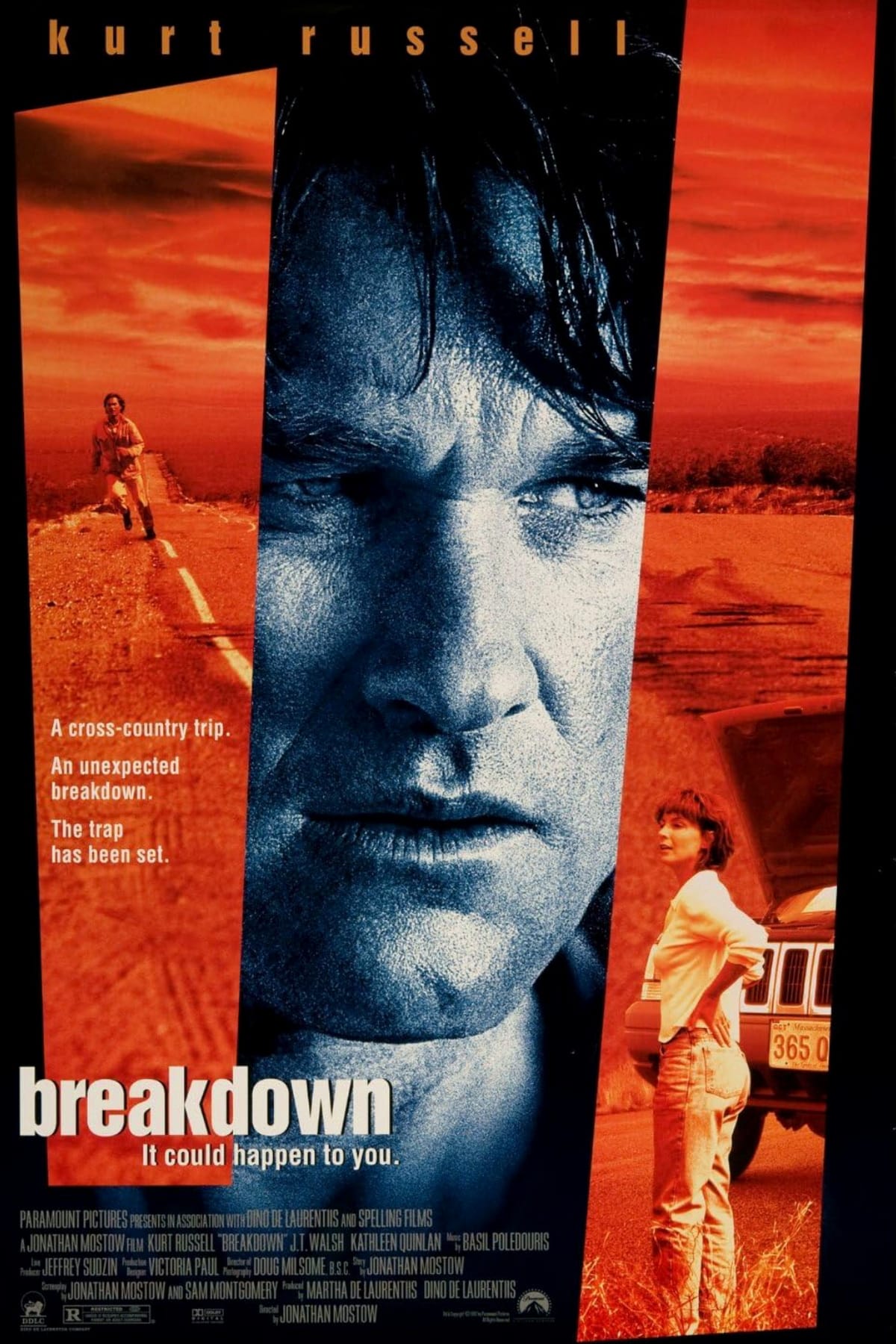
Your car breaks down on a remote highway. A trucker offers to take your wife to a nearby diner to call for help while you stay with the car. Nothing particularly suspicious about that. But when you get to the diner, she isn’t there. And when you find the trucker again, he claims he’s never seen you before. That’s the situation Kurt Russell finds himself in during Breakdown, and it’s why I’m recommending it for your next movie night.
What I like about Russell here is that he’s believable as a husband who’s scared and increasingly desperate. He doesn’t have special training or a reassuring plan. He’s trying to figure out what happened to his wife, and every conversation makes it harder to know whom he can trust. J.T. Walsh is particularly good as the trucker. His calm responses make Russell’s frustration—and yours—even worse. You want somebody to give this man a straight answer.
The movie gets more elaborate as it goes, and some of the later action requires a little generosity. But by then, I’m invested enough to go along with it. If you want a thriller that gives you a clear reason to care, keeps you anxious, and gets moving without much fuss, Breakdown is an easy choice.
His wife accepts a lift from a trucker. Then she disappears, and the driver denies knowing anything about her. Kurt Russell makes the ensuing nightmare worth your evening.
There's something particularly frightening about being stranded in the middle of nowhere. No cell service, no familiar faces, and nobody around to help you.
Now imagine your wife disappears, and the last person who saw her insists he's never met her.
That's the situation Kurt Russell finds himself in during Breakdown, a thriller that takes an ordinary road trip and turns it into a nightmare.
What It’s About
Jeff Taylor (Kurt Russell) and his wife Amy (Kathleen Quinlan) are driving across the country, heading for California and a new chapter in their lives.
Unfortunately, their Jeep breaks down on a deserted stretch of highway in the Southwest. A passing truck driver named Red Barr (J.T. Walsh) offers to take Amy to a nearby diner where she can call for help. Jeff stays behind with the vehicle.
When Jeff eventually gets the Jeep running and drives to the diner, Amy is nowhere to be found. Nobody remembers seeing her.
Things get considerably worse when Jeff locates the truck driver, who calmly insists he's never seen Amy before.
Jeff knows something is terribly wrong, but he's in unfamiliar territory, surrounded by strangers, and has no idea whom he can trust. The police aren't much help, either.
Finding his wife is now entirely up to him.
Who It’s For
If you enjoy suspenseful thrillers that don't require an elaborate premise to keep you interested, Breakdown is an excellent choice.
Kurt Russell is particularly good here because Jeff isn't some unstoppable action hero. He's an ordinary guy who's frightened, confused, and increasingly desperate. He makes mistakes, but he keeps going because he doesn't have much choice.
J.T. Walsh is equally effective. He has a way of appearing completely reasonable, even when you know something isn't right. That makes him especially unsettling.
Director Jonathan Mostow keeps the story moving, building suspense through Jeff's increasingly dangerous efforts to find Amy. There are some action-movie conveniences, particularly toward the end, but they don't seriously diminish the experience.
What makes Breakdown work is how easily you can imagine finding yourself in the same situation. It's a straightforward, well-executed thriller that wastes very little time.
If you haven't seen it, it's well worth putting on your watchlist.
A simple road trip turns into a nightmare when Kurt Russell's wife disappears in the middle of nowhere. Breakdown takes a frighteningly believable situation and turns it into a tense, fast-moving thriller.
Kurt Russell stars as a husband whose wife mysteriously disappears during a cross-country road trip. With nobody willing to help and a truck driver denying everything, Breakdown delivers a tense, fast-moving thriller built around a frighteningly believable situation.
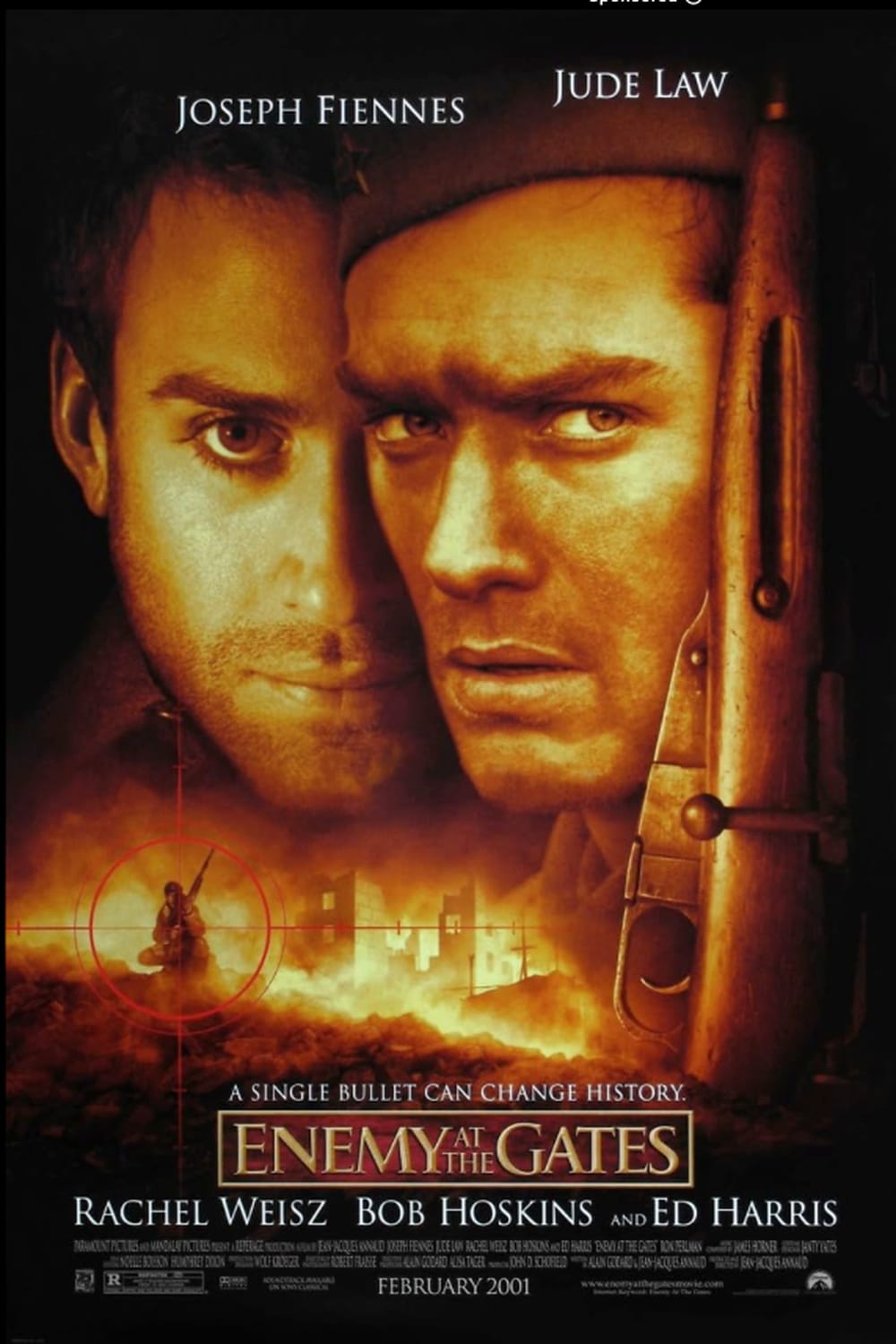
One of the best things about Enemy at the Gates is the deadly game of cat and mouse between Jude Law and Ed Harris. Two expert snipers hunting each other through the ruins of Stalingrad, knowing that one mistake could get them killed.
It's a terrific premise for a movie. But did it actually happen?
Well, half of it certainly did.
The Real Vassili Zaitsev
Jude Law's character, Vassili Zaitsev, was a real Soviet sniper who became famous during the Battle of Stalingrad in 1942. He was credited with killing numerous German soldiers, and the Soviet government used his accomplishments to boost morale during one of the most desperate battles of World War II.
So the movie's central character wasn't invented, and neither was his reputation.
But what about Major König, the German sniper played so convincingly by Ed Harris?
That's where things get interesting.
Was Major König a Real Person?
According to the story, the Germans sent an expert sniper named Major Erwin König to Stalingrad specifically to eliminate Zaitsev. The two men supposedly spent several days hunting each other before their confrontation ended.
Zaitsev himself described such a duel in his memoirs.
The problem is that historians have never found convincing German records establishing that König existed. Historian Antony Beevor, who extensively researched the Battle of Stalingrad, concluded that the famous duel was likely a Soviet propaganda invention.
That doesn't absolutely prove Zaitsev never fought another skilled German sniper. It does mean there's no reliable independent evidence confirming the particular confrontation depicted in the movie.
And there's something rather ironic about that.
Enemy at the Gates tells the story of a government turning a talented soldier into a national hero through propaganda. Yet the movie's central confrontation may itself have originated in that same propaganda.
Does that make the movie any less entertaining?
Not to me. Jude Law and Ed Harris make the confrontation so believable that I'm perfectly happy to accept it as a great piece of filmmaking, even if history can't back it up.
The Soviet sniper played by Jude Law really existed. But what about the German sharpshooter portrayed by Ed Harris? The historical answer is considerably less certain.
The most frightening moment in a good sniper movie isn't necessarily when somebody pulls the trigger. It's the moment just before somebody moves.
You find yourself wanting to tell the guy to stay perfectly still. Don't raise your head. Don't look around. And whatever you do, don't assume the other guy isn't watching.
That's what makes Enemy at the Gates so good. I've seen plenty of movies featuring snipers, but I can't think of one that does a better job of showing what makes their particular kind of warfare so terrifying.
In fact, I think this may be the best sniper movie ever made.
The Most Dangerous Thing You Can Do Is Move
Enemy at the Gates takes place during the Battle of Stalingrad in 1942, when German and Soviet forces were fighting over a city that was rapidly being reduced to rubble.
And there is plenty of conventional warfare in this movie. Explosions, gunfire, enormous numbers of soldiers charging into battle, and some genuinely horrifying scenes showing just how expendable those soldiers could be.
But that's not what makes the movie special.
Jude Law plays Vassili Zaitsev, a Russian soldier whose extraordinary marksmanship attracts the attention of a political officer named Danilov, played by Joseph Fiennes. The Russians badly need a hero, and Danilov decides Vassili is going to be that hero.
Unfortunately, the Germans are paying attention, too.
They send their own expert sniper, Major König, played by Ed Harris, to eliminate him. And suddenly, in the middle of one of the largest battles of World War II, the movie becomes a contest between two men trying to kill each other.
What makes their confrontation so interesting is how little shooting is actually required to create suspense.
They're watching. Waiting. Trying to anticipate where the other man might be hiding. An abandoned building becomes a dangerous place to enter. A window becomes something you wouldn't dream of walking past. Even an apparently safe position might be exactly where the enemy wants you.
A single mistake could mean you're dead before you realize you've made it.
Jude Law and Ed Harris Are Outstanding
Jude Law is fantastic as Vassili. He's an exceptionally talented marksman, but Law never makes him seem like some invincible action hero who can casually dispatch anybody who gets in his way.
He's frightened, and understandably so. The better his reputation becomes, the more pressure he faces. Being celebrated as a national hero doesn't do much good when somebody equally talented has been sent specifically to kill you.
And then there's Ed Harris.
Harris has always been one of those actors who can dominate a scene without saying much of anything, and he's incredible here. His König is experienced, intelligent, methodical and almost unnervingly calm.
He doesn't need to act intimidating. You believe he's dangerous simply by watching him think.
That's a big part of why the movie works. You're not watching a talented young sniper fight some incompetent enemy who exists merely to be defeated. You're watching two exceptionally skilled men who know that the other guy is perfectly capable of killing them.
And both actors make you believe it.
The supporting cast is excellent, too. Rachel Weisz, Joseph Fiennes, Bob Hoskins and Ron Perlman all contribute to a movie that has quite a bit going on beyond the central confrontation. There are friendships, romantic complications, political maneuvering and the constant misery of a city being destroyed around its inhabitants.
But the movie is at its best when it returns to those two men and their rifles.
It's the Waiting That Gets You
Director Jean-Jacques Annaud understands something that a lot of action filmmakers seem to forget: suspense doesn't require constant action.
Sometimes it requires exactly the opposite.
The tension comes from not knowing what the other person is planning. Is he still there? Has he moved? Is that an opportunity, or is it a trap? Should you take the shot, or is somebody trying to make you reveal your position?
And perhaps the worst question of all: What if he's already figured out where you are?
There are plenty of war movies with bigger battles, more elaborate action sequences and spectacular explosions. There are also plenty of movies featuring remarkable shots made from extraordinary distances.
But Enemy at the Gates understands that the real skill of a sniper isn't simply being able to hit a target. It's having the patience, discipline and nerve to stay alive long enough to take the shot.
That's what separates this movie from the others for me.
You spend so much time worrying about somebody moving that when a rifle finally goes off, it's almost a relief.
*Enemy at the Gates* might be the best sniper movie ever made. Jude Law and Ed Harris turn patience, fear and the smallest movements into something every bit as suspenseful as a massive battle.
Being an excellent sniper is one thing. Having your government make sure the entire enemy army knows just how excellent you are is another.
That's the situation Vassili Zaitsev finds himself in during Enemy at the Gates. He's become a hero to the Russian people, but his growing reputation has also made him a target. And the Germans have decided to do something about it.
What It’s About
It's 1942, and the Germans are trying to take Stalingrad. The Russians are fighting desperately to hold the city, sending soldiers into battle under circumstances that make survival seem almost impossible.
Jude Law plays Vassili Zaitsev, a young Russian soldier whose remarkable shooting ability catches the attention of Danilov (Joseph Fiennes), a political officer who recognizes an opportunity.
The Russian army needs something to celebrate, and Danilov gives them a hero. Soon, Vassili's exploits are being reported throughout the city, providing a badly needed boost to morale.
Unfortunately, the Germans notice. They send Major König (Ed Harris), an experienced sniper whose assignment is simple: find Vassili and kill him.
What follows is a deadly game of patience and deception, with two skilled marksmen trying to outthink one another in the ruins of Stalingrad.
There's also Tania (Rachel Weisz), a young Soviet soldier who becomes romantically involved with Vassili, complicating his friendship with Danilov.
Who It’s For
If you enjoy war movies, particularly those that focus on individual soldiers rather than grand military strategy, Enemy at the Gates has plenty to offer.
The sniper confrontations are the main attraction. These aren't typical action sequences with everybody shooting at everybody else. Sometimes the characters spend more time waiting than firing, knowing that one careless movement could be their last.
Jude Law is convincing as a capable but increasingly vulnerable young soldier, while Ed Harris makes König a particularly intimidating opponent. He's quiet, calculating, and never seems especially worried about the man he's been sent to kill.
Some of the most gripping moments involve two men doing almost nothing. That's no small achievement for a war movie, and it makes this a must-watch.
Two expert snipers hunt each other through the ruins of Stalingrad, where patience can be just as deadly as a well-placed bullet.
During the Battle of Stalingrad, a celebrated Soviet sniper becomes the target of an elite German marksman. Jude Law and Ed Harris face off in a tense World War II drama where one mistake can be fatal.
When a war ends, governments have a pretty straightforward way of announcing it. The fighting stops, agreements are signed, soldiers come home, and everybody starts talking about rebuilding.
But what if your three sons went off to fight and not one of them came home?
For Joshua Connor, the war isn't over. Not even close.
Russell Crowe plays an Australian father whose three sons disappeared during the Battle of Gallipoli in World War I. Four years later, he still doesn't know exactly what happened to them.
Some Questions Won't Leave You Alone
Connor is a farmer who has spent much of his life finding underground water. It's an unusual skill, locating something buried beneath the earth that nobody else can see.
Now he's determined to find something considerably more important.
He travels from Australia to Turkey in 1919, hoping to locate his sons' remains and bring them home. His wife has also died, and he wants to reunite his family in the only way he believes is still possible.
It's a remarkably simple motivation for a movie. He isn't trying to win a battle, stop another war, or accomplish something heroic. He just wants to find his boys.
But when he reaches Gallipoli, he discovers that wanting to find somebody and actually being allowed to look for them are two very different things.
The War Didn't End for the Other Side, Either
One of the more interesting developments comes when Connor receives help from Major Hasan, a Turkish officer played by Yılmaz Erdoğan.
Here's a man who fought on the opposite side of the same battle that took Connor's sons. Under different circumstances, these two men would have regarded each other as enemies.
But the fighting is over, and Hasan understands something that Connor's own military authorities seem to have difficulty appreciating.
This isn't really about the war anymore. It's about a father.
Connor also meets Ayshe, played by Olga Kurylenko, a Turkish woman who has suffered losses of her own. Through these encounters, the movie reminds us that ending a war doesn't magically put families back together, regardless of which side they were on.
And that's where The Water Diviner has something worthwhile to say.
We tend to measure wars in victories, defeats, territories won or lost, and numbers of casualties. Those are the things that make it into history books. They're also the things governments can count.
But how do you measure what happens afterward?
A Father's Refusal to Give Up
Crowe, who also directed the movie, gives Connor the kind of quiet determination that makes the character believable. He's not a particularly talkative man, and he doesn't spend much time explaining himself.
He doesn't need to.
A father arriving in a foreign country, standing on the ground where his children disappeared, and refusing to leave until somebody helps him. There's plenty of drama in that.
We know exactly when World War I ended. November 11, 1918. It's a date commemorated around the world.
But history books can't tell us when the war ended for Joshua Connor.
Or for the countless real families who waited for someone who never came home.
The fighting ended, but three sons never came home. Russell Crowe's The Water Diviner tells a father's story that no peace treaty could bring to an end.
When a war ends, the fighting stops. That doesn't mean the people left behind get to move on. If only it were that simple.
For Joshua Connor, it means three sons who went to Gallipoli and never came home. Four years later, he's done waiting—he's going to find them himself.
What It’s About
Russell Crowe plays Connor, an Australian farmer with an unusual talent for finding water underground. In 1919, he travels to Turkey hoping to locate the remains of his three sons, all missing after the Gallipoli campaign of World War I.
He wants to bring them home, but even getting access to the battlefield proves difficult. Apparently, finding water in the Australian outback is easier than getting permission to search a former battlefield.
An Australian officer (Jai Courtney) is helping recover bodies, and Turkish Major Hasan (Yılmaz Erdoğan) knows the terrain and what happened there. Connor needs their cooperation, even though the men involved fought on opposite sides.
He also meets Ayshe (Olga Kurylenko), a hotel owner in Istanbul whose family has been affected by the war. Their encounters give him a glimpse of a country still dealing with its own losses.
Who It’s For
Despite the title, this isn't really a movie about someone using a stick to find water. It's about grief, guilt and how far a parent will go for an answer. Crowe, who also directed, keeps Connor relatively restrained. You understand what he's carrying without needing a speech about it.
When the movie stays close to Connor's search, it has something worthwhile to say about what remains after the war is supposedly finished. If you like historical dramas built around personal stakes rather than military strategy, this is worth considering.
Russell Crowe gives a father's search after Gallipoli real emotional weight, even when the movie drifts into romance and adventure. Its quieter moments are the ones that stay with you.
Russell Crowe plays an Australian father who travels to Turkey after World War I to find his three missing sons. The Water Diviner mixes grief, wartime history and adventure, with some uneven turns along the way.
Is Dark Winds a Spin-Off of Longmire? There's a Reason You Think So
If you've watched Longmire and started watching Dark Winds, you might have noticed something familiar. The setting, the investigations, the complicated relationships between law enforcement and Native American communities. And especially one of the actors.
No. The two shows aren't connected, at least not as far as their stories are concerned. But there's a pretty good reason you might think otherwise.
You've Seen That Police Officer Before
Zahn McClarnon, who plays Navajo Tribal Police Lieutenant Joe Leaphorn in Dark Winds, also played Chief Mathias, the Cheyenne tribal police chief in Longmire.
Apparently, McClarnon is particularly good at playing law enforcement officers who don't have much patience for nonsense.
And he's not the only familiar face. A Martinez, who played Jacob Nighthorse in Longmire, appears in Dark Winds as Sheriff Gordo Sena. Interestingly, McClarnon has said that although they worked on Longmire for years, he doesn't think they ever shared a scene.
Two Different Stories, Two Different Authors
Longmire is based on Craig Johnson's novels about Wyoming sheriff Walt Longmire. Dark Winds comes from Tony Hillerman's Leaphorn and Chee mysteries, set in the Navajo Nation during the 1970s.
Different authors, different characters, and entirely different fictional worlds.
But both shows understand something about telling a good mystery. The setting matters, the characters have complicated histories, and solving the crime isn't necessarily the only interesting thing going on.
If you've finished Longmire and are wondering what to watch next, Dark Winds is certainly worth considering.
Just don't expect Walt Longmire to come riding into town.
If Dark Winds reminds you of Longmire, you're not imagining things. There are familiar faces, similar themes, and a connection worth knowing about.
Anthony Bourdain built a career out of being somebody you wanted to listen to. The young man in Tony hasn’t quite earned that privilege yet.
He has opinions, ambitions and a fairly generous assessment of his own potential. What he doesn’t have is the writing fellowship he’s already told people he landed.
So he follows a girl to Provincetown, Massachusetts, where his plans eventually lead him to a restaurant kitchen and a job washing dishes. It’s an awkward beginning for a future culinary celebrity, which gives the movie somewhere interesting to start.
Sessa Gives You a Reason to Stick Around
Dominic Sessa plays the 19-year-old Bourdain, and the casting makes sense beyond his appearance. He’s good at playing a young man whose difficult behavior doesn’t entirely conceal how badly he wants somebody to like him.
Tony can be arrogant and insecure within the same conversation. He wants to impress people, particularly Nancy, played by Emilia Jones, but his efforts tend to create problems he then has to talk his way around.
Sessa makes that combination sympathetic without making Tony especially easy to deal with. You can understand his embarrassment and still think he’s doing an excellent job of making things worse.
Banderas Is the Best Reason to Visit
The restaurant gives the movie its strongest material, particularly once Antonio Banderas enters the picture as the chef who hires Tony.
Banderas brings authority to the role without making every interaction a demonstration of it. There’s warmth underneath the expectations, and his interest in Tony genuinely gives their relationship some weight. You understand why this young man might begin to care about earning his approval.
Leo Woodall’s Sal offers a more reckless example to follow. Between the work, the friendships and the excesses, the kitchen gives Tony several competing ideas about the person he could become.
The appeal is watching him respond to those people. Cooking gives the story a setting and a direction, but the relationships give you a reason to care.
Not (Entirely) Accurate
The romance is less engaging than the restaurant relationships. It helps get Tony to Provincetown and adds another dimension to the story, but the movie finds more interesting things for him to do once he’s there.
And this is a heavily fictionalized account of Bourdain’s early life. Treating it as a detailed explanation of the man he eventually became would be asking more of it than it delivers.
As a modest story about a difficult young man finding work and people who matter to him, though, it has plenty going for it. You won’t love it—but how many movies a year do you really love? You’ll like it, though, and you’ll be glad you saw it.
Dominic Sessa plays a young Anthony Bourdain in a familiar but engaging coming-of-age story. Antonio Banderas and the restaurant relationships make it worth renting.
If you've watched The Last Kingdom, you know that Uhtred spends an extraordinary amount of time trying to reclaim his ancestral home, Bebbanburg. He fights for kings, makes enemies, switches allegiances, and occasionally finds himself in situations that would have been considerably easier to avoid if he'd simply given up on the place.
But he doesn't. Bebbanburg is his birthright, and getting it back is the one ambition that never really changes.
So you might be interested to learn that Bebbanburg is a real place. Not only that, but the castle is still standing, and you can visit it.
Where Is the Real Bebbanburg Castle?
Today, Bebbanburg is called Bamburgh Castle, and it stands on the northeastern coast of England in Northumberland, overlooking the North Sea. It's an impressive sight, occupying a rocky outcrop roughly 150 feet above the surrounding coastline.
The location has been fortified for more than 1,400 years. During the Anglo-Saxon period, it was an important stronghold of the rulers of Northumbria, which makes it a particularly appropriate home for Uhtred in Bernard Cornwell's novels and the television series.
The name itself has an interesting history. The settlement was once known as Din Guaroy, but eventually became Bebbanburg, traditionally associated with Bebba, an early Anglo-Saxon queen. Over the centuries, the name evolved into Bamburgh.
So while Uhtred's particular adventures are fictional, the fortress he spends his life trying to reclaim is very much part of English history.
Does the Castle Look Like It Did in Uhtred's Time?
Not exactly. In fact, much of the castle you see today would be completely unfamiliar to someone living in ninth-century England.
The original Anglo-Saxon stronghold would have included timber defenses and buildings that looked quite different from the enormous stone fortress standing there now. Much of the surviving medieval structure dates from the Norman period and later centuries, particularly the 12th century.
The castle also underwent extensive restoration during the late 19th century after industrialist William Armstrong purchased it in 1894.
That means visitors are looking at a place with genuine Anglo-Saxon history, but not an accurately preserved ninth-century castle. The location is authentic; much of the architecture is considerably younger.
Is It the Same Castle Used in The Last Kingdom?
Here's where things get a little complicated.
Although Bamburgh Castle is the real historical location of Bebbanburg, the television production didn't simply move in and start filming all of Uhtred's adventures there.
Much of The Last Kingdom was filmed in Hungary, where the production could construct elaborate medieval settlements and control the surroundings. The castle's interiors weren't used to represent Uhtred's home, although filming did take place on Bamburgh Beach, with the real castle overlooking the action.
So when you see Bebbanburg on television, you're often looking at a combination of real geography, constructed sets, and filmmaking techniques rather than the actual castle as it exists today.
Which is probably just as well. It's difficult to imagine the current owners being particularly enthusiastic about Uhtred and his companions storming through the front gate with swords.
Can You Visit Bamburgh Castle?
Yes. Bamburgh Castle is open to visitors and is one of Northumberland's major historic attractions. You can explore parts of the fortress, walk through its grounds, and look out over the same coastline that made the location strategically important more than a thousand years ago.
The castle embraces its connection to The Last Kingdom, including stories and activities relating to Uhtred and the Anglo-Saxon history behind the series.
If you're thinking about making the trip, the official Bamburgh Castle website has information about admission, opening hours, and upcoming events. It's worth checking before you go, particularly since hours and access can change throughout the year.
The Bottom Line
There's something rather satisfying about discovering that Bebbanburg actually exists. So much of The Last Kingdomrevolves around Uhtred trying to return to this one place that it almost becomes another character in the story.
And while the castle has changed enormously since the days of the Anglo-Saxons, the rocky hill, the coastline, and the historical significance of the location are all real.
You can even stand there yourself and survey the kingdom Uhtred spent so many years trying to reclaim.
Although, fortunately, you won't have to fight your uncle to get through the gates.
Is Bebbanburg Castle from The Last Kingdom real? Discover the history of Bamburgh Castle, where it stands, and whether the series was filmed there.
Offering a hitchhiker a ride seems like a decent thing to do. In a thriller, I’d want to know a little more about both people before getting in the car. Switchback puts Danny Glover behind the wheel and Jared Leto in the passenger seat, while Dennis Quaid’s FBI agent follows the trail of a serial killer. There’s a lot of open country ahead, and plenty of reason to be uncomfortable.
What I enjoy here is how much the people and places contribute to the suspense. Glover is easy company, Leto gives you questions to chew on, and R. Lee Ermey makes a local sheriff somebody worth spending time with. The highways, small towns, and snowy mountains give the story room to develop. I like a thriller that lets me get interested in a conversation before reminding me somebody could be in danger.
It takes a little time bringing its different threads together, and you’ll need to allow it a few conveniences along the way. But if you’re in the mood for a murder hunt with an appealing cast, some uneasy companionship, and a memorable railroad setting, this is my pick for the evening. Go in knowing as little as possible.
Danny Glover offers Jared Leto a ride while Dennis Quaid hunts a serial killer. The uneasy company and snowy mountain setting make this is a satisfying night's suspense.
If you've watched The Last Kingdom, you've probably wondered how much of Uhtred's story actually happened. After all, King Alfred was real, the Viking invasions were real, and the struggle to create England was very real. So it stands to reason that Uhtred of Bebbanburg, played by Alexander Dreymon, might have been wandering around ninth-century England getting himself into trouble, too.
Well, there really was an Uhtred of Bebbanburg. But he wasn't quite the fellow we meet in the series. For one thing, he lived more than a hundred years later.
Who Was the Real Uhtred?
The historical figure most closely associated with the character was Uhtred the Bold, a powerful nobleman who ruled Northumbria in the early 11th century. He was involved in the complicated politics of northern England, where the English, Danes, and Scots were regularly fighting over territory and power.
Uhtred the Bold was a real warrior and political leader, and his life included shifting allegiances, military campaigns, and a particularly unpleasant ending. In 1016, he was murdered after being summoned to a meeting under a promise of safe conduct.
That certainly sounds like someone who could have appeared in The Last Kingdom. The trouble is that King Alfred died in 899, long before Uhtred the Bold became a prominent figure. The two men never met, much less spent years arguing about loyalty, religion, and the future of England.
Why Did Bernard Cornwell Invent a Different Uhtred?
Here's where the story gets particularly interesting.
Bernard Cornwell, who wrote the novels on which The Last Kingdom is based, was adopted. When he met his biological father as an adult, he discovered that his family ancestry could be traced back to the Saxon rulers of Bebbanburg, including men named Uhtred.
Cornwell had already been interested in writing about the creation of England, particularly the struggle between Alfred's kingdom of Wessex and the invading Danes. Discovering his family connection gave him a way to tell that story through the eyes of a fictional warrior.
Rather than writing a biography of Uhtred the Bold, Cornwell borrowed the name, family background, and ancestral home, then moved his character backward in history to the time of Alfred the Great.
It was a convenient arrangement. Cornwell got a character with genuine historical roots, but one whose adventures he could invent without having to explain why they weren't in the history books.
Did Uhtred Really Help Create England?
Not the Uhtred we know from the show. His relationships with Alfred, his children, and the various Danish leaders are fictional, even though many of those people actually existed.
But the larger historical story is genuine. Alfred defended Wessex against the Vikings, his successors expanded their power, and the various Anglo-Saxon kingdoms were gradually brought together into what became England.
Cornwell placed his invented Uhtred in the middle of those events, allowing viewers to experience the history through someone who wasn't particularly enthusiastic about taking orders from kings.
And that might be the most entertaining part of the arrangement. We get to watch a man help build a country while spending much of his time complaining about the people trying to build it.
The Bottom Line
Uhtred of Bebbanburg wasn't a real person in the way The Last Kingdom portrays him. He was inspired by historical figures, particularly Uhtred the Bold, but his adventures alongside Alfred the Great belong to fiction.
The history surrounding him, however, is largely rooted in actual events. That's part of what makes the series so compelling. You can enjoy Uhtred's story without knowing much about Anglo-Saxon England, then discover that many of the battles, rulers, and political struggles really happened.
And considering how complicated the real history was, you can hardly blame Cornwell for wanting one fellow to guide us through it.
Was Uhtred of Bebbanburg a real person? Discover the historical warrior who inspired The Last Kingdom and why he never actually met King Alfred.
If you've seen Switchback (1997), you probably remember the scenery almost as well as the story. Dennis Quaid spends much of the movie pursuing a serial killer through some spectacular mountain country, and by the time the action moves onto a freight train winding through snowy canyons, you might find yourself paying as much attention to the landscape as the chase.
The good news is that those mountains are real. And if you're wondering where the filmmakers found them, most of the answer is Colorado.
Where Was Switchback Filmed?
Much of Switchback was filmed in Colorado, including locations around Leadville, Red Cliff, Pinecliffe, and Colorado Springs. The production made extensive use of the Rocky Mountains, with some filming taking place at elevations around 10,000 feet.
Leadville, one of America's highest incorporated cities, sits among some of Colorado's most impressive peaks, including Mount Elbert and Mount Massive. It's the sort of setting that makes a movie look considerably more expensive without requiring the filmmakers to build anything.
Red Cliff provided another memorable location. The area is known for its steep mountain terrain and dramatic highway bridges, and the filmmakers used those surroundings for some of the movie's driving sequences.
Colorado Springs also appears in the film, including a location used for courthouse exteriors.
The production wasn't confined entirely to Colorado, however. Oakland, California, was also used for a scene near the end.
Where Were the Train Scenes Filmed?
The railroad sequences are among the movie's most distinctive features, and they were filmed using sections of Colorado's historic Rio Grande rail system.
Locations associated with the railroad filming include La Veta Pass and portions of the rail routes west of Denver, where tracks run through mountain canyons and difficult terrain.
There's an interesting bit of Hollywood deception involved, too. The locomotives that appear to belong to the Denver & Rio Grande Western Railroad weren't actually Rio Grande locomotives. The production used two former Southern Pacific SD39 diesel locomotives, repainted to resemble Rio Grande equipment.
Apparently, even the trains needed a little help from the art department.
Railroad enthusiasts may also recognize the large snowplow-like piece of equipment used during the movie's climax. That's a real piece of Denver & Rio Grande Western railroad equipment, designated AX-044, which was repainted for the film.
Unlike a lot of Hollywood movie props, this one survived. It was preserved in Hot Sulphur Springs, Colorado, where it has been displayed as a piece of railroad history.
The Mountains Were Real. The Geography Wasn't Always.
One of the advantages of filming in Colorado is that spectacular scenery is never particularly difficult to find. The disadvantage, at least if you're interested in geographical accuracy, is that the best locations aren't necessarily anywhere near one another.
Switchback pieces together roads, towns, and railroad routes from different parts of the state to create what appears to be one continuous journey. The movie's train routes don't always correspond to the geography of the real railroad system, either.
Most viewers probably won't notice. If you're familiar with Colorado's mountains or its railroads, though, you might recognize somewhere you know and wonder how the characters managed to get there quite so quickly.
The Bottom Line
Switchback isn't the kind of movie that usually gets mentioned in conversations about great Colorado scenery, but perhaps it should be. Whatever you think of the story, the filmmakers made excellent use of the Rocky Mountains, particularly during the railroad sequences.
And if you happen to be a railroad enthusiast, there's an additional attraction: those trains, mountain routes, and much of the equipment were real.
Even if Hollywood rearranged a few things along the way.
Where was Switchback (1997) filmed? Explore its Colorado mountain locations, dramatic train scenes, and the real railroad equipment used in the movie.
If you've seen Zulu (1964), you probably remember those enormous mountains overlooking the battlefield. They're spectacular, and they make the British soldiers' predicament seem even more hopeless. It's the kind of landscape that stays with you long after you've forgotten some of the details of the movie.
There's just one problem. Those mountains weren't there when the real battle took place.
Where Was Zulu Actually Filmed?
Most of Zulu, starring Michael Caine and Stanley Baker, was filmed in South Africa's Drakensberg Mountains, primarily in Royal Natal National Park. The towering cliffs visible throughout the movie are part of the Drakensberg Amphitheatre, a massive natural rock formation that provided director Cy Endfield with a spectacular backdrop.
The filmmakers constructed a replica of the Rorke's Drift mission station in the area, using the mountains to give the location an imposing sense of scale. Watching the movie, you'd naturally assume this was what the British soldiers saw when they looked beyond their defenses.
It wasn't.
Where Did the Real Battle Take Place?
The actual Battle of Rorke's Drift happened on January 22–23, 1879, near the Buffalo River in what is now KwaZulu-Natal, South Africa. The real battlefield is roughly 90 miles from the principal filming location, and the surrounding terrain looks quite different.
Instead of towering mountain cliffs, the actual mission station was surrounded by rolling hills and more open countryside. The filmmakers weren't trying to recreate the landscape with geographical precision. They wanted a setting that would make the battle look as impressive on screen as the story deserved.
The historic battlefield is still open to visitors, although anyone arriving with the movie's scenery in mind might wonder where the mountains went.
Was Any of Zulu Filmed in England?
Yes. Although the major outdoor scenes were filmed in South Africa, some interior scenes were filmed at Twickenham Film Studios in England. This wasn't unusual for a production of the period, particularly one requiring controlled lighting and elaborate interior sets.
The result is that a movie depicting the defense of one small mission station was assembled from locations in two countries, neither of them the actual battlefield.
The Bottom Line
The filmmakers didn't need to exaggerate the odds faced by the British defenders at Rorke's Drift. Those were remarkable enough. But when it came to choosing the landscape, historical accuracy apparently took a back seat to finding something that would look spectacular on screen.
And it's difficult to argue with the results. The Drakensberg Mountains are one of the reasons Zulu still looks so impressive more than sixty years later.
Zulu (1964) was filmed in South Africa, but not at the real Rorke's Drift battlefield. Discover where those spectacular mountains actually are.
The remarkable thing about Zulu (1964) is that the part that sounds most like Hollywood fiction is actually true.
On January 22, 1879, roughly 150 men defending a small British outpost in South Africa faced an attacking force of approximately 4,000 Zulu warriors. They were badly outnumbered, fought through the night, and survived.
That's not something the screenwriters invented. It really happened.
But while Zulu, starring Michael Caine and Stanley Baker, gets the central story right, it takes considerable liberties with the people involved and some of the battle's most memorable moments.
Was the Battle of Rorke's Drift Real?
Absolutely. The battle took place on January 22–23, 1879, during the Anglo-Zulu War.
Earlier that day, a Zulu army had inflicted a devastating defeat on British forces at Isandlwana. Another Zulu force then attacked the mission station at Rorke's Drift, where a much smaller British garrison prepared to defend itself.
The soldiers improvised barricades from bags of maize and boxes of supplies. When the attacks began, they fought from behind those defenses, eventually retreating to a smaller fortified position.
Even the desperate fighting inside the hospital, including soldiers breaking through interior walls to escape, was real.
Eleven Victoria Crosses, Britain's highest military decoration for valor, were awarded for the defense.
Were the Characters Real?
Most of the principal soldiers were real people, including Lieutenants John Chard and Gonville Bromhead, played by Stanley Baker and Michael Caine.
But the movie makes some questionable changes.
Private Henry Hook, played by James Booth, is portrayed as a troublemaking drunk who eventually discovers his courage in battle.
The real Hook was a disciplined soldier with a good service record who reportedly didn't drink. He didn't need the personal redemption the movie invented for him. He was already a brave man.
The film also portrays missionary Otto Witt as a disruptive figure who opposes the defense. His actual involvement was considerably different.
These changes make for interesting characters, but they aren't particularly fair to the people being portrayed.
Did the Zulu Warriors Really Salute the British?
No. And this may be the movie's most memorable invention.
Near the end, the surviving defenders watch as the Zulu warriors gather on the surrounding hills. Instead of renewing their attack, the warriors appear to honor the British soldiers for their courage.
It's a terrific cinematic moment.
But there's no reliable historical evidence that such a salute occurred. The Zulu force withdrew after failing to capture the position.
What Does the Movie Leave Out?
One important detail is how the war began.
Britain invaded the Zulu kingdom in January 1879. The Zulu weren't simply attacking British soldiers without provocation.
The film concentrates on the courage of men defending an isolated position, which is certainly part of the story. But it provides relatively little context for why those men were fighting there in the first place.
The Bottom Line
Zulu is surprisingly faithful to the extraordinary circumstances of the battle itself. The numbers, the desperate defense, the burning hospital, and the eventual British survival are grounded in history.
It's considerably less reliable when portraying individual personalities and certain dramatic encounters.
Which leads to an interesting conclusion: the filmmakers didn't need to exaggerate the battle to make it exciting.
The Battle of Rorke's Drift really happened. But how accurate is Zulu (1964)? Here's what the movie gets right, what it changes, and what it invents.
Uhtred would like his home back. That doesn’t seem unreasonable, but he keeps getting pulled into other people’s wars, promises, and plans for England. Born a Saxon and raised by Danes, he belongs to both worlds just enough for neither side to entirely trust him. The Last Kingdom gives him a sword, a considerable opinion of himself, and plenty of opportunities to make his life more complicated. I found him very easy to keep watching.
But his relationship with King Alfred is what really sold me. Alfred needs Uhtred’s abilities. Uhtred needs things Alfred can give him. You’d think they could work something out. Instead, religion, pride, duty, and two very different ideas about loyalty keep turning a useful partnership into an exhausting negotiation. I enjoyed those confrontations as much as the battles—and the battles give them considerable competition.
If this has been sitting on your “maybe someday” list, I’d move it up. There’s violence, some grim stretches, and an initial adjustment to the names and competing kingdoms. But the friendships, grudges, and difficult choices give you reasons to stay invested beyond who wins the next fight. Once I cared about these people, watching another episode became a very easy decision.
A Saxon raised by Danes keeps getting caught between two worlds. The battles draw you in; his uneasy alliance with King Alfred keeps you watching.
Finding somebody you want to spend the rest of your life with sounds pretty good. Finding them when the rest of your life can be measured in days? That seems like a particularly cruel plot twist.
That’s what makes Seeking a Friend for the End of the World so interesting. There’s an asteroid coming, and the news isn’t encouraging. Whatever plans people had for retirement, next summer, or even next month have suddenly become irrelevant.
Steve Carell plays Dodge, a man whose wife responds to the announcement by leaving him. Apparently, if she only has a little time left, she’d prefer to spend it elsewhere.
That’s quite a performance review of your marriage.
The World Is Ending. Now What?
Most disaster movies give their characters something to do about the disaster. Find a scientist. Get to the bunker. Put Bruce Willis on a spaceship. There’s usually a plan, even if it requires several people to make speeches before anybody gets moving.
This movie is interested in the people who don’t have a plan. They’re still here, they’ve heard the news, and they have to decide what to do with themselves.
Some party. Some cling to their routines. Some behave as though consequences have been permanently discontinued. The early comedy comes from watching people respond to the same horrifying information in wildly different ways.
Dodge mostly seems lost. Carell is good at playing a man who can stand quietly in a room and somehow make you feel how uncomfortable it is to be him. Here, that discomfort comes with the realization that he may have spent his life waiting for something that never happened.
Now he’s nearly out of time to figure out what it was.
Two People With Somewhere Else to Be
Keira Knightley plays Penny, Dodge’s neighbor, who wants to get home to her family. Dodge wants to find a woman he loved years earlier. Their separate problems put them on the road together, traveling through a world that’s gradually losing interest in keeping things running.
Penny is more expressive, impulsive, and willing to throw herself into an experience. Dodge looks like he’d prefer to receive written instructions before having one.
They’re an unusual pairing, and the movie asks you to accept that these two people would find something in each other under extraordinary circumstances. For me, their quieter moments make the strongest case. Conversations, music, and time spent together start to matter more than the odd people they encounter.
Neither needs somebody to be impressive. A promising career isn’t much of a selling point anymore. They need someone they can talk to, trust, and sit beside when being alone becomes unbearable.
That gives their growing connection an urgency that a conventional romance would have to work much harder to create.
Is It Still Worth Starting?
The comedy can be broad, especially early on, and some of the roadside encounters feel like detours from the people you actually want to spend time with. If you arrive expecting a Steve Carell comedy that keeps the laughs coming, the movie’s increasingly tender direction may surprise you.
But that’s also where it becomes worth talking about.
Even knowing how little time they have, you still want them to find something together. You wouldn’t wish it away just to spare them the goodbye.
A good conversation doesn’t become worthless because it ends. Neither does the relief of being understood by somebody when you’ve spent a long time feeling otherwise.
Finding the right person this late would be lousy timing. Spending the remaining days wishing you’d met sooner would be an even worse use of it.
An asteroid is heading toward Earth, and Dodge’s wife has just left him. His unlikely connection with a neighbor gives this end-of-the-world movie something more interesting to explore than the disaster.
The world is ending, and your wife has decided she’d rather spend what’s left of it with somebody else. Apparently, “until death do us part” had a little flexibility.
That’s where Seeking a Friend for the End of the World leaves Steve Carell: facing an approaching asteroid with nobody beside him and no particular idea what to do next.
What It’s About
Carell plays Dodge, an insurance salesman whose response to humanity’s impending extinction is to keep going to work. Other people are throwing parties, abandoning responsibilities and saying things they probably should’ve kept to themselves. Dodge mostly seems bewildered by the whole business.
His neighbor Penny, played by Keira Knightley, has a more immediate concern. Her family is in England, commercial flights have stopped, and she’s stranded an ocean away from the people she wants to see.
When Penny gives Dodge a letter that was mistakenly delivered to her, he discovers there might still be a reason to look up his high school sweetheart. The two leave town together, hoping to help each other get where they need to go while there’s still time.
Who It’s For
If you like comedies with some sadness underneath them, there’s plenty here to appreciate. Carell makes Dodge’s loneliness believable without constantly asking for sympathy. His quiet, hesitant manner also gives Knightley’s more impulsive Penny somebody to bounce off.
The early scenes get laughs from people treating the apocalypse as permission to behave terribly. Some of that humor is deliberately crude, and a few encounters feel like comedy sketches interrupting the trip. As the movie spends more time with Dodge and Penny, though, their conversations become more interesting than the surrounding chaos.
The shift can feel uneven. Anyone expecting a steady stream of Steve Carell jokes should adjust those expectations, and the relationship asks you to accept a lot happening in very little time.
But that urgency gives their time together its appeal. If you’re open to a funny, melancholy romance that takes its premise seriously, this is worth making time for.
Funny in uncomfortable places and sadder than its casting might suggest, this is a romance with an unusually firm deadline.
With an asteroid approaching Earth, Steve Carell and Keira Knightley become unlikely traveling companions. Their road trip mixes uncomfortable comedy with a growing connection, giving this end-of-the-world romance more sadness than its setup might suggest.
A movie about a famous person’s youth has to give you a reason to care before that person does anything famous.
Tony has a reasonably good one: its young Anthony Bourdain is an ambitious, insecure pain in the ass who could benefit from having something useful to do.
Dominic Sessa makes him interesting company, and Antonio Banderas gives him somebody worth listening to. Their relationship is the strongest reason to spend a summer in this particular kitchen.
What It’s About
Set in 1975, Tony follows a 19-year-old Bourdain whose plans to become a writer have suffered a setback. He hasn’t received the fellowship he expected, despite already telling people he got it.
He heads to Provincetown, Massachusetts, where a girl he likes is spending the summer. Things don’t go especially smoothly, and he eventually takes a dishwashing job at a seafood restaurant.
The kitchen introduces him to people who have little interest in the impressive future he imagines for himself. They have work to do, and now he does, too.
Banderas plays the chef who hires him and gradually becomes a mentor. Leo Woodall plays Sal, a coworker whose appeal comes with considerably more potential for trouble. Tony finds camaraderie, temptation and the beginnings of an interest that might actually lead somewhere.
Sessa handles the contradictions well. Tony wants to be treated like an adult while regularly giving people reasons to question that decision. His arrogance can be irritating, but there’s enough uncertainty underneath it to keep him sympathetic.
Who It’s For
If you enjoy character-driven movies about people finding their way, Tony has an appealing cast and enough humor and warmth to make the familiar setup work.
You don’t need to know Bourdain’s television shows or have read his books. The immediate concerns—embarrassment, attraction, work, friendship and wanting to be taken seriously—are easy enough to recognize.
The reservations are mostly about how familiar the journey becomes. The mentor relationship is more engaging than the romantic subplot, and the movie’s modest scope may leave viewers hoping for a broader portrait of Bourdain wanting more. It also takes substantial liberties with his history. This is a fictionalized story built around his early experiences, rather than a detailed biography.
Still, Sessa gives the movie an engaging center, and Banderas makes the time in the restaurant count. If a small coming-of-age drama sounds like your kind of evening, this is worth renting.
Dominic Sessa gives us somebody worth following, even when Tony gives everybody around him reasons to lose patience.
Dominic Sessa plays a young Anthony Bourdain finding his way in a Provincetown kitchen. Antonio Banderas helps make this familiar coming-of-age drama worth renting.
If you survived a train wreck that killed everybody else on board, you’d probably consider yourself lucky. So would everybody you know. You’d hug your family, answer a lot of questions, and wonder how you managed to walk away.
But without a scratch? No broken bones. No injuries at all.
At some point, “lucky” starts to seem like an inadequate explanation.
His Son Sees Somebody He Doesn’t
David Dunn, played by Bruce Willis, survives something he shouldn’t have survived, then meets a stranger who thinks there’s a perfectly reasonable explanation. Well, reasonable to him. Samuel L. Jackson plays Elijah Price, a man who believes comic books might have something to tell us about people like David.
David isn’t buying it. His son, on the other hand, doesn’t need much convincing.
David works as a security guard. His marriage is struggling, and he carries himself like a man who has gotten used to being disappointed with his life. Whatever he once expected things to look like, this apparently wasn’t it.
His son Joseph, played by Spencer Treat Clark, sees an entirely different person. He thinks his dad might be a superhero, and he wants David to recognize it, too.
David’s response is essentially what yours probably would be: let’s calm down.
But the questions keep getting harder to dismiss.
Elijah Has an Explanation for Everything
Jackson gives the movie a different kind of energy. Elijah is physically fragile and deeply invested in the possibility that somebody at the opposite extreme might exist. Where David hesitates, Elijah has theories. Where David sees coincidence, Elijah sees evidence.
He’s an interesting person to listen to, partly because Jackson makes him so certain of himself. You can understand why David keeps listening even when the sensible response would be to excuse himself and head home.
Writer-director M. Night Shyamalan lets these conversations do a lot of the work. Unbreakable takes its time, and that pace won’t work for everybody. If you’re expecting Bruce Willis to start throwing people through walls every ten minutes, you’ll spend a fair amount of the movie waiting.
I like that the possibility of David being extraordinary has consequences before it has much spectacle. His son’s excitement puts pressure on him. Elijah’s insistence becomes harder to ignore. Even a simple question about whether he’s ever been sick requires him to reconsider something he’s never thought much about.
He can barely make sense of the life he already has.
Now these two people expect him to believe he’s capable of something far beyond it.
David Dunn walks away from a deadly train wreck without a scratch. A stranger has an explanation, his son is ready to believe it, and David would prefer that everybody calm down.
If you were putting together a crew to rob somebody, a piano tuner probably wouldn’t be your first call. You’d want a driver, somebody who understands security systems, maybe a large individual who can discourage questions.
But a guy who can tell you what’s wrong with your Steinway? You’d probably let him finish working and show him out.
Its central character has unusually sensitive hearing, which turns out to be useful for opening things that don’t belong to him. It’s a clever connection between two occupations I’d never thought to put together, and it gives this crime story somebody interesting to build around.
Unfortunately for him, the criminals find him interesting, too.
Leo Woodall plays Niki, a young piano tuner working in New York with his mentor, Harry (Dustin Hoffman). Niki’s once-promising future as a pianist has been derailed by a sensitivity to sound that makes ordinary surroundings difficult to tolerate.
His work makes sense for him. It requires patience, concentration and an ear for tiny differences. There’s something satisfying about watching somebody do a specialized job well, even when you have no particular interest in doing it yourself. I don’t need to understand piano tuning to appreciate that this guy knows what he’s listening for.
Then somebody finds another use for that concentration.
The Wrong People Appreciate His Work
What I like about this setup is that Niki’s appeal to the criminals is very specific. They don’t need him to become intimidating or learn how to win a fistfight. They need him to listen.
That also makes his position uncomfortable. Being useful to people like this might sound preferable to being useless to them, but neither arrangement comes with much job security. Once they know what he can do, his talent stops being entirely his business.
And Tuner gives him a life outside that problem. Harry is his mentor, somebody with whom he shares a craft and a working relationship. Hoffman brings warmth to that part of the movie, giving us a reason to care about Niki’s days before the safes enter the picture.
There’s also Ruthie (Havana Rose Liu), a composition student with whom Niki begins a romance. Music gives them a connection that has nothing to do with his usefulness to criminals. The further he gets into safecracking, the more he risks bringing that trouble into something he actually wants.
Those relationships matter. Otherwise, we’re just waiting to find out whether a lock opens.
He Was Already Good at His Job
There’s an appealingly modest idea underneath all this. Niki doesn’t discover that he’s secretly capable of something. He already knows he’s good at something. The trouble begins when other people recognize how much money they might make from it.
That’s enough to give Tuner a personality of its own. The unusual occupation gets your attention, but the complications grow naturally out of the person doing it.
You want his talent to lead somewhere good. You’d just prefer that getting paid didn’t require somebody else’s safe to be empty.
A gifted piano tuner discovers that his ear for tiny details has a much riskier application. Being good at his new line of work may be the worst thing that could happen to him.
A piano tuner probably isn’t the first person you’d think to recruit to open a safe. Then again, most piano tuners can’t hear what’s happening inside a lock.
That’s the trouble with having an unusual talent. Eventually, somebody comes along with an unusual job offer.
What It’s About
Leo Woodall plays Niki White, a gifted musician whose extreme sensitivity to sound has ended his plans for a performing career. He now tunes pianos across New York alongside Harry Horowitz (Dustin Hoffman), an older man who’s become both his employer and a father figure.
Niki’s hearing makes everyday life difficult, but it also allows him to pick up things other people can’t. When he discovers he can use that ability to crack safes, he attracts the attention of Uri (Lior Raz), who sees an opportunity to put him to work.
The money becomes particularly tempting when Harry develops serious health problems. Meanwhile, Niki begins a relationship with Ruthie (Havana Rose Liu), a composition student who gives him something else to look forward to.
Unfortunately, his new employers have plans that don’t leave much room for a quiet life.
Who It’s For
Tuner is a good choice if you enjoy crime movies that spend time getting you interested in the people involved. There’s humor, a romance and a convincing friendship here, and those quieter scenes give the dangerous ones some weight.
Hoffman is especially welcome as Harry. He brings warmth and a talkative ease that plays well against Woodall’s more withdrawn Niki. You can understand why this young man would want to help him, even when the solution involves a spectacularly questionable career move.
The sound also gives the safecracking scenes an unusual tension. Listening becomes part of the suspense, which suits a story about somebody whose greatest skill also makes him vulnerable.
A piano tuner discovers he’s good at opening safes, but the people offering him work are harder to figure out. Dustin Hoffman and Leo Woodall give this unusual crime story plenty of reason to care about what happens between the break-ins.
A gifted piano tuner discovers his hearing makes him an excellent safecracker. Leo Woodall and Dustin Hoffman lead a crime story that mixes suspense, humor and a friendship that gives the risky decisions some weight.
His girlfriend died. Except he didn’t have a girlfriend. At least he didn’t think so.
The truth is, he’d hooked up with her a few times. Apparently, that’s not what she told her family. Now her brother is calling, expecting him to come to Texas for the funeral.
That would be awkward enough. But when Ben arrives, he discovers that her brother believes she was murdered—and wants his help finding whoever did it.
Ben isn’t convinced. But he’s a New York journalist looking for a story, and this grieving family might have just handed him one.
This Could Make a Great Podcast
B.J. Novak (Ryan from The Office) wrote and directed Vengeance. He also plays Ben, a guy who starts seeing professional possibilities in a situation most of us would be trying to get out of.
He doesn’t necessarily need to solve a murder. A podcast about a family refusing to accept a death could be interesting, too. Either way, there’s something here he can work with.
There’s something uncomfortable about watching him mentally assemble a story while the people providing it are still grieving. He asks questions and listens, but you get the feeling he’s already deciding which parts will make good listening.
Boyd Holbrook plays Ty, the brother who wants answers. He can be stubborn, funny and completely convinced of something Ben finds difficult to believe. But Holbrook never lets you forget that this is a brother whose sister is dead. Ben can finish recording and go home. Ty still has to live with what happened.
And the family welcomes Ben. They make room for him in their lives, which makes his reasons for being there increasingly awkward.
Then Ashton Kutcher Starts Talking
Kutcher plays a local music producer, and he’s awfully good. He speaks calmly, takes his time and gives Ben something he wasn’t necessarily expecting to find: somebody who can make him stop talking and listen.
It’s the sort of performance that makes you wish he got more roles like this.
Those conversations are part of what makes Vengeance interesting. Ben arrives believing he has a pretty good understanding of these people. Spending time with them complicates the story he thought he was going to tell.
Meanwhile, there’s still a death to investigate. The mystery keeps things moving, and the humor keeps the movie from becoming one long discussion about everything wrong with America.
But the podcast gives it an uncomfortable problem that stays with you. These people are trusting Ben with their grief, their suspicions and their memories of somebody they loved.
He’s hoping to get a good story. They’re hoping they’ve found somebody who gives a damn.
They shouldn’t have to wonder whether those are the same thing.
A New York writer heads to West Texas with the makings of a podcast and a pretty good idea of who he’ll find there. Getting to know the people complicates things.
Getting a call that your girlfriend has died would be terrible. Having to work out which girlfriend the caller means makes for a particularly awkward conversation.
That’s how Vengeance introduces Ben, a man whose casual approach to relationships has apparently left somebody with a very different impression. Now her family expects him at the funeral.
What It’s About
B.J. Novak plays Ben, a New York writer who travels to West Texas after learning that a woman he occasionally hooked up with has died. Her family believes they were in a serious relationship. Ben doesn’t quite know how to correct that misunderstanding (and there probably isn’t a good moment).
Her brother, played by Boyd Holbrook, is convinced her death wasn’t an accident. He wants Ben to help him get revenge. Ben sees an opportunity to make a podcast.
With encouragement from his producer (Issa Rae), he stays to investigate. The family welcomes him into their home, and a local music producer (Ashton Kutcher) offers another perspective on the young woman Ben barely knew.
Ben arrives expecting to explain these people to his audience. He might want to understand them first.
Who It’s For
If you enjoy a mystery with uncomfortable humor and people talking themselves into trouble, there’s plenty here to keep you interested. The investigation gives the story direction, but the conversations often provide the best material.
Holbrook makes the brother’s loyalty and grief believable, even when his conclusions seem questionable. Kutcher is especially effective playing someone whose calm, thoughtful manner makes you pay attention whenever he speaks.
The movie also gives its Texas family room to surprise Ben. His assumption that he’s the smartest person in the conversation becomes a problem the film enjoys poking at.
Some of the dialogue sounds a little too carefully written, particularly when characters start explaining what’s wrong with modern America. The shifts between comedy and darker material can be abrupt, too.
Still, Vengeance is worth watching for the performances, the awkward humor and the growing discomfort of a man realizing that somebody else’s tragedy might be more than his next career opportunity.
A New York writer heads to Texas thinking he understands the people he’s about to turn into a podcast. Watching that confidence unravel is half the fun.
A New York writer visits Texas after the death of a woman he barely knew and turns her family’s suspicions into a podcast. Vengeance mixes a murder mystery with uncomfortable humor and some pointed questions about who gets to tell someone else’s story.
Michael Keaton has played Batman, Beetlejuice and plenty of guys who have something smart to say. In My Life, he plays a man trying to figure out what to say to a child he may never get to know. Bob Jones learns he’s dying of cancer while his wife, played by Nicole Kidman, is expecting their first baby. He begins recording videos so his child will have something of him beyond photographs and other people’s memories.
That’s a pretty effective way to get me interested—and a fairly clear indication that I should keep some tissues nearby. But what I like about My Life is that Bob has more to work through than what advice to leave behind. Making those recordings means thinking about who he actually is, including the family relationships he’s spent years avoiding. Keaton brings humor, frustration and vulnerability to a role that could easily have been nothing but sadness.
I wouldn’t recommend this for an evening when you want something light. It’s sentimental, and it makes very little effort to conceal its intentions. But I don’t mind a movie going after my emotions when it gives me people worth caring about. My Life does, and Keaton is the reason I’d give it your time.
Michael Keaton plays an expectant father recording messages for the child he may never know. An emotional drama worth revisiting—with tissues nearby.
A man places a classified ad looking for somebody to travel through time with him. You probably don’t need to hear much more before reaching a conclusion.
He’s a crackpot.
Safety Not Guaranteed gives you plenty of reasons to think so. What makes it interesting is watching how your opinion changes once you spend some time with the guy. You don’t necessarily become convinced he can travel through time. But somewhere along the way, you realize you’re rooting for him.
And you’d rather not see him humiliated.
This Should Be an Easy Story The setup practically writes the magazine article for you. A man named Kenneth has placed an ad seeking somebody to accompany him on a trip through time. A Seattle magazine sends a writer and two interns to investigate. Kenneth, played by Mark Duplass, is a supermarket employee who takes his proposed expedition very seriously. Aubrey Plaza plays Darius, the intern who approaches Kenneth by pretending she wants to join him. She’s unimpressed with much of her own life, so you wouldn’t expect her to be especially receptive to whatever this stranger is selling. Kenneth doesn’t make it easy, either. He’s suspicious, demanding and concerned about preparations that seem excessive for a trip you doubt will ever happen. There’s training involved. Apparently, responding to the ad doesn’t automatically qualify you for departure. It’s funny because he’s so serious. But that seriousness also makes it increasingly difficult to dismiss him. Duplass Gives You Somebody to Care About Kenneth could have been an exhausting character. Duplass makes him much more watchable than that. Kenneth can be awkward and unreasonable, but there’s a sincerity underneath it that keeps the performance from becoming a collection of odd behaviors. He isn’t trying to entertain the people around him. He has something important to do, and he wants somebody he can trust beside him. You can laugh at the preparations while recognizing how much they mean to him. And once you recognize that, Darius’s deception starts to feel less comfortable. What initially seemed like a harmless way to get a story now involves a person who doesn’t know he’s part of the joke. Plaza handles that changing relationship well. Her dry delivery gives the early scenes their humor, but she also lets you see Darius becoming interested despite herself. Their conversations gradually feel less like an interview and more like two people finding somebody they actually want to talk to. You Still Want to Know Whether It Works Of course, the time machine matters. A movie can’t introduce that possibility and expect you to forget about it because the characters are getting along. But Safety Not Guaranteed gives you another reason to stay interested while you wait for answers. You start wondering what will happen to Kenneth if Darius lets him down, or if the expedition he’s invested so much in amounts to nothing. That’s a good position for a movie to put you in. Your curiosity gets you through the door; your concern for somebody keeps you there. Eventually, you’re hoping she doesn’t turn out to be one more person who laughs at him.
A magazine assignment sends three employees looking for a man who claims he can travel through time. Finding somebody to laugh at seems easy—until they get to know him.
If somebody placed a classified ad looking for a companion for time travel, you’d probably laugh it off. But wouldn’t you be a little curious about the person who placed it? Maybe even curious enough to answer?
That’s where Safety Not Guaranteed begins. And the more you get to know the man behind the ad, the harder it becomes to simply laugh him off.
What It’s About
A Seattle magazine sends a writer and two interns to investigate the man behind the ad. It sounds like an easy story: find the crackpot, let him explain himself, and come back with something entertaining.
Aubrey Plaza plays Darius, an unhappy intern who makes contact with Kenneth (Mark Duplass), the supermarket employee preparing for this supposedly historic trip. She pretends she wants to accompany him, hoping to earn his trust and find out what he’s actually doing.
Kenneth takes the whole thing seriously. There’s training involved, precautions to follow, and a growing sense that he might be getting himself into real trouble.
Meanwhile, her boss Jeff (Jake Johnson) has a personal reason for visiting the area, leaving fellow intern Arnau (Karan Soni) caught up in his distractions. As Darius spends more time with Kenneth, getting the story becomes harder to separate from caring about the person in it.
Who It’s For
This is for viewers who enjoy unusual premises and don’t need a movie to move at the speed of its trailer. Much of the pleasure comes from conversations, awkward encounters, and watching Darius gradually lower her defenses.
Plaza’s dry delivery fits somebody accustomed to keeping people at a distance. Duplass gives Kenneth enough vulnerability that his strange behavior becomes more than a running joke. You can question his judgment and still understand why Darius keeps showing up.
The side stories occasionally pull attention away from that relationship, and anyone expecting an elaborate science-fiction adventure should adjust expectations. The movie spends more time on why someone would want to revisit the past than explaining the mechanics.
For an offbeat comedy with some feeling behind it, Safety Not Guaranteed is worth renting.
A man advertising for a time-travel partner sounds like somebody you should probably avoid. Get to know him and he makes surprisingly good company.
A magazine intern investigates a man seeking a partner for time travel and finds herself taking him more seriously than expected. Aubrey Plaza and Mark Duplass give this offbeat comedy its humor and unexpected warmth.
Ask somebody to name a Robin Williams movie, and there’s a good chance you’ll hear Mrs. Doubtfire, Good Morning, Vietnam or Good Will Hunting. Fair enough. Those are pretty good places to start.
But when somebody makes that many movies, a few worthwhile ones tend to get pushed aside. You remember the big hits, the famous scenes and the characters everybody can imitate. Meanwhile, other performances sit there waiting for somebody to notice them.
These three deserve the attention. They’re very different movies, and Williams gives you a different reason to watch each one. In one, he might actually be the most normal person in the room.
In another, you probably shouldn’t be in the room with him.
The World According to Garp (1982)
Drama / Comedy
You’d think casting Robin Williams in a movie full of unusual people would give him permission to be the strangest person on the screen. The World According to Garp goes in another direction. Everybody around him seems determined to make his life peculiar enough without his help.
Williams plays T.S. Garp, an aspiring writer raised by an unconventional mother, played by Glenn Close. Garp wants a life that makes some kind of sense: writing, marriage, children. What he gets is considerably more complicated.
This is a strange movie. Funny things happen, terrible things happen, and sometimes they arrive uncomfortably close together. There’s a scene involving a small plane and a house that gives you a pretty good idea of how differently these people process the world.
Close is excellent, and John Lithgow is memorable in a supporting role. But Williams is what keeps me interested. He gives Garp enough warmth and ordinary human frustration that you have somebody to follow through all the madness.
I wouldn’t recommend it to somebody who needs a movie to pick a mood and stay there. But if you’re willing to go along with its peculiar view of life, there’s a lot here worth watching.
BMG Rating: Worth Paying For
Moscow on the Hudson (1984)
Comedy / Drama / Romance
Playing a Russian musician probably wouldn’t be my first suggestion for Robin Williams. Then again, nobody asked me, and the result makes a pretty good argument for that decision.
Williams plays Vladimir Ivanoff, a saxophonist visiting New York with a Soviet circus. When an opportunity to defect presents itself, he takes it. Now he has the freedom he wanted, along with the rather significant problem of figuring out what to do next.
Getting to America and building a life in America turn out to be two different things.
What I like is how believable Williams is. The accent, the Russian dialogue, the uncertainty about his surroundings: you accept him as this man. You’re watching somebody try to find his footing in a place where even ordinary errands can become overwhelming.
There’s humor in that, but the movie also understands loneliness, friendship and missing people you can’t simply go home to visit. Freedom matters to Vladimir. So does having somebody to eat dinner with.
It’s warm without pretending everything is easy, and Williams gives you plenty of reason to root for him.
BMG Rating: Worth Paying For
Insomnia (2002)
Thriller / Crime / Drama
After those two, you might want something a little darker. Insomnia should take care of that.
Al Pacino plays a Los Angeles detective sent to Alaska to investigate the murder of a teenage girl. Hilary Swank plays a local detective, and Williams plays a novelist who becomes involved in the investigation. Christopher Nolan directs.
The setting alone makes this interesting. The daylight seems determined never to leave, and Pacino looks increasingly like a man who would pay good money for a dark room and eight uninterrupted hours.
Then there’s Williams.
He’s quiet, calm and unsettling. You keep waiting for some familiar warmth to make you comfortable with him, and the movie gives you very little help. His conversations with Pacino are a big part of why this works: two men watching each other, choosing their words and trying to figure out what the other knows.
It’s a good thriller, with Williams giving you a very good reason to feel uneasy. After spending two movies hoping things work out for him, you may find yourself hoping somebody keeps an eye on him.
BMG Rating: Must Watch
That’s a pretty good three-movie demonstration of what the man could do.
A struggling Russian musician, a writer surrounded by strange people, and a very unsettling murder suspect. Three Robin Williams movies that take you well beyond his familiar favorites.
You’d think the difficult part of making The Godfather would be finding somebody who could convincingly play a mob boss. Turns out, dealing with the actual mob bosses—shockingly—isn’t a walk in the park.
And when people like that object to your movie, you probably shouldn’t assume they’re going to leave a bad review and move on.
If only it were that easy.
That’s the part of The Offer that makes it such an interesting series. Making a major Hollywood movie already involves money, egos, arguments and people threatening to pull the plug. Add organized crime to the discussion, and suddenly a disagreement about casting seems like a relatively pleasant afternoon.
The 2022 limited series follows producer Albert S. Ruddy (Miles Teller) through the struggle to get The Godfathermade. It’s based on Ruddy’s experiences, with the battles inside Hollywood running alongside the trouble coming from outside it.
The Mob Would Like to Discuss Its Public Image
One of the central figures is Joe Colombo, played by Giovanni Ribisi. Colombo was a real New York crime boss whose Italian-American Civil Rights League opposed The Godfather over its portrayal of Italian Americans. The production faced threats, and Ruddy eventually negotiated with Colombo, agreeing to remove the word “Mafia” from the script.
Think about that for a minute. You’re trying to make a movie about organized crime, and organized crime has concerns about how you’re presenting organized crime.
There’s something almost funny about it. Until you remember who’s raising the concerns.
The series gets considerable mileage out of that uncomfortable combination. Colombo cares about respect, appearances and how his community is represented. He also brings a kind of power to the conversation that a producer can’t answer by pointing to his contract.
Ribisi makes that contradiction interesting to watch. His Colombo can be personable, even likable, without making you forget why Ruddy needs to choose his words carefully. Getting along with him offers possibilities. Getting on the wrong side of him offers possibilities, too (considerably less appealing ones).
Getting Him on Your Side Creates Another Problem
What makes the relationship work as a story is that Ruddy can’t simply win an argument and get back to making his movie. He has to find a way forward with somebody who has the ability to make his working life extremely difficult.
And securing Colombo’s support doesn’t neatly end the trouble. In the series, their developing relationship draws the mob further into the production, while a disastrous press conference creates another crisis for Ruddy. Getting past one obstacle leaves him standing in front of the next one.
Meanwhile, the Hollywood people still need managing. Francis Ford Coppola has a movie he wants to make. Paramount has opinions about the people he wants in it. Ruddy is caught between competing demands while trying to keep the whole thing moving.
We already know The Godfather gets made. The interest is in watching Ruddy try to reach that outcome while keeping the studio, the filmmakers and the men outside the studio sufficiently satisfied.
Most producers have to worry about whether people will show up to see their movie.
Ruddy also had to worry about who might show up if they do.
Note: You can watch The Offer on Paramount+, available directly through its own app and website or as a separate paid subscription within major platforms such as Prime Video and the Apple TV app.
Making The Godfather meant dealing with studio executives, casting battles and actual mobsters who wanted the production stopped. The Offer follows the man trying to keep all three from sinking his movie.
Most crime thrillers wait until dark to make things uncomfortable. Insomnia sends Al Pacino to an Alaskan town where the sun barely sets, then leaves him trying to solve a murder without getting any sleep.
And Robin Williams isn’t going to make his visit any more pleasant.
If you mostly remember Williams as somebody who made you laugh, this is a good opportunity to see how uncomfortable he could make you.
What It’s About
Pacino plays Will Dormer, a veteran Los Angeles detective sent to help investigate the murder of a teenage girl. His reputation arrives ahead of him, particularly with Ellie Burr (Hilary Swank), a young local officer who has studied his work and is eager to learn from him.
Dormer knows how to work a case. But he’s brought problems from Los Angeles, and the constant daylight makes it increasingly difficult to get the rest he needs.
The investigation leads toward Walter Finch (Williams), a local novelist whose connection to the case becomes a growing concern. As the two men become entangled, Dormer finds himself dealing with someone who pays very close attention to his weaknesses.
Meanwhile, Ellie is paying attention, too.
Who It’s For
The appeal here is watching capable actors make a conversation feel dangerous. Williams plays Finch with a calm, almost reasonable manner that makes you listen more carefully to what he’s actually saying. His familiarity makes the performance especially unnerving.
Pacino looks exhausted, but he also shows you what that exhaustion does: patience wears thin, concentration slips, and decisions become harder to trust. Swank gives Ellie enough intelligence and determination that her admiration for Dormer never makes her seem foolish.
Christopher Nolan keeps the pressure building through the investigation and the increasingly uncomfortable relationship between Dormer and Finch. There’s action, but much of the tension comes from wondering what somebody knows and what they intend to do with it.
It’s grim, deliberate and worth your attention if you enjoy crime stories where catching someone is only part of the problem.
Al Pacino is running on fumes, and Robin Williams is quietly making things worse. This is an unsettling thriller built around two men who have very good reasons to worry about each other.
An exhausted detective investigates a teenage girl’s murder in an Alaskan town where darkness barely arrives. Al Pacino, Robin Williams and Hilary Swank anchor a tense thriller about suspicion, compromised judgment and an increasingly dangerous investigation.
Going shopping in New York and deciding never to go home is a fairly dramatic change of plans. Especially when the people supervising your shopping trip work for the Soviet government.
That’s the situation in Moscow on the Hudson, a Robin Williams movie that finds plenty of humor in starting over without pretending it’s easy.
What It’s About
Williams plays Vladimir Ivanoff, a saxophonist traveling to America with a Soviet circus. Back home, he has a family, a familiar routine and very little say in how his life works.
During a visit to Bloomingdale’s, Vladimir makes an impulsive decision to defect. Suddenly, a man who arrived with a closely watched touring group is on his own in New York, trying to figure out what comes next.
He gets help from Lionel (Cleavant Derricks), a department-store security guard who welcomes him into his family’s crowded apartment. He also meets Lucia (María Conchita Alonso), an Italian immigrant with her own ideas about building a life in America.
Vladimir has gained the freedom to make his own choices. Now he needs a job, somewhere to live and people who make this unfamiliar place feel a little less lonely.
Who It’s For
The first thing that works is Williams. He’s believable as Vladimir, and the accent never becomes the whole performance. You can see the excitement of discovering something new alongside the uncertainty of a man who has left practically everything behind.
There are funny situations, but Vladimir isn’t simply there to misunderstand American customs for our amusement. His friendships matter, his homesickness makes sense, and his enthusiasm gives the movie much of its warmth.
It takes its time, too. Once the defection happens, the story becomes more about everyday adjustments than another big event. Viewers expecting nonstop Williams comedy may find that slower pace a surprise.
But if you enjoy watching him play a decent, vulnerable person with something to figure out, this is an appealing choice. It’s upbeat without suggesting that a fresh start comes with all the answers.
Robin Williams makes a Russian musician’s adjustment to America funny without making the man himself a joke. It’s a warm, sometimes bittersweet story about finding your place somewhere new.
A Soviet musician defects during a New York shopping trip and discovers that freedom is only the beginning. Robin Williams brings humor and vulnerability to a warm story about friendship, homesickness and building a new life.
There’s something unusual about watching a Robin Williams movie and realizing he might be the most normal person in it. That should give you some idea of what you’re getting into with The World According to Garp.
It’s a movie about growing up, getting married, raising children and discovering that worrying about everything doesn’t necessarily prepare you for anything.
What It’s About
Williams plays T.S. Garp, an aspiring writer raised by his fiercely independent mother, Jenny Fields (Glenn Close). Jenny wants a child without the complications of having a husband, and her approach to motherhood gives Garp a fairly unconventional start in life.
As he grows up, Garp develops interests in wrestling, writing and Helen (Mary Beth Hurt), the daughter of his wrestling coach. He eventually builds a family with her, hoping for some stability in a world that rarely seems interested in providing it.
Meanwhile, Jenny writes a book that turns her into a public figure and draws an entirely different collection of people into their lives. Among them is Roberta Muldoon (John Lithgow), a former football player who becomes a close family friend.
Garp would like to protect the people he loves. Figuring out how to do that is another matter.
Who It’s For
If you like Robin Williams when he settles into a character instead of driving every scene with jokes, there’s plenty to appreciate here. His performance gives you somebody recognizable to follow through some decidedly unusual circumstances. Garp can be loving, insecure, stubborn and unreasonable, sometimes within the same conversation.
Close makes Jenny completely certain of herself, which is both funny and a believable source of frustration for her son. Lithgow brings warmth to a story that needs it.
But don’t mistake this for a comfortable family comedy. There’s frank sexual material, infidelity and tragedy, and the shifts from absurd humor to something painful can be abrupt.
That combination won’t suit everybody. But if you’re willing to follow a messy, unpredictable life rather than a tidy plot, The World According to Garp gives you characters worth spending time with.
Robin Williams plays a man trying to build an ordinary life among people who make that practically impossible. It’s funny, strange and considerably darker than you might expect.
Robin Williams plays an aspiring writer trying to build a family in a world that refuses to behave. The World According to Garp mixes unusual characters, dark humor and family drama, with some painful turns along the way.
Making a movie sounds like a pretty good job until you consider how many people can make your life miserable. The studio wants one thing, the director wants another, and everybody has an opinion about who should play the lead.
Then the mob gets involved.
The Offer takes the making of The Godfather and turns it into a story about trying to get anything accomplished when almost everybody has the power to tell you no.
What It’s About
Miles Teller plays Albert S. Ruddy, a producer attempting to bring Mario Puzo’s novel to the screen. Having a popular book to work from helps. Getting the right people hired, keeping the studio happy and preventing the whole production from falling apart is another matter.
Matthew Goode plays Paramount executive Robert Evans, whose support comes with a substantial personality attached. Dan Fogler is Francis Ford Coppola, a director with strong ideas about the movie he wants to make, while Juno Temple plays Bettye McCartt, Ruddy’s resourceful assistant.
Outside the studio, opposition from mob boss Joe Colombo (Giovanni Ribisi) gives Ruddy problems that can’t necessarily be resolved with a meeting and a revised budget.
The job becomes a series of negotiations with people who aren’t particularly accustomed to compromising.
Who It’s For
If you enjoy stories about difficult people trying to work together, there’s plenty here beyond the connection to a famous movie. Casting decisions, money problems and bruised egos become obstacles with consequences, even though you already know the production eventually succeeds.
Goode is a particular attraction. His Evans can make an ordinary conversation feel like a performance, while Teller gives the series someone comparatively grounded to follow through the commotion. Temple helps keep the problem-solving from becoming an exclusively male occupation.
The personalities are big, the history is dramatized, and ten episodes may feel generous if the filmmaking details don’t interest you. Familiarity with The Godfather also adds to the enjoyment.
But for viewers who like Hollywood stories with arguments, humor and a steady supply of complications, The Offer is worth making time for.
You know The Godfather got made. The fun of The Offer is watching the arguments, personalities and increasingly difficult negotiations that stood between an idea and a finished movie.
Miles Teller plays the producer trying to get The Godfather made while navigating studio executives, a determined director and mob opposition. The Offer turns a famous movie’s production into an entertaining series of negotiations, setbacks and clashing personalities.
If you've watched Mystery, Alaska, starring Russell Crowe, Burt Reynolds, and Hank Azaria, you might assume those spectacular mountain backdrops and the little town nestled beneath them are somewhere in Alaska. Surprisingly, the movie wasn't filmed in Alaska at all. Most of it was shot in and around Canmore, Alberta, Canada, with additional filming in nearby Banff National Park. And the town of Mystery? That was built specifically for the movie.
Canmore, Alberta: Alaska Without the Alaska
Canmore is a real mountain town in the Canadian Rockies, about an hour west of Calgary and just outside Banff National Park. Surrounded by towering peaks, forests, and lakes, it provided exactly the kind of scenery the filmmakers needed to make their fictional Alaskan community believable.
And here's something that makes the location particularly appropriate: hockey is a big deal in this part of Canada. The filmmakers recruited local residents as extras, including people who had played competitive hockey. So while the town of Mystery was fictional, quite a few of the people skating around in the background knew exactly what they were doing.
The Town and Hockey Rink Were Built for the Movie
One of the more interesting things about Mystery, Alaska is that the filmmakers didn't simply find a picturesque little village and start shooting. They actually constructed a town set near Canmore's Quarry Lake, along with the outdoor hockey rink where so much of the story takes place.
Quarry Lake is a real location that visitors can still explore, although you won't find the fictional town or its famous hockey rink waiting for you. The surrounding mountains, however, are very much the same ones you see in the movie.
And considering how important that little outdoor rink is to the story, it's fitting that the filmmakers went to so much trouble to create it. After all, Mystery, Alaska isn't really about playing the New York Rangers. It's about a small town where hockey is practically a religion, and everybody knows everybody else's business.
Mystery, Alaska wasn't actually filmed in Alaska. Discover the Canadian mountain town where the movie was shot and how filmmakers created its famous outdoor hockey rink.
If you watched Netflix's The Wrong Missy, starring David Spade and Lauren Lapkus, and found yourself wondering where all those beautiful beaches and luxury hotel scenes were filmed, the answer is Oahu, Hawaii. Most of the movie's tropical mayhem takes place at the Four Seasons Resort Oahu at Ko Olina, a real luxury resort on the island's western coast. And yes, you can actually stay there.
Oahu: A Pretty Good Place for a Terrible Vacation
Oahu is Hawaii's third-largest island and home to Honolulu, Waikiki Beach, and Pearl Harbor. But The Wrong Missy takes us away from the busy tourist areas and over to Ko Olina, a resort community on the island's sunnier western coast. It's known for its beautiful lagoons, calm water, and spectacular sunsets.
Of course, the scenery provides quite a contrast to what's happening in the movie. Tim (David Spade) thinks he's headed to paradise with the woman of his dreams. Instead, he accidentally invites the wrong Missy, and what should have been a relaxing corporate retreat turns into one disaster after another. At least he couldn't have picked a prettier place to be miserable.
The Four Seasons Resort at Ko Olina
The resort featured in the movie is the Four Seasons Resort Oahu at Ko Olina, and this is definitely not your average beach hotel. The upscale property features 370 rooms and suites, four swimming pools, fine dining, an extensive spa, and direct access to a beautiful beach. It's the kind of place where you might spend more on a weekend than you would on an entire vacation somewhere else.
Here's an interesting bit of movie trivia: the same property also appeared in the 2002 surfing movie Blue Crush, back when it operated as a JW Marriott. It later became a Four Seasons in 2016. So if you're looking to recreate Tim's Hawaiian getaway, you can book a room at the very same resort.
Just make absolutely certain you're inviting the right person.
The resort in The Wrong Missy is real. Here’s the Hawaiian hotel used for Tim and Missy’s disastrous corporate getaway.
There’s something appealing about a Western that doesn’t feel obligated to reinvent the Western. Give me a gunslinger with a questionable past, a few dangerous men looking for trouble, and somebody worth changing for.
You’ve already got the makings of a decent movie.
Knowing the Setup Isn’t the Same as Watching the Movie
In Angel and the Badman, Zachary Levi plays Quirt Evans, a wounded outlaw who finds unexpected kindness when a rancher’s daughter, Penny (Meg Fraser), takes him into her care. Her family’s beliefs put him in unfamiliar territory: among people whose response to trouble is very different from his own.
Now, when an outlaw meets a kindhearted woman who sees something good in him, nobody needs to draw us a diagram. We understand the possibilities. There might be some romance. He might begin reconsidering a few things. And those dangerous men probably aren’t going to disappear just because he’s developed an interest in settling down.
But knowing the setup doesn’t tell you whether you’ll enjoy spending time with these people. That’s what the movie still has to earn.
A Good Woman Can Only Do So Much
What interests me about the romance is that Penny represents a life Quirt hasn’t been living. She offers kindness without requiring him to earn it first. For a man accustomed to dealing with threats, that creates a different sort of challenge.
What do you do with people who expect something better from you?
You can dismiss them as naive. You can decide their way of living would never work in your world. Or you can start wondering whether your world is the problem.
That gives the familiar romance something worth following. Being attracted to Penny is one thing. Accepting what a life with her would require is considerably more complicated. He can’t simply announce that he’s a changed man and expect everyone else to cooperate.
His past has people in it.
And people tend to be less accommodating than a fresh start requires.
I’m Fine With Familiar
I don’t need every movie to leave me stunned by its originality. Sometimes I want the pleasure of watching a story take shape, getting invested in the people, and hoping things work out even when the odds suggest they won’t.
That doesn’t mean familiar stories get a free pass. You still need a reason to care. A romance doesn’t work just because two attractive people occupy the same frame, and putting a hat on an actor doesn’t automatically make him an interesting cowboy.
But familiarity itself has never been the problem for me. I’ve watched enough movies to recognize a setup. I’d rather enjoy where a story is taking me than spend two hours waiting for a surprise that turns out to be the only thing it had going for it.
Angel and the Badman gives me a wounded outlaw, a woman who sees a possibility he hasn’t quite seen himself, and a reason to hope he figures it out before his old life catches up with him.
I could see where it was going. I still wanted him to get there.
A wounded outlaw gets a chance at a different life, provided his old one will leave him alone. Angel and the Badman makes a familiar Western setup easy to settle into.
There's something appealing about a Western that doesn't feel obligated to reinvent the Western. Give me a gunslinger with a questionable past, a few dangerous men looking for trouble, and somebody worth changing for. You've already got the makings of a decent movie.
Angel and the Badman takes that familiar formula and adds something we don't always get in a Western: a hero who might be better off putting down his gun.
What It’s About
Zachary Levi plays Quirt Evans, an outlaw who's made a living with a gun and accumulated more than a few enemies along the way.
When Quirt turns up badly wounded at a ranch, he's taken in by a family that believes in a very different way of living. Penny (Meg Fraser), the rancher's daughter, helps nurse him back to health and begins to see something in him beyond his reputation.
Quirt finds himself attracted to Penny and to the possibility of a quieter life. Unfortunately, deciding you're finished with violence doesn't necessarily mean violence is finished with you.
Neal McDonough plays Laredo, a dangerous figure from Quirt's past, while Tommy Lee Jones adds another familiar face to the cast. The movie is a remake of the 1947 John Wayne Western, built around the same central question: Can a man who's spent his life solving problems with a gun become somebody different?
Who It’s For
If you enjoy traditional Westerns, particularly ones with recognizable characters, clear moral choices, and a little romance mixed into the gunplay, Angel and the Badman is worth considering.
This isn't a Western built entirely around shootouts. The central conflict is as much about Quirt's character as it is about the men pursuing him. There's also an unmistakable emphasis on faith, forgiveness, and redemption. That will appeal to some viewers more than others, especially if you prefer your Westerns rougher and less concerned with delivering a moral message.
And while Zachary Levi isn't the first actor most people would picture stepping into a role originally played by John Wayne, the movie isn't asking you to forget the original.
For viewers who appreciate an old-fashioned Western with a more hopeful outlook, this is a reasonable rental. Just don't expect a reinvention of the genre.
A traditional Western about an outlaw trying to leave his violent past behind. Angel and the Badman doesn't reinvent the genre, but its straightforward story of redemption has an appeal of its own.
Zachary Levi stars as a wounded outlaw offered a chance to leave his violent past behind. This remake of the John Wayne Western mixes romance, redemption, and traditional frontier conflict into an old-fashioned story of second chances.
A movie about a group of grown men who have been playing the same game of tag for decades sounds like the kind of idea that could get old in about fifteen minutes.
Ed Helms, Jon Hamm, Jake Johnson, Hannibal Buress, and Jeremy Renner play longtime friends who have kept one tradition alive as the rest of their lives have changed: every May, the game starts again. There are elaborate disguises, ambushes, ridiculous levels of planning, and one guy—Renner’s Jerry—who has apparently turned avoiding being tagged into a martial art.
The comedy is broad and intentionally ridiculous, but what surprised me is that the movie actually understands why these guys keep doing it. The game is really just an excuse to stay connected. Careers change. People get married. Friends move away. Life gets busy. Tag gives them a reason to keep showing up.
That gives the movie more heart than I expected, without turning it into something overly sentimental.
If you want a comedy that’s easy to watch, genuinely funny, and built around a group of actors who seem like they’re having a very good time together, Tag is worth rediscovering. Just don’t overthink the premise. The movie certainly doesn’t.
A decades-long game of tag shouldn’t be enough to carry a movie. Tag works because underneath all the ridiculousness, it’s really about finding an excuse to stay friends.
Last Action Herois one of those movies that makes more sense once you stop expecting it to be a normal Arnold Schwarzenegger action movie.
A young movie fan named Danny is magically pulled into the world of his favorite action hero, Jack Slater, played by Schwarzenegger. Suddenly, all the ridiculous things we normally accept in action movies become part of the joke. Cars explode for no reason. Heroes never seem to run out of ammunition. The bad guys are obviously bad guys. Danny understands the rules because he's spent his whole life watching these movies. Jack doesn't even realize there are rules.
That's what makes the movie work for me. Schwarzenegger is basically making fun of the exact kind of larger-than-life character that made him famous, and he's much better at it than the movie's reputation would suggest.
It's loud, occasionally ridiculous, and definitely a product of the early '90s. But underneath all of that is a surprisingly clever idea and a movie that's having fun with action-movie clichés without pretending it doesn't also enjoy them.
If you've dismissed Last Action Hero as one of Schwarzenegger's lesser movies, I'd give it another shot. I think it was simply easier to misunderstand than it was to appreciate.
Arnold Schwarzenegger makes fun of the kind of action hero that made him famous. Last Action Hero is much smarter—and more fun—than its reputation suggests.
When somebody tells you they've made a movie about two middle-aged people performing Neil Diamond songs in Wisconsin, your first reaction probably isn't, "I've got to see that!"
Think about it. How many movies have we seen about Elvis Presley, Johnny Cash, Elton John, Freddie Mercury, or some other musical legend? Hollywood loves telling us how famous people became famous. And we love watching those stories.
But what about the millions of people who spend their lives chasing a dream that never quite turns out the way they imagined?
That's why Song Sung Blue is so refreshing. It's a movie that tells the story of two musicians who never really became famous.
Not Exactly the Road to Stardom
Hugh Jackman plays Mike Sardina, a struggling musician who performs under the name Lightning. Kate Hudson plays Claire, another musician trying to make a living doing something she loves.
Neither is particularly successful. They're not young performers on the verge of being discovered, and nobody is knocking down their doors with recording contracts. They're ordinary people dealing with ordinary problems.
But they share something important.
They both love performing, and neither is quite ready to give up on the possibility that music might still have something to offer them. Eventually, they become a couple and form a Neil Diamond tribute act called Lightning and Thunder.
Yes, Lightning and Thunder.
It's a name that sounds like it belongs on the side of a van parked behind a bowling alley somewhere. But that's part of what makes the story interesting. These are people who aren't especially concerned with whether the rest of the world thinks their dream is impressive.
They just want to perform. And there's something appealing about that.
Hugh Jackman and Kate Hudson Make It Work
Of course, casting two major Hollywood stars as struggling musicians presents an interesting problem. You're asking us to believe that Hugh Jackman and Kate Hudson are ordinary people scraping together a living in the Midwest.
That's a fairly substantial leap.
But both actors are comfortable with musical performances, and the movie gives them an opportunity to do something besides stand around looking attractive and delivering dialogue.
Jackman brings plenty of enthusiasm to Mike, a man who might not have the career he wanted but certainly hasn't lost his appetite for performing.
Hudson is particularly important because Claire needs to be somebody we care about beyond her relationship with Mike. She's got her own ambitions, her own problems, and her own reasons for wanting something better.
Their relationship becomes the movie's real attraction. The music is entertaining, particularly if you like Neil Diamond, but it's the relationship between these two people that gives the story somewhere to go.
And it doesn't always go where you might expect.
I'm not going to get into the specifics because I think it's better to discover those developments while watching the movie. Just don't go into this expecting two hours of people singing "Sweet Caroline" and living happily ever after.
Success Doesn't Always Mean Stardom
One of the more interesting things about Song Sung Blue is how differently it treats success compared with the typical musical biography.
There's no shortage of movies about enormously talented people who become enormously successful. We know how those stories generally go, even when there are a few tragedies along the way.
Song Sung Blue is interested in something smaller and, in some ways, easier to relate to.
Most of us aren't going to become famous. Most of us aren't going to have our names on a theater marquee or thousands of people waiting to hear us sing. But that doesn't mean we stop wanting something out of life.
And maybe the best part of Mike and Claire's story is that they don't seem to need the entire world to appreciate what they're doing.
Sometimes a room full of people singing along is enough.
Hugh Jackman and Kate Hudson play a married couple chasing an unlikely second act as a Neil Diamond tribute band. *Song Sung Blue* sounds like a small story, but it has considerably more going on than the premise suggests.
A movie about a married couple performing Neil Diamond songs at bars and local events doesn't exactly sound like the foundation for a big emotional drama.
That's part of what makes Song Sung Blue interesting.
The music gets you in the door, Hugh Jackman and Kate Hudson make the couple easy to spend time with, and then the movie gradually reveals that there's considerably more going on here than two people singing "Sweet Caroline."
What It’s About
Song Sung Blue is based on the true story of Mike and Claire Sardina, two struggling Milwaukee musicians who meet, fall in love and create a Neil Diamond tribute act called Lightning & Thunder. The movie itself was adapted from Greg Kohs' 2008 documentary about the couple.
Hugh Jackman plays Mike, a performer convinced that he has something more to offer than the impersonation gigs he's been doing. Kate Hudson is Claire, a single mother and singer who quickly becomes both his musical partner and, eventually, his wife.
Together they discover that they're actually pretty good at this. Their act starts attracting attention, and for a while Song Sung Blue has the feel of one of those enjoyable movies about ordinary people getting an unexpected shot at something bigger.
But their story isn't remotely that simple.
Life keeps interfering with the dream, and the movie becomes as much about their relationship and their ability to keep going as it is about music.
Who It’s For
You don't need to be a Neil Diamond fanatic to enjoy this. It helps if you like his music, obviously, but the songs aren't really the point. Mike and Claire are.
Jackman is naturally comfortable playing a guy who comes alive in front of an audience, but Hudson is arguably the bigger reason the movie works. She gives Claire an easy warmth without making her feel like the generic supportive wife in somebody else's story.
Be aware that Song Sung Blue gets considerably heavier than its cheerful musical premise suggests. There are some substantial tonal swings, and at 2 hours and 12 minutes, it could have been tighter. Critics were somewhat divided on how well the melodrama works, while audiences responded much more enthusiastically. Rotten Tomatoes currently has it at 77% from critics and 97% from verified audiences.
Hugh Jackman and Kate Hudson turn the true story of a Milwaukee Neil Diamond tribute act into something considerably more substantial than the premise suggests.
Hugh Jackman and Kate Hudson play a real-life Milwaukee couple who turn their love of Neil Diamond into a successful tribute act—and discover that keeping the dream alive is much harder than starting it.
You know those movies where you can pretty much figure out what's going to happen about halfway through? Maliceisn't one of them. In fact, the more confident you become that you've figured things out, the more likely you are to find yourself arguing with your television...or throwing your remote.
Malice is a 1993 thriller starring Alec Baldwin, Nicole Kidman, and Bill Pullman. It's one of those movies that's difficult to talk about because almost anything I tell you beyond the basic premise risks ruining something.
But I’ll do my best.
Everybody Seems to Have Something Going On
Bill Pullman plays Andy, a college administrator married to Tracy (Nicole Kidman). They're living in an old house that needs work, trying to build a life together, and dealing with the usual problems that come with marriage.
Then there's Dr. Jed Hill, played by Alec Baldwin.
Jed is a brilliant surgeon who also happens to be an arrogant SOB. He's the kind of guy who walks into a room and immediately lets everyone know he's the smartest person in it. Unfortunately, he might actually be.
Andy and Jed knew each other in high school, and when they reconnect, Andy eventually invites him to rent part of his house. Tracy isn't particularly thrilled about the arrangement.
Meanwhile, there's a series of violent attacks involving women at the college where Andy works. The police are investigating, and Andy finds himself drawn into that situation as well. So now you've got a marriage, an obnoxious surgeon living upstairs, a criminal investigation, and several people whose behavior might make you suspicious.
And we're just getting started.
Just When You Think You Know
Here's what works about Malice. Most thrillers give you a mystery and spend the rest of the movie letting you work toward the answer. Maybe there's a twist near the end, but you generally understand what kind of story you're watching. Malice doesn't follow that arrangement.
It gives you information, lets you draw some conclusions, and then introduces something that makes you reconsider those conclusions. Sometimes you realize you were looking at something the wrong way. Other times, you realize you weren't even asking the right questions.
That's when you start talking “with” your television. "Why would you do that?" "Are you kidding me?" "Oh, come on!"
And my personal favorite? "Wait…WHAT?" Get used to saying that one. A lot.
The cast deserves a lot of credit for making this work. Alec Baldwin is particularly good as Jed. I suspect he's especially good in this role because I'm not entirely convinced he's acting. He might just be playing himself.
Nicole Kidman has a role that requires more than you might initially expect, and Bill Pullman is a good choice for Andy. He comes across as a fairly ordinary guy surrounded by people and circumstances that are anything but ordinary. There's also an impressive supporting cast, including Anne Bancroft, George C. Scott, and Bebe Neuwirth.
Just Enjoy the Ride
I don't think Malice is a perfectly constructed thriller. I'm not even sure it would survive a particularly aggressive examination of every plot detail. But I also don't think that's the point of watching it.
Some movies are enjoyable because everything makes perfect sense. Others are enjoyable because you're never entirely sure what the hell is going on, and you can't wait to find out. Malice belongs firmly in that second category.
My advice? Don't read detailed plot descriptions. Don't go looking for explanations or spoilers. Just put the movie on and see how well you do at figuring things out.
And maybe put the remote somewhere safe.
Your television didn't do anything to deserve what's coming.
Alec Baldwin, Nicole Kidman, and Bill Pullman star in a thriller that keeps changing direction just when you think you've figured it out. Good luck keeping your opinions to yourself.
You know those movies where you can pretty much figure out what’s going to happen about halfway through? Malice isn’t one of them.
In fact, the more confident you become that you’ve figured things out, the more likely you are to find yourself arguing with your television. And your television, of course, isn’t going to explain a damn thing.
That’s a big part of what makes Malice so much fun.
What It’s About
Bill Pullman plays Andy, a college administrator married to Tracy (Nicole Kidman). They’re living in an old house that needs work, trying to build a life together, and dealing with the usual problems that come with marriage.
Then there’s Dr. Jed Hill, played by Alec Baldwin.
Jed is a brilliant surgeon who also happens to be an arrogant SOB. He’s the kind of guy who walks into a room and immediately makes it clear that he knows he’s the smartest person there. Baldwin is so convincing at it that I’m not entirely convinced he’s acting. He might just be playing himself.
When Jed becomes increasingly involved in Andy and Tracy’s lives, Malice begins moving in directions that are difficult to discuss without ruining the movie.
And that’s really all you should know.
Who It’s For
If you like thrillers where almost everybody seems to have something going on beneath the surface, Malice gives you plenty to work with.
The three leads are a big reason it works. Pullman is particularly good because he gives Andy an ordinary, grounded quality that helps anchor a story that becomes increasingly complicated. Kidman gives you just enough to keep you wondering, while Baldwin gets one of those roles seemingly designed for him.
Is every piece of the plot completely believable once you start examining it? Probably not. You may finish the movie with a few questions about whether everything actually holds together.
I didn’t care much.
Just when you think you’ve figured out Malice, the movie gives you another reason to question everything.
Alec Baldwin, Nicole Kidman and Bill Pullman star in Malice (1993), a twist-filled mystery thriller that keeps you guessing about who's telling the truth, what they're hiding and whether you've figured out anything at all.
💡
Somehow, it’s both a great movie and hard to watch.
Leaving Las Vegas is not the kind of movie you throw on because you want to relax.
It is bleak, uncomfortable, emotionally exhausting, and populated by two people whose lives are already badly damaged when they find each other.
And somehow, it is also tender.
Nicolas Cage plays Ben Sanderson, a screenwriter who has come to Las Vegas to drink himself to death (literally). There he meets Sera, played by Elisabeth Shue. Her life is a mess too, though in a different way, and the two of them form a connection that neither seems to expect.
That sounds like a rough two hours. It is.
Why it works
The movie never pretends that Ben and Sera can fix each other. Ben isn’t suddenly going to stop drinking because he met the right person, and Sera has problems that a new relationship won’t solve either.
What they can do is give each other a little comfort. That may not sound like much, but it’s what makes the movie work.
Cage won the Academy Award for this role, and absolutely deserved it. Most actors are terrible at playing drunk. Cage is brilliant at it. He can be funny and charming one moment, then make you remember exactly where Ben is headed the next.
Shue is just as good. I’m a big fan of Elisabeth Shue and, without her, this could have become two hours of watching Nicolas Cage fall apart.
Should you watch it?
Yes, if you’re up for something heavy. I wouldn’t recommend putting it on after a long day when all you want is to unwind. It’s painful to watch, and it doesn’t let you off easy.
A devastating, unforgettable drama anchored by one of Nicolas Cage’s best performances — and the kind of great movie you may only want to watch once.
The Last Kingdom Is the Kind of Show That Steals a Week From You
Some shows are easy to watch.
The Last Kingdom is dangerous.
You start with one episode because you’ve heard it’s good. Then somebody betrays somebody, Uhtred makes a reckless decision, Alfred gives him another impossible job, and suddenly it’s midnight and Netflix is asking if you’re still watching.
Yes.
The Last Kingdom originally ran from 2015 to 2022, so this isn’t remotely a new series. But it still feels surprisingly current because it has something a lot of sprawling historical dramas struggle to maintain: momentum.
The setup is simple enough. Uhtred is born a Saxon nobleman, captured as a child and raised by Danes. By adulthood, he belongs completely to neither side. He’s Saxon by blood, Danish by upbringing and generally convinced that whatever Uhtred wants should probably take priority over everything else.
This creates problems. Lots of them.
Alexander Dreymon plays him as arrogant, funny, impulsive, loyal and periodically impossible to defend. Uhtred will spend three episodes earning your respect and then make one decision so obviously stupid that you want to reach through the screen and explain the situation to him.
It doesn’t matter.
That’s the trick. He isn’t interesting because he’s always right. He’s interesting because you never quite know what he’s going to do next, and even when you can see disaster coming, you still want to see how he gets himself out of it.
For all the battles, Viking raids and sword fights, the relationship that really makes The Last Kingdom work is between Uhtred and King Alfred. They are almost perfectly designed to irritate each other.
Alfred is disciplined, religious and obsessed with creating a unified England. Uhtred is impulsive, skeptical of authority and mostly obsessed with getting his ancestral home back.
Yet they repeatedly need each other.
Alfred understands Uhtred’s value better than he likes to admit. Uhtred understands Alfred’s importance better than he likes to admit. So they spend years arguing, negotiating, threatening each other and occasionally saving each other.
Every time the two of them end up in the same room, the show gets better.
Historical dramas can sometimes feel like they expect you to arrive prepared. The Last Kingdom doesn’t. You don’t need to know anything about ninth-century England, the Saxon kingdoms or the Danish invasions before starting.
The history gives the story scale.
There are shifting alliances, political marriages, battles, betrayals, revenge, succession fights and enough people switching sides that you occasionally have to remind yourself who hates whom this week. But the show rarely gets bogged down in the machinery of history.
More importantly, it rarely forgets that it’s supposed to be entertaining.
Once the show has you, those seasons disappear remarkably quickly because nearly every episode pushes directly into the next one. There’s always another battle coming, another betrayal, another political problem, another person Uhtred probably shouldn’t trust.
If you missed The Last Kingdom when it was current, that may actually be the best way to watch it now. No waiting between seasons. No wondering when the story will continue.
It’s all sitting there.
You just need to make the mistake of pressing play.
Five seasons sounds like a commitment. The Last Kingdom makes it feel like a weekend.
I know what you’re thinking...how many times can somebody yell “You’re it!” before the joke wears off?
It’s a fair question. A whole movie about grown men playing tag sounds like something that would run out of material pretty quickly.
Tag gets around that by giving us five friends who treat a playground game like a military operation (and apparently have never stopped to consider whether any of this is reasonable behavior).
What It’s About
For one month every year, these childhood friends resume the game they’ve been playing for decades. They have adult lives now, but jobs, marriages and basic dignity don’t necessarily get in the way of making a tag.
Ed Helms plays Hoagie, who brings the group together for a particularly important mission. Jerry (Jeremy Renner) has never been tagged, and his upcoming wedding gives them an opportunity to finally end that streak. Jon Hamm, Jake Johnson and Hannibal Buress round out the group pursuing him.
Jerry, unfortunately for them, is prepared. Very prepared. What should be a simple matter of touching another person becomes a series of ambushes, escapes and increasingly elaborate plans. Renner plays these encounters with the concentration of someone trying to survive an assassination attempt, which makes the whole thing even more ridiculous.
Who It’s For
Tag is just a fun movie. These guys argue, compete and exploit each other’s weaknesses like people who’ve had decades to collect useful ammunition.
The humor is crude, the physical comedy is exaggerated, and a few moments push the game further than they need to. But underneath all the scheming is something pretty familiar: it’s easy to lose touch with friends when everyone gets busy.
That's something we can all relate to.
A childhood game taken to ridiculous extremes makes for a surprisingly fun comedy. Having this group of actors doing the chasing certainly helps.
Five childhood friends have kept a game of tag going well into adulthood. With Jeremy Renner as their seemingly unbeatable opponent, Tag turns a ridiculous competition into a fun comedy about staying connected.
But there's a lot more meat on this bone than just laughs.
It's a coming-of-age story set during basic training in Mississippi in 1945, near the end of World War II, and loosely drawn from Neil Simon's own experience in the Army. A group of young men show up thinking they're there to learn how to become soldiers. What they really get is a fairly abrupt introduction to adulthood.
And if there's ever been someone perfectly cast for this kind of role, it's Matthew Broderick.
Which, somehow, can be said about a surprising number of roles Matthew Broderick has played. Ferris Bueller's Day Off immediately comes to mind. It's difficult to imagine anyone else as Ferris Bueller.
The same thing happens here.
Broderick plays Eugene Morris Jerome, an aspiring writer from Brooklyn who has been drafted into the Army.
Eugene isn't the toughest guy in the barracks — not even close (it's Matthew Broderick, after all). He's relatively soft-spoken, not particularly enthusiastic about Army life, and mostly interested in observing what's going on around him.
What he is, mostly, is watching.
He's watching the other guys. He's watching Sgt. Toomey (Christopher Walken, who's fantastic). He's watching this strange new world he's been dropped into and trying to make sense of it.
And that's really where Biloxi Blues starts becoming something other than the basic-training comedy you thought you were watching.
Basic Training Gets Complicated
The guys in Eugene's platoon initially look like the assortment of characters you'd expect in a military comedy. They're tired, hungry, uncomfortable, obsessed with women and doing everything they can to avoid attracting the attention of Toomey.
Then there's Arnold Epstein, played by Michael Dolan, who seems almost determined to make basic training harder on himself. And he succeeds.
He questions orders, argues with authority and refuses to accept that putting on a uniform means shutting off his brain.
Naturally, that puts him directly in Toomey's path.
Walken doesn't play Toomey as the standard screaming drill sergeant we've seen a hundred times. He's quieter, stranger and much harder to read. Sometimes he's funny. Sometimes he's genuinely unsettling.
The relationship between Epstein and Toomey is where the movie starts gaining some real weight. What begins as the usual recruit-versus-drill-sergeant conflict turns into something more interesting about authority, dignity and how much of yourself you're supposed to surrender simply because someone outranks you.
Eugene Is Growing Up Too
Eugene has his own concerns. He wants to become a writer, he wants to fall in love, and he would very much like to stop being a virgin.
Neil Simon gets plenty of comedy out of that, but Eugene is also discovering that adulthood is a lot messier than the checklist he has in his head.
He's exposed to prejudice, sex, friendship, humiliation and parts of other people's lives that he doesn't completely understand. Even his writing becomes part of that. Eugene is constantly watching people and writing things down, but he eventually learns that there's a difference between observing somebody and turning their life into material.
That's what Biloxi Blues does so well.
It never stops being a comedy in order to become something deeper. The comedy and the heavier stuff simply exist together.
Calling it a basic-training comedy is technically accurate. Calling it a coming-of-age story is accurate too.
But Biloxi Blues works because it's both at the same time...done brilliantly.
*Biloxi Blues* is legitimately funny. But beneath the basic-training comedy is a coming-of-age story with considerably more on its mind than just getting laughs.
There are plenty of movies about basic training, but not one like Biloxi Blues.
It's funny without turning the Army into a complete joke, serious without becoming heavy-handed, and built around characters who gradually become more interesting than they first appear.
What It’s About
Matthew Broderick plays Eugene Morris Jerome, a young Brooklyn man sent to basic training in Biloxi, Mississippi, during the final months of World War II.
Eugene wants to become a writer, which means he's constantly observing the other recruits, mentally filing away their personalities, arguments and humiliations as potential material. He's also determined to accomplish a few more immediate goals before the Army ships him somewhere considerably less pleasant.
The recruits quickly discover that basic training revolves around Sergeant Toomey, played by Christopher Walken. Toomey is demanding, eccentric and difficult to read, and his methods create plenty of friction within the group.
Broderick is an ideal fit for Eugene. His dry delivery and slightly removed perspective make sense for someone who's participating in everything while simultaneously studying everyone around him.
Walken is the real wildcard. Sergeant Toomey could have been nothing more than the obligatory terrifying drill instructor, but Walken keeps you guessing about exactly what the character is thinking and why he behaves the way he does.
Who It’s For
Biloxi Blues is a strong choice if you like Matthew Broderick or comedies where the humor comes from people rather than a constant stream of setups and punchlines.
The movie takes its time, and viewers expecting a broad military comedy may be surprised by how reflective it becomes. But that's also what gives it staying power.
What initially looks like a straightforward Army comedy gradually becomes something broader as the men deal with friendship, prejudice, sex, fear and the realization that the war they're training for is very real.
It's funny, smart and occasionally uncomfortable in ways that feel intentional. Biloxi Blues starts with a bunch of boys entering basic training and understands that becoming soldiers isn't the only growing up they have left to do.
Biloxi Blues gets plenty of laughs out of Army basic training, but the movie is really about young men learning life is more complicated than they expected.
Matthew Broderick heads to basic training in Biloxi Blues, a Neil Simon comedy that mixes Army life, sharp dialogue and a surprisingly thoughtful coming-of-age story.
Wimbledon is one of those movies that sounds almost too lightweight to work. Paul Bettany plays Peter Colt, a fading British tennis player who enters Wimbledon knowing his career is nearly over. Kirsten Dunst is Lizzie Bradbury, a young American star whose career is heading in exactly the opposite direction. They meet, sparks fly, and suddenly Peter starts winning matches nobody expects him to win.
You can probably see where some of this is going.
That doesn’t really matter. Wimbledon works because it’s an unusually likable combination of sports movie and romantic comedy, and neither side feels like an excuse for the other. Bettany is especially good as the aging athlete who knows his best tennis is behind him but gets one unexpected chance to find out whether there might still be something left. His relationship with Dunst gives the movie energy, but his improbable tournament run gives it stakes.
There’s nothing particularly heavy about Wimbledon, and that’s part of why I like it. It’s funny, easy to watch, romantic without becoming overly sentimental, and the tennis gives the story just enough momentum to keep it from feeling like another interchangeable rom-com.
Twenty-plus years later, this is exactly the kind of movie that can disappear from the conversation.
Paul Bettany and Kirsten Dunst make Wimbledon more than another romantic comedy. It’s a funny, easygoing sports movie about one last chance at both love and winning.
Enemy Mine starts with a setup that sounds like pretty standard 1980s science fiction. Dennis Quaid plays a human fighter pilot at war with an alien race known as the Dracs. After a battle leaves him stranded on a hostile planet, he discovers that one of the enemy pilots, played by Louis Gossett Jr., has survived there too.
They hate each other. Unfortunately, they also need each other.
That is where Enemy Mine becomes much more interesting than its premise suggests. The science-fiction setting is really just the framework for a story about two people who have been taught to see each other as enemies and gradually discover that most of what separates them matters a lot less when survival is on the line. Quaid is good, but Gossett is the reason the movie works. Beneath all the makeup, he manages to make the Drac character funny, stubborn, sympathetic and completely believable.
Some of the effects and pacing are unmistakably from 1985, and the movie is more earnest than modern science fiction usually allows itself to be. I think that is part of its charm. Enemy Mine isn't really about spaceships or aliens. It's about friendship, prejudice and what happens when you actually get to know the person you've been told to hate.
That makes it much easier to remember than a lot of bigger science-fiction movies from the same era.
Dennis Quaid and Louis Gossett Jr. turn a simple sci-fi survival story into something unexpectedly human. Here’s why Enemy Mine deserves another look.
The World’s Fastest Indian is one of those movies I can recommend to almost anybody.
Anthony Hopkins plays Burt Munro, an aging New Zealander who has spent years working on an old Indian motorcycle and dreaming about taking it to the Bonneville Salt Flats in Utah. That sounds like the setup for a sports movie about breaking a speed record, but the record really isn’t what makes the movie work. It’s Burt.
He doesn’t have much money, his motorcycle is held together by ingenuity as much as engineering, and practically every stage of the trip gives him another reason to turn around. He keeps going anyway. Along the way, he meets people who could have been written as obstacles but instead become part of what makes the movie so enjoyable. Hopkins makes Burt stubborn, funny, eccentric and enormously easy to root for.
That’s why I’m picking it this week. It’s warm without becoming overly sentimental, inspiring without feeling manufactured, and genuinely fun to spend a couple of hours with. If you want a movie that leaves you feeling better than when you started it, this is it.
Anthony Hopkins turns one man’s unlikely trip to Bonneville into the kind of movie that is almost impossible not to root for.
Tin Cup is technically a golf movie, but golf is really just the setting. What it’s actually about is a guy who knows exactly how to get out of his own way—and almost never does.
Kevin Costner plays Roy McAvoy, a gifted former golfer running a beat-up driving range in West Texas when Dr. Molly Griswold, played by Rene Russo, shows up looking for lessons. The complication is that she’s dating Roy’s old rival, David Simms, played by Don Johnson. Before long, Roy decides the best possible response is to try to qualify for the U.S. Open.
Of course he does.
What makes Tin Cup work for me is that Roy is both incredibly easy to root for and completely responsible for most of his problems. Costner is funny without trying too hard to be funny, Russo gives the movie some real chemistry, and Cheech Marin is terrific as Roy’s friend and caddie, Romeo.
You absolutely do not need to care about golf. This is a sports movie, romantic comedy and character comedy all rolled together, with one of those endings that could only work because the movie has spent two hours convincing you exactly who this guy is.
For an easy movie night with plenty of laughs and just enough heart, Tin Cup is a great watch.
Kevin Costner plays a golfer talented enough to win and stubborn enough to make that extremely difficult. Tin Cup is funny, romantic and far more entertaining than you need to be a golf fan to appreciate.
Why It’s the Weekly Pick
There are plenty of movies about chasing a dream.
The Rookie is a little different because Jim Morris had already given his up.
Dennis Quaid plays Morris, a high school science teacher and baseball coach in a small Texas town who once had a shot at professional baseball before injuries ended his career. Years later, while throwing batting practice to his players, he discovers something surprising.
He can still throw hard.
Really hard.
His team makes him a deal: if they can win the district championship, Morris has to keep his end of the bargain and try out for the major leagues.
It sounds like the kind of thing Hollywood would invent.
They didn't.
The Rookie is based on Morris's real-life journey from high school teacher and coach to Major League Baseball pitcher at an age when most players are already wondering how much longer their careers will last.
And that true-story foundation is a big reason the movie works.
This isn't really a baseball movie about winning the big game. It's about what happens when the thing you thought was over suddenly becomes possible again — and whether you're willing to risk looking ridiculous by trying.
You don't need to love baseball.
You just need to understand what it feels like to wonder whether you gave up on something too soon.
Dennis Quaid stars in one of those rare sports movies where knowing how it ends doesn’t take away much of the fun.
Space Cowboys has one of those premises that sounds like it could have been played entirely for laughs. Clint Eastwood, Tommy Lee Jones, Donald Sutherland and James Garner are four former Air Force pilots who came within sight of becoming astronauts decades earlier, only to watch that dream disappear. Then a malfunctioning satellite creates a problem that, conveniently enough, requires the obsolete technology they helped develop. Suddenly, NASA needs the old guys.
What makes the movie work isn't really the space mission. It's watching four veteran actors play off one another. Eastwood and Jones bring the old rivalry, Sutherland gets most of the laughs, and Garner somehow makes everything look effortless. The first half is basically a hangout movie disguised as a NASA adventure, and that's a big part of why I like it.
It eventually becomes a much more conventional space thriller, and I don't think every part of the story holds up equally well. But Space Cowboys has something a lot of newer movies don't: personality. It's funny, sentimental without becoming overly soft, and built around actors who know exactly how to hold the screen. If you haven't seen it in years—or never saw it at all—this is exactly the kind of older studio movie that's worth pulling back into circulation.
Clint Eastwood, Tommy Lee Jones, Donald Sutherland and James Garner finally get their shot at space. The mission is fun, but the real reason to watch is the four men sharing the screen.
There are basically three types of sports movies:
Sports movies about underdogs,..
Sports movies about second chances...
and sports movies based on true stories.
The Rookie manages to be all three without feeling like it was assembled from a Disney checklist.
What It’s About
Jim Morris once had a legitimate shot at professional baseball. Then injuries got in the way, the dream disappeared, and life moved on. Years later, Morris is a high school science teacher and baseball coach in a small Texas town. He has a wife, children, a job and a life that seems pretty far removed from professional sports.
Then his players notice something...their coach can still throw.
Hard.
When Morris pushes the team to take their season more seriously, they make him a deal: if they win the district championship, he has to try out for professional baseball again.
They win.
So he goes.
And suddenly a man who thought his baseball career ended years earlier is standing in front of major-league scouts throwing fastballs in the upper 90s.
The crazy part is that The Rookie is based on a true story.
Who It’s For
If you like feel-good sports movies, true stories or movies about getting another shot at something you thought was over, The Rookie is an easy recommendation.
You don’t need to care much about baseball.
Quaid keeps the movie grounded because he never plays Jim Morris like some larger-than-life sports hero. He feels like a regular husband, father and teacher who suddenly finds himself chasing something that makes very little practical sense.
It’s sincere, easy to watch and one of those sports movies that works even if the sport itself isn’t really your thing.
The Rookie is exactly what a feel-good sports movie should be: sincere, easy to watch and just sentimental enough without drowning in it.
Dennis Quaid stars in the true story of Jim Morris, a high school teacher who gets an improbable second chance at a Major League Baseball career.
Most thrillers need a bad guy. Someone has to be chasing you, hunting you, sabotaging the mission or generally making an already bad situation worse.
Last Breath doesn’t bother with any of that.
There’s no villain here. There doesn’t need to be. Put a man hundreds of feet below the surface of the North Sea, disconnect him from the equipment keeping him alive and suddenly Mother Nature has provided all the conflict you could possibly want.
And the fact that this is based on a true story makes it considerably more unsettling. Last Breath follows saturation divers Chris Lemons, Dave Yuasa and Duncan Allcock, played by Finn Cole, Simu Liu and Woody Harrelson. When something goes catastrophically wrong during a dive, Lemons ends up stranded on the ocean floor while the people above him desperately try to figure out how to get him back.
That’s the movie.
A lot of modern thrillers don’t trust the situation. There has to be another twist, another betrayal, another character with some secret agenda. Eventually you’re watching people fight each other instead of dealing with the thing that made the movie interesting in the first place.
Last Breath understands that being trapped at the bottom of the North Sea is enough.
What makes it even better is that these aren’t ordinary people who wandered into danger and have no idea what they’re doing. These are professionals. Saturation diving is an incredibly specialized job involving equipment and procedures most of us probably didn’t even know existed before watching the movie. The divers live under pressure for extended periods, descend to extraordinary depths and rely on an entire system above them to keep them alive.
So when that system starts failing, the movie doesn’t suddenly turn everyone into an idiot just to create suspense.
They work the problem.
That may not sound as exciting as a car chase, but there’s something very satisfying about watching competent people deal with a situation where the margin for error is essentially nonexistent. It’s one of the reasons movies like Apollo 13work so well. The suspense comes from watching people who know exactly what they’re doing slowly run out of options.
Woody Harrelson is particularly well suited to that kind of movie. He has enough presence that you immediately buy him as somebody who has been doing this for a long time, but Last Breath doesn’t turn him into some larger-than-life action hero. Simu Liu gets to be similarly restrained. These are guys doing an extremely dangerous job who suddenly find themselves dealing with something none of their training can easily fix.
Meanwhile, Finn Cole spends much of the movie in the worst possible place: alone.
The underwater scenes are what really separate Last Breath from a lot of other survival movies. There’s something uniquely unnerving about deep water because almost everything we normally associate with safety disappears. You can’t simply walk away. You can’t breathe. You can barely see. Even when somebody knows exactly where you are, reaching you can still be extraordinarily difficult.
The ocean doesn’t have to chase you. It can just wait.
If you like survival movies, rescue movies or stories about people trying to solve seemingly impossible problems, Last Breath is exactly the kind of thriller I’m always looking for. It doesn’t need a mastermind, a monster or somebody holding a gun.
A man stranded at the bottom of the North Sea is all the conflict Last Breath needs. No villain, no conspiracy—just one terrifying problem and very little time to solve it.
Some movies have to work pretty hard to manufacture suspense.
Last Breath doesn't have that problem.
This actually happened.
The 2025 thriller stars Woody Harrelson, Simu Liu and Finn Cole as commercial saturation divers working hundreds of feet below the surface of the North Sea. It's based on a real 2012 diving accident and on the 2019 documentary that told the same story.
And once you understand the situation, there really isn't much else the movie needs to do.
What It’s About
Chris Lemons — played by Finn Cole — is part of a three-man diving team working on an underwater installation.
This isn't recreational scuba diving.
These guys live under pressure for extended periods and descend to depths where the ocean becomes an incredibly hostile workplace. They're connected to their support vessel by an umbilical that provides things like breathing gas, communications and power. Then something goes very wrong. A problem aboard the ship leaves Lemons stranded on the seafloor, disconnected from the systems keeping him alive and with only a few minutes of emergency oxygen.
He's hundreds of feet underwater.
His crewmates know where he is.
They just can't get to him.
That's really all you need to know.
Why It Works
Last Breath understands that the true story is already incredible enough. It doesn't need a villain. It doesn't need some enormous conspiracy. It doesn't need two hours of character backstory before anything happens.
Put a man at the bottom of the North Sea with almost no oxygen and you've pretty much got my attention.
What surprised me is how effective the movie is at making the job itself interesting. Most of us know almost nothing about saturation diving, so the equipment, procedures and dependence on the ship above become part of the suspense rather than just technical background.
Woody Harrelson is exactly the kind of actor you want in something like this. He doesn't need to dominate the movie. He brings an immediate familiarity and credibility to a story that is really about a group of professionals trying to solve an almost impossible problem. Simu Liu is good here too, but Finn Cole has the hardest job because so much of his part comes down to making you feel just how isolated Chris is.
And that is where Last Breath gets you.
The ocean is enormous. It's dark. Help is technically nearby, but it might as well be a hundred miles away. If you like survival movies where the characters have to actually solve a problem rather than simply outrun something, this is a very good one.
It's tense, straightforward and doesn't waste much time.
And knowing that you're watching a dramatization of something that actually happened?
That makes the whole thing considerably harder to shake.
A stripped-down survival thriller that takes one terrifying situation and squeezes every bit of tension out of it.
A routine deep-sea job turns into a nightmare hundreds of feet below the North Sea in this remarkably tense true-story thriller.
It’s hard to hold on to your hatred of someone when he’s the only one who can help keep you alive.
That’s the setup for Enemy Mine, a science-fiction adventure starring Dennis Quaid and Louis Gossett Jr. It has spaceships, an alien world and some distinctly 1980s effects, but the relationship between its two stranded enemies is what makes it worth watching.
What It’s About
Quaid plays Willis Davidge, a human fighter pilot at war with an alien species known as the Dracs. After a dogfight leaves him and an opposing pilot stranded on a hostile planet, their first instinct is to finish what they started.
The Drac, nicknamed Jerry and played by Gossett, isn’t any happier about the situation.
But neither has much chance of surviving alone. With rescue uncertain and the planet offering plenty of ways to die, the two gradually learn to communicate, cooperate and understand the enemy they were taught to hate.
Why It Works
Quaid and Gossett give you a reason to care about what could otherwise have been a fairly ordinary stranded-on-an-alien-planet story. Quaid brings the temper and stubbornness. Gossett, working beneath extensive creature makeup, gives Jerry personality, dignity and a surprising amount of warmth.
Their early exchanges have some humor, but the friendship develops through the practical business of staying alive. Learning each other’s language. Finding shelter. Figuring out which assumptions about the other are wrong.
That gives the more emotional parts of the story something to build on.
The effects show their age, and some of the later action is less interesting than watching these two work out how to live together. But the central relationship holds up. Jerry becomes a character you care about rather than simply an impressive makeup job.
Enemy Mine has enough adventure for a Saturday afternoon, with a friendship that gives it more staying power than you might expect. If you like science fiction with a human story at its center—even when one of the characters isn’t human—this is worth revisiting.
The effects show their age. The friendship between Dennis Quaid and Louis Gossett Jr. still gives this sci-fi adventure its heart.
Dennis Quaid and Louis Gossett Jr. play enemies stranded on an unforgiving planet. Their unlikely partnership gives this 1985 sci-fi adventure its staying power.
A man types a message. An operator reads it over the phone. The person on the other end answers, and the operator types the response back.
That doesn’t sound like much of a movie.
But Relay takes that exchange and makes it surprisingly tense. You start paying attention to the wording. The pauses. Who knows what, and whether someone has just said more than they should.
Suddenly, you’re leaning forward watching people communicate through a third party.
It works.
Riz Ahmed plays a fixer who arranges deals between corporations with secrets and people holding information that could hurt them. His job is to negotiate a way out—money changes hands, documents come back, and ideally everyone lives long enough to move on.
His own survival depends on keeping his identity hidden. One of his tools is a telephone relay service, designed to let people with hearing or speech disabilities communicate by phone. He uses it to keep his voice out of the conversation.
Then a woman played by Lily James needs his help, and an already delicate operation becomes considerably more dangerous.
That’s enough plot. The pleasure is watching him work.
There’s something satisfying about a movie that lets you follow a capable person through a complicated process. He has rules. He has precautions. He’s thought about things you haven’t thought about yet. You’re trying to understand the plan while wondering whether the people pursuing his client are catching on.
And Ahmed makes you believe he can do this.
He isn’t the prototypical Hollywood thriller lead—the imposing guy who enters a room and immediately looks like he can handle everyone in it. His character is watchful, reserved and someone you could plausibly pass on a crowded sidewalk without noticing.
For this particular movie, that’s a considerable advantage.
He needs to disappear into the city. You need to believe he survives by noticing trouble early and thinking his way around it. Ahmed gives him that credibility without having to announce how clever he is.
He pulls it off.
The relay service adds to the tension because nobody can rush it. Even an urgent message has to be typed, read aloud and answered. When someone’s safety depends on the next exchange, that wait starts to feel awfully long.
Apparently, I’m not alone in enjoying this one. Relay has 82% from critics and 89% from verified audiences on Rotten Tomatoes, along with a solid 7.0 out of 10 on IMDb.
If you’re in the mood for a clever thriller with a lead who keeps you interested without saying much, put Relay on your list.
You might be surprised how invested you get in the next phone call.
A thriller built around typed messages and telephone operators? Relay makes it work, with Riz Ahmed proving you don’t need to dominate a room to hold the screen.
Some thrillers give their hero a gun. Relay gives him a keyboard, a telephone service and a very good reason to keep his identity to himself.
It’s a setup that makes ordinary phone calls surprisingly tense. Somebody is always listening, somebody is always watching, and the man arranging everything needs to stay several moves ahead.
What It’s About
Riz Ahmed plays Ash, a secretive fixer who negotiates deals between corporations with something to hide and people holding information they would rather keep buried. His clients want money, protection or simply a way out. The corporations want their secrets back.
Ash operates through strict rules and elaborate precautions, using a telephone relay service to communicate without revealing his own voice. Then Sarah, played by Lily James, asks for help escaping a situation that has become dangerous—and keeping his distance becomes considerably harder.
Why It Works
The appeal is watching a careful person do a complicated job. Messages, meeting places and seemingly minor instructions become pieces of a larger strategy. You’re watching the plan take shape while wondering where it might fall apart.
Ahmed is well suited to that kind of character. Ash needs to be difficult for the people around him to read while remaining interesting enough for us to follow. His restraint gives the movie much of its tension.
Director David Mackenzie, who also made Hell or High Water, builds suspense around the mechanics of the operation. The relay service gives those exchanges an unusual rhythm: even an urgent conversation has to pass through another person.
If you like corporate conspiracy thrillers, cautious professionals and stories that make you pay attention, Relay has a strong hook. Go in knowing the premise. Leave the rest for the movie.
A thriller that makes a phone call feel dangerous—and a careful plan feel anything but safe.
Riz Ahmed plays a fixer whose survival depends on staying anonymous. A frightened client puts his carefully controlled operation under pressure in this corporate thriller.
Getting cancer at 27 is about as far from funny as a movie premise can get.
But 50/50 finds humor in the people, friendships and uncomfortable situations surrounding a diagnosis without ever making the illness itself the joke. More importantly, underneath the humor is a very good drama anchored by a believable performance from Joseph Gordon-Levitt.
What It’s About
Adam is 27, living a pretty normal life, when persistent back pain leads to a cancer diagnosis.
Suddenly he’s dealing with doctors, chemotherapy, an increasingly complicated relationship and friends and family who aren’t always sure what they’re supposed to say or do.
His best friend Kyle, played by Seth Rogen, responds in the way you would expect Seth Rogen to respond—with jokes, bad advice and plenty of inappropriate comments.
But there’s more to Kyle than that.
Why It Works
Joseph Gordon-Levitt makes Adam feel like a real person rather than a character designed to generate sympathy. He’s scared, frustrated and sometimes angry, but much of it stays beneath the surface until he simply can’t keep it there anymore.
Rogen is still very much Rogen, but the role gives him more depth than usual. The jokes are there, but so is a genuine friendship that becomes increasingly important as Adam’s situation gets more serious.
And Anna Kendrick is fantastic as Katherine, Adam’s young therapist. She’s smart and sincere but still inexperienced enough that she doesn’t always know exactly what to do. Kendrick makes those awkward moments funny while still giving the character real warmth.
50/50 is ultimately a drama about getting terrible news and discovering who is actually going to be there when things get difficult.
The humor doesn’t get in the way of that.
It’s part of what makes the movie feel real.
Joseph Gordon-Levitt makes the drama believable, Seth Rogen adds humor without undercutting it, and Anna Kendrick is terrific.
A young man’s cancer diagnosis upends his life, leading to a deeply human story about fear, friendship and the people who show up when it matters most.
Cancer is a dangerous subject for a movie. Push too hard and it becomes manipulative. Make it too light and it can feel completely wrong.
Joseph Gordon-Levitt plays Adam, a 27-year-old whose relatively normal life changes instantly when he learns that he has cancer. The movie doesn’t spend much time building toward the diagnosis. It happens, and from that point forward the story is less about the disease itself than about how Adam—and everyone around him—tries to deal with it.
That’s where the movie feels particularly believable.
Adam doesn’t suddenly become inspirational. He doesn’t know what to say, what to feel or how frightened he’s supposed to be. Joseph Gordon-Levitt plays all of that extremely well. There’s a restraint to the performance that keeps Adam from ever feeling like a character designed simply to make us cry.
He feels like a guy who has been handed something he has no idea how to carry.
That makes the moments when his fear and anger finally begin to come out much more effective. Gordon-Levitt never oversells it. The movie earns the emotional moments instead of forcing them.
Seth Rogen is, in many ways, still Seth Rogen here.
That works.
He plays Adam’s best friend Kyle, and a lot of his usual personality is intact—the crude humor, the inappropriate comments, the constant joking. But there’s more underneath it this time. Kyle jokes because that’s how he deals with something he doesn’t know how to fix, and he keeps trying to make sure Adam’s entire identity doesn’t suddenly become “the guy with cancer.”
Sometimes he goes too far. Sometimes he says exactly the wrong thing. But he’s there when Adam needs him, and as the movie goes along, that becomes increasingly important.
Rogen adds significantly more to 50/50 than comic relief. The humor gives the movie room to breathe. Instead of spending two hours trying to make you miserable, it allows these characters to act like actual people who still joke, laugh, get uncomfortable and say stupid things even when something very serious is happening.
Anna Kendrick may be my favorite part of the movie.
She plays Katherine, Adam’s young therapist, who is still learning how to do the job herself. Kendrick is fantastic because she never turns Katherine into the overly wise movie therapist who always knows exactly what to say. She’s awkward, sincere, funny and occasionally unsure of herself.
In some ways, she’s figuring this out right alongside Adam.
Their scenes together give the movie a warmth that it needs, and Kendrick manages to be funny without ever making the character feel unserious. She brings a lot to the movie without pushing herself to the center of it.
And that balance really describes 50/50 as a whole.
This is a drama first. Cancer is never treated casually, and the movie doesn’t pretend that everything becomes okay because somebody makes a joke. But it also understands that people don’t stop being people when something terrible happens.
They laugh. They get angry. They avoid uncomfortable conversations. They say the wrong thing. And sometimes the person who seems least equipped to help turns out to be the one who actually shows up.
A young man’s cancer diagnosis turns his life upside down, but what follows is a surprisingly human mix of fear, anger, friendship and humor that never gets in the way of the drama.
No. Mystery, Alaska is not based on a true story.
The 1999 movie tells the fictional story of a small Alaska town where hockey is practically a religion. When the town’s amateur team gets the chance to play the New York Rangers in an exhibition game, the whole community gets pulled into the spectacle.
Mystery itself is fictional, as are the players and the game at the center of the movie. The New York Rangers are, of course, a real NHL team, but the Rangers players depicted in the movie are fictional characters played by actors. The exhibition game itself never happened.
The movie does include appearances by several real hockey figures, including former NHL star Phil Esposito, former player Jim Fox, former goaltender and broadcaster John Davidson, Rangers announcer Sam Rosen, and former NHL player and coach Barry Melrose.
That mix of real hockey personalities, a real NHL franchise and a believable small-town hockey culture helps give Mystery, Alaska the feel of a true underdog sports story.
*Mystery, Alaska* feels believable enough to make you wonder whether the small-town hockey story and its game against the New York Rangers actually happened.
Moneyball came out in 2011 and made baseball analytics look like the future. One year later, Clint Eastwood showed up in Trouble With the Curve and basically said:
Not so fast.
The two movies were never really opposites in any official sense, but they might as well have been. Moneyball is built around the idea that baseball had spent decades trusting the wrong things. Scouts watched players, formed opinions, repeated conventional wisdom and missed value that was sitting right there in the numbers.
Trouble With the Curve comes at baseball from almost the exact opposite direction. Eastwood plays Gus Lobel, an aging Atlanta Braves scout who has spent his life watching players, listening to the sound of the bat and trusting instincts built over decades.
The front office has computers.
Gus has a folding chair.
You can probably guess which side the movie takes.
The prospect everyone wants looks terrific on paper. The statistics are there. The organization is convinced. Gus watches him and sees something else.
Actually, he hears it.
There’s something wrong with the sound of the bat, and eventually Gus realizes the kid has trouble with a breaking ball. That’s basically the entire philosophy of Trouble With the Curve in a few minutes.
Numbers can tell you what happened.
Gus believes a good scout can tell you why.
The movie absolutely stacks the deck. Its young analytics guy is written so broadly that he might as well walk around carrying a laptop and kicking puppies. The old-school-versus-new-school argument isn’t exactly subtle. But I also think that’s part of why the movie is enjoyable. It knows exactly what kind of baseball movie it wants to be.
Amy Adams gives the whole thing considerably more depth. She plays Gus’s daughter Mickey, who understands baseball almost as well as he does but has spent most of her life trying to understand something much harder:
Her father.
That creates a nice irony. Gus can sit in the stands, watch a hitter for five minutes and notice something everyone else missed, yet somehow spend years missing what was happening with his own daughter.
Justin Timberlake is a good addition to the mix too. He brings some lighter energy and gives Adams someone to play against who isn’t carrying decades of unresolved baggage.
None of this makes Trouble With the Curve a better baseball movie than Moneyball.
A year after *Moneyball* made analytics look like baseball’s future, Trouble With the Curve made the case for scouts, instincts and actually watching the game.
There are baseball movies about winning championships. This isn’t really one of them.
Trouble With the Curve is more about an aging father, the daughter he’s kept at arm’s length, and whether either one of them can figure out how to reconnect.
Baseball just happens to be where they have to do it.
WHAT IT’S ABOUT
Clint Eastwood plays Gus Lobel, an old-school Atlanta Braves scout who has spent decades evaluating players by watching them, listening to them and trusting his instincts.
The problem is that his eyesight is beginning to fail, and the organization is starting to wonder whether the game has passed him by. When Gus is sent to evaluate one of the country’s top prospects, his daughter Mickey, played by Amy Adams, reluctantly joins him.
Their relationship is complicated. Gus loves his daughter, but he has never been particularly good at showing it, and Mickey has carried that distance with her into adulthood.
Justin Timberlake plays Johnny Flanagan, a former player now working as a scout himself. He’s a good addition to the Eastwood-Adams chemistry—lighter, more relaxed and just charming enough to keep the movie from becoming too heavy.
WHO IT’S FOR
This is for people who like Clint Eastwood, Amy Adams, baseball movies and slower, character-driven dramas.
It’s predictable, and some of the old-school-baseball-versus-modern-analytics material is pretty broad, but Eastwood and Adams make the relationship work.
You don’t watch Trouble With the Curve because you don’t know where it’s going.
You watch because spending a couple of hours getting there with these characters is pretty enjoyable.
💡
Baseball is the setting. The relationship between Eastwood and Adams is the reason to watch.
Clint Eastwood and Amy Adams turn an old-school baseball story into something more—a father-daughter drama about aging, regret and second chances.
Hollywood is a strange business.
Every so often, completely different studios seem to decide at roughly the same time that what audiences really need is the exact same thing.
Volcano movies. Asteroid movies. Movies about the White House getting attacked.
Hollywood loves a good dogpile.
And apparently, for a few months there, the subject was penguins.
Two movies came along about men who form unlikely friendships with penguins: My Penguin Friend with Jean Reno and The Penguin Lessons with Steve Coogan.
The strange part isn’t that Hollywood somehow gave us two penguin movies at almost the same time.
The strange part is that both of them are worth watching.
Jean Reno plays João, a Brazilian fisherman who finds a penguin washed ashore, covered in oil and barely alive. He takes the bird home, cleans him up, nurses him back to health and eventually releases him back into the ocean.
Normally, that’s where the story ends.
Not with this penguin.
He finds his way back to João, and what follows is an unlikely friendship between a man who has withdrawn from much of the world and a bird that apparently has no intention of letting him stay that way.
The best part is that the basic story actually happened.
That matters because My Penguin Friend could very easily feel like somebody sat down and tried to manufacture the perfect heartwarming family movie.
Instead, knowing there really was a fisherman and a penguin that kept coming back makes the whole thing work considerably better than it probably should.
Then There’s The Penguin Lessons
The Penguin Lessons starts with almost the same elevator pitch—man meets penguin—but becomes a very different movie.
Steve Coogan plays Tom Michell, an English teacher working at a boarding school in Argentina during the 1970s. While traveling, he comes across a penguin covered in oil, rescues it and soon discovers that getting a penguin out of your life is considerably more difficult than getting one into it.
That sounds very close to My Penguin Friend.
It isn’t.
Coogan brings his usual dry humor, and The Penguin Lessons has more going on around the edges. The political situation in Argentina matters. The school matters. The people Tom meets matter.
The penguin becomes less the entire point of the movie and more the thing that starts pulling this detached guy into the lives of the people around him.
It’s funnier than My Penguin Friend, a little more eccentric and probably a little less emotionally direct.
I still preferred the Jean Reno movie.
But not by enough that I’d tell you to skip this one.
Two Penguins, Two Very Different Movies
My Penguin Friend is the warmer, simpler movie. It leans into the relationship between João and the penguin and lets that carry almost everything else.
The Penguin Lessons is more of a comedy-drama about a man being dragged back into the world around him, with the penguin acting as a wonderfully strange catalyst.
If you like animal movies, true stories or just smaller movies built around people you actually enjoy spending time with, I’d recommend both.
Start with My Penguin Friend.
And if that doesn’t completely scratch your penguin itch, Hollywood has you covered.
Hollywood somehow gave us two movies about men forming unlikely friendships with penguins within months of each other. Even stranger: *My Penguin Friend* and *The Penguin Lessons* are both worth watching.
I guess 2024 was apparently the year of the penguin.
Two movies about people forming unlikely friendships with penguins came along at almost the same time, and somehow both of them were good.
My favorite was My Penguin Friend with Jean Reno, and this one comes with an added advantage: the basic story actually happened.
What It’s About
Jean Reno plays João, a Brazilian fisherman who finds a penguin washed ashore, covered in oil and barely alive. He brings the bird home, cleans him up and nurses him back to health before eventually releasing him back into the ocean.
That should be the end of it.
Instead, the penguin finds his way back to João, beginning a friendship that sounds like it was invented specifically for a family movie. But My Penguin Friend is inspired by the real story of a Brazilian fisherman and a penguin that repeatedly returned to visit him after being released into the wild.
That true-story angle helps because the movie itself is pretty simple. It’s a warm story about grief, loneliness and an animal that unexpectedly gives someone a reason to reconnect with the world around him.
Jean Reno is a good fit for it because he plays João quietly. The movie doesn’t try too hard to make the relationship cute or turn the penguin into a comedy act, and that restraint keeps the whole thing from becoming overly sentimental.
Who It’s For
If you like true stories, animal movies or simply want something warm and easy to watch, My Penguin Friend should be a good fit.
It’s not complicated, and it’s not trying to be. The movie knows exactly what it has: Jean Reno, a beautiful coastal setting and a genuinely unusual friendship between a man and a penguin.
If you liked The Penguin Lessons, this is an obvious companion movie. They’re very different stories, but 2024 somehow gave us two good penguin movies.
That was more than I expected.
💡
Jean Reno, a penguin and one of those true stories that sounds too good to be true.
Jean Reno stars as a Brazilian fisherman who rescues an injured penguin and forms an unlikely friendship in this warm movie inspired by a true story.
If you liked Notting Hill, there’s a pretty good chance Wimbledon will work for you too.
It doesn’t have quite the star power of Hugh Grant and Julia Roberts, but it has a lot of the same DNA: British charm, an American love interest, dry humor and a romance that feels polished without becoming overly sentimental.
Then add tennis.
What It’s About
Paul Bettany plays Peter Colt, a British tennis player whose best days appear to be behind him. He gets a wild-card entry into Wimbledon and expects the tournament to be something close to a farewell tour.
Then he meets Lizzie Bradbury, played by Kirsten Dunst, a young American star whose career is heading very much in the opposite direction.
From there, Wimbledon becomes part sports movie and part romantic comedy. Peter starts playing better, the relationship gets more complicated, and suddenly a tournament he expected to quietly exit starts looking a lot more interesting.
That combination is what makes it work.
The tennis gives the movie momentum, but you don’t need to care much about tennis. Bettany is easy to root for, Dunst brings enough personality to keep Lizzie from feeling like just the love interest, and the whole thing has an easygoing charm that carries it along.
It’s not reinventing anything.
It’s just doing this kind of movie well.
Who It’s For
If Notting Hill is your kind of romantic comedy but you wouldn’t mind a little more sports mixed in, Wimbledon should be right in your lane.
It doesn’t have quite the same star wattage, but Bettany and Dunst work well together, the British setting helps, and the tennis gives the story just enough structure to keep it from becoming another generic romance.
It’s light, funny and very easy to like.
And sometimes that’s plenty.
💡
Part sports movie, part romantic comedy, and much more likable than its low profile suggests.
Paul Bettany and Kirsten Dunst mix tennis, British charm and romantic comedy in Wimbledon, an underseen movie that should work especially well for Notting Hill fans.
This is close. The main thing to fix is the Roy paragraph; right now the wording is a little tangled. I’d also smooth a few transitions.
There’s something very likable about a movie built around a guy who could probably have a much better life if he would just stop being himself for five minutes.
Tin Cup understands that perfectly.
Kevin Costner plays Roy McAvoy, a washed-up golf pro running a driving range in West Texas alongside his best friend and caddie, Romeo, played by Cheech Marin.
Roy has more than enough talent to have become something bigger. What he lacks is the willingness to play it safe. He’s always going for the impossible shot, even when the smart play is sitting right in front of him.
And he loses because of it.
What It’s About
Roy’s life gets more complicated when Dr. Molly Griswold, played by Rene Russo, shows up looking for golf lessons. She also happens to be dating David Simms, a successful professional golfer played by Don Johnson—and an old rival of Roy’s.
That is about all the motivation Roy needs.
From there, Tin Cup becomes part golf movie, part romantic comedy and part story about a guy trying to prove that maybe he hasn’t wasted all that talent after all.
Costner is perfect for it. Roy is impulsive, stubborn, proud and almost pathologically unwilling to take the sensible route when a more difficult one is available.
Somehow, that makes him more likable.
The movie also gets the balance right. There’s enough golf to satisfy golf fans, but not so much that everyone else gets left behind. The sport gives the movie structure; Roy, Molly and the people around them give it personality.
Who It’s For
If you like sports movies, romantic comedies or Kevin Costner in full lovable-loser mode, Tin Cup is an easy recommendation.
The cast is a big part of why it works. Costner and Russo have real chemistry, Cheech Marin gives Roy exactly the kind of friend he needs, and Don Johnson delivers exactly the right kind of smug.
It’s funny, easygoing and just serious enough when it needs to be.
Mostly, though, it’s fun.
💡 He may never take the smart shot, but Tin Cup wouldn’t be nearly as much fun if he did.
Kevin Costner plays a gifted golfer who keeps getting in his own way in Tin Cup, a funny, easygoing mix of sports movie, romance and lovable-loser comedy.
Actors sometimes talk about their careers in terms of one for them, one for me.
One movie is for the audience. Big studio, big marketing budget, recognizable premise, hopefully a big box office return. Then they make one for themselves—something smaller, maybe less commercial. A movie they want to make because they like the script, the director, the other actors or simply think it would be fun.
She’s Funny That Way feels almost exactly like one of those movies. It opened in just 27 theaters in the U.S. and made only about $112,000 domestically. Even worldwide, it finished at roughly $6 million.
This was not a movie built to take over the multiplex.
But look at the cast: Owen Wilson. Jennifer Aniston. Kathryn Hahn. Will Forte. This is not a collection of people who needed to take whatever job came along, and yet there’s a decent chance you’ve never even heard of it.
That’s a shame, because She’s Funny That Way isn’t some inaccessible arthouse movie where everybody stares silently through windows for six minutes while you wonder whether you’re sophisticated enough to understand what’s happening.
That’s not really my beat anyway.
This is a comedy, and a genuinely clever one.
Imogen Poots plays Izzy, a young woman working as an escort in New York who gets hired by Arnold, a Broadway director played by Owen Wilson. Arnold has a habit of offering women money to leave the business and pursue whatever dream they actually have. Izzy wants to act, so he gives her the money.
That would probably be the end of the story if Izzy didn’t shortly thereafter walk into an audition for the Broadway play Arnold is directing. And if Arnold’s wife weren’t starring in it. And if the playwright didn’t immediately become interested in Izzy. And if several other people involved weren’t already sleeping with, dating, treating or lying to several of the other people involved.
You get the idea.
The movie spends the next hour and a half tightening the knot. People walk into rooms at exactly the wrong moment. Someone knows somebody they absolutely should not know. A conversation that would be completely harmless under normal circumstances suddenly becomes a disaster because of who happens to be standing ten feet away.
That’s harder to pull off than it looks, and the cast is really good at it. But Imogen Poots is the one who stands out.
She sits right in the middle of all this nonsense without becoming just another eccentric character in an already crowded movie. She’s funny, charming and just offbeat enough that Izzy feels completely at home in this increasingly ridiculous world.
Maybe that’s part of what makes She’s Funny That Way feel like a “one for me” movie. It feels like a bunch of talented people found a script they liked, enjoyed the people they were working with and decided to make something a little smaller and a little less obvious.
That doesn’t guarantee a good movie.
In this case, it worked.
Maybe they made this one for themselves, but more of us should have seen it.
A stacked cast including Owen Wilson and Jennifer Aniston, a clever script and barely any box office. *She’s Funny That Way* is the kind of overlooked comedy that makes you wonder how more people missed it.
She’s Funny That Way starts with a mess and spends the rest of the movie making it messier.
It’s clever, a little old-fashioned, packed with recognizable faces, and built around the simple idea that if you put enough people with bad timing in the same place, eventually everything falls apart.
In a funny way.
What It’s About
Imogen Poots plays Izzy, a young woman working as an escort in New York who is hired by a Broadway director played by Owen Wilson. After he offers her a substantial amount of money to quit and pursue acting instead, their lives become a lot more entangled than either of them expects.
From there, the movie starts stacking relationships on top of relationships.
There are actors, directors, therapists, exes, current spouses, people sleeping with people they probably shouldn’t be sleeping with, and several characters who have no idea just how closely connected all of them are.
That’s where the fun is.
This is basically a screwball comedy built around misunderstandings, coincidence and increasingly uncomfortable encounters. The cast is ridiculous: Owen Wilson, Jennifer Aniston, Kathryn Hahn, Will Forte, Rhys Ifans and more.
But Imogen Poots is the standout.
She’s funny, charming and just strange enough to make Izzy feel like someone who could genuinely stumble into this whole mess and somehow keep moving through it.
The movie keeps throwing people together in combinations that probably shouldn’t work, and somehow they do.
Who It’s For
If you like ensemble comedies where the humor comes from people colliding with each other rather than a constant stream of jokes, She’s Funny That Way is worth a look.
It’s clever without feeling overly clever, silly without becoming stupid, and the cast clearly understands the kind of movie they’re in.
There’s a lightness to it that I liked.
And Imogen Poots is great.
She basically holds the whole thing together.
💡
Clever, funny and loaded with familiar faces, but Imogen Poots is the reason the whole thing works.
A call girl, a Broadway director and an increasingly tangled group of actors, spouses and therapists collide in She’s Funny That Way. Imogen Poots steals it.
This version is better. It gets to the core faster and keeps the whole piece centered on one idea: Missy should be unbearable, but somehow she’s hilarious.
I’d make only a few small rhythm edits:
Comedy is probably the hardest genre to recommend.
You can tell me a thriller is well made. You can tell me a drama has great performances. You can tell me an action movie has an incredible car chase.
That surprised me, because this is exactly the kind of comedy I usually expect to wear out its welcome. It’s crude. It’s broad. The characters are exaggerated. The entire movie is built around one person behaving so badly that every normal human being in the room should probably just leave.
Usually, that gets old.
Here, it somehow gets funnier.
David Spade plays Tim, a guy who meets a woman he really likes and decides to invite her on a company retreat to Hawaii. Unfortunately, he has two women named Melissa in his phone.
He invites the wrong one.
The wrong Melissa is Missy, played by Lauren Lapkus, a blind date Tim already knows is a complete disaster. She’s inappropriate, impulsive, aggressive, weirdly confident and apparently incapable of entering a normal social situation without immediately making it much, much worse.
That sounds like a character who should become unbearable about fifteen minutes into the movie.
She doesn’t.
A lot of that is Lapkus. Every time you think Missy has probably reached the limit of what she can reasonably do in public, she finds another gear.
I can absolutely understand someone finding Missy exhausting. In real life, five minutes with this woman might be enough to make you fake your own death.
But this isn’t real life.
It’s 90 minutes in Hawaii with David Spade desperately trying to contain a human tornado.
And I laughed through a surprising amount of it.
For a comedy, that’s enough.
I’d publish that. The “fake your own death” → “But this isn’t real life” sequence is especially good.
Lauren Lapkus plays a blind date so aggressively unhinged she should ruin the movie. Instead, *The Wrong Missy* somehow gets funnier the further she goes.
The Wrong Missy is exactly the kind of comedy that could have been terrible. The premise is ridiculous, the characters are exaggerated, and Lauren Lapkus spends much of the movie operating at a level that would be exhausting in real life.
But it works.
It’s genuinely funny.
What It’s About
David Spade plays Tim, a fairly ordinary guy who meets what seems like his perfect match and decides to invite her on a company trip to Hawaii. There’s just one problem: he texts the wrong Melissa.
Instead of the woman he actually wants to bring, he accidentally invites Missy, a blind date he was very much hoping never to see again.
That mistake basically drives the entire movie.
Missy is loud, inappropriate, unpredictable and completely incapable of understanding when she should probably stop talking. Lauren Lapkus doesn’t play any of this halfway. She throws herself into the character so completely that you have to wonder if this is how she is in real life.
Spade is the perfect counterweight. He doesn’t need to compete with her. Most of the time, he just reacts while Missy makes another situation considerably worse than it was thirty seconds earlier.
That balance is a big part of why the movie works.
It’s broad comedy. Very broad comedy.
There are plenty of crude jokes, ridiculous situations and moments where you know exactly where something is going and laugh anyway. None of this is especially sophisticated, but the timing is good, the cast understands the assignment and the movie keeps moving.
I laughed through a lot of it.
That matters more to me than whether the comedy is clever.
Who It’s For
If you like David Spade, Happy Madison comedies or movies built around one completely unhinged character destroying every normal situation around them, The Wrong Missy is probably for you.
Lauren Lapkus is the whole engine here. If Missy annoys you, the movie almost certainly won’t work. But if she makes you laugh, you’re going to have a pretty good time.
The movie is her.
It’s crude, stupid and completely over the top.
Those things usually don’t do much for me.
This one does.
💡
Lauren Lapkus goes completely over the top, David Spade mostly watches in horror, and somehow the whole thing works.
David Spade accidentally invites the wrong woman on a work retreat and ends up trapped in paradise with the *The Wrong Missy*.
I never disliked Brad Pitt.
I always thought he was a good actor, and there are plenty of movies with Brad Pitt that I really like. But for whatever reason, I never really thought of them as Brad Pitt movies. They were movies with Brad Pitt in them, usually surrounded by other major actors and other significant characters.
Something has changed.
Maybe he’s gotten better as he’s gotten older. Maybe I’ve changed. Maybe the movies he’s making now are simply aimed more directly at people like me.
Whatever it is, between F1 and now Heart of the Beast, I suddenly find myself looking forward to Brad Pitt movies in a way I never really did before.
Pitt plays James Belmont, a former Special Forces soldier who heads into the Alaskan wilderness with Odin, the combat dog who served alongside him in the military.
Then their plane goes down.
What follows is, on paper, a pretty familiar survival story. James is injured. They’re a long way from civilization. The weather is bad, the terrain is worse, and the Alaskan wilderness has no shortage of ways to kill you.
None of that is particularly original.
A man trying to survive in the wilderness certainly isn’t. A man trying to survive in the wilderness with his dog probably isn’t either.
But strangely, almost nothing about Heart of the Beast feels recycled while you’re watching it.
A lot of that comes down to James and Odin.
This isn’t a guy who happens to own a really good dog. These two served together. They went through things together. They saw things and did things that both of them are still carrying around, and the movie establishes pretty quickly that their relationship goes well beyond owner and pet.
James loves Odin.
Odin loves James.
And more importantly, they trust each other.
That matters once the survival part of the movie really gets going, because Heart of the Beast never treats Odin like a furry sidekick who gets trotted out whenever the movie needs an emotional moment. He is James’ partner. Sometimes James is taking care of Odin. Sometimes Odin is taking care of James. There are stretches where one of them simply wouldn’t make it without the other.
That gives a fairly basic survival story considerably more weight than I expected.
The movie also understands that you don’t need to constantly manufacture bigger problems when the wilderness is already doing a perfectly good job. There are injuries, brutal conditions, wildlife and plenty of moments when a relatively small mistake could turn into a very large one.
It feels dangerous without feeling like the filmmakers are working through a checklist of disasters.
And Pitt is really good in it.
If you like survival movies, Brad Pitt, dogs or even Alaska, Heart of the Beast is easy for me to recommend. But the reason it works has less to do with whether James and Odin can survive the wilderness than with how quickly you care about the two of them surviving it together.
The plane crash, the injuries and the Alaskan wilderness give the movie its danger.
James and Odin give it a reason to matter.
I went into Heart of the Beast expecting a pretty straightforward Brad Pitt survival movie.
What I got was a movie about a man and his dog who have already been through hell together and aren’t particularly interested in leaving the other one behind.
Brad Pitt and a retired combat dog are stranded in the Alaskan wilderness in Heart of the Beast, a familiar survival story that somehow feels surprisingly fresh.
There are movies that don’t need much of a sales pitch.
Brad Pitt. A combat dog. A plane crash. The Alaskan wilderness.
That’ll do.
What It’s About
Heart of the Beast stars Pitt as James Belmont, a former Special Forces soldier traveling with his retired combat dog, Odin. After a plane crash leaves them stranded deep in Alaska, getting back to civilization becomes a matter of surviving long enough to find it. Paramount Pictures
The movie is directed by David Ayer, who previously worked with Pitt on Fury, and this is a very different kind of war movie. There are no armies here. Mostly it’s one man, one dog and a whole lot of wilderness that would be perfectly happy to kill both of them. Rotten Tomatoes
That simplicity is a big part of what works.
The movie doesn’t need an elaborate plot because surviving provides plenty to do. Belmont and Odin have to deal with injuries, weather, dangerous terrain and wildlife, but the movie understands that the relationship between the two of them is more important than any individual obstacle. AP News
And the dog isn’t just here because somebody decided Brad Pitt needed a German shepherd on the poster.
Odin is half the movie.
There’s something inherently compelling about watching a capable guy get dropped into a situation where capability only gets you so far. Pitt can carry long stretches without much dialogue, and putting a dog beside him gives the movie an emotional center without turning the whole thing into a speech about friendship.
Who It’s For
If you like straightforward survival movies, Heart of the Beast is about as straightforward as they come. It has huge scenery, dangerous animals, bad weather, Brad Pitt trying to stay alive and a German shepherd you immediately become far too concerned about.
It also has the good sense to keep things moving. At 101 minutes, it doesn’t turn a simple survival story into a two-and-a-half-hour ordeal.
This is not a complicated movie.
It doesn’t need to be.
Sometimes Brad Pitt and a dog trying to get out of Alaska alive is plenty.
💡
Brad Pitt, a dog and the Alaskan wilderness. Sometimes that’s all a movie needs.
Brad Pitt and a retired combat dog are stranded deep in Alaska after a plane crash. Heart of the Beast keeps things simple—and that’s part of the appeal.
Zulu is one of those movies that can look like homework from a distance.
It was made in 1964, it takes place during the Anglo-Zulu War, and the opening moves at a pace that definitely reminds you how old it is.
Give it a little time.
What It’s About
Technically, Zulu is about a battle between thousands of Zulu warriors and roughly 150 British soldiers. But the movie is really built around two British officers: an engineer played by Stanley Baker and a career infantry officer played by Michael Caine.
The problem is simple: how does a tiny British force survive when it’s outnumbered roughly 25 to 1?
The engineer technically holds senior rank, so he takes command. The career officer clearly isn’t thrilled about it. He’s a snot about it, but he’s British, so naturally he’s very proper about being a snot.
Then the Zulus arrive.
Once the threat appears, the age of the movie matters a lot less. The scale is still impressive, the formations are easy to follow, and the movie lets the battle develop instead of chopping everything into pieces. You understand where people are, what they’re trying to do and how quickly things can go wrong.
A lot of modern action movies are bigger but somehow harder to follow. Zulu does the opposite. The geography is simple, the danger is obvious, and every change in position matters.
Who It’s For
If you like war movies but usually stay inside the World War II lane, Zulu is an easy one to branch out with. It has the scale, tension and sense of impending disaster you want from a great war movie, just in a very different setting.
And if you tend to avoid movies made before you were born because you assume they’ll feel too slow or dated, this is exactly the kind of exception worth making.
💡
Zulu may take a little patience at the start, but once the battle begins, you stop thinking about how old the movie is.
A 1964 war movie that starts slow, then turns into one of the most gripping battle films you can watch.
Ben’s Movie Guide Rating
Skip
Not worth your time.
Watch If Free
Watch when there’s no extra cost.
Worth Paying For
Worth the rental or ticket price.
Must Watch
Make time for this one.
More Ben Recommends
Imagine being a parent who knows your child's school isn't doing a good job. You know your child is falling behind, and you're worried about what that means for their future.
Now imagine discovering there's a much better school nearby. Better teachers, better results, a genuine opportunity for your child to succeed.
There's just one problem. You can't simply enroll your child. You have to enter a lottery and hope their name gets picked.
Think about that for a second. Your child's future is determined randomly.
Meanwhile, the people running the school your child is trying to escape have jobs, contracts, administrators, unions and politicians looking out for their interests.
Who's looking out for your kid?
That's the uncomfortable question running through Waiting for "Superman", Davis Guggenheim's 2010 documentary about the failures of American public education.
A System Built to Protect Itself
The documentary follows five children and their families as they try to secure a better education. These aren't parents who don't care. They're doing exactly what we tell parents they should do: getting involved, paying attention and trying to give their children every possible advantage.
But the film spends just as much time examining the enormous educational bureaucracy standing between these families and the schools they want.
One of its biggest targets is teacher tenure and the extraordinary difficulty of removing ineffective teachers from classrooms.
Now, there's nothing wrong with teachers having job protections. Good teachers deserve fair treatment, reasonable security and protection from arbitrary decisions. Teaching isn't an easy profession, and plenty of teachers work extremely hard under difficult circumstances.
But there's a difference between protecting good teachers and creating a system that makes it nearly impossible to get rid of bad ones.
The film illustrates that problem with New York City's infamous "rubber rooms," where teachers removed from classrooms could spend extended periods collecting pay while their cases worked through the system.
Think about that for a moment. A school system could find itself paying teachers not to teach while children continued attending schools that desperately needed effective teachers.
How did we arrive at a point where that made sense?
Everybody Has Someone Fighting for Them
One of the documentary's most interesting figures is Michelle Rhee, then chancellor of Washington, D.C., public schools. She arrives determined to change a struggling system and encounters enormous resistance.
Rhee's approach was controversial, and it's reasonable to question some of her methods. But watching the institutional battles unfold raises a question that goes beyond whether she was right about every proposed reform.
Who is actually supposed to be in charge?
Teachers' unions exist to represent teachers. That's their job. They negotiate compensation, working conditions, job protections and other employment matters. There's nothing surprising about that.
But unions aren't the only adults with interests to protect. Administrators have careers, school boards have political considerations, and elected officials have constituencies they don't want to upset.
None of these groups necessarily has bad intentions. The problem is that their interests don't always align with what children need.
And children don't have a union.
They don't negotiate contracts. They don't vote in school board elections. They can't threaten to strike, and most can't simply transfer to a better school when things aren't working.
Their parents can complain, organize and advocate, but that doesn't necessarily give them the power to change anything.
The Lottery Says Everything
The documentary builds toward several school admission lotteries, and these scenes are difficult to watch.
By this point, we've gotten to know the children. We've heard their ambitions and watched their parents struggle to find opportunities for them.
Now their futures appear to depend on whether someone pulls the right number or calls the right name.
It's an absurd situation when you think about it.
These families aren't asking for special privileges. They're asking for a decent education, something public schools are supposed to provide every child.
The documentary clearly favors successful charter schools, and that's one area where its argument deserves some skepticism. Not every charter school is successful, and changing how a school is managed doesn't automatically make it better. Poverty, family circumstances, funding and countless other factors also affect educational outcomes.
But those complications don't erase the central problem.
When parents are desperate to get their children out of one publicly funded school and into another, something has gone seriously wrong.
And when the system makes it easier to defend its existing arrangements than to respond to those families, its priorities deserve to be questioned.
Waiting for "Superman" isn't a perfectly balanced examination of every problem in American education. It has an argument to make, and it isn't particularly shy about making it.
But it asks a question that shouldn't be controversial at all.
If public education exists for the benefit of children, shouldn't their interests come first?
The remarkable thing is that we apparently still need to ask.
Teachers have unions, administrators have careers, and politicians have constituencies. But when public schools fail, who is fighting for the children? Waiting for "Superman" asks an uncomfortable question about America's educational priorities.
Most parents assume that sending their children to school means they'll receive an education. It's a reasonable expectation, considering how much money we spend making that happen.
But what happens when the school assigned to your child isn't doing its job? And what if the only realistic chance of getting into a better school comes down to having your name drawn out of a hat?
That's the uncomfortable situation at the center of Waiting for Superman.
What It’s About
Director Davis Guggenheim examines America's public education system through the experiences of five children whose families are trying to give them something better.
Anthony, Bianca, Daisy, Emily and Francisco come from different backgrounds, but their families share the same concern: the schools available to them aren't providing the opportunities they need.
The documentary explores some of the reasons American schools struggle, including ineffective teachers, bureaucratic resistance to reform and a system that can make it extraordinarily difficult to remove poor performers.
We also meet education reformers like Geoffrey Canada, founder of the Harlem Children's Zone, and Michelle Rhee, who challenged established practices while leading Washington, D.C.'s public schools.
But the film keeps returning to the children. Their families have identified alternative schools they believe can provide a better education. Unfortunately, there are far more applicants than available seats.
Admission comes down to a lottery.
Who It’s For
Waiting for Superman is for anyone interested in education, government accountability or what happens when large institutions lose sight of the people they're supposed to serve.
Guggenheim makes a complicated subject surprisingly accessible. Statistics and policy arguments are part of the story, but watching parents hope their child's name gets called makes the consequences of a failing system much harder to dismiss.
The documentary has a definite point of view. It's sympathetic to charter schools and education reformers, while taking a particularly critical look at teachers unions and the protections afforded to ineffective teachers. There are reasonable arguments that the film oversimplifies some of these issues.
And because it was released in 2010, it shouldn't be mistaken for an up-to-date assessment of American education.
Still, the central question remains worth considering: Why should a child's chance at a decent education depend so heavily on luck?
It's an engaging, sometimes frustrating documentary that gives viewers plenty to think about, whether they agree with its conclusions or not.
Five children want a better education. Whether they get one may come down to a lottery. Waiting for Superman puts a human face on the failures of America's public education system.
Five children, five families and a public education system that isn't meeting their needs. Waiting for Superman examines America's struggling schools and the desperate hope parents place in lotteries for a better education.
If you make your living picking pockets, you probably spend a fair amount of time worrying about getting caught. Somebody grabs your wrist. A cop sees something. An otherwise productive afternoon ends in handcuffs.
Those are reasonable occupational concerns. But there’s another question worth considering before you reach into a stranger’s pocket.
What if this particular person is considerably more dangerous than you are?
That’s the problem facing Harry Lehman in The Only Living Pickpocket in New York. He steals something valuable, sells it, and then discovers that its owners expect him to get it back. They aren’t interested in having him arrested. They’re interested in having their property returned, and Harry would be wise to understand the difference.
Business Was Already Bad
John Turturro plays Harry, an aging thief trying to earn a living in a city that has made his particular skill considerably less useful. People still carry wallets. Unfortunately for Harry, those wallets increasingly contain cards their owners can cancel.
You can appreciate the inconvenience without feeling especially sorry for his business model.
But Harry also cares for his disabled wife, Rosie, and that gives his financial problems weight beyond his own comfort. He has someone depending on him. Whatever judgment you make about how he earns his money, the responsibilities waiting at home are real.
Then he makes a mistake that turns all those existing problems into background concerns.
The Wrong Person to Rob
The item causing the trouble is a valuable USB stick Harry unwittingly steals and fences. What he treats as something to sell turns out to belong to people with considerably more power than the average pickpocket. A crime family wants it returned.
Unfortunately, returning stolen property becomes complicated once you’ve already sold it.
That’s the part of the setup I like. Harry has successfully done what he normally does, and doing it successfully has created the problem. He got away with the theft. He found a buyer. Under ordinary circumstances, that would qualify as a decent day at work.
Now he has to undo it.
He Has Something to Get Home To
The danger matters more because Harry’s life extends beyond the stolen goods. Getting himself into trouble also threatens his ability to care for Rosie. He can’t consider what happens next as though he’s the only person affected.
That gives the premise somewhere to go beyond watching a criminal try to escape the consequences of being a criminal. We can recognize that Harry created this mess and still want him to find a way through it. Having someone depend on you doesn’t excuse a bad decision. It can make that decision considerably more painful.
For years, his success has depended on walking away before somebody realizes what’s missing.
This time, walking away was only the beginning of his trouble.
John Turturro plays an aging pickpocket whose latest theft leaves him owing a crime family something he’s already sold. Getting caught is only the beginning.
Having your brother beside you for every important moment sounds pretty good. Someone who understands you, backs you up and knows when you need a little help.
Having him there for every date might take some getting used to.
Bob and Walt don’t have much choice. The brothers in Stuck on You are conjoined twins, which means neither gets to leave the other at home. They’ve built a life around that arrangement, and much of it works surprisingly well. The complications really start when they want different things.
Walt wants to become an actor. Bob would be perfectly happy if Walt wanted to keep running their restaurant.
It’s difficult to wish somebody luck in Hollywood when you have to move there with him.
They Already Know How to Be Together
Matt Damon plays Bob, the quieter brother, while Greg Kinnear plays Walt, who has considerably fewer reservations about being the center of attention. You can see how this arrangement has lasted. Walt supplies the push. Bob supplies some brakes.
Their everyday life is full of accommodations they barely seem to notice anymore. Working together, moving together and making room for each other’s preferences are ordinary parts of the day. What looks impossibly complicated to everybody else is familiar territory to them.
That familiarity gives the movie something useful beneath the physical comedy. These men have a functioning life. They work, have ambitions and get irritated with each other. Neither spends every waking moment contemplating his unusual circumstances.
You start to understand why Bob would hesitate to trade that life for an uncertain one. He knows where he belongs. Walt sees possibilities somewhere else.
Both positions are reasonable, which makes the disagreement harder.
One Brother’s Adventure Is the Other Brother’s Ordeal
Walt’s acting ambitions create plenty of opportunities for ridiculous situations, but the move also exposes an imbalance. He’s pursuing something he wants. Bob is accepting the disruption required to help him get it.
That’s a recognizable problem, even if most families can negotiate it without sharing a doorway.
How much do you owe someone you love? At what point does supporting his dream mean indefinitely postponing your own comfort? And if he has spent his entire life beside you, how do you even begin explaining that you need some room?
Walt isn’t wrong to want more. Bob isn’t wrong to be anxious about what “more” might involve.
A Little Independence Can Feel Like a Loss
The obvious assumption is that these brothers would benefit from greater independence. But independence involves giving something up, too: the reassurance of having someone close who already understands what you need.
Learning to live together took them a lifetime. They’ve become good at it.
Now comes the uncomfortable business of discovering which parts of that life they still want to share—and which parts they’ve never had the chance to choose.
Bob and Walt have spent their lives making room for each other. When one brother wants something different, Stuck on You finds an unexpectedly thoughtful problem beneath its outrageous premise.
Picking pockets was probably never a sensible retirement plan. It’s an even tougher business when people stop carrying cash.
Harry Lehman knows how to lift a wallet. Unfortunately, knowing your trade doesn’t help much when the contents are worth less than the trouble of stealing them. Then he takes something valuable, and his problems get considerably worse.
What It’s About
John Turturro plays Harry, an aging New York pickpocket struggling to earn a living in a city that’s moving on without him. Credit cards can be canceled in minutes, and the skills he’s spent a lifetime developing aren’t paying what they used to.
At home, his wife Rosie needs care. Whatever Harry’s shortcomings (and stealing for a living certainly qualifies), he has responsibilities that don’t disappear after a disappointing day’s work.
When he steals and sells a USB drive belonging to a dangerous crime family, Harry discovers that he’s passed along something its owners very much want back. Now he has to retrace his steps and recover it before they lose patience.
His knowledge of the city becomes essential as he works his way through its neighborhoods and criminal connections. Steve Buscemi and Giancarlo Esposito are among the supporting cast, but Harry’s predicament keeps the story centered on one man with increasingly limited options.
Who It’s For
The Only Living Pickpocket in New York suits viewers who enjoy crime stories built around people, places and difficult conversations. The tension comes from watching an experienced man navigate trouble that experience alone may not get him out of.
Turturro gives Harry a useful combination of professional competence and personal vulnerability. He can understand a stranger well enough to steal from him while badly misjudging what that theft will mean.
There’s also an appealing sadness to the setup: Harry is trying to preserve a way of life that was precarious even before the world changed around him.
Expect an intimate, character-focused film with an older New York crime-movie sensibility. If watching Turturro work his way through a bad situation sounds like an evening well spent, this belongs on your list.
John Turturro gives this small-scale crime story its human stakes: a thief trying to recover something he stole while holding together the life it helps support.
An aging pickpocket steals a USB drive belonging to a dangerous crime family, then has to get it back. John Turturro anchors a New York crime story about dwindling options and one costly mistake.
Supporting your brother’s dreams is a nice idea. Having to accompany him to every audition makes it a considerably bigger commitment.
Stuck on You gives one brother a desire to become a Hollywood actor and the other a perfectly reasonable preference for staying home. Since they’re conjoined twins, this requires some negotiation.
What It’s About
Matt Damon and Greg Kinnear play Bob and Walt Tenor, brothers running a burger restaurant on Martha’s Vineyard. They’ve built a comfortable life together and work remarkably well as a team, although their personalities don’t always line up.
Bob is shy and happy with the life they have. Walt enjoys performing and wants to find out whether he can make it beyond the local stage.
Bob reluctantly agrees to a move to Los Angeles, where Walt begins pursuing acting work. Getting a part is difficult enough for anybody. Getting one when your brother will also need to be in the room presents additional complications.
Their new surroundings bring romantic possibilities, uncomfortable explanations and an encounter with Cher, playing a decidedly unflattering version of herself. As Walt gets closer to the career he wants, the brothers have to consider how much each should be expected to sacrifice for the other.
Who It’s For
Stuck on You is for viewers who enjoy an absurd comedy that takes its characters’ feelings seriously. The Farrelly brothers supply physical jokes, sexual humor and awkward situations, but Bob and Walt are people you get to know beyond the premise.
Damon gives Bob a hesitant sweetness, while Kinnear makes Walt’s confidence both appealing and occasionally exhausting. Their easy familiarity makes the everyday cooperation believable, which helps when the situations become ridiculous.
Not every gag lands, and the Hollywood detour stretches a fairly simple story. Some viewers will also find the mix of crude humor and sentiment uneven.
Still, the affection between these brothers gives the movie a reason to keep going after the initial joke. If you like your silliness with a little warmth, they’re good company.
Matt Damon and Greg Kinnear make an unlikely comedy pairing work by making the brotherhood believable. The jokes can be crude, but there’s considerable affection underneath them.
Conjoined brothers Bob and Walt head to Hollywood so Walt can pursue acting—with Bob necessarily along for the ride. Matt Damon and Greg Kinnear give this sometimes crude comedy a warm, believable relationship at its center.
Most parents want their kids to spend a little less time staring at screens. Ben has his kids living in the forest.
They hunt their dinner, climb rock faces and discuss books that plenty of adults would struggle to finish. Nobody needs to remind them to get some exercise or find something constructive to do. As parenting accomplishments go, that’s a pretty impressive list.
Then they spend some time around other people, and you start noticing what isn’t on it.
An Education Most Parents Would Envy
In Captain Fantastic, Viggo Mortensen plays Ben, a father raising six children deep in the Pacific Northwest. Their days combine demanding physical training with serious study, practical skills and very little patience for lazy thinking.
He doesn’t simply want them to repeat what they’ve read. He expects them to understand it, explain it and defend their conclusions. These are children who can have an actual conversation about a book.
There’s plenty to admire here. Ben spends time with his children. He knows them. He takes their questions seriously and expects more from them than sitting quietly while the adults talk. Whatever else you think of his approach, this is a father putting enormous effort into the job.
Mortensen makes that devotion believable. Ben can be warm, funny and encouraging, which matters because you need to understand why the children embrace this life. They’re a family with routines, jokes and affection, and much of what they do together looks rewarding.
You might even find yourself thinking he has a point.
Then the family leaves the woods.
The Outside World Wasn’t on the Lesson Plan
When their mother dies, Ben and the children travel to attend her funeral. Their relatives have concerns about how the children are being raised, and being around other families gives those concerns some weight.
The encounters are often funny because the children know so much and so little at the same time. They can handle difficult ideas, but ordinary conversations with people their own age are unfamiliar territory. Knowing how human beings work in theory turns out to be limited preparation for actually talking to one.
It’s easy to laugh at that gap. It’s harder to dismiss it.
Most children eventually have to learn how to deal with people who weren’t raised in their house. They encounter different expectations, develop friendships and discover interests their parents didn’t choose. Ben’s children have had relatively few opportunities to do any of that.
He has good reasons for disliking parts of modern life. But keeping his children away from its worst habits also means keeping them away from experiences they might value.
Whose Life Is He Preparing Them For?
Ben wants independent thinkers. The difficulty comes when independent thinking leads one of his children toward something he doesn’t approve of.
That’s familiar parenting territory, even if most families arrive there without hunting their own dinner. Captain Fantastic makes it harder to judge because so much of what Ben has taught his children is worth learning.
He’s taught them how to survive without the outside world.
Sooner or later, they get to decide whether they want to.
Ben’s children can hunt their dinner and debate difficult books. A family trip reveals the gaps in an education designed entirely by their father.
Most parents want their kids to spend a little less time staring at screens. Ben has his kids living in the forest.
They hunt their dinner, climb rock faces and discuss books that plenty of adults would struggle to finish. They’re exceptionally well prepared for life in the woods, but dinner with the relatives is an entirely different matter.
What It’s About
Viggo Mortensen plays Ben, a father raising six children deep in the Pacific Northwest. Their days combine demanding physical training with an education that leaves little room for television, junk food or accepting an answer without questioning it.
Ben loves his children, and he takes preparing them for adulthood seriously. He also has firm opinions about almost everything, including how little the outside world has to offer them.
When their mother dies, the family leaves the forest to attend her funeral. Traveling together in an old bus, they encounter relatives who have serious concerns about Ben’s parenting.
His father-in-law, Jack (Frank Langella), is particularly unwilling to accept that this is a reasonable way for his grandchildren to grow up. Meanwhile, the children begin discovering experiences and possibilities their father’s carefully constructed world hasn’t provided.
Who It’s For
Captain Fantastic is for viewers who enjoy unusual characters and family stories with something worth arguing about afterward. There’s humor in watching these articulate, capable children navigate ordinary social situations, but the family’s grief keeps those encounters from becoming a string of jokes.
Mortensen makes Ben’s devotion believable without smoothing away his arrogance. You can admire the attention he gives his children and still wonder what happens when one of them wants a life he wouldn’t choose.
Some encounters make conventional life look conveniently foolish, and a few of the family’s eccentricities feel exaggerated for effect. But the disagreements matter because the children have to live with the decisions. If you enjoy movies that give you reasons to sympathize with a parent while questioning his judgment, this family is worth spending an evening with.
Viggo Mortensen makes a convincing case for a very different kind of childhood, while giving us plenty of reasons to question the man providing it.
A father raising six children in the wilderness takes them into a world he’s taught them to distrust. Viggo Mortensen anchors an unusual family story about grief, independence and the limits of a parent’s certainty.
Yes. The Boys in the Boatis based on the real University of Washington rowing crew that represented the United States at the 1936 Berlin Olympics. The movie adapts Daniel James Brown’s nonfiction book, following a team of young men from working-class families during the Great Depression.
Joe Rantz, played by Callum Turner, was a real member of that crew. His difficult upbringing wasn’t invented to give the movie an emotional backstory. His mother died when he was young, and his father later left him to fend for himself at 15. Rowing became a way to help afford college, rather than the pursuit of an Olympic dream from the outset.
The biggest thing to understand is that the movie speeds up the journey considerably. Joe began rowing at Washington in 1933, three years before the Berlin Games. The film compresses that development into 1936, making the crew’s progress from inexperienced recruits to Olympic contenders seem much faster than it actually was.
The central achievement, however, is real: Washington’s eight rowers and coxswain won Olympic gold in Berlin. Hollywood shortened the road, but it didn’t invent the finish.
Joe Rantz and Washington’s Olympic crew were real. But The Boys in the Boat makes one major change to how their story unfolds.
If somebody told you that joining the college rowing team would come with a job and a place to sleep, you might develop a sudden interest in rowing. Whether you knew anything about boats would probably be a secondary consideration.
That’s how The Boys in the Boat gets started. Joe Rantz isn’t looking for Olympic glory. He’s trying to stay in college, and a spot on the University of Washington crew offers a way to support himself.
The Olympics would be nice. Having somewhere to sleep would be nice sooner.
We’ve all seen the sports story about the team nobody believes in. We know there will be hard practices, setbacks and a coach who isn’t easily impressed. But this movie gives us a reason to care whether Joe even makes the team.
A Job With an Unusual Interview
Callum Turner plays Joe as a young man who doesn’t have much to say about his circumstances. He’s living in an abandoned car, trying to keep up with school and facing a tuition bill he can’t pay. Rowing becomes a practical decision.
You don’t need to know anything about the sport to understand needing a job. And you don’t have to care about college athletics to appreciate what an education might mean to somebody with very little else going for him.
Turner’s restraint helps. Joe doesn’t continually explain how hard his life has been. He looks like somebody trying to keep other people from noticing.
Joel Edgerton’s coach, Al Ulbrickson, still needs results. Having a difficult life doesn’t automatically make somebody a good rower. The opportunity gets Joe through the door. What he does with it is another matter.
A Bigger Future Than He Had in Mind
George Clooney directs this as a straightforward underdog story. You’ll recognize the route, and a little more time with the other men would have helped them feel as distinct as Joe. But that practical beginning gives the familiar journey some weight.
As the crew’s ambitions grow, you remember where Joe started. The distance that matters isn’t only between the beginning and end of a race. It’s between scraping together enough money to stay in college and discovering you might be capable of competing on an international stage.
Joe doesn’t have that journey mapped out when he tries for a place in the boat. He needs work, somewhere to stay and a chance to keep going.
For somebody in his position, staying in school is already an ambitious plan. Rowing gives him a reason to make a bigger one.
Joe Rantz has a practical reason to try out for the rowing team: it comes with work and somewhere to stay. That makes the familiar underdog story in The Boys in the Boat matter before the racing even begins.
Trying out for a college team is one thing. Trying out because you need a job and somewhere to sleep gives the selection process a little more urgency.
That’s where The Boys in the Boat begins. Before anyone can think about competing against the world’s best, there’s the more immediate problem of getting through college during the Great Depression.
What It’s About
Callum Turner plays Joe Rantz, a University of Washington student barely scraping by. When he learns that making the rowing team comes with paid work, he tries out despite having little reason to think he belongs in a racing shell.
He’s hardly the only applicant who needs the money.
Coach Al Ulbrickson (Joel Edgerton) has to turn these young men into a crew capable of competing against established programs with greater resources. Physical strength helps, but eight men pulling hard won’t accomplish much unless they learn to move together.
Based on a true story, the movie follows their unlikely push toward the 1936 Berlin Olympics. For Joe, that means learning to depend on other people after spending much of his life getting by on his own.
Who It’s For
If you enjoy sports movies about overlooked people earning their opportunity, this is comfortably in your territory. You don’t need to know anything about rowing. The movie makes the effort, coordination and pressure understandable enough to give you a reason to care when the boats line up.
The storytelling is conventional, and several teammates remain less developed than Joe. Anyone hoping for a detailed portrait of the entire crew may find it a little thin.
But the races provide momentum, and the Depression setting gives the opportunity real value. For an evening when you want a straightforward story about perseverance and teamwork, The Boys in the Boat is an easy film to settle into.
An old-fashioned underdog story about young men who need more than a win. The familiar sports-movie formula works best when it lets their circumstances give the races meaning.
A struggling college student joins a rowing crew for the paid work and finds an opportunity far beyond staying in school. The Boys in the Boat follows an unlikely team’s push toward the Olympics with familiar but engaging underdog storytelling.
Yes—500 Days of Summer was heavily inspired by a relationship experienced by co-writer Scott Neustadter. Tom and Summer are fictional characters, but much of what happens between them came from his own life.
In a 2009 interview, Neustadter explained that he and writing partner Michael H. Weber began working on the screenplay after he was dumped. Writing became a way to work through the experience and eventually find some humor in it. He said that even certain musical choices came directly from moments in the real relationship.
That doesn’t make the finished movie a literal record of everything that happened. The writers shaped those experiences into a fictional story. But the confusion of thinking you’ve found your person, only to discover they don’t feel the same way? That part was personal.
Tom and Summer are fictional, but much of their relationship came from co-writer Scott Neustadter’s own experience. Here’s the real-life inspiration behind *500 Days of Summer*.
She likes the same music. She’s funny. You’re attracted to her, she seems attracted to you, and spending time together feels almost ridiculously easy. After enough disappointing dates, this seems like something worth getting excited about.
There’s just one small problem. She’s told you she doesn’t want a serious relationship.
Well, people say things. Maybe she hasn’t met the right person yet. Maybe she’s protecting herself. Maybe once she realizes how good you are together, she’ll change her mind.
That’s a lot of maybes to build a relationship on.
She’s Told Him. He’s Still Hopeful.
Joseph Gordon-Levitt plays Tom in 500 Days of Summer, a greeting-card writer who believes in the kind of love that makes everything else fall into place. When he meets Summer, played by Zooey Deschanel, it doesn’t take much for him to start imagining that she might be the person he’s been waiting for.
Summer is interested in him. She enjoys his company, and what develops between them gives him plenty of reasons to be happy. But she’s also clear that she isn’t looking for the commitment he wants.
Tom hears that. He just gives considerably more weight to everything that seems to contradict it.
And you can understand why. Being told somebody doesn’t want a serious relationship gets confusing when you’re spending time together doing things that certainly feel like one. There’s affection, intimacy and the comfortable little routines that make another person part of your life.
He’s waiting for her to catch up to a future he’s already started imagining.
The Good Days Make a Convincing Argument
The movie moves back and forth through their time together, which is a particularly effective way to tell this story. You see why Tom falls for Summer, but you also see the uncomfortable moments that don’t fit the version he prefers.
Gordon-Levitt makes Tom easy to sympathize with because he captures both the excitement and the embarrassment. You can enjoy watching him get carried away even while recognizing that he’s getting carried away.
Deschanel has a trickier job. We spend so much time with Tom’s feelings that Summer can seem unfair simply because she doesn’t share them. But wanting somebody badly doesn’t make their reluctance a character flaw.
That’s an uncomfortable thought when you’re the one doing the wanting.
You Can’t Be in Love for Both of You
What makes 500 Days of Summer interesting is that Tom’s mistake grows out of something most people would consider a good quality. He’s hopeful. He believes this connection matters, and he wants to give it a chance.
But hope becomes a problem when it starts answering questions for somebody else.
There’s nothing foolish about being excited when you meet a person you could love. The foolish part is deciding that the strength of your feelings settles the matter. Shared music, great afternoons and genuine affection can all mean something without meaning everything you want them to.
Tom thinks he’s in a love story. He has some lovely memories to support that conclusion.
He still needs to find out whether Summer thinks she’s in the same one.
Summer says she doesn’t want a serious relationship. Tom has plenty of reasons to believe they’re perfect together—and a growing habit of treating those reasons as her answer.
Having the same taste in music is a good start. Whether it means you’re supposed to spend the rest of your lives together is a different matter.
(500) Days of Summer follows a man who gets a bit ahead of himself on that second part. It’s funny, occasionally uncomfortable, and particularly good at showing how we can turn a promising connection into a whole future the other person hasn’t agreed to.
What It’s About
Joseph Gordon-Levitt plays Tom Hansen, a greeting-card writer who believes there’s one person out there who will make everything fall into place. When Summer Finn (Zooey Deschanel) starts working at his office, he begins to think he’s found her.
Summer enjoys his company, but she doesn’t share his enthusiasm for serious relationships. Tom hears that. Whether he actually accepts it is another matter.
The movie jumps around their 500-day history, moving between the excitement of getting close and the confusion of trying to understand what happened. A happy afternoon can sit right beside an unhappy conversation, giving us a chance to compare the relationship Tom remembers with the one unfolding onscreen.
Who It’s For
You'll love 500 Days if you like romantic comedies that leave room for people to misunderstand each other without making either person a complete idiot or an obvious villain.
The quirkiness can feel a little calculated, and seeing everything largely through Tom’s perspective leaves Summer harder to know. But that limited perspective also gives the movie something worth examining. Watch it for the humor, the chemistry, and the gap between liking someone and understanding them.
Being perfect for someone in your head doesn’t necessarily make them perfect for you in real life. This movie finds plenty of humor (and some uncomfortable recognition) in that distinction.
A hopeless romantic falls for a coworker who has very different expectations. Joseph Gordon-Levitt and Zooey Deschanel give this funny, bittersweet relationship story its appeal, while a shuffled timeline lets us question the romance its leading man remembers.
You're driving down a lonely highway in the middle of nowhere. There's not much to look at except miles of desert, and you haven't seen another car in quite a while.
Then you spot a man standing beside the road, looking for a ride.
You think about it for a second. You're going that direction anyway. Why not help the guy out? Besides, a little company might make this boring drive go faster.
Seems like a decent thing to do.
Watch The Hitcher, and you might never have that thought again.
The Worst Passenger You Could Possibly Pick Up
Jim Halsey (C. Thomas Howell) is a young man driving a car across the country. He's tired, the highway seems endless, and when he sees a hitchhiker standing in the rain, he pulls over.
The man's name is John Ryder, played by Rutger Hauer.
At first, Ryder doesn't seem especially threatening. He's quiet, a little strange, and not particularly interested in conversation. But it doesn't take long before Jim realizes he's made a terrible mistake.
Ryder isn't some harmless traveler looking to get to the next town. He's a killer, and he has something particularly unpleasant in mind for the young man who's just offered him a ride.
Jim eventually manages to get Ryder out of his car, and you'd think that would be the end of it.
Unfortunately, Ryder has other plans.
What follows is a nightmare that stretches across miles of empty Texas highway. Jim finds himself pursued by a man who seems to appear wherever he goes, leaving dead bodies behind and making sure the police have every reason to believe Jim is responsible.
All because he stopped to help somebody.
Rutger Hauer Is Absolutely Terrifying
What's especially disturbing about Ryder is how little effort he seems to put into being frightening.
He doesn't spend much time shouting or making elaborate threats. He doesn't need to. Hauer plays him with an almost casual indifference to human life. He can be sitting across from somebody having a perfectly ordinary conversation, and you still wouldn't be surprised if he suddenly pulled out a knife.
There's something deeply unsettling about a man who seems to have absolutely nothing to lose.
And Ryder doesn't appear particularly interested in getting away with his crimes. In fact, there are moments when you begin to wonder whether he's trying to get Jim to kill him.
That makes him even more frightening. How do you deal with somebody who doesn't seem especially concerned about his own survival?
Hauer is excellent in this role. He gives Ryder just enough personality to make him feel like an actual person, but never enough to make you comfortable around him.
C. Thomas Howell deserves some credit, too. Jim is young, frightened, and increasingly desperate. He's not an action hero who's prepared for this sort of thing. He's an ordinary guy who made a decision millions of people have probably made without giving it much thought.
And now he's paying a terrible price for it.
There's No Place to Hide on an Open Highway
One of the things I like most about The Hitcher is its setting.
Most horror movies give their characters somewhere to hide. A house, a basement, a dark building with an unfortunate number of unlocked doors.
Here, you've got hundreds of miles of open road.
You can see for miles in almost every direction, but that doesn't seem to help Jim. The gas stations are isolated. The towns are few and far between. And every time he thinks he's finally escaped Ryder, the man somehow turns up again.
Even finding the police doesn't solve his problem. Ryder is so good at manipulating the situation that Jim quickly discovers the people who should be helping him have become another threat.
Jennifer Jason Leigh enters the story as Nash, a waitress who becomes involved in Jim's desperate attempt to survive. She's one of the few people willing to believe him, which is fortunate because practically everybody else seems ready to put him in jail.
Or worse.
The movie has some terrific action sequences, but what really makes it work is that constant feeling of helplessness. Jim can't outrun his problem, he can't explain it away, and he certainly can't reason with the man who's causing it.
He just has to survive.
Would You Have Stopped?
That's the question I kept coming back to.
I don't pickup hitchhikers. Never have. But I've been tempted.
We generally want to help people in need of help, particularly if we were in a position to do so without much inconvenience.
And that's what makes the premise so effective. Jim doesn't do anything wrong. He isn't looking for trouble, showing off, or making some spectacularly stupid decision that any sensible person would avoid.
One lonely highway, one stranger looking for a ride, and one seemingly decent decision. The Hitcher turns a simple act of kindness into a nightmare you won't easily forget.
Jeff Bridges plays a lot of different characters, but I can't think of many he's made more believable than Bad Blake in Crazy Heart. He's a country singer whose better days are well behind him. He's drinking too much, playing small gigs in bowling alleys, and generally making a mess of his life. When we meet him, he's pretty much at rock bottom. And Bridges is so convincing that you almost forget you're watching an actor.
What I particularly enjoyed was watching Blake slowly find his way back. Colin Farrell plays Tommy Sweet, a younger country star who owes some of his success to Blake and hasn't forgotten it. Their relationship is an important part of the story, and Farrell is very good in the role. I also really liked Maggie Gyllenhaal as Jean, a journalist who becomes romantically involved with Blake. Their relationship gives the movie some genuine warmth, but it also makes you wonder whether a guy who's made this many mistakes can really change.
The music is good, too, and Bridges looks and sounds like someone who's been performing these songs his entire life. Crazy Heart isn't an especially fast-moving movie, and it's not going to surprise you with a lot of twists. But it doesn't need to. It's a good story about a talented man who's spent years getting in his own way, and what happens when he finally has a reason to do something about it. If you missed this one, it's worth going back for.
Jeff Bridges is terrific as a washed-up country singer trying to put his life back together. With good music, a believable romance, and a strong supporting cast, Crazy Heart is well worth rediscovering.
By the time we meet Bad Blake, his career has gone from concert halls to bowling alleys. The talent is still there. Unfortunately, so is the drinking, and it's doing a pretty good job of ruining whatever he has left.
Crazy Heart isn't a complicated story. What makes it worth watching is how believable Jeff Bridges makes the man at its center.
What It’s About
Bad Blake (Jeff Bridges) was once a respected country singer. Now he's driving from one small gig to another, playing bars and bowling alleys, drinking too much and taking terrible care of himself. He's not just down on his luck. He's helped put himself there.
He meets Jean Craddock (Maggie Gyllenhaal), a journalist and single mother who interviews him for a story. A romance develops, and Bad has something to look forward to beyond his next show.
There's also Tommy Sweet (Colin Farrell), a younger country star whose career took off after learning from Bad. Tommy hasn't forgotten that, and his willingness to help gives Bad a possible way back into the music business. Robert Duvall plays Wayne, an old friend who knows how far Bad has fallen.
But none of them can fix Bad's life for him.
Who It’s For
Jeff Bridges is excellent here. Bad looks like a mess, sounds like a man who's been singing and drinking for decades, and carries himself like someone who's wasted a lot of chances. There's nothing polished about the performance, which is why I believed it.
I also really liked Maggie Gyllenhaal. The romance works because Jean isn't just there to rescue him. She's interested in Bad, but she has her own life and good reasons to be careful. Farrell's character gives the story an unexpectedly generous side, too; he's successful without treating his old mentor like a nobody.
The music is good, and the movie takes its time. If you need big surprises, this probably isn't your movie. But if you enjoy stories about people trying to climb out of holes they dug themselves, Crazy Heart is well worth renting.
Jeff Bridges is completely believable as a country singer who's hit rock bottom. The music, the romance and a few people who haven't given up on him make his attempt at a comeback worth watching.
Jeff Bridges plays a washed-up country singer whose career has taken him from concert halls to bowling alleys. With a convincing performance, a good romance and plenty of country music, Crazy Heart tells a familiar comeback story remarkably well.
The short answer is both. You Can See Everything is a real documentary about Elizabeth Holmes, but it also includes scripted reenactments. And the distinction becomes increasingly important as the movie goes along.
Filmmakers Nathan Fielder and Lance Oppenheim were given extraordinary access to Holmes, her partner Billy Evans, and their children during the 34 days before Holmes reported to prison in 2023.
That footage is genuine documentary material. The filmmakers spent considerable time inside the family's home, recording conversations and everyday activities.
But the movie doesn't remain a conventional documentary.
As the story progresses, Fielder begins using actors to recreate conversations and events that weren't captured by the original cameras. These sequences are dramatizations of what the filmmakers say happened, not actual recordings of those events.
The movie also raises some interesting questions about the documentary footage itself. Are people behaving naturally when they know they're being filmed? Are they trying to influence how they'll be portrayed? And how much can filmmakers really know about what happened when the cameras weren't there?
Without spoiling the film's more unusual developments, the important thing to understand is that You Can See Everything deliberately mixes documentary footage with recreations.
It's a real documentary. It just doesn't always use documentary footage to tell its story.
Is You Can See Everything a genuine Elizabeth Holmes documentary or partly scripted? Here's what's real, what's recreated, and why the distinction matters.
I knew You Can See Everything was going to be weird within minutes.
It's one thing to give a documentary crew complete access to your life. You're not hiding anything. You're being transparent. Good for you.
But does that include letting them film you taking a shower? Completely naked? And even if you do allow that, why would the filmmakers decide it belonged in the finished documentary?
There I was, watching a movie about Elizabeth Holmes, the convicted founder of Theranos, and suddenly I'm looking at her partner's genitals. It added absolutely nothing to the story. Nothing.
And this was just the beginning.
Is This Really Elizabeth Holmes?
The documentary begins about a month before Holmes is scheduled to report to prison. Filmmakers Nathan Fielder and Lance Oppenheim have been granted extraordinary access to her home and family, including her longtime partner, Billy Evans, and their two young children.
For a while, it's a relatively straightforward documentary. We're getting an unusually close look at someone who was once among the most celebrated entrepreneurs in America.
But here's what's strange.
This is the woman who founded Theranos, attracted enormous investments, became a billionaire on paper and convinced some extremely powerful people that her company was going to revolutionize medical testing.
You would never know it from watching her here.
She's soft-spoken, almost childlike at times, and seems genuinely confused by questions that shouldn't be particularly difficult to understand. There are moments when she comes across as surprisingly dense.
I'm not exaggerating. It's almost like watching an adult patiently trying to explain something to a child.
One of the documentary's early threads involves whether Holmes was simply misunderstood. Did she actually deceive people, or did she mean one thing while everybody else interpreted it differently?
That's quite an explanation for a fraud conviction.
Meanwhile, we're introduced to a version of Holmes that seems almost impossibly perfect. She's a devoted mother, loving partner, gentle, thoughtful and apparently without much of an ego.
At least that's the picture being presented.
I'm not saying those qualities aren't genuine. But reconciling this woman with the enormously ambitious CEO who built Theranos is difficult. It's almost like we're watching two completely different people.
And Then There's Billy
If Holmes is difficult to understand, Billy Evans is in a category of his own.
He genuinely seems to love his children and appears to be a devoted father. But he's also controlling, intensely protective of Holmes, and seems comfortable speaking for her in ways that made me increasingly uncomfortable.
At times, it almost feels as though he's taken over her identity.
Then there's Fielder himself.
He has a peculiar way of interacting with people, sometimes getting remarkably close to their faces or positioning himself in places that make perfectly ordinary conversations feel uncomfortable.
And, of course, let's not forget that shower scene.
Everybody involved seems a little strange. Some considerably stranger than others.
Then the Movie Takes a Turn
I think of You Can See Everything as two different movies.
The first half is a reasonably conventional documentary, although the people involved are anything but conventional.
The second half?
I don't even know how to describe it without spoiling something, and I'm not entirely sure I could explain it properly if I tried.
Let's just say the documentary heads in directions I wasn't expecting, including reenactments and some increasingly unusual questions about what's real and what isn't.
One interesting part of the discussion involves The Dropout, the Hulu series starring Amanda Seyfried as Holmes.
It's a dramatization of a real person's life. That means some events and conversations are recreated or invented for television. Yet there seems to be genuine surprise that the series might have negatively affected how people see Holmes.
Really?
You take an actual person, create a fictionalized version of her life, and then expect everyone watching to automatically recognize which parts are factual and which parts somebody made up?
Labeling something a dramatization doesn't mean audiences won't believe what they're seeing.
And without revealing where that discussion eventually leads, I'll just say it fits perfectly into an already very strange movie.
Interesting Isn't Necessarily the Same as Good
At nearly three hours, You Can See Everything is a considerable investment of time.
Was I bored? Not particularly. There's plenty here to keep you curious, even if that curiosity sometimes comes from wondering what on earth you're watching.
Did I love it? No.
Would I call it a particularly good documentary? I'm not sure I would.
But I also wouldn't call it bad.
It's interesting. Sometimes fascinating. Frequently uncomfortable. And almost relentlessly weird.
If you're interested in Elizabeth Holmes, or simply want to watch one of the more unusual documentaries you're likely to encounter, there's enough here to justify seeing it.
Would I spend the money to go so far as to buy it? Absolutely not. A rental is about as far as I'd go, and I'd be perfectly comfortable waiting until it's available on a streaming service I'm already paying for.
Nearly three hours later, I wasn't much closer to understanding Elizabeth Holmes. But I had learned something.
There are some people you can watch for three hours and still have absolutely no idea what to make of them.
Apparently, you can make an entire documentary out of that.
What starts as an unusually intimate documentary about Elizabeth Holmes turns into something much stranger. Nearly three hours of bizarre personalities, uncomfortable moments and questions that don't necessarily have answers.
Elizabeth Holmes convinced some very smart, very wealthy people that her company had developed a revolutionary blood-testing machine. That didn't end well.
Now, with a prison sentence approaching, she's inviting a documentary crew into her home to show the world who she really is. Given how the Theranos story turned out, that's an interesting decision.
What It’s About
In the final 34 days before entering prison, Holmes agrees to let filmmaker Nathan Fielder and his crew live with her and her partner, Billy Evans. She wants a chance to tell her side of the story, away from the headlines and the people who have already decided what to think of her.
Fielder, working with co-director Lance Oppenheim, is willing to listen. But listening isn't the same as believing.
He asks questions Holmes doesn't always answer convincingly, and the more time the crew spends inside her home, the harder it becomes to know what anyone is really revealing. The film starts as a portrait of a disgraced entrepreneur, then heads in directions that are better left unexplained.
Who It’s For
If you're interested in the Theranos scandal, there's plenty here to hold your attention. But You Can See Everything isn't simply another documentary explaining how Holmes fooled investors. It's more interested in the way people present themselves, particularly when they know they're being watched.
Fielder's awkward, almost painfully direct questions make for some uncomfortable exchanges, and there's a strange humor running through much of it. You may find yourself laughing, then wondering whether you should be.
There are reservations. At nearly three hours, this asks for some patience, and anyone expecting a straightforward investigation with tidy conclusions may find the whole thing frustrating. It frequently makes you question not just Holmes, but the people making the movie.
That's also what makes it different. You Can See Everything is an unusual choice for movie night, but if you enjoy documentaries that leave you thinking and arguing afterward, it's well worth considering.
Elizabeth Holmes opens her home to the cameras, hoping they'll help tell her side of the story. What follows is a strange, funny, increasingly uncomfortable documentary about just how difficult it can be to recognize the truth.
Convicted Theranos founder Elizabeth Holmes invites a documentary crew into her home just weeks before entering prison. What begins as her chance to explain herself becomes a strange, sometimes funny examination of truth, deception and the people behind the cameras.
If you've watched The Holdovers (2023), you might have wondered whether Barton Academy, the prestigious New England boarding school where Paul Giamatti's character teaches, is a real place.
The answer is no. Barton Academy is fictional.
But the buildings are very real. In fact, director Alexander Payne used five different Massachusetts schools to create the fictional campus.
Rather than relying on studio sets, the filmmakers found actual schools that had the appearance they wanted for a movie set in 1970. One school might have the right dining hall, another the perfect chapel, and another the sort of old-fashioned hallways that make you feel like you've stepped back in time.
Five Schools Became Barton Academy
The schools used in the production were:
· Groton School in Groton, Massachusetts, where the filmmakers used the chapel.
Barton Academy from *The Holdovers* isn't real, but the filmmakers used five actual Massachusetts schools to create it. Here's where those familiar buildings are located.
Christmas is supposed to be about family. Going home, gathering around the dinner table, exchanging gifts, and spending time with the people who matter most to you.
But not everybody gets that Christmas.
Some people have to work. Others are too far from home, have nowhere to go, or have lost the people they used to celebrate with. For them, Christmas can be a pretty lonely time of year.
That's the Christmas we get in The Holdovers (2023).
Stuck at School for Christmas
It's 1970, and most of the students at Barton Academy, a prestigious New England boarding school, are heading home for the holidays. But a handful of boys aren't going anywhere. They're stuck at school, and somebody has to look after them.
That unfortunate assignment falls to Paul Hunham, played by Paul Giamatti.
Hunham is an ancient history teacher who seems to have made it his life's work to be disliked by practically everyone he meets. He's arrogant, demanding, and not particularly interested in whether anybody enjoys his company.
Eventually, only one student remains, Angus Tully (Dominic Sessa), a bright but troubled teenager whose family has other plans for Christmas.
Then there's Mary Lamb (Da'Vine Joy Randolph), the school's cook. She's staying at Barton too, although her reasons are considerably more heartbreaking. Her son was killed in Vietnam, and Christmas without him isn't something she's particularly looking forward to.
So there they are. Three people spending Christmas somewhere they don't want to be, with people they wouldn't ordinarily choose to spend time with.
Sounds like a wonderful holiday, doesn't it?
Making the Best of What You've Got
What makes The Holdovers work is that it doesn't try to turn these three into one big happy family overnight.
Hunham is still an irritating old grouch. Angus has a talent for getting himself into trouble, and Mary is dealing with grief that isn't going to disappear because somebody puts up a Christmas tree.
But as they spend time together, something begins to change. They start learning about one another, discovering that the people they've been stuck with might have a little more going on than they originally thought.
Giamatti is terrific, as you'd expect. Sessa holds his own remarkably well, and Randolph gives the movie much of its emotional weight. The three work beautifully together, especially when the movie allows them to be funny without making light of their circumstances.
And that's what I particularly like about this film. It understands that Christmas doesn't magically fix everything. People are still lonely. Families are still complicated. Whatever problems you had on December 24th are probably going to be there on December 26th.
But that doesn't mean you can't find something good in between.
The Holdovers is funny, touching, and occasionally a little sad. It's also a Christmas movie that recognizes something most holiday movies tend to overlook.
Not everybody gets to go home for Christmas.
Sometimes you have to make the best of where you are, with whoever happens to be there. And sometimes, that turns out to be enough.
Not everybody gets to go home for Christmas. *The Holdovers* tells the story of three people stuck together over the holidays who discover that an unexpected Christmas can still be a pretty good one.
Some people look forward to Christmas all year. Others would just as soon skip the whole thing.
In The Holdovers, three people find themselves stuck at a nearly empty boarding school over the holidays, and none of them is particularly happy about it.
It doesn't sound like much of a Christmas celebration, but it turns out to be the beginning of a pretty good story.
What It’s About
It's December 1970 at Barton Academy, an exclusive New England boarding school where the students are preparing to head home for Christmas.
Unfortunately, not everyone gets to leave.
Paul Giamatti plays Paul Hunham, a history teacher who's about as popular with his students as a surprise exam. He's demanding, sarcastic, and apparently incapable of making himself agreeable to anyone.
When he's assigned to supervise the students who can't go home for Christmas, he's no happier about the arrangement than they are.
One of those students is Angus Tully (Dominic Sessa), a bright but rebellious teenager whose mother has decided to spend the holidays with her new husband instead of her son.
Also staying behind is Mary Lamb (Da'Vine Joy Randolph), the school's cook, who's grieving the loss of her son in Vietnam.
As the holiday break unfolds, these three very different people begin to discover that they have more in common than they might have imagined.
Who It’s For
If you enjoy movies built around interesting characters rather than elaborate plots, The Holdovers is worth your attention.
Giamatti is excellent as a thoroughly unpleasant man who gradually reveals there's more to him than his disagreeable personality. His exchanges with Sessa are particularly entertaining, and the young actor holds his own remarkably well.
Randolph brings something different to the movie. Her character's grief is never far from the surface, even during the lighter moments, and she gives the story much of its emotional weight.
The movie takes its time, and there's a slightly old-fashioned quality to it that suits the 1970 setting. The humor comes naturally from the characters, while the more serious moments generally avoid becoming overly sentimental.
Don't expect a traditional Christmas comedy. This is a quieter, more thoughtful movie about loneliness, disappointment, and the unexpected connections people sometimes make.
It's the kind of movie that doesn't need much to happen to keep you interested.
Three people who would rather be somewhere else find themselves spending Christmas together. Paul Giamatti leads a terrific cast in a movie that's funny, occasionally sad, and surprisingly touching.
When a miserable history teacher, a rebellious student, and a grieving school cook spend Christmas together at an empty boarding school, an unlikely friendship develops. Paul Giamatti leads this funny, thoughtful, and surprisingly touching holiday story.
Picking up a hitchhiker is one of those things that seems like a decent thing to do, provided you don't spend too much time thinking about what could go wrong.
The Hitcher offers a pretty convincing argument for never doing it again.
What begins as an ordinary drive across the country turns into a nightmare, thanks to a stranger who seems determined to make one young man's life miserable. And miserable doesn't begin to cover it.
What It’s About
Jim Halsey (C. Thomas Howell) is driving a car across the country when he spots a hitchhiker standing along a lonely stretch of highway. It's raining, Jim's tired, and giving the guy a lift seems harmless enough.
Unfortunately, the stranger is John Ryder (Rutger Hauer), and it doesn't take long for Jim to realize he's made a terrible mistake.
After a frightening encounter, Jim manages to get Ryder out of his car. That should be the end of it.
It isn't.
Ryder begins appearing wherever Jim goes, leaving a trail of violence behind him and somehow managing to make Jim look responsible. Before long, Jim isn't just running from a murderer. He's running from the police, too.
Jennifer Jason Leigh plays Nash, a young waitress who becomes caught up in Jim's increasingly desperate attempt to survive.
Who It’s For
If you enjoy suspense movies that put an ordinary person in an extraordinary situation and then refuse to give him a break, The Hitcher is worth your attention.
Rutger Hauer is the reason this movie works as well as it does. He doesn't need to shout, threaten constantly, or explain himself. There's something genuinely unsettling about how calmly he goes about terrorizing Jim. You never quite understand what he wants, which makes him even more frightening.
Howell is believable as a young man who finds himself completely overwhelmed, and the movie does a good job of making the open desert feel like a place with nowhere to escape.
There are some fairly substantial leaps in logic, particularly involving Ryder's ability to anticipate everyone's movements. You'll also need a tolerance for some disturbing violence.
But if you're looking for a tense, nasty little thriller with a particularly memorable villain, The Hitcher delivers. Just don't expect a relaxing drive.
Rutger Hauer turns a simple encounter on a deserted highway into a nightmare. The Hitcher is a relentless road thriller that makes you wonder whether stopping to help a stranger is ever a good idea.
A young man picks up a hitchhiker and finds himself hunted across the desert by a seemingly unstoppable killer. Rutger Hauer gives The Hitcher its menace in this tense, violent road thriller from 1986.
Your car breaks down on a remote highway. A trucker offers to take your wife to a nearby diner to call for help while you stay with the car. Nothing particularly suspicious about that. But when you get to the diner, she isn’t there. And when you find the trucker again, he claims he’s never seen you before. That’s the situation Kurt Russell finds himself in during Breakdown, and it’s why I’m recommending it for your next movie night.
What I like about Russell here is that he’s believable as a husband who’s scared and increasingly desperate. He doesn’t have special training or a reassuring plan. He’s trying to figure out what happened to his wife, and every conversation makes it harder to know whom he can trust. J.T. Walsh is particularly good as the trucker. His calm responses make Russell’s frustration—and yours—even worse. You want somebody to give this man a straight answer.
The movie gets more elaborate as it goes, and some of the later action requires a little generosity. But by then, I’m invested enough to go along with it. If you want a thriller that gives you a clear reason to care, keeps you anxious, and gets moving without much fuss, Breakdown is an easy choice.
His wife accepts a lift from a trucker. Then she disappears, and the driver denies knowing anything about her. Kurt Russell makes the ensuing nightmare worth your evening.
There's something particularly frightening about being stranded in the middle of nowhere. No cell service, no familiar faces, and nobody around to help you.
Now imagine your wife disappears, and the last person who saw her insists he's never met her.
That's the situation Kurt Russell finds himself in during Breakdown, a thriller that takes an ordinary road trip and turns it into a nightmare.
What It’s About
Jeff Taylor (Kurt Russell) and his wife Amy (Kathleen Quinlan) are driving across the country, heading for California and a new chapter in their lives.
Unfortunately, their Jeep breaks down on a deserted stretch of highway in the Southwest. A passing truck driver named Red Barr (J.T. Walsh) offers to take Amy to a nearby diner where she can call for help. Jeff stays behind with the vehicle.
When Jeff eventually gets the Jeep running and drives to the diner, Amy is nowhere to be found. Nobody remembers seeing her.
Things get considerably worse when Jeff locates the truck driver, who calmly insists he's never seen Amy before.
Jeff knows something is terribly wrong, but he's in unfamiliar territory, surrounded by strangers, and has no idea whom he can trust. The police aren't much help, either.
Finding his wife is now entirely up to him.
Who It’s For
If you enjoy suspenseful thrillers that don't require an elaborate premise to keep you interested, Breakdown is an excellent choice.
Kurt Russell is particularly good here because Jeff isn't some unstoppable action hero. He's an ordinary guy who's frightened, confused, and increasingly desperate. He makes mistakes, but he keeps going because he doesn't have much choice.
J.T. Walsh is equally effective. He has a way of appearing completely reasonable, even when you know something isn't right. That makes him especially unsettling.
Director Jonathan Mostow keeps the story moving, building suspense through Jeff's increasingly dangerous efforts to find Amy. There are some action-movie conveniences, particularly toward the end, but they don't seriously diminish the experience.
What makes Breakdown work is how easily you can imagine finding yourself in the same situation. It's a straightforward, well-executed thriller that wastes very little time.
If you haven't seen it, it's well worth putting on your watchlist.
A simple road trip turns into a nightmare when Kurt Russell's wife disappears in the middle of nowhere. Breakdown takes a frighteningly believable situation and turns it into a tense, fast-moving thriller.
Kurt Russell stars as a husband whose wife mysteriously disappears during a cross-country road trip. With nobody willing to help and a truck driver denying everything, Breakdown delivers a tense, fast-moving thriller built around a frighteningly believable situation.
One of the best things about Enemy at the Gates is the deadly game of cat and mouse between Jude Law and Ed Harris. Two expert snipers hunting each other through the ruins of Stalingrad, knowing that one mistake could get them killed.
It's a terrific premise for a movie. But did it actually happen?
Well, half of it certainly did.
The Real Vassili Zaitsev
Jude Law's character, Vassili Zaitsev, was a real Soviet sniper who became famous during the Battle of Stalingrad in 1942. He was credited with killing numerous German soldiers, and the Soviet government used his accomplishments to boost morale during one of the most desperate battles of World War II.
So the movie's central character wasn't invented, and neither was his reputation.
But what about Major König, the German sniper played so convincingly by Ed Harris?
That's where things get interesting.
Was Major König a Real Person?
According to the story, the Germans sent an expert sniper named Major Erwin König to Stalingrad specifically to eliminate Zaitsev. The two men supposedly spent several days hunting each other before their confrontation ended.
Zaitsev himself described such a duel in his memoirs.
The problem is that historians have never found convincing German records establishing that König existed. Historian Antony Beevor, who extensively researched the Battle of Stalingrad, concluded that the famous duel was likely a Soviet propaganda invention.
That doesn't absolutely prove Zaitsev never fought another skilled German sniper. It does mean there's no reliable independent evidence confirming the particular confrontation depicted in the movie.
And there's something rather ironic about that.
Enemy at the Gates tells the story of a government turning a talented soldier into a national hero through propaganda. Yet the movie's central confrontation may itself have originated in that same propaganda.
Does that make the movie any less entertaining?
Not to me. Jude Law and Ed Harris make the confrontation so believable that I'm perfectly happy to accept it as a great piece of filmmaking, even if history can't back it up.
The Soviet sniper played by Jude Law really existed. But what about the German sharpshooter portrayed by Ed Harris? The historical answer is considerably less certain.
The most frightening moment in a good sniper movie isn't necessarily when somebody pulls the trigger. It's the moment just before somebody moves.
You find yourself wanting to tell the guy to stay perfectly still. Don't raise your head. Don't look around. And whatever you do, don't assume the other guy isn't watching.
That's what makes Enemy at the Gates so good. I've seen plenty of movies featuring snipers, but I can't think of one that does a better job of showing what makes their particular kind of warfare so terrifying.
In fact, I think this may be the best sniper movie ever made.
The Most Dangerous Thing You Can Do Is Move
Enemy at the Gates takes place during the Battle of Stalingrad in 1942, when German and Soviet forces were fighting over a city that was rapidly being reduced to rubble.
And there is plenty of conventional warfare in this movie. Explosions, gunfire, enormous numbers of soldiers charging into battle, and some genuinely horrifying scenes showing just how expendable those soldiers could be.
But that's not what makes the movie special.
Jude Law plays Vassili Zaitsev, a Russian soldier whose extraordinary marksmanship attracts the attention of a political officer named Danilov, played by Joseph Fiennes. The Russians badly need a hero, and Danilov decides Vassili is going to be that hero.
Unfortunately, the Germans are paying attention, too.
They send their own expert sniper, Major König, played by Ed Harris, to eliminate him. And suddenly, in the middle of one of the largest battles of World War II, the movie becomes a contest between two men trying to kill each other.
What makes their confrontation so interesting is how little shooting is actually required to create suspense.
They're watching. Waiting. Trying to anticipate where the other man might be hiding. An abandoned building becomes a dangerous place to enter. A window becomes something you wouldn't dream of walking past. Even an apparently safe position might be exactly where the enemy wants you.
A single mistake could mean you're dead before you realize you've made it.
Jude Law and Ed Harris Are Outstanding
Jude Law is fantastic as Vassili. He's an exceptionally talented marksman, but Law never makes him seem like some invincible action hero who can casually dispatch anybody who gets in his way.
He's frightened, and understandably so. The better his reputation becomes, the more pressure he faces. Being celebrated as a national hero doesn't do much good when somebody equally talented has been sent specifically to kill you.
And then there's Ed Harris.
Harris has always been one of those actors who can dominate a scene without saying much of anything, and he's incredible here. His König is experienced, intelligent, methodical and almost unnervingly calm.
He doesn't need to act intimidating. You believe he's dangerous simply by watching him think.
That's a big part of why the movie works. You're not watching a talented young sniper fight some incompetent enemy who exists merely to be defeated. You're watching two exceptionally skilled men who know that the other guy is perfectly capable of killing them.
And both actors make you believe it.
The supporting cast is excellent, too. Rachel Weisz, Joseph Fiennes, Bob Hoskins and Ron Perlman all contribute to a movie that has quite a bit going on beyond the central confrontation. There are friendships, romantic complications, political maneuvering and the constant misery of a city being destroyed around its inhabitants.
But the movie is at its best when it returns to those two men and their rifles.
It's the Waiting That Gets You
Director Jean-Jacques Annaud understands something that a lot of action filmmakers seem to forget: suspense doesn't require constant action.
Sometimes it requires exactly the opposite.
The tension comes from not knowing what the other person is planning. Is he still there? Has he moved? Is that an opportunity, or is it a trap? Should you take the shot, or is somebody trying to make you reveal your position?
And perhaps the worst question of all: What if he's already figured out where you are?
There are plenty of war movies with bigger battles, more elaborate action sequences and spectacular explosions. There are also plenty of movies featuring remarkable shots made from extraordinary distances.
But Enemy at the Gates understands that the real skill of a sniper isn't simply being able to hit a target. It's having the patience, discipline and nerve to stay alive long enough to take the shot.
That's what separates this movie from the others for me.
You spend so much time worrying about somebody moving that when a rifle finally goes off, it's almost a relief.
*Enemy at the Gates* might be the best sniper movie ever made. Jude Law and Ed Harris turn patience, fear and the smallest movements into something every bit as suspenseful as a massive battle.
Being an excellent sniper is one thing. Having your government make sure the entire enemy army knows just how excellent you are is another.
That's the situation Vassili Zaitsev finds himself in during Enemy at the Gates. He's become a hero to the Russian people, but his growing reputation has also made him a target. And the Germans have decided to do something about it.
What It’s About
It's 1942, and the Germans are trying to take Stalingrad. The Russians are fighting desperately to hold the city, sending soldiers into battle under circumstances that make survival seem almost impossible.
Jude Law plays Vassili Zaitsev, a young Russian soldier whose remarkable shooting ability catches the attention of Danilov (Joseph Fiennes), a political officer who recognizes an opportunity.
The Russian army needs something to celebrate, and Danilov gives them a hero. Soon, Vassili's exploits are being reported throughout the city, providing a badly needed boost to morale.
Unfortunately, the Germans notice. They send Major König (Ed Harris), an experienced sniper whose assignment is simple: find Vassili and kill him.
What follows is a deadly game of patience and deception, with two skilled marksmen trying to outthink one another in the ruins of Stalingrad.
There's also Tania (Rachel Weisz), a young Soviet soldier who becomes romantically involved with Vassili, complicating his friendship with Danilov.
Who It’s For
If you enjoy war movies, particularly those that focus on individual soldiers rather than grand military strategy, Enemy at the Gates has plenty to offer.
The sniper confrontations are the main attraction. These aren't typical action sequences with everybody shooting at everybody else. Sometimes the characters spend more time waiting than firing, knowing that one careless movement could be their last.
Jude Law is convincing as a capable but increasingly vulnerable young soldier, while Ed Harris makes König a particularly intimidating opponent. He's quiet, calculating, and never seems especially worried about the man he's been sent to kill.
Some of the most gripping moments involve two men doing almost nothing. That's no small achievement for a war movie, and it makes this a must-watch.
Two expert snipers hunt each other through the ruins of Stalingrad, where patience can be just as deadly as a well-placed bullet.
During the Battle of Stalingrad, a celebrated Soviet sniper becomes the target of an elite German marksman. Jude Law and Ed Harris face off in a tense World War II drama where one mistake can be fatal.
When a war ends, governments have a pretty straightforward way of announcing it. The fighting stops, agreements are signed, soldiers come home, and everybody starts talking about rebuilding.
But what if your three sons went off to fight and not one of them came home?
For Joshua Connor, the war isn't over. Not even close.
Russell Crowe plays an Australian father whose three sons disappeared during the Battle of Gallipoli in World War I. Four years later, he still doesn't know exactly what happened to them.
Some Questions Won't Leave You Alone
Connor is a farmer who has spent much of his life finding underground water. It's an unusual skill, locating something buried beneath the earth that nobody else can see.
Now he's determined to find something considerably more important.
He travels from Australia to Turkey in 1919, hoping to locate his sons' remains and bring them home. His wife has also died, and he wants to reunite his family in the only way he believes is still possible.
It's a remarkably simple motivation for a movie. He isn't trying to win a battle, stop another war, or accomplish something heroic. He just wants to find his boys.
But when he reaches Gallipoli, he discovers that wanting to find somebody and actually being allowed to look for them are two very different things.
The War Didn't End for the Other Side, Either
One of the more interesting developments comes when Connor receives help from Major Hasan, a Turkish officer played by Yılmaz Erdoğan.
Here's a man who fought on the opposite side of the same battle that took Connor's sons. Under different circumstances, these two men would have regarded each other as enemies.
But the fighting is over, and Hasan understands something that Connor's own military authorities seem to have difficulty appreciating.
This isn't really about the war anymore. It's about a father.
Connor also meets Ayshe, played by Olga Kurylenko, a Turkish woman who has suffered losses of her own. Through these encounters, the movie reminds us that ending a war doesn't magically put families back together, regardless of which side they were on.
And that's where The Water Diviner has something worthwhile to say.
We tend to measure wars in victories, defeats, territories won or lost, and numbers of casualties. Those are the things that make it into history books. They're also the things governments can count.
But how do you measure what happens afterward?
A Father's Refusal to Give Up
Crowe, who also directed the movie, gives Connor the kind of quiet determination that makes the character believable. He's not a particularly talkative man, and he doesn't spend much time explaining himself.
He doesn't need to.
A father arriving in a foreign country, standing on the ground where his children disappeared, and refusing to leave until somebody helps him. There's plenty of drama in that.
We know exactly when World War I ended. November 11, 1918. It's a date commemorated around the world.
But history books can't tell us when the war ended for Joshua Connor.
Or for the countless real families who waited for someone who never came home.
The fighting ended, but three sons never came home. Russell Crowe's The Water Diviner tells a father's story that no peace treaty could bring to an end.
When a war ends, the fighting stops. That doesn't mean the people left behind get to move on. If only it were that simple.
For Joshua Connor, it means three sons who went to Gallipoli and never came home. Four years later, he's done waiting—he's going to find them himself.
What It’s About
Russell Crowe plays Connor, an Australian farmer with an unusual talent for finding water underground. In 1919, he travels to Turkey hoping to locate the remains of his three sons, all missing after the Gallipoli campaign of World War I.
He wants to bring them home, but even getting access to the battlefield proves difficult. Apparently, finding water in the Australian outback is easier than getting permission to search a former battlefield.
An Australian officer (Jai Courtney) is helping recover bodies, and Turkish Major Hasan (Yılmaz Erdoğan) knows the terrain and what happened there. Connor needs their cooperation, even though the men involved fought on opposite sides.
He also meets Ayshe (Olga Kurylenko), a hotel owner in Istanbul whose family has been affected by the war. Their encounters give him a glimpse of a country still dealing with its own losses.
Who It’s For
Despite the title, this isn't really a movie about someone using a stick to find water. It's about grief, guilt and how far a parent will go for an answer. Crowe, who also directed, keeps Connor relatively restrained. You understand what he's carrying without needing a speech about it.
When the movie stays close to Connor's search, it has something worthwhile to say about what remains after the war is supposedly finished. If you like historical dramas built around personal stakes rather than military strategy, this is worth considering.
Russell Crowe gives a father's search after Gallipoli real emotional weight, even when the movie drifts into romance and adventure. Its quieter moments are the ones that stay with you.
Russell Crowe plays an Australian father who travels to Turkey after World War I to find his three missing sons. The Water Diviner mixes grief, wartime history and adventure, with some uneven turns along the way.
Is Dark Winds a Spin-Off of Longmire? There's a Reason You Think So
If you've watched Longmire and started watching Dark Winds, you might have noticed something familiar. The setting, the investigations, the complicated relationships between law enforcement and Native American communities. And especially one of the actors.
No. The two shows aren't connected, at least not as far as their stories are concerned. But there's a pretty good reason you might think otherwise.
You've Seen That Police Officer Before
Zahn McClarnon, who plays Navajo Tribal Police Lieutenant Joe Leaphorn in Dark Winds, also played Chief Mathias, the Cheyenne tribal police chief in Longmire.
Apparently, McClarnon is particularly good at playing law enforcement officers who don't have much patience for nonsense.
And he's not the only familiar face. A Martinez, who played Jacob Nighthorse in Longmire, appears in Dark Winds as Sheriff Gordo Sena. Interestingly, McClarnon has said that although they worked on Longmire for years, he doesn't think they ever shared a scene.
Two Different Stories, Two Different Authors
Longmire is based on Craig Johnson's novels about Wyoming sheriff Walt Longmire. Dark Winds comes from Tony Hillerman's Leaphorn and Chee mysteries, set in the Navajo Nation during the 1970s.
Different authors, different characters, and entirely different fictional worlds.
But both shows understand something about telling a good mystery. The setting matters, the characters have complicated histories, and solving the crime isn't necessarily the only interesting thing going on.
If you've finished Longmire and are wondering what to watch next, Dark Winds is certainly worth considering.
Just don't expect Walt Longmire to come riding into town.
If Dark Winds reminds you of Longmire, you're not imagining things. There are familiar faces, similar themes, and a connection worth knowing about.
Anthony Bourdain built a career out of being somebody you wanted to listen to. The young man in Tony hasn’t quite earned that privilege yet.
He has opinions, ambitions and a fairly generous assessment of his own potential. What he doesn’t have is the writing fellowship he’s already told people he landed.
So he follows a girl to Provincetown, Massachusetts, where his plans eventually lead him to a restaurant kitchen and a job washing dishes. It’s an awkward beginning for a future culinary celebrity, which gives the movie somewhere interesting to start.
Sessa Gives You a Reason to Stick Around
Dominic Sessa plays the 19-year-old Bourdain, and the casting makes sense beyond his appearance. He’s good at playing a young man whose difficult behavior doesn’t entirely conceal how badly he wants somebody to like him.
Tony can be arrogant and insecure within the same conversation. He wants to impress people, particularly Nancy, played by Emilia Jones, but his efforts tend to create problems he then has to talk his way around.
Sessa makes that combination sympathetic without making Tony especially easy to deal with. You can understand his embarrassment and still think he’s doing an excellent job of making things worse.
Banderas Is the Best Reason to Visit
The restaurant gives the movie its strongest material, particularly once Antonio Banderas enters the picture as the chef who hires Tony.
Banderas brings authority to the role without making every interaction a demonstration of it. There’s warmth underneath the expectations, and his interest in Tony genuinely gives their relationship some weight. You understand why this young man might begin to care about earning his approval.
Leo Woodall’s Sal offers a more reckless example to follow. Between the work, the friendships and the excesses, the kitchen gives Tony several competing ideas about the person he could become.
The appeal is watching him respond to those people. Cooking gives the story a setting and a direction, but the relationships give you a reason to care.
Not (Entirely) Accurate
The romance is less engaging than the restaurant relationships. It helps get Tony to Provincetown and adds another dimension to the story, but the movie finds more interesting things for him to do once he’s there.
And this is a heavily fictionalized account of Bourdain’s early life. Treating it as a detailed explanation of the man he eventually became would be asking more of it than it delivers.
As a modest story about a difficult young man finding work and people who matter to him, though, it has plenty going for it. You won’t love it—but how many movies a year do you really love? You’ll like it, though, and you’ll be glad you saw it.
Dominic Sessa plays a young Anthony Bourdain in a familiar but engaging coming-of-age story. Antonio Banderas and the restaurant relationships make it worth renting.
If you've watched The Last Kingdom, you know that Uhtred spends an extraordinary amount of time trying to reclaim his ancestral home, Bebbanburg. He fights for kings, makes enemies, switches allegiances, and occasionally finds himself in situations that would have been considerably easier to avoid if he'd simply given up on the place.
But he doesn't. Bebbanburg is his birthright, and getting it back is the one ambition that never really changes.
So you might be interested to learn that Bebbanburg is a real place. Not only that, but the castle is still standing, and you can visit it.
Where Is the Real Bebbanburg Castle?
Today, Bebbanburg is called Bamburgh Castle, and it stands on the northeastern coast of England in Northumberland, overlooking the North Sea. It's an impressive sight, occupying a rocky outcrop roughly 150 feet above the surrounding coastline.
The location has been fortified for more than 1,400 years. During the Anglo-Saxon period, it was an important stronghold of the rulers of Northumbria, which makes it a particularly appropriate home for Uhtred in Bernard Cornwell's novels and the television series.
The name itself has an interesting history. The settlement was once known as Din Guaroy, but eventually became Bebbanburg, traditionally associated with Bebba, an early Anglo-Saxon queen. Over the centuries, the name evolved into Bamburgh.
So while Uhtred's particular adventures are fictional, the fortress he spends his life trying to reclaim is very much part of English history.
Does the Castle Look Like It Did in Uhtred's Time?
Not exactly. In fact, much of the castle you see today would be completely unfamiliar to someone living in ninth-century England.
The original Anglo-Saxon stronghold would have included timber defenses and buildings that looked quite different from the enormous stone fortress standing there now. Much of the surviving medieval structure dates from the Norman period and later centuries, particularly the 12th century.
The castle also underwent extensive restoration during the late 19th century after industrialist William Armstrong purchased it in 1894.
That means visitors are looking at a place with genuine Anglo-Saxon history, but not an accurately preserved ninth-century castle. The location is authentic; much of the architecture is considerably younger.
Is It the Same Castle Used in The Last Kingdom?
Here's where things get a little complicated.
Although Bamburgh Castle is the real historical location of Bebbanburg, the television production didn't simply move in and start filming all of Uhtred's adventures there.
Much of The Last Kingdom was filmed in Hungary, where the production could construct elaborate medieval settlements and control the surroundings. The castle's interiors weren't used to represent Uhtred's home, although filming did take place on Bamburgh Beach, with the real castle overlooking the action.
So when you see Bebbanburg on television, you're often looking at a combination of real geography, constructed sets, and filmmaking techniques rather than the actual castle as it exists today.
Which is probably just as well. It's difficult to imagine the current owners being particularly enthusiastic about Uhtred and his companions storming through the front gate with swords.
Can You Visit Bamburgh Castle?
Yes. Bamburgh Castle is open to visitors and is one of Northumberland's major historic attractions. You can explore parts of the fortress, walk through its grounds, and look out over the same coastline that made the location strategically important more than a thousand years ago.
The castle embraces its connection to The Last Kingdom, including stories and activities relating to Uhtred and the Anglo-Saxon history behind the series.
If you're thinking about making the trip, the official Bamburgh Castle website has information about admission, opening hours, and upcoming events. It's worth checking before you go, particularly since hours and access can change throughout the year.
The Bottom Line
There's something rather satisfying about discovering that Bebbanburg actually exists. So much of The Last Kingdomrevolves around Uhtred trying to return to this one place that it almost becomes another character in the story.
And while the castle has changed enormously since the days of the Anglo-Saxons, the rocky hill, the coastline, and the historical significance of the location are all real.
You can even stand there yourself and survey the kingdom Uhtred spent so many years trying to reclaim.
Although, fortunately, you won't have to fight your uncle to get through the gates.
Is Bebbanburg Castle from The Last Kingdom real? Discover the history of Bamburgh Castle, where it stands, and whether the series was filmed there.
Offering a hitchhiker a ride seems like a decent thing to do. In a thriller, I’d want to know a little more about both people before getting in the car. Switchback puts Danny Glover behind the wheel and Jared Leto in the passenger seat, while Dennis Quaid’s FBI agent follows the trail of a serial killer. There’s a lot of open country ahead, and plenty of reason to be uncomfortable.
What I enjoy here is how much the people and places contribute to the suspense. Glover is easy company, Leto gives you questions to chew on, and R. Lee Ermey makes a local sheriff somebody worth spending time with. The highways, small towns, and snowy mountains give the story room to develop. I like a thriller that lets me get interested in a conversation before reminding me somebody could be in danger.
It takes a little time bringing its different threads together, and you’ll need to allow it a few conveniences along the way. But if you’re in the mood for a murder hunt with an appealing cast, some uneasy companionship, and a memorable railroad setting, this is my pick for the evening. Go in knowing as little as possible.
Danny Glover offers Jared Leto a ride while Dennis Quaid hunts a serial killer. The uneasy company and snowy mountain setting make this is a satisfying night's suspense.
If you've watched The Last Kingdom, you've probably wondered how much of Uhtred's story actually happened. After all, King Alfred was real, the Viking invasions were real, and the struggle to create England was very real. So it stands to reason that Uhtred of Bebbanburg, played by Alexander Dreymon, might have been wandering around ninth-century England getting himself into trouble, too.
Well, there really was an Uhtred of Bebbanburg. But he wasn't quite the fellow we meet in the series. For one thing, he lived more than a hundred years later.
Who Was the Real Uhtred?
The historical figure most closely associated with the character was Uhtred the Bold, a powerful nobleman who ruled Northumbria in the early 11th century. He was involved in the complicated politics of northern England, where the English, Danes, and Scots were regularly fighting over territory and power.
Uhtred the Bold was a real warrior and political leader, and his life included shifting allegiances, military campaigns, and a particularly unpleasant ending. In 1016, he was murdered after being summoned to a meeting under a promise of safe conduct.
That certainly sounds like someone who could have appeared in The Last Kingdom. The trouble is that King Alfred died in 899, long before Uhtred the Bold became a prominent figure. The two men never met, much less spent years arguing about loyalty, religion, and the future of England.
Why Did Bernard Cornwell Invent a Different Uhtred?
Here's where the story gets particularly interesting.
Bernard Cornwell, who wrote the novels on which The Last Kingdom is based, was adopted. When he met his biological father as an adult, he discovered that his family ancestry could be traced back to the Saxon rulers of Bebbanburg, including men named Uhtred.
Cornwell had already been interested in writing about the creation of England, particularly the struggle between Alfred's kingdom of Wessex and the invading Danes. Discovering his family connection gave him a way to tell that story through the eyes of a fictional warrior.
Rather than writing a biography of Uhtred the Bold, Cornwell borrowed the name, family background, and ancestral home, then moved his character backward in history to the time of Alfred the Great.
It was a convenient arrangement. Cornwell got a character with genuine historical roots, but one whose adventures he could invent without having to explain why they weren't in the history books.
Did Uhtred Really Help Create England?
Not the Uhtred we know from the show. His relationships with Alfred, his children, and the various Danish leaders are fictional, even though many of those people actually existed.
But the larger historical story is genuine. Alfred defended Wessex against the Vikings, his successors expanded their power, and the various Anglo-Saxon kingdoms were gradually brought together into what became England.
Cornwell placed his invented Uhtred in the middle of those events, allowing viewers to experience the history through someone who wasn't particularly enthusiastic about taking orders from kings.
And that might be the most entertaining part of the arrangement. We get to watch a man help build a country while spending much of his time complaining about the people trying to build it.
The Bottom Line
Uhtred of Bebbanburg wasn't a real person in the way The Last Kingdom portrays him. He was inspired by historical figures, particularly Uhtred the Bold, but his adventures alongside Alfred the Great belong to fiction.
The history surrounding him, however, is largely rooted in actual events. That's part of what makes the series so compelling. You can enjoy Uhtred's story without knowing much about Anglo-Saxon England, then discover that many of the battles, rulers, and political struggles really happened.
And considering how complicated the real history was, you can hardly blame Cornwell for wanting one fellow to guide us through it.
Was Uhtred of Bebbanburg a real person? Discover the historical warrior who inspired The Last Kingdom and why he never actually met King Alfred.
If you've seen Switchback (1997), you probably remember the scenery almost as well as the story. Dennis Quaid spends much of the movie pursuing a serial killer through some spectacular mountain country, and by the time the action moves onto a freight train winding through snowy canyons, you might find yourself paying as much attention to the landscape as the chase.
The good news is that those mountains are real. And if you're wondering where the filmmakers found them, most of the answer is Colorado.
Where Was Switchback Filmed?
Much of Switchback was filmed in Colorado, including locations around Leadville, Red Cliff, Pinecliffe, and Colorado Springs. The production made extensive use of the Rocky Mountains, with some filming taking place at elevations around 10,000 feet.
Leadville, one of America's highest incorporated cities, sits among some of Colorado's most impressive peaks, including Mount Elbert and Mount Massive. It's the sort of setting that makes a movie look considerably more expensive without requiring the filmmakers to build anything.
Red Cliff provided another memorable location. The area is known for its steep mountain terrain and dramatic highway bridges, and the filmmakers used those surroundings for some of the movie's driving sequences.
Colorado Springs also appears in the film, including a location used for courthouse exteriors.
The production wasn't confined entirely to Colorado, however. Oakland, California, was also used for a scene near the end.
Where Were the Train Scenes Filmed?
The railroad sequences are among the movie's most distinctive features, and they were filmed using sections of Colorado's historic Rio Grande rail system.
Locations associated with the railroad filming include La Veta Pass and portions of the rail routes west of Denver, where tracks run through mountain canyons and difficult terrain.
There's an interesting bit of Hollywood deception involved, too. The locomotives that appear to belong to the Denver & Rio Grande Western Railroad weren't actually Rio Grande locomotives. The production used two former Southern Pacific SD39 diesel locomotives, repainted to resemble Rio Grande equipment.
Apparently, even the trains needed a little help from the art department.
Railroad enthusiasts may also recognize the large snowplow-like piece of equipment used during the movie's climax. That's a real piece of Denver & Rio Grande Western railroad equipment, designated AX-044, which was repainted for the film.
Unlike a lot of Hollywood movie props, this one survived. It was preserved in Hot Sulphur Springs, Colorado, where it has been displayed as a piece of railroad history.
The Mountains Were Real. The Geography Wasn't Always.
One of the advantages of filming in Colorado is that spectacular scenery is never particularly difficult to find. The disadvantage, at least if you're interested in geographical accuracy, is that the best locations aren't necessarily anywhere near one another.
Switchback pieces together roads, towns, and railroad routes from different parts of the state to create what appears to be one continuous journey. The movie's train routes don't always correspond to the geography of the real railroad system, either.
Most viewers probably won't notice. If you're familiar with Colorado's mountains or its railroads, though, you might recognize somewhere you know and wonder how the characters managed to get there quite so quickly.
The Bottom Line
Switchback isn't the kind of movie that usually gets mentioned in conversations about great Colorado scenery, but perhaps it should be. Whatever you think of the story, the filmmakers made excellent use of the Rocky Mountains, particularly during the railroad sequences.
And if you happen to be a railroad enthusiast, there's an additional attraction: those trains, mountain routes, and much of the equipment were real.
Even if Hollywood rearranged a few things along the way.
Where was Switchback (1997) filmed? Explore its Colorado mountain locations, dramatic train scenes, and the real railroad equipment used in the movie.
If you've seen Zulu (1964), you probably remember those enormous mountains overlooking the battlefield. They're spectacular, and they make the British soldiers' predicament seem even more hopeless. It's the kind of landscape that stays with you long after you've forgotten some of the details of the movie.
There's just one problem. Those mountains weren't there when the real battle took place.
Where Was Zulu Actually Filmed?
Most of Zulu, starring Michael Caine and Stanley Baker, was filmed in South Africa's Drakensberg Mountains, primarily in Royal Natal National Park. The towering cliffs visible throughout the movie are part of the Drakensberg Amphitheatre, a massive natural rock formation that provided director Cy Endfield with a spectacular backdrop.
The filmmakers constructed a replica of the Rorke's Drift mission station in the area, using the mountains to give the location an imposing sense of scale. Watching the movie, you'd naturally assume this was what the British soldiers saw when they looked beyond their defenses.
It wasn't.
Where Did the Real Battle Take Place?
The actual Battle of Rorke's Drift happened on January 22–23, 1879, near the Buffalo River in what is now KwaZulu-Natal, South Africa. The real battlefield is roughly 90 miles from the principal filming location, and the surrounding terrain looks quite different.
Instead of towering mountain cliffs, the actual mission station was surrounded by rolling hills and more open countryside. The filmmakers weren't trying to recreate the landscape with geographical precision. They wanted a setting that would make the battle look as impressive on screen as the story deserved.
The historic battlefield is still open to visitors, although anyone arriving with the movie's scenery in mind might wonder where the mountains went.
Was Any of Zulu Filmed in England?
Yes. Although the major outdoor scenes were filmed in South Africa, some interior scenes were filmed at Twickenham Film Studios in England. This wasn't unusual for a production of the period, particularly one requiring controlled lighting and elaborate interior sets.
The result is that a movie depicting the defense of one small mission station was assembled from locations in two countries, neither of them the actual battlefield.
The Bottom Line
The filmmakers didn't need to exaggerate the odds faced by the British defenders at Rorke's Drift. Those were remarkable enough. But when it came to choosing the landscape, historical accuracy apparently took a back seat to finding something that would look spectacular on screen.
And it's difficult to argue with the results. The Drakensberg Mountains are one of the reasons Zulu still looks so impressive more than sixty years later.
Zulu (1964) was filmed in South Africa, but not at the real Rorke's Drift battlefield. Discover where those spectacular mountains actually are.
The remarkable thing about Zulu (1964) is that the part that sounds most like Hollywood fiction is actually true.
On January 22, 1879, roughly 150 men defending a small British outpost in South Africa faced an attacking force of approximately 4,000 Zulu warriors. They were badly outnumbered, fought through the night, and survived.
That's not something the screenwriters invented. It really happened.
But while Zulu, starring Michael Caine and Stanley Baker, gets the central story right, it takes considerable liberties with the people involved and some of the battle's most memorable moments.
Was the Battle of Rorke's Drift Real?
Absolutely. The battle took place on January 22–23, 1879, during the Anglo-Zulu War.
Earlier that day, a Zulu army had inflicted a devastating defeat on British forces at Isandlwana. Another Zulu force then attacked the mission station at Rorke's Drift, where a much smaller British garrison prepared to defend itself.
The soldiers improvised barricades from bags of maize and boxes of supplies. When the attacks began, they fought from behind those defenses, eventually retreating to a smaller fortified position.
Even the desperate fighting inside the hospital, including soldiers breaking through interior walls to escape, was real.
Eleven Victoria Crosses, Britain's highest military decoration for valor, were awarded for the defense.
Were the Characters Real?
Most of the principal soldiers were real people, including Lieutenants John Chard and Gonville Bromhead, played by Stanley Baker and Michael Caine.
But the movie makes some questionable changes.
Private Henry Hook, played by James Booth, is portrayed as a troublemaking drunk who eventually discovers his courage in battle.
The real Hook was a disciplined soldier with a good service record who reportedly didn't drink. He didn't need the personal redemption the movie invented for him. He was already a brave man.
The film also portrays missionary Otto Witt as a disruptive figure who opposes the defense. His actual involvement was considerably different.
These changes make for interesting characters, but they aren't particularly fair to the people being portrayed.
Did the Zulu Warriors Really Salute the British?
No. And this may be the movie's most memorable invention.
Near the end, the surviving defenders watch as the Zulu warriors gather on the surrounding hills. Instead of renewing their attack, the warriors appear to honor the British soldiers for their courage.
It's a terrific cinematic moment.
But there's no reliable historical evidence that such a salute occurred. The Zulu force withdrew after failing to capture the position.
What Does the Movie Leave Out?
One important detail is how the war began.
Britain invaded the Zulu kingdom in January 1879. The Zulu weren't simply attacking British soldiers without provocation.
The film concentrates on the courage of men defending an isolated position, which is certainly part of the story. But it provides relatively little context for why those men were fighting there in the first place.
The Bottom Line
Zulu is surprisingly faithful to the extraordinary circumstances of the battle itself. The numbers, the desperate defense, the burning hospital, and the eventual British survival are grounded in history.
It's considerably less reliable when portraying individual personalities and certain dramatic encounters.
Which leads to an interesting conclusion: the filmmakers didn't need to exaggerate the battle to make it exciting.
The Battle of Rorke's Drift really happened. But how accurate is Zulu (1964)? Here's what the movie gets right, what it changes, and what it invents.
Uhtred would like his home back. That doesn’t seem unreasonable, but he keeps getting pulled into other people’s wars, promises, and plans for England. Born a Saxon and raised by Danes, he belongs to both worlds just enough for neither side to entirely trust him. The Last Kingdom gives him a sword, a considerable opinion of himself, and plenty of opportunities to make his life more complicated. I found him very easy to keep watching.
But his relationship with King Alfred is what really sold me. Alfred needs Uhtred’s abilities. Uhtred needs things Alfred can give him. You’d think they could work something out. Instead, religion, pride, duty, and two very different ideas about loyalty keep turning a useful partnership into an exhausting negotiation. I enjoyed those confrontations as much as the battles—and the battles give them considerable competition.
If this has been sitting on your “maybe someday” list, I’d move it up. There’s violence, some grim stretches, and an initial adjustment to the names and competing kingdoms. But the friendships, grudges, and difficult choices give you reasons to stay invested beyond who wins the next fight. Once I cared about these people, watching another episode became a very easy decision.
A Saxon raised by Danes keeps getting caught between two worlds. The battles draw you in; his uneasy alliance with King Alfred keeps you watching.
Finding somebody you want to spend the rest of your life with sounds pretty good. Finding them when the rest of your life can be measured in days? That seems like a particularly cruel plot twist.
That’s what makes Seeking a Friend for the End of the World so interesting. There’s an asteroid coming, and the news isn’t encouraging. Whatever plans people had for retirement, next summer, or even next month have suddenly become irrelevant.
Steve Carell plays Dodge, a man whose wife responds to the announcement by leaving him. Apparently, if she only has a little time left, she’d prefer to spend it elsewhere.
That’s quite a performance review of your marriage.
The World Is Ending. Now What?
Most disaster movies give their characters something to do about the disaster. Find a scientist. Get to the bunker. Put Bruce Willis on a spaceship. There’s usually a plan, even if it requires several people to make speeches before anybody gets moving.
This movie is interested in the people who don’t have a plan. They’re still here, they’ve heard the news, and they have to decide what to do with themselves.
Some party. Some cling to their routines. Some behave as though consequences have been permanently discontinued. The early comedy comes from watching people respond to the same horrifying information in wildly different ways.
Dodge mostly seems lost. Carell is good at playing a man who can stand quietly in a room and somehow make you feel how uncomfortable it is to be him. Here, that discomfort comes with the realization that he may have spent his life waiting for something that never happened.
Now he’s nearly out of time to figure out what it was.
Two People With Somewhere Else to Be
Keira Knightley plays Penny, Dodge’s neighbor, who wants to get home to her family. Dodge wants to find a woman he loved years earlier. Their separate problems put them on the road together, traveling through a world that’s gradually losing interest in keeping things running.
Penny is more expressive, impulsive, and willing to throw herself into an experience. Dodge looks like he’d prefer to receive written instructions before having one.
They’re an unusual pairing, and the movie asks you to accept that these two people would find something in each other under extraordinary circumstances. For me, their quieter moments make the strongest case. Conversations, music, and time spent together start to matter more than the odd people they encounter.
Neither needs somebody to be impressive. A promising career isn’t much of a selling point anymore. They need someone they can talk to, trust, and sit beside when being alone becomes unbearable.
That gives their growing connection an urgency that a conventional romance would have to work much harder to create.
Is It Still Worth Starting?
The comedy can be broad, especially early on, and some of the roadside encounters feel like detours from the people you actually want to spend time with. If you arrive expecting a Steve Carell comedy that keeps the laughs coming, the movie’s increasingly tender direction may surprise you.
But that’s also where it becomes worth talking about.
Even knowing how little time they have, you still want them to find something together. You wouldn’t wish it away just to spare them the goodbye.
A good conversation doesn’t become worthless because it ends. Neither does the relief of being understood by somebody when you’ve spent a long time feeling otherwise.
Finding the right person this late would be lousy timing. Spending the remaining days wishing you’d met sooner would be an even worse use of it.
An asteroid is heading toward Earth, and Dodge’s wife has just left him. His unlikely connection with a neighbor gives this end-of-the-world movie something more interesting to explore than the disaster.
The world is ending, and your wife has decided she’d rather spend what’s left of it with somebody else. Apparently, “until death do us part” had a little flexibility.
That’s where Seeking a Friend for the End of the World leaves Steve Carell: facing an approaching asteroid with nobody beside him and no particular idea what to do next.
What It’s About
Carell plays Dodge, an insurance salesman whose response to humanity’s impending extinction is to keep going to work. Other people are throwing parties, abandoning responsibilities and saying things they probably should’ve kept to themselves. Dodge mostly seems bewildered by the whole business.
His neighbor Penny, played by Keira Knightley, has a more immediate concern. Her family is in England, commercial flights have stopped, and she’s stranded an ocean away from the people she wants to see.
When Penny gives Dodge a letter that was mistakenly delivered to her, he discovers there might still be a reason to look up his high school sweetheart. The two leave town together, hoping to help each other get where they need to go while there’s still time.
Who It’s For
If you like comedies with some sadness underneath them, there’s plenty here to appreciate. Carell makes Dodge’s loneliness believable without constantly asking for sympathy. His quiet, hesitant manner also gives Knightley’s more impulsive Penny somebody to bounce off.
The early scenes get laughs from people treating the apocalypse as permission to behave terribly. Some of that humor is deliberately crude, and a few encounters feel like comedy sketches interrupting the trip. As the movie spends more time with Dodge and Penny, though, their conversations become more interesting than the surrounding chaos.
The shift can feel uneven. Anyone expecting a steady stream of Steve Carell jokes should adjust those expectations, and the relationship asks you to accept a lot happening in very little time.
But that urgency gives their time together its appeal. If you’re open to a funny, melancholy romance that takes its premise seriously, this is worth making time for.
Funny in uncomfortable places and sadder than its casting might suggest, this is a romance with an unusually firm deadline.
With an asteroid approaching Earth, Steve Carell and Keira Knightley become unlikely traveling companions. Their road trip mixes uncomfortable comedy with a growing connection, giving this end-of-the-world romance more sadness than its setup might suggest.
A movie about a famous person’s youth has to give you a reason to care before that person does anything famous.
Tony has a reasonably good one: its young Anthony Bourdain is an ambitious, insecure pain in the ass who could benefit from having something useful to do.
Dominic Sessa makes him interesting company, and Antonio Banderas gives him somebody worth listening to. Their relationship is the strongest reason to spend a summer in this particular kitchen.
What It’s About
Set in 1975, Tony follows a 19-year-old Bourdain whose plans to become a writer have suffered a setback. He hasn’t received the fellowship he expected, despite already telling people he got it.
He heads to Provincetown, Massachusetts, where a girl he likes is spending the summer. Things don’t go especially smoothly, and he eventually takes a dishwashing job at a seafood restaurant.
The kitchen introduces him to people who have little interest in the impressive future he imagines for himself. They have work to do, and now he does, too.
Banderas plays the chef who hires him and gradually becomes a mentor. Leo Woodall plays Sal, a coworker whose appeal comes with considerably more potential for trouble. Tony finds camaraderie, temptation and the beginnings of an interest that might actually lead somewhere.
Sessa handles the contradictions well. Tony wants to be treated like an adult while regularly giving people reasons to question that decision. His arrogance can be irritating, but there’s enough uncertainty underneath it to keep him sympathetic.
Who It’s For
If you enjoy character-driven movies about people finding their way, Tony has an appealing cast and enough humor and warmth to make the familiar setup work.
You don’t need to know Bourdain’s television shows or have read his books. The immediate concerns—embarrassment, attraction, work, friendship and wanting to be taken seriously—are easy enough to recognize.
The reservations are mostly about how familiar the journey becomes. The mentor relationship is more engaging than the romantic subplot, and the movie’s modest scope may leave viewers hoping for a broader portrait of Bourdain wanting more. It also takes substantial liberties with his history. This is a fictionalized story built around his early experiences, rather than a detailed biography.
Still, Sessa gives the movie an engaging center, and Banderas makes the time in the restaurant count. If a small coming-of-age drama sounds like your kind of evening, this is worth renting.
Dominic Sessa gives us somebody worth following, even when Tony gives everybody around him reasons to lose patience.
Dominic Sessa plays a young Anthony Bourdain finding his way in a Provincetown kitchen. Antonio Banderas helps make this familiar coming-of-age drama worth renting.
If you survived a train wreck that killed everybody else on board, you’d probably consider yourself lucky. So would everybody you know. You’d hug your family, answer a lot of questions, and wonder how you managed to walk away.
But without a scratch? No broken bones. No injuries at all.
At some point, “lucky” starts to seem like an inadequate explanation.
His Son Sees Somebody He Doesn’t
David Dunn, played by Bruce Willis, survives something he shouldn’t have survived, then meets a stranger who thinks there’s a perfectly reasonable explanation. Well, reasonable to him. Samuel L. Jackson plays Elijah Price, a man who believes comic books might have something to tell us about people like David.
David isn’t buying it. His son, on the other hand, doesn’t need much convincing.
David works as a security guard. His marriage is struggling, and he carries himself like a man who has gotten used to being disappointed with his life. Whatever he once expected things to look like, this apparently wasn’t it.
His son Joseph, played by Spencer Treat Clark, sees an entirely different person. He thinks his dad might be a superhero, and he wants David to recognize it, too.
David’s response is essentially what yours probably would be: let’s calm down.
But the questions keep getting harder to dismiss.
Elijah Has an Explanation for Everything
Jackson gives the movie a different kind of energy. Elijah is physically fragile and deeply invested in the possibility that somebody at the opposite extreme might exist. Where David hesitates, Elijah has theories. Where David sees coincidence, Elijah sees evidence.
He’s an interesting person to listen to, partly because Jackson makes him so certain of himself. You can understand why David keeps listening even when the sensible response would be to excuse himself and head home.
Writer-director M. Night Shyamalan lets these conversations do a lot of the work. Unbreakable takes its time, and that pace won’t work for everybody. If you’re expecting Bruce Willis to start throwing people through walls every ten minutes, you’ll spend a fair amount of the movie waiting.
I like that the possibility of David being extraordinary has consequences before it has much spectacle. His son’s excitement puts pressure on him. Elijah’s insistence becomes harder to ignore. Even a simple question about whether he’s ever been sick requires him to reconsider something he’s never thought much about.
He can barely make sense of the life he already has.
Now these two people expect him to believe he’s capable of something far beyond it.
David Dunn walks away from a deadly train wreck without a scratch. A stranger has an explanation, his son is ready to believe it, and David would prefer that everybody calm down.
If you were putting together a crew to rob somebody, a piano tuner probably wouldn’t be your first call. You’d want a driver, somebody who understands security systems, maybe a large individual who can discourage questions.
But a guy who can tell you what’s wrong with your Steinway? You’d probably let him finish working and show him out.
Its central character has unusually sensitive hearing, which turns out to be useful for opening things that don’t belong to him. It’s a clever connection between two occupations I’d never thought to put together, and it gives this crime story somebody interesting to build around.
Unfortunately for him, the criminals find him interesting, too.
Leo Woodall plays Niki, a young piano tuner working in New York with his mentor, Harry (Dustin Hoffman). Niki’s once-promising future as a pianist has been derailed by a sensitivity to sound that makes ordinary surroundings difficult to tolerate.
His work makes sense for him. It requires patience, concentration and an ear for tiny differences. There’s something satisfying about watching somebody do a specialized job well, even when you have no particular interest in doing it yourself. I don’t need to understand piano tuning to appreciate that this guy knows what he’s listening for.
Then somebody finds another use for that concentration.
The Wrong People Appreciate His Work
What I like about this setup is that Niki’s appeal to the criminals is very specific. They don’t need him to become intimidating or learn how to win a fistfight. They need him to listen.
That also makes his position uncomfortable. Being useful to people like this might sound preferable to being useless to them, but neither arrangement comes with much job security. Once they know what he can do, his talent stops being entirely his business.
And Tuner gives him a life outside that problem. Harry is his mentor, somebody with whom he shares a craft and a working relationship. Hoffman brings warmth to that part of the movie, giving us a reason to care about Niki’s days before the safes enter the picture.
There’s also Ruthie (Havana Rose Liu), a composition student with whom Niki begins a romance. Music gives them a connection that has nothing to do with his usefulness to criminals. The further he gets into safecracking, the more he risks bringing that trouble into something he actually wants.
Those relationships matter. Otherwise, we’re just waiting to find out whether a lock opens.
He Was Already Good at His Job
There’s an appealingly modest idea underneath all this. Niki doesn’t discover that he’s secretly capable of something. He already knows he’s good at something. The trouble begins when other people recognize how much money they might make from it.
That’s enough to give Tuner a personality of its own. The unusual occupation gets your attention, but the complications grow naturally out of the person doing it.
You want his talent to lead somewhere good. You’d just prefer that getting paid didn’t require somebody else’s safe to be empty.
A gifted piano tuner discovers that his ear for tiny details has a much riskier application. Being good at his new line of work may be the worst thing that could happen to him.
A piano tuner probably isn’t the first person you’d think to recruit to open a safe. Then again, most piano tuners can’t hear what’s happening inside a lock.
That’s the trouble with having an unusual talent. Eventually, somebody comes along with an unusual job offer.
What It’s About
Leo Woodall plays Niki White, a gifted musician whose extreme sensitivity to sound has ended his plans for a performing career. He now tunes pianos across New York alongside Harry Horowitz (Dustin Hoffman), an older man who’s become both his employer and a father figure.
Niki’s hearing makes everyday life difficult, but it also allows him to pick up things other people can’t. When he discovers he can use that ability to crack safes, he attracts the attention of Uri (Lior Raz), who sees an opportunity to put him to work.
The money becomes particularly tempting when Harry develops serious health problems. Meanwhile, Niki begins a relationship with Ruthie (Havana Rose Liu), a composition student who gives him something else to look forward to.
Unfortunately, his new employers have plans that don’t leave much room for a quiet life.
Who It’s For
Tuner is a good choice if you enjoy crime movies that spend time getting you interested in the people involved. There’s humor, a romance and a convincing friendship here, and those quieter scenes give the dangerous ones some weight.
Hoffman is especially welcome as Harry. He brings warmth and a talkative ease that plays well against Woodall’s more withdrawn Niki. You can understand why this young man would want to help him, even when the solution involves a spectacularly questionable career move.
The sound also gives the safecracking scenes an unusual tension. Listening becomes part of the suspense, which suits a story about somebody whose greatest skill also makes him vulnerable.
A piano tuner discovers he’s good at opening safes, but the people offering him work are harder to figure out. Dustin Hoffman and Leo Woodall give this unusual crime story plenty of reason to care about what happens between the break-ins.
A gifted piano tuner discovers his hearing makes him an excellent safecracker. Leo Woodall and Dustin Hoffman lead a crime story that mixes suspense, humor and a friendship that gives the risky decisions some weight.
His girlfriend died. Except he didn’t have a girlfriend. At least he didn’t think so.
The truth is, he’d hooked up with her a few times. Apparently, that’s not what she told her family. Now her brother is calling, expecting him to come to Texas for the funeral.
That would be awkward enough. But when Ben arrives, he discovers that her brother believes she was murdered—and wants his help finding whoever did it.
Ben isn’t convinced. But he’s a New York journalist looking for a story, and this grieving family might have just handed him one.
This Could Make a Great Podcast
B.J. Novak (Ryan from The Office) wrote and directed Vengeance. He also plays Ben, a guy who starts seeing professional possibilities in a situation most of us would be trying to get out of.
He doesn’t necessarily need to solve a murder. A podcast about a family refusing to accept a death could be interesting, too. Either way, there’s something here he can work with.
There’s something uncomfortable about watching him mentally assemble a story while the people providing it are still grieving. He asks questions and listens, but you get the feeling he’s already deciding which parts will make good listening.
Boyd Holbrook plays Ty, the brother who wants answers. He can be stubborn, funny and completely convinced of something Ben finds difficult to believe. But Holbrook never lets you forget that this is a brother whose sister is dead. Ben can finish recording and go home. Ty still has to live with what happened.
And the family welcomes Ben. They make room for him in their lives, which makes his reasons for being there increasingly awkward.
Then Ashton Kutcher Starts Talking
Kutcher plays a local music producer, and he’s awfully good. He speaks calmly, takes his time and gives Ben something he wasn’t necessarily expecting to find: somebody who can make him stop talking and listen.
It’s the sort of performance that makes you wish he got more roles like this.
Those conversations are part of what makes Vengeance interesting. Ben arrives believing he has a pretty good understanding of these people. Spending time with them complicates the story he thought he was going to tell.
Meanwhile, there’s still a death to investigate. The mystery keeps things moving, and the humor keeps the movie from becoming one long discussion about everything wrong with America.
But the podcast gives it an uncomfortable problem that stays with you. These people are trusting Ben with their grief, their suspicions and their memories of somebody they loved.
He’s hoping to get a good story. They’re hoping they’ve found somebody who gives a damn.
They shouldn’t have to wonder whether those are the same thing.
A New York writer heads to West Texas with the makings of a podcast and a pretty good idea of who he’ll find there. Getting to know the people complicates things.
Getting a call that your girlfriend has died would be terrible. Having to work out which girlfriend the caller means makes for a particularly awkward conversation.
That’s how Vengeance introduces Ben, a man whose casual approach to relationships has apparently left somebody with a very different impression. Now her family expects him at the funeral.
What It’s About
B.J. Novak plays Ben, a New York writer who travels to West Texas after learning that a woman he occasionally hooked up with has died. Her family believes they were in a serious relationship. Ben doesn’t quite know how to correct that misunderstanding (and there probably isn’t a good moment).
Her brother, played by Boyd Holbrook, is convinced her death wasn’t an accident. He wants Ben to help him get revenge. Ben sees an opportunity to make a podcast.
With encouragement from his producer (Issa Rae), he stays to investigate. The family welcomes him into their home, and a local music producer (Ashton Kutcher) offers another perspective on the young woman Ben barely knew.
Ben arrives expecting to explain these people to his audience. He might want to understand them first.
Who It’s For
If you enjoy a mystery with uncomfortable humor and people talking themselves into trouble, there’s plenty here to keep you interested. The investigation gives the story direction, but the conversations often provide the best material.
Holbrook makes the brother’s loyalty and grief believable, even when his conclusions seem questionable. Kutcher is especially effective playing someone whose calm, thoughtful manner makes you pay attention whenever he speaks.
The movie also gives its Texas family room to surprise Ben. His assumption that he’s the smartest person in the conversation becomes a problem the film enjoys poking at.
Some of the dialogue sounds a little too carefully written, particularly when characters start explaining what’s wrong with modern America. The shifts between comedy and darker material can be abrupt, too.
Still, Vengeance is worth watching for the performances, the awkward humor and the growing discomfort of a man realizing that somebody else’s tragedy might be more than his next career opportunity.
A New York writer heads to Texas thinking he understands the people he’s about to turn into a podcast. Watching that confidence unravel is half the fun.
A New York writer visits Texas after the death of a woman he barely knew and turns her family’s suspicions into a podcast. Vengeance mixes a murder mystery with uncomfortable humor and some pointed questions about who gets to tell someone else’s story.
Michael Keaton has played Batman, Beetlejuice and plenty of guys who have something smart to say. In My Life, he plays a man trying to figure out what to say to a child he may never get to know. Bob Jones learns he’s dying of cancer while his wife, played by Nicole Kidman, is expecting their first baby. He begins recording videos so his child will have something of him beyond photographs and other people’s memories.
That’s a pretty effective way to get me interested—and a fairly clear indication that I should keep some tissues nearby. But what I like about My Life is that Bob has more to work through than what advice to leave behind. Making those recordings means thinking about who he actually is, including the family relationships he’s spent years avoiding. Keaton brings humor, frustration and vulnerability to a role that could easily have been nothing but sadness.
I wouldn’t recommend this for an evening when you want something light. It’s sentimental, and it makes very little effort to conceal its intentions. But I don’t mind a movie going after my emotions when it gives me people worth caring about. My Life does, and Keaton is the reason I’d give it your time.
Michael Keaton plays an expectant father recording messages for the child he may never know. An emotional drama worth revisiting—with tissues nearby.
A man places a classified ad looking for somebody to travel through time with him. You probably don’t need to hear much more before reaching a conclusion.
He’s a crackpot.
Safety Not Guaranteed gives you plenty of reasons to think so. What makes it interesting is watching how your opinion changes once you spend some time with the guy. You don’t necessarily become convinced he can travel through time. But somewhere along the way, you realize you’re rooting for him.
And you’d rather not see him humiliated.
This Should Be an Easy Story The setup practically writes the magazine article for you. A man named Kenneth has placed an ad seeking somebody to accompany him on a trip through time. A Seattle magazine sends a writer and two interns to investigate. Kenneth, played by Mark Duplass, is a supermarket employee who takes his proposed expedition very seriously. Aubrey Plaza plays Darius, the intern who approaches Kenneth by pretending she wants to join him. She’s unimpressed with much of her own life, so you wouldn’t expect her to be especially receptive to whatever this stranger is selling. Kenneth doesn’t make it easy, either. He’s suspicious, demanding and concerned about preparations that seem excessive for a trip you doubt will ever happen. There’s training involved. Apparently, responding to the ad doesn’t automatically qualify you for departure. It’s funny because he’s so serious. But that seriousness also makes it increasingly difficult to dismiss him. Duplass Gives You Somebody to Care About Kenneth could have been an exhausting character. Duplass makes him much more watchable than that. Kenneth can be awkward and unreasonable, but there’s a sincerity underneath it that keeps the performance from becoming a collection of odd behaviors. He isn’t trying to entertain the people around him. He has something important to do, and he wants somebody he can trust beside him. You can laugh at the preparations while recognizing how much they mean to him. And once you recognize that, Darius’s deception starts to feel less comfortable. What initially seemed like a harmless way to get a story now involves a person who doesn’t know he’s part of the joke. Plaza handles that changing relationship well. Her dry delivery gives the early scenes their humor, but she also lets you see Darius becoming interested despite herself. Their conversations gradually feel less like an interview and more like two people finding somebody they actually want to talk to. You Still Want to Know Whether It Works Of course, the time machine matters. A movie can’t introduce that possibility and expect you to forget about it because the characters are getting along. But Safety Not Guaranteed gives you another reason to stay interested while you wait for answers. You start wondering what will happen to Kenneth if Darius lets him down, or if the expedition he’s invested so much in amounts to nothing. That’s a good position for a movie to put you in. Your curiosity gets you through the door; your concern for somebody keeps you there. Eventually, you’re hoping she doesn’t turn out to be one more person who laughs at him.
A magazine assignment sends three employees looking for a man who claims he can travel through time. Finding somebody to laugh at seems easy—until they get to know him.
If somebody placed a classified ad looking for a companion for time travel, you’d probably laugh it off. But wouldn’t you be a little curious about the person who placed it? Maybe even curious enough to answer?
That’s where Safety Not Guaranteed begins. And the more you get to know the man behind the ad, the harder it becomes to simply laugh him off.
What It’s About
A Seattle magazine sends a writer and two interns to investigate the man behind the ad. It sounds like an easy story: find the crackpot, let him explain himself, and come back with something entertaining.
Aubrey Plaza plays Darius, an unhappy intern who makes contact with Kenneth (Mark Duplass), the supermarket employee preparing for this supposedly historic trip. She pretends she wants to accompany him, hoping to earn his trust and find out what he’s actually doing.
Kenneth takes the whole thing seriously. There’s training involved, precautions to follow, and a growing sense that he might be getting himself into real trouble.
Meanwhile, her boss Jeff (Jake Johnson) has a personal reason for visiting the area, leaving fellow intern Arnau (Karan Soni) caught up in his distractions. As Darius spends more time with Kenneth, getting the story becomes harder to separate from caring about the person in it.
Who It’s For
This is for viewers who enjoy unusual premises and don’t need a movie to move at the speed of its trailer. Much of the pleasure comes from conversations, awkward encounters, and watching Darius gradually lower her defenses.
Plaza’s dry delivery fits somebody accustomed to keeping people at a distance. Duplass gives Kenneth enough vulnerability that his strange behavior becomes more than a running joke. You can question his judgment and still understand why Darius keeps showing up.
The side stories occasionally pull attention away from that relationship, and anyone expecting an elaborate science-fiction adventure should adjust expectations. The movie spends more time on why someone would want to revisit the past than explaining the mechanics.
For an offbeat comedy with some feeling behind it, Safety Not Guaranteed is worth renting.
A man advertising for a time-travel partner sounds like somebody you should probably avoid. Get to know him and he makes surprisingly good company.
A magazine intern investigates a man seeking a partner for time travel and finds herself taking him more seriously than expected. Aubrey Plaza and Mark Duplass give this offbeat comedy its humor and unexpected warmth.
Ask somebody to name a Robin Williams movie, and there’s a good chance you’ll hear Mrs. Doubtfire, Good Morning, Vietnam or Good Will Hunting. Fair enough. Those are pretty good places to start.
But when somebody makes that many movies, a few worthwhile ones tend to get pushed aside. You remember the big hits, the famous scenes and the characters everybody can imitate. Meanwhile, other performances sit there waiting for somebody to notice them.
These three deserve the attention. They’re very different movies, and Williams gives you a different reason to watch each one. In one, he might actually be the most normal person in the room.
In another, you probably shouldn’t be in the room with him.
The World According to Garp (1982)
Drama / Comedy
You’d think casting Robin Williams in a movie full of unusual people would give him permission to be the strangest person on the screen. The World According to Garp goes in another direction. Everybody around him seems determined to make his life peculiar enough without his help.
Williams plays T.S. Garp, an aspiring writer raised by an unconventional mother, played by Glenn Close. Garp wants a life that makes some kind of sense: writing, marriage, children. What he gets is considerably more complicated.
This is a strange movie. Funny things happen, terrible things happen, and sometimes they arrive uncomfortably close together. There’s a scene involving a small plane and a house that gives you a pretty good idea of how differently these people process the world.
Close is excellent, and John Lithgow is memorable in a supporting role. But Williams is what keeps me interested. He gives Garp enough warmth and ordinary human frustration that you have somebody to follow through all the madness.
I wouldn’t recommend it to somebody who needs a movie to pick a mood and stay there. But if you’re willing to go along with its peculiar view of life, there’s a lot here worth watching.
BMG Rating: Worth Paying For
Moscow on the Hudson (1984)
Comedy / Drama / Romance
Playing a Russian musician probably wouldn’t be my first suggestion for Robin Williams. Then again, nobody asked me, and the result makes a pretty good argument for that decision.
Williams plays Vladimir Ivanoff, a saxophonist visiting New York with a Soviet circus. When an opportunity to defect presents itself, he takes it. Now he has the freedom he wanted, along with the rather significant problem of figuring out what to do next.
Getting to America and building a life in America turn out to be two different things.
What I like is how believable Williams is. The accent, the Russian dialogue, the uncertainty about his surroundings: you accept him as this man. You’re watching somebody try to find his footing in a place where even ordinary errands can become overwhelming.
There’s humor in that, but the movie also understands loneliness, friendship and missing people you can’t simply go home to visit. Freedom matters to Vladimir. So does having somebody to eat dinner with.
It’s warm without pretending everything is easy, and Williams gives you plenty of reason to root for him.
BMG Rating: Worth Paying For
Insomnia (2002)
Thriller / Crime / Drama
After those two, you might want something a little darker. Insomnia should take care of that.
Al Pacino plays a Los Angeles detective sent to Alaska to investigate the murder of a teenage girl. Hilary Swank plays a local detective, and Williams plays a novelist who becomes involved in the investigation. Christopher Nolan directs.
The setting alone makes this interesting. The daylight seems determined never to leave, and Pacino looks increasingly like a man who would pay good money for a dark room and eight uninterrupted hours.
Then there’s Williams.
He’s quiet, calm and unsettling. You keep waiting for some familiar warmth to make you comfortable with him, and the movie gives you very little help. His conversations with Pacino are a big part of why this works: two men watching each other, choosing their words and trying to figure out what the other knows.
It’s a good thriller, with Williams giving you a very good reason to feel uneasy. After spending two movies hoping things work out for him, you may find yourself hoping somebody keeps an eye on him.
BMG Rating: Must Watch
That’s a pretty good three-movie demonstration of what the man could do.
A struggling Russian musician, a writer surrounded by strange people, and a very unsettling murder suspect. Three Robin Williams movies that take you well beyond his familiar favorites.
You’d think the difficult part of making The Godfather would be finding somebody who could convincingly play a mob boss. Turns out, dealing with the actual mob bosses—shockingly—isn’t a walk in the park.
And when people like that object to your movie, you probably shouldn’t assume they’re going to leave a bad review and move on.
If only it were that easy.
That’s the part of The Offer that makes it such an interesting series. Making a major Hollywood movie already involves money, egos, arguments and people threatening to pull the plug. Add organized crime to the discussion, and suddenly a disagreement about casting seems like a relatively pleasant afternoon.
The 2022 limited series follows producer Albert S. Ruddy (Miles Teller) through the struggle to get The Godfathermade. It’s based on Ruddy’s experiences, with the battles inside Hollywood running alongside the trouble coming from outside it.
The Mob Would Like to Discuss Its Public Image
One of the central figures is Joe Colombo, played by Giovanni Ribisi. Colombo was a real New York crime boss whose Italian-American Civil Rights League opposed The Godfather over its portrayal of Italian Americans. The production faced threats, and Ruddy eventually negotiated with Colombo, agreeing to remove the word “Mafia” from the script.
Think about that for a minute. You’re trying to make a movie about organized crime, and organized crime has concerns about how you’re presenting organized crime.
There’s something almost funny about it. Until you remember who’s raising the concerns.
The series gets considerable mileage out of that uncomfortable combination. Colombo cares about respect, appearances and how his community is represented. He also brings a kind of power to the conversation that a producer can’t answer by pointing to his contract.
Ribisi makes that contradiction interesting to watch. His Colombo can be personable, even likable, without making you forget why Ruddy needs to choose his words carefully. Getting along with him offers possibilities. Getting on the wrong side of him offers possibilities, too (considerably less appealing ones).
Getting Him on Your Side Creates Another Problem
What makes the relationship work as a story is that Ruddy can’t simply win an argument and get back to making his movie. He has to find a way forward with somebody who has the ability to make his working life extremely difficult.
And securing Colombo’s support doesn’t neatly end the trouble. In the series, their developing relationship draws the mob further into the production, while a disastrous press conference creates another crisis for Ruddy. Getting past one obstacle leaves him standing in front of the next one.
Meanwhile, the Hollywood people still need managing. Francis Ford Coppola has a movie he wants to make. Paramount has opinions about the people he wants in it. Ruddy is caught between competing demands while trying to keep the whole thing moving.
We already know The Godfather gets made. The interest is in watching Ruddy try to reach that outcome while keeping the studio, the filmmakers and the men outside the studio sufficiently satisfied.
Most producers have to worry about whether people will show up to see their movie.
Ruddy also had to worry about who might show up if they do.
Note: You can watch The Offer on Paramount+, available directly through its own app and website or as a separate paid subscription within major platforms such as Prime Video and the Apple TV app.
Making The Godfather meant dealing with studio executives, casting battles and actual mobsters who wanted the production stopped. The Offer follows the man trying to keep all three from sinking his movie.
Most crime thrillers wait until dark to make things uncomfortable. Insomnia sends Al Pacino to an Alaskan town where the sun barely sets, then leaves him trying to solve a murder without getting any sleep.
And Robin Williams isn’t going to make his visit any more pleasant.
If you mostly remember Williams as somebody who made you laugh, this is a good opportunity to see how uncomfortable he could make you.
What It’s About
Pacino plays Will Dormer, a veteran Los Angeles detective sent to help investigate the murder of a teenage girl. His reputation arrives ahead of him, particularly with Ellie Burr (Hilary Swank), a young local officer who has studied his work and is eager to learn from him.
Dormer knows how to work a case. But he’s brought problems from Los Angeles, and the constant daylight makes it increasingly difficult to get the rest he needs.
The investigation leads toward Walter Finch (Williams), a local novelist whose connection to the case becomes a growing concern. As the two men become entangled, Dormer finds himself dealing with someone who pays very close attention to his weaknesses.
Meanwhile, Ellie is paying attention, too.
Who It’s For
The appeal here is watching capable actors make a conversation feel dangerous. Williams plays Finch with a calm, almost reasonable manner that makes you listen more carefully to what he’s actually saying. His familiarity makes the performance especially unnerving.
Pacino looks exhausted, but he also shows you what that exhaustion does: patience wears thin, concentration slips, and decisions become harder to trust. Swank gives Ellie enough intelligence and determination that her admiration for Dormer never makes her seem foolish.
Christopher Nolan keeps the pressure building through the investigation and the increasingly uncomfortable relationship between Dormer and Finch. There’s action, but much of the tension comes from wondering what somebody knows and what they intend to do with it.
It’s grim, deliberate and worth your attention if you enjoy crime stories where catching someone is only part of the problem.
Al Pacino is running on fumes, and Robin Williams is quietly making things worse. This is an unsettling thriller built around two men who have very good reasons to worry about each other.
An exhausted detective investigates a teenage girl’s murder in an Alaskan town where darkness barely arrives. Al Pacino, Robin Williams and Hilary Swank anchor a tense thriller about suspicion, compromised judgment and an increasingly dangerous investigation.
Going shopping in New York and deciding never to go home is a fairly dramatic change of plans. Especially when the people supervising your shopping trip work for the Soviet government.
That’s the situation in Moscow on the Hudson, a Robin Williams movie that finds plenty of humor in starting over without pretending it’s easy.
What It’s About
Williams plays Vladimir Ivanoff, a saxophonist traveling to America with a Soviet circus. Back home, he has a family, a familiar routine and very little say in how his life works.
During a visit to Bloomingdale’s, Vladimir makes an impulsive decision to defect. Suddenly, a man who arrived with a closely watched touring group is on his own in New York, trying to figure out what comes next.
He gets help from Lionel (Cleavant Derricks), a department-store security guard who welcomes him into his family’s crowded apartment. He also meets Lucia (María Conchita Alonso), an Italian immigrant with her own ideas about building a life in America.
Vladimir has gained the freedom to make his own choices. Now he needs a job, somewhere to live and people who make this unfamiliar place feel a little less lonely.
Who It’s For
The first thing that works is Williams. He’s believable as Vladimir, and the accent never becomes the whole performance. You can see the excitement of discovering something new alongside the uncertainty of a man who has left practically everything behind.
There are funny situations, but Vladimir isn’t simply there to misunderstand American customs for our amusement. His friendships matter, his homesickness makes sense, and his enthusiasm gives the movie much of its warmth.
It takes its time, too. Once the defection happens, the story becomes more about everyday adjustments than another big event. Viewers expecting nonstop Williams comedy may find that slower pace a surprise.
But if you enjoy watching him play a decent, vulnerable person with something to figure out, this is an appealing choice. It’s upbeat without suggesting that a fresh start comes with all the answers.
Robin Williams makes a Russian musician’s adjustment to America funny without making the man himself a joke. It’s a warm, sometimes bittersweet story about finding your place somewhere new.
A Soviet musician defects during a New York shopping trip and discovers that freedom is only the beginning. Robin Williams brings humor and vulnerability to a warm story about friendship, homesickness and building a new life.
There’s something unusual about watching a Robin Williams movie and realizing he might be the most normal person in it. That should give you some idea of what you’re getting into with The World According to Garp.
It’s a movie about growing up, getting married, raising children and discovering that worrying about everything doesn’t necessarily prepare you for anything.
What It’s About
Williams plays T.S. Garp, an aspiring writer raised by his fiercely independent mother, Jenny Fields (Glenn Close). Jenny wants a child without the complications of having a husband, and her approach to motherhood gives Garp a fairly unconventional start in life.
As he grows up, Garp develops interests in wrestling, writing and Helen (Mary Beth Hurt), the daughter of his wrestling coach. He eventually builds a family with her, hoping for some stability in a world that rarely seems interested in providing it.
Meanwhile, Jenny writes a book that turns her into a public figure and draws an entirely different collection of people into their lives. Among them is Roberta Muldoon (John Lithgow), a former football player who becomes a close family friend.
Garp would like to protect the people he loves. Figuring out how to do that is another matter.
Who It’s For
If you like Robin Williams when he settles into a character instead of driving every scene with jokes, there’s plenty to appreciate here. His performance gives you somebody recognizable to follow through some decidedly unusual circumstances. Garp can be loving, insecure, stubborn and unreasonable, sometimes within the same conversation.
Close makes Jenny completely certain of herself, which is both funny and a believable source of frustration for her son. Lithgow brings warmth to a story that needs it.
But don’t mistake this for a comfortable family comedy. There’s frank sexual material, infidelity and tragedy, and the shifts from absurd humor to something painful can be abrupt.
That combination won’t suit everybody. But if you’re willing to follow a messy, unpredictable life rather than a tidy plot, The World According to Garp gives you characters worth spending time with.
Robin Williams plays a man trying to build an ordinary life among people who make that practically impossible. It’s funny, strange and considerably darker than you might expect.
Robin Williams plays an aspiring writer trying to build a family in a world that refuses to behave. The World According to Garp mixes unusual characters, dark humor and family drama, with some painful turns along the way.
Making a movie sounds like a pretty good job until you consider how many people can make your life miserable. The studio wants one thing, the director wants another, and everybody has an opinion about who should play the lead.
Then the mob gets involved.
The Offer takes the making of The Godfather and turns it into a story about trying to get anything accomplished when almost everybody has the power to tell you no.
What It’s About
Miles Teller plays Albert S. Ruddy, a producer attempting to bring Mario Puzo’s novel to the screen. Having a popular book to work from helps. Getting the right people hired, keeping the studio happy and preventing the whole production from falling apart is another matter.
Matthew Goode plays Paramount executive Robert Evans, whose support comes with a substantial personality attached. Dan Fogler is Francis Ford Coppola, a director with strong ideas about the movie he wants to make, while Juno Temple plays Bettye McCartt, Ruddy’s resourceful assistant.
Outside the studio, opposition from mob boss Joe Colombo (Giovanni Ribisi) gives Ruddy problems that can’t necessarily be resolved with a meeting and a revised budget.
The job becomes a series of negotiations with people who aren’t particularly accustomed to compromising.
Who It’s For
If you enjoy stories about difficult people trying to work together, there’s plenty here beyond the connection to a famous movie. Casting decisions, money problems and bruised egos become obstacles with consequences, even though you already know the production eventually succeeds.
Goode is a particular attraction. His Evans can make an ordinary conversation feel like a performance, while Teller gives the series someone comparatively grounded to follow through the commotion. Temple helps keep the problem-solving from becoming an exclusively male occupation.
The personalities are big, the history is dramatized, and ten episodes may feel generous if the filmmaking details don’t interest you. Familiarity with The Godfather also adds to the enjoyment.
But for viewers who like Hollywood stories with arguments, humor and a steady supply of complications, The Offer is worth making time for.
You know The Godfather got made. The fun of The Offer is watching the arguments, personalities and increasingly difficult negotiations that stood between an idea and a finished movie.
Miles Teller plays the producer trying to get The Godfather made while navigating studio executives, a determined director and mob opposition. The Offer turns a famous movie’s production into an entertaining series of negotiations, setbacks and clashing personalities.
If you've watched Mystery, Alaska, starring Russell Crowe, Burt Reynolds, and Hank Azaria, you might assume those spectacular mountain backdrops and the little town nestled beneath them are somewhere in Alaska. Surprisingly, the movie wasn't filmed in Alaska at all. Most of it was shot in and around Canmore, Alberta, Canada, with additional filming in nearby Banff National Park. And the town of Mystery? That was built specifically for the movie.
Canmore, Alberta: Alaska Without the Alaska
Canmore is a real mountain town in the Canadian Rockies, about an hour west of Calgary and just outside Banff National Park. Surrounded by towering peaks, forests, and lakes, it provided exactly the kind of scenery the filmmakers needed to make their fictional Alaskan community believable.
And here's something that makes the location particularly appropriate: hockey is a big deal in this part of Canada. The filmmakers recruited local residents as extras, including people who had played competitive hockey. So while the town of Mystery was fictional, quite a few of the people skating around in the background knew exactly what they were doing.
The Town and Hockey Rink Were Built for the Movie
One of the more interesting things about Mystery, Alaska is that the filmmakers didn't simply find a picturesque little village and start shooting. They actually constructed a town set near Canmore's Quarry Lake, along with the outdoor hockey rink where so much of the story takes place.
Quarry Lake is a real location that visitors can still explore, although you won't find the fictional town or its famous hockey rink waiting for you. The surrounding mountains, however, are very much the same ones you see in the movie.
And considering how important that little outdoor rink is to the story, it's fitting that the filmmakers went to so much trouble to create it. After all, Mystery, Alaska isn't really about playing the New York Rangers. It's about a small town where hockey is practically a religion, and everybody knows everybody else's business.
Mystery, Alaska wasn't actually filmed in Alaska. Discover the Canadian mountain town where the movie was shot and how filmmakers created its famous outdoor hockey rink.
If you watched Netflix's The Wrong Missy, starring David Spade and Lauren Lapkus, and found yourself wondering where all those beautiful beaches and luxury hotel scenes were filmed, the answer is Oahu, Hawaii. Most of the movie's tropical mayhem takes place at the Four Seasons Resort Oahu at Ko Olina, a real luxury resort on the island's western coast. And yes, you can actually stay there.
Oahu: A Pretty Good Place for a Terrible Vacation
Oahu is Hawaii's third-largest island and home to Honolulu, Waikiki Beach, and Pearl Harbor. But The Wrong Missy takes us away from the busy tourist areas and over to Ko Olina, a resort community on the island's sunnier western coast. It's known for its beautiful lagoons, calm water, and spectacular sunsets.
Of course, the scenery provides quite a contrast to what's happening in the movie. Tim (David Spade) thinks he's headed to paradise with the woman of his dreams. Instead, he accidentally invites the wrong Missy, and what should have been a relaxing corporate retreat turns into one disaster after another. At least he couldn't have picked a prettier place to be miserable.
The Four Seasons Resort at Ko Olina
The resort featured in the movie is the Four Seasons Resort Oahu at Ko Olina, and this is definitely not your average beach hotel. The upscale property features 370 rooms and suites, four swimming pools, fine dining, an extensive spa, and direct access to a beautiful beach. It's the kind of place where you might spend more on a weekend than you would on an entire vacation somewhere else.
Here's an interesting bit of movie trivia: the same property also appeared in the 2002 surfing movie Blue Crush, back when it operated as a JW Marriott. It later became a Four Seasons in 2016. So if you're looking to recreate Tim's Hawaiian getaway, you can book a room at the very same resort.
Just make absolutely certain you're inviting the right person.
The resort in The Wrong Missy is real. Here’s the Hawaiian hotel used for Tim and Missy’s disastrous corporate getaway.
There’s something appealing about a Western that doesn’t feel obligated to reinvent the Western. Give me a gunslinger with a questionable past, a few dangerous men looking for trouble, and somebody worth changing for.
You’ve already got the makings of a decent movie.
Knowing the Setup Isn’t the Same as Watching the Movie
In Angel and the Badman, Zachary Levi plays Quirt Evans, a wounded outlaw who finds unexpected kindness when a rancher’s daughter, Penny (Meg Fraser), takes him into her care. Her family’s beliefs put him in unfamiliar territory: among people whose response to trouble is very different from his own.
Now, when an outlaw meets a kindhearted woman who sees something good in him, nobody needs to draw us a diagram. We understand the possibilities. There might be some romance. He might begin reconsidering a few things. And those dangerous men probably aren’t going to disappear just because he’s developed an interest in settling down.
But knowing the setup doesn’t tell you whether you’ll enjoy spending time with these people. That’s what the movie still has to earn.
A Good Woman Can Only Do So Much
What interests me about the romance is that Penny represents a life Quirt hasn’t been living. She offers kindness without requiring him to earn it first. For a man accustomed to dealing with threats, that creates a different sort of challenge.
What do you do with people who expect something better from you?
You can dismiss them as naive. You can decide their way of living would never work in your world. Or you can start wondering whether your world is the problem.
That gives the familiar romance something worth following. Being attracted to Penny is one thing. Accepting what a life with her would require is considerably more complicated. He can’t simply announce that he’s a changed man and expect everyone else to cooperate.
His past has people in it.
And people tend to be less accommodating than a fresh start requires.
I’m Fine With Familiar
I don’t need every movie to leave me stunned by its originality. Sometimes I want the pleasure of watching a story take shape, getting invested in the people, and hoping things work out even when the odds suggest they won’t.
That doesn’t mean familiar stories get a free pass. You still need a reason to care. A romance doesn’t work just because two attractive people occupy the same frame, and putting a hat on an actor doesn’t automatically make him an interesting cowboy.
But familiarity itself has never been the problem for me. I’ve watched enough movies to recognize a setup. I’d rather enjoy where a story is taking me than spend two hours waiting for a surprise that turns out to be the only thing it had going for it.
Angel and the Badman gives me a wounded outlaw, a woman who sees a possibility he hasn’t quite seen himself, and a reason to hope he figures it out before his old life catches up with him.
I could see where it was going. I still wanted him to get there.
A wounded outlaw gets a chance at a different life, provided his old one will leave him alone. Angel and the Badman makes a familiar Western setup easy to settle into.
There's something appealing about a Western that doesn't feel obligated to reinvent the Western. Give me a gunslinger with a questionable past, a few dangerous men looking for trouble, and somebody worth changing for. You've already got the makings of a decent movie.
Angel and the Badman takes that familiar formula and adds something we don't always get in a Western: a hero who might be better off putting down his gun.
What It’s About
Zachary Levi plays Quirt Evans, an outlaw who's made a living with a gun and accumulated more than a few enemies along the way.
When Quirt turns up badly wounded at a ranch, he's taken in by a family that believes in a very different way of living. Penny (Meg Fraser), the rancher's daughter, helps nurse him back to health and begins to see something in him beyond his reputation.
Quirt finds himself attracted to Penny and to the possibility of a quieter life. Unfortunately, deciding you're finished with violence doesn't necessarily mean violence is finished with you.
Neal McDonough plays Laredo, a dangerous figure from Quirt's past, while Tommy Lee Jones adds another familiar face to the cast. The movie is a remake of the 1947 John Wayne Western, built around the same central question: Can a man who's spent his life solving problems with a gun become somebody different?
Who It’s For
If you enjoy traditional Westerns, particularly ones with recognizable characters, clear moral choices, and a little romance mixed into the gunplay, Angel and the Badman is worth considering.
This isn't a Western built entirely around shootouts. The central conflict is as much about Quirt's character as it is about the men pursuing him. There's also an unmistakable emphasis on faith, forgiveness, and redemption. That will appeal to some viewers more than others, especially if you prefer your Westerns rougher and less concerned with delivering a moral message.
And while Zachary Levi isn't the first actor most people would picture stepping into a role originally played by John Wayne, the movie isn't asking you to forget the original.
For viewers who appreciate an old-fashioned Western with a more hopeful outlook, this is a reasonable rental. Just don't expect a reinvention of the genre.
A traditional Western about an outlaw trying to leave his violent past behind. Angel and the Badman doesn't reinvent the genre, but its straightforward story of redemption has an appeal of its own.
Zachary Levi stars as a wounded outlaw offered a chance to leave his violent past behind. This remake of the John Wayne Western mixes romance, redemption, and traditional frontier conflict into an old-fashioned story of second chances.
A movie about a group of grown men who have been playing the same game of tag for decades sounds like the kind of idea that could get old in about fifteen minutes.
Ed Helms, Jon Hamm, Jake Johnson, Hannibal Buress, and Jeremy Renner play longtime friends who have kept one tradition alive as the rest of their lives have changed: every May, the game starts again. There are elaborate disguises, ambushes, ridiculous levels of planning, and one guy—Renner’s Jerry—who has apparently turned avoiding being tagged into a martial art.
The comedy is broad and intentionally ridiculous, but what surprised me is that the movie actually understands why these guys keep doing it. The game is really just an excuse to stay connected. Careers change. People get married. Friends move away. Life gets busy. Tag gives them a reason to keep showing up.
That gives the movie more heart than I expected, without turning it into something overly sentimental.
If you want a comedy that’s easy to watch, genuinely funny, and built around a group of actors who seem like they’re having a very good time together, Tag is worth rediscovering. Just don’t overthink the premise. The movie certainly doesn’t.
A decades-long game of tag shouldn’t be enough to carry a movie. Tag works because underneath all the ridiculousness, it’s really about finding an excuse to stay friends.
Last Action Herois one of those movies that makes more sense once you stop expecting it to be a normal Arnold Schwarzenegger action movie.
A young movie fan named Danny is magically pulled into the world of his favorite action hero, Jack Slater, played by Schwarzenegger. Suddenly, all the ridiculous things we normally accept in action movies become part of the joke. Cars explode for no reason. Heroes never seem to run out of ammunition. The bad guys are obviously bad guys. Danny understands the rules because he's spent his whole life watching these movies. Jack doesn't even realize there are rules.
That's what makes the movie work for me. Schwarzenegger is basically making fun of the exact kind of larger-than-life character that made him famous, and he's much better at it than the movie's reputation would suggest.
It's loud, occasionally ridiculous, and definitely a product of the early '90s. But underneath all of that is a surprisingly clever idea and a movie that's having fun with action-movie clichés without pretending it doesn't also enjoy them.
If you've dismissed Last Action Hero as one of Schwarzenegger's lesser movies, I'd give it another shot. I think it was simply easier to misunderstand than it was to appreciate.
Arnold Schwarzenegger makes fun of the kind of action hero that made him famous. Last Action Hero is much smarter—and more fun—than its reputation suggests.
When somebody tells you they've made a movie about two middle-aged people performing Neil Diamond songs in Wisconsin, your first reaction probably isn't, "I've got to see that!"
Think about it. How many movies have we seen about Elvis Presley, Johnny Cash, Elton John, Freddie Mercury, or some other musical legend? Hollywood loves telling us how famous people became famous. And we love watching those stories.
But what about the millions of people who spend their lives chasing a dream that never quite turns out the way they imagined?
That's why Song Sung Blue is so refreshing. It's a movie that tells the story of two musicians who never really became famous.
Not Exactly the Road to Stardom
Hugh Jackman plays Mike Sardina, a struggling musician who performs under the name Lightning. Kate Hudson plays Claire, another musician trying to make a living doing something she loves.
Neither is particularly successful. They're not young performers on the verge of being discovered, and nobody is knocking down their doors with recording contracts. They're ordinary people dealing with ordinary problems.
But they share something important.
They both love performing, and neither is quite ready to give up on the possibility that music might still have something to offer them. Eventually, they become a couple and form a Neil Diamond tribute act called Lightning and Thunder.
Yes, Lightning and Thunder.
It's a name that sounds like it belongs on the side of a van parked behind a bowling alley somewhere. But that's part of what makes the story interesting. These are people who aren't especially concerned with whether the rest of the world thinks their dream is impressive.
They just want to perform. And there's something appealing about that.
Hugh Jackman and Kate Hudson Make It Work
Of course, casting two major Hollywood stars as struggling musicians presents an interesting problem. You're asking us to believe that Hugh Jackman and Kate Hudson are ordinary people scraping together a living in the Midwest.
That's a fairly substantial leap.
But both actors are comfortable with musical performances, and the movie gives them an opportunity to do something besides stand around looking attractive and delivering dialogue.
Jackman brings plenty of enthusiasm to Mike, a man who might not have the career he wanted but certainly hasn't lost his appetite for performing.
Hudson is particularly important because Claire needs to be somebody we care about beyond her relationship with Mike. She's got her own ambitions, her own problems, and her own reasons for wanting something better.
Their relationship becomes the movie's real attraction. The music is entertaining, particularly if you like Neil Diamond, but it's the relationship between these two people that gives the story somewhere to go.
And it doesn't always go where you might expect.
I'm not going to get into the specifics because I think it's better to discover those developments while watching the movie. Just don't go into this expecting two hours of people singing "Sweet Caroline" and living happily ever after.
Success Doesn't Always Mean Stardom
One of the more interesting things about Song Sung Blue is how differently it treats success compared with the typical musical biography.
There's no shortage of movies about enormously talented people who become enormously successful. We know how those stories generally go, even when there are a few tragedies along the way.
Song Sung Blue is interested in something smaller and, in some ways, easier to relate to.
Most of us aren't going to become famous. Most of us aren't going to have our names on a theater marquee or thousands of people waiting to hear us sing. But that doesn't mean we stop wanting something out of life.
And maybe the best part of Mike and Claire's story is that they don't seem to need the entire world to appreciate what they're doing.
Sometimes a room full of people singing along is enough.
Hugh Jackman and Kate Hudson play a married couple chasing an unlikely second act as a Neil Diamond tribute band. *Song Sung Blue* sounds like a small story, but it has considerably more going on than the premise suggests.
A movie about a married couple performing Neil Diamond songs at bars and local events doesn't exactly sound like the foundation for a big emotional drama.
That's part of what makes Song Sung Blue interesting.
The music gets you in the door, Hugh Jackman and Kate Hudson make the couple easy to spend time with, and then the movie gradually reveals that there's considerably more going on here than two people singing "Sweet Caroline."
What It’s About
Song Sung Blue is based on the true story of Mike and Claire Sardina, two struggling Milwaukee musicians who meet, fall in love and create a Neil Diamond tribute act called Lightning & Thunder. The movie itself was adapted from Greg Kohs' 2008 documentary about the couple.
Hugh Jackman plays Mike, a performer convinced that he has something more to offer than the impersonation gigs he's been doing. Kate Hudson is Claire, a single mother and singer who quickly becomes both his musical partner and, eventually, his wife.
Together they discover that they're actually pretty good at this. Their act starts attracting attention, and for a while Song Sung Blue has the feel of one of those enjoyable movies about ordinary people getting an unexpected shot at something bigger.
But their story isn't remotely that simple.
Life keeps interfering with the dream, and the movie becomes as much about their relationship and their ability to keep going as it is about music.
Who It’s For
You don't need to be a Neil Diamond fanatic to enjoy this. It helps if you like his music, obviously, but the songs aren't really the point. Mike and Claire are.
Jackman is naturally comfortable playing a guy who comes alive in front of an audience, but Hudson is arguably the bigger reason the movie works. She gives Claire an easy warmth without making her feel like the generic supportive wife in somebody else's story.
Be aware that Song Sung Blue gets considerably heavier than its cheerful musical premise suggests. There are some substantial tonal swings, and at 2 hours and 12 minutes, it could have been tighter. Critics were somewhat divided on how well the melodrama works, while audiences responded much more enthusiastically. Rotten Tomatoes currently has it at 77% from critics and 97% from verified audiences.
Hugh Jackman and Kate Hudson turn the true story of a Milwaukee Neil Diamond tribute act into something considerably more substantial than the premise suggests.
Hugh Jackman and Kate Hudson play a real-life Milwaukee couple who turn their love of Neil Diamond into a successful tribute act—and discover that keeping the dream alive is much harder than starting it.
You know those movies where you can pretty much figure out what's going to happen about halfway through? Maliceisn't one of them. In fact, the more confident you become that you've figured things out, the more likely you are to find yourself arguing with your television...or throwing your remote.
Malice is a 1993 thriller starring Alec Baldwin, Nicole Kidman, and Bill Pullman. It's one of those movies that's difficult to talk about because almost anything I tell you beyond the basic premise risks ruining something.
But I’ll do my best.
Everybody Seems to Have Something Going On
Bill Pullman plays Andy, a college administrator married to Tracy (Nicole Kidman). They're living in an old house that needs work, trying to build a life together, and dealing with the usual problems that come with marriage.
Then there's Dr. Jed Hill, played by Alec Baldwin.
Jed is a brilliant surgeon who also happens to be an arrogant SOB. He's the kind of guy who walks into a room and immediately lets everyone know he's the smartest person in it. Unfortunately, he might actually be.
Andy and Jed knew each other in high school, and when they reconnect, Andy eventually invites him to rent part of his house. Tracy isn't particularly thrilled about the arrangement.
Meanwhile, there's a series of violent attacks involving women at the college where Andy works. The police are investigating, and Andy finds himself drawn into that situation as well. So now you've got a marriage, an obnoxious surgeon living upstairs, a criminal investigation, and several people whose behavior might make you suspicious.
And we're just getting started.
Just When You Think You Know
Here's what works about Malice. Most thrillers give you a mystery and spend the rest of the movie letting you work toward the answer. Maybe there's a twist near the end, but you generally understand what kind of story you're watching. Malice doesn't follow that arrangement.
It gives you information, lets you draw some conclusions, and then introduces something that makes you reconsider those conclusions. Sometimes you realize you were looking at something the wrong way. Other times, you realize you weren't even asking the right questions.
That's when you start talking “with” your television. "Why would you do that?" "Are you kidding me?" "Oh, come on!"
And my personal favorite? "Wait…WHAT?" Get used to saying that one. A lot.
The cast deserves a lot of credit for making this work. Alec Baldwin is particularly good as Jed. I suspect he's especially good in this role because I'm not entirely convinced he's acting. He might just be playing himself.
Nicole Kidman has a role that requires more than you might initially expect, and Bill Pullman is a good choice for Andy. He comes across as a fairly ordinary guy surrounded by people and circumstances that are anything but ordinary. There's also an impressive supporting cast, including Anne Bancroft, George C. Scott, and Bebe Neuwirth.
Just Enjoy the Ride
I don't think Malice is a perfectly constructed thriller. I'm not even sure it would survive a particularly aggressive examination of every plot detail. But I also don't think that's the point of watching it.
Some movies are enjoyable because everything makes perfect sense. Others are enjoyable because you're never entirely sure what the hell is going on, and you can't wait to find out. Malice belongs firmly in that second category.
My advice? Don't read detailed plot descriptions. Don't go looking for explanations or spoilers. Just put the movie on and see how well you do at figuring things out.
And maybe put the remote somewhere safe.
Your television didn't do anything to deserve what's coming.
Alec Baldwin, Nicole Kidman, and Bill Pullman star in a thriller that keeps changing direction just when you think you've figured it out. Good luck keeping your opinions to yourself.
You know those movies where you can pretty much figure out what’s going to happen about halfway through? Malice isn’t one of them.
In fact, the more confident you become that you’ve figured things out, the more likely you are to find yourself arguing with your television. And your television, of course, isn’t going to explain a damn thing.
That’s a big part of what makes Malice so much fun.
What It’s About
Bill Pullman plays Andy, a college administrator married to Tracy (Nicole Kidman). They’re living in an old house that needs work, trying to build a life together, and dealing with the usual problems that come with marriage.
Then there’s Dr. Jed Hill, played by Alec Baldwin.
Jed is a brilliant surgeon who also happens to be an arrogant SOB. He’s the kind of guy who walks into a room and immediately makes it clear that he knows he’s the smartest person there. Baldwin is so convincing at it that I’m not entirely convinced he’s acting. He might just be playing himself.
When Jed becomes increasingly involved in Andy and Tracy’s lives, Malice begins moving in directions that are difficult to discuss without ruining the movie.
And that’s really all you should know.
Who It’s For
If you like thrillers where almost everybody seems to have something going on beneath the surface, Malice gives you plenty to work with.
The three leads are a big reason it works. Pullman is particularly good because he gives Andy an ordinary, grounded quality that helps anchor a story that becomes increasingly complicated. Kidman gives you just enough to keep you wondering, while Baldwin gets one of those roles seemingly designed for him.
Is every piece of the plot completely believable once you start examining it? Probably not. You may finish the movie with a few questions about whether everything actually holds together.
I didn’t care much.
Just when you think you’ve figured out Malice, the movie gives you another reason to question everything.
Alec Baldwin, Nicole Kidman and Bill Pullman star in Malice (1993), a twist-filled mystery thriller that keeps you guessing about who's telling the truth, what they're hiding and whether you've figured out anything at all.
💡
Somehow, it’s both a great movie and hard to watch.
Leaving Las Vegas is not the kind of movie you throw on because you want to relax.
It is bleak, uncomfortable, emotionally exhausting, and populated by two people whose lives are already badly damaged when they find each other.
And somehow, it is also tender.
Nicolas Cage plays Ben Sanderson, a screenwriter who has come to Las Vegas to drink himself to death (literally). There he meets Sera, played by Elisabeth Shue. Her life is a mess too, though in a different way, and the two of them form a connection that neither seems to expect.
That sounds like a rough two hours. It is.
Why it works
The movie never pretends that Ben and Sera can fix each other. Ben isn’t suddenly going to stop drinking because he met the right person, and Sera has problems that a new relationship won’t solve either.
What they can do is give each other a little comfort. That may not sound like much, but it’s what makes the movie work.
Cage won the Academy Award for this role, and absolutely deserved it. Most actors are terrible at playing drunk. Cage is brilliant at it. He can be funny and charming one moment, then make you remember exactly where Ben is headed the next.
Shue is just as good. I’m a big fan of Elisabeth Shue and, without her, this could have become two hours of watching Nicolas Cage fall apart.
Should you watch it?
Yes, if you’re up for something heavy. I wouldn’t recommend putting it on after a long day when all you want is to unwind. It’s painful to watch, and it doesn’t let you off easy.
A devastating, unforgettable drama anchored by one of Nicolas Cage’s best performances — and the kind of great movie you may only want to watch once.
The Last Kingdom Is the Kind of Show That Steals a Week From You
Some shows are easy to watch.
The Last Kingdom is dangerous.
You start with one episode because you’ve heard it’s good. Then somebody betrays somebody, Uhtred makes a reckless decision, Alfred gives him another impossible job, and suddenly it’s midnight and Netflix is asking if you’re still watching.
Yes.
The Last Kingdom originally ran from 2015 to 2022, so this isn’t remotely a new series. But it still feels surprisingly current because it has something a lot of sprawling historical dramas struggle to maintain: momentum.
The setup is simple enough. Uhtred is born a Saxon nobleman, captured as a child and raised by Danes. By adulthood, he belongs completely to neither side. He’s Saxon by blood, Danish by upbringing and generally convinced that whatever Uhtred wants should probably take priority over everything else.
This creates problems. Lots of them.
Alexander Dreymon plays him as arrogant, funny, impulsive, loyal and periodically impossible to defend. Uhtred will spend three episodes earning your respect and then make one decision so obviously stupid that you want to reach through the screen and explain the situation to him.
It doesn’t matter.
That’s the trick. He isn’t interesting because he’s always right. He’s interesting because you never quite know what he’s going to do next, and even when you can see disaster coming, you still want to see how he gets himself out of it.
For all the battles, Viking raids and sword fights, the relationship that really makes The Last Kingdom work is between Uhtred and King Alfred. They are almost perfectly designed to irritate each other.
Alfred is disciplined, religious and obsessed with creating a unified England. Uhtred is impulsive, skeptical of authority and mostly obsessed with getting his ancestral home back.
Yet they repeatedly need each other.
Alfred understands Uhtred’s value better than he likes to admit. Uhtred understands Alfred’s importance better than he likes to admit. So they spend years arguing, negotiating, threatening each other and occasionally saving each other.
Every time the two of them end up in the same room, the show gets better.
Historical dramas can sometimes feel like they expect you to arrive prepared. The Last Kingdom doesn’t. You don’t need to know anything about ninth-century England, the Saxon kingdoms or the Danish invasions before starting.
The history gives the story scale.
There are shifting alliances, political marriages, battles, betrayals, revenge, succession fights and enough people switching sides that you occasionally have to remind yourself who hates whom this week. But the show rarely gets bogged down in the machinery of history.
More importantly, it rarely forgets that it’s supposed to be entertaining.
Once the show has you, those seasons disappear remarkably quickly because nearly every episode pushes directly into the next one. There’s always another battle coming, another betrayal, another political problem, another person Uhtred probably shouldn’t trust.
If you missed The Last Kingdom when it was current, that may actually be the best way to watch it now. No waiting between seasons. No wondering when the story will continue.
It’s all sitting there.
You just need to make the mistake of pressing play.
Five seasons sounds like a commitment. The Last Kingdom makes it feel like a weekend.
I know what you’re thinking...how many times can somebody yell “You’re it!” before the joke wears off?
It’s a fair question. A whole movie about grown men playing tag sounds like something that would run out of material pretty quickly.
Tag gets around that by giving us five friends who treat a playground game like a military operation (and apparently have never stopped to consider whether any of this is reasonable behavior).
What It’s About
For one month every year, these childhood friends resume the game they’ve been playing for decades. They have adult lives now, but jobs, marriages and basic dignity don’t necessarily get in the way of making a tag.
Ed Helms plays Hoagie, who brings the group together for a particularly important mission. Jerry (Jeremy Renner) has never been tagged, and his upcoming wedding gives them an opportunity to finally end that streak. Jon Hamm, Jake Johnson and Hannibal Buress round out the group pursuing him.
Jerry, unfortunately for them, is prepared. Very prepared. What should be a simple matter of touching another person becomes a series of ambushes, escapes and increasingly elaborate plans. Renner plays these encounters with the concentration of someone trying to survive an assassination attempt, which makes the whole thing even more ridiculous.
Who It’s For
Tag is just a fun movie. These guys argue, compete and exploit each other’s weaknesses like people who’ve had decades to collect useful ammunition.
The humor is crude, the physical comedy is exaggerated, and a few moments push the game further than they need to. But underneath all the scheming is something pretty familiar: it’s easy to lose touch with friends when everyone gets busy.
That's something we can all relate to.
A childhood game taken to ridiculous extremes makes for a surprisingly fun comedy. Having this group of actors doing the chasing certainly helps.
Five childhood friends have kept a game of tag going well into adulthood. With Jeremy Renner as their seemingly unbeatable opponent, Tag turns a ridiculous competition into a fun comedy about staying connected.
But there's a lot more meat on this bone than just laughs.
It's a coming-of-age story set during basic training in Mississippi in 1945, near the end of World War II, and loosely drawn from Neil Simon's own experience in the Army. A group of young men show up thinking they're there to learn how to become soldiers. What they really get is a fairly abrupt introduction to adulthood.
And if there's ever been someone perfectly cast for this kind of role, it's Matthew Broderick.
Which, somehow, can be said about a surprising number of roles Matthew Broderick has played. Ferris Bueller's Day Off immediately comes to mind. It's difficult to imagine anyone else as Ferris Bueller.
The same thing happens here.
Broderick plays Eugene Morris Jerome, an aspiring writer from Brooklyn who has been drafted into the Army.
Eugene isn't the toughest guy in the barracks — not even close (it's Matthew Broderick, after all). He's relatively soft-spoken, not particularly enthusiastic about Army life, and mostly interested in observing what's going on around him.
What he is, mostly, is watching.
He's watching the other guys. He's watching Sgt. Toomey (Christopher Walken, who's fantastic). He's watching this strange new world he's been dropped into and trying to make sense of it.
And that's really where Biloxi Blues starts becoming something other than the basic-training comedy you thought you were watching.
Basic Training Gets Complicated
The guys in Eugene's platoon initially look like the assortment of characters you'd expect in a military comedy. They're tired, hungry, uncomfortable, obsessed with women and doing everything they can to avoid attracting the attention of Toomey.
Then there's Arnold Epstein, played by Michael Dolan, who seems almost determined to make basic training harder on himself. And he succeeds.
He questions orders, argues with authority and refuses to accept that putting on a uniform means shutting off his brain.
Naturally, that puts him directly in Toomey's path.
Walken doesn't play Toomey as the standard screaming drill sergeant we've seen a hundred times. He's quieter, stranger and much harder to read. Sometimes he's funny. Sometimes he's genuinely unsettling.
The relationship between Epstein and Toomey is where the movie starts gaining some real weight. What begins as the usual recruit-versus-drill-sergeant conflict turns into something more interesting about authority, dignity and how much of yourself you're supposed to surrender simply because someone outranks you.
Eugene Is Growing Up Too
Eugene has his own concerns. He wants to become a writer, he wants to fall in love, and he would very much like to stop being a virgin.
Neil Simon gets plenty of comedy out of that, but Eugene is also discovering that adulthood is a lot messier than the checklist he has in his head.
He's exposed to prejudice, sex, friendship, humiliation and parts of other people's lives that he doesn't completely understand. Even his writing becomes part of that. Eugene is constantly watching people and writing things down, but he eventually learns that there's a difference between observing somebody and turning their life into material.
That's what Biloxi Blues does so well.
It never stops being a comedy in order to become something deeper. The comedy and the heavier stuff simply exist together.
Calling it a basic-training comedy is technically accurate. Calling it a coming-of-age story is accurate too.
But Biloxi Blues works because it's both at the same time...done brilliantly.
*Biloxi Blues* is legitimately funny. But beneath the basic-training comedy is a coming-of-age story with considerably more on its mind than just getting laughs.
There are plenty of movies about basic training, but not one like Biloxi Blues.
It's funny without turning the Army into a complete joke, serious without becoming heavy-handed, and built around characters who gradually become more interesting than they first appear.
What It’s About
Matthew Broderick plays Eugene Morris Jerome, a young Brooklyn man sent to basic training in Biloxi, Mississippi, during the final months of World War II.
Eugene wants to become a writer, which means he's constantly observing the other recruits, mentally filing away their personalities, arguments and humiliations as potential material. He's also determined to accomplish a few more immediate goals before the Army ships him somewhere considerably less pleasant.
The recruits quickly discover that basic training revolves around Sergeant Toomey, played by Christopher Walken. Toomey is demanding, eccentric and difficult to read, and his methods create plenty of friction within the group.
Broderick is an ideal fit for Eugene. His dry delivery and slightly removed perspective make sense for someone who's participating in everything while simultaneously studying everyone around him.
Walken is the real wildcard. Sergeant Toomey could have been nothing more than the obligatory terrifying drill instructor, but Walken keeps you guessing about exactly what the character is thinking and why he behaves the way he does.
Who It’s For
Biloxi Blues is a strong choice if you like Matthew Broderick or comedies where the humor comes from people rather than a constant stream of setups and punchlines.
The movie takes its time, and viewers expecting a broad military comedy may be surprised by how reflective it becomes. But that's also what gives it staying power.
What initially looks like a straightforward Army comedy gradually becomes something broader as the men deal with friendship, prejudice, sex, fear and the realization that the war they're training for is very real.
It's funny, smart and occasionally uncomfortable in ways that feel intentional. Biloxi Blues starts with a bunch of boys entering basic training and understands that becoming soldiers isn't the only growing up they have left to do.
Biloxi Blues gets plenty of laughs out of Army basic training, but the movie is really about young men learning life is more complicated than they expected.
Matthew Broderick heads to basic training in Biloxi Blues, a Neil Simon comedy that mixes Army life, sharp dialogue and a surprisingly thoughtful coming-of-age story.
Wimbledon is one of those movies that sounds almost too lightweight to work. Paul Bettany plays Peter Colt, a fading British tennis player who enters Wimbledon knowing his career is nearly over. Kirsten Dunst is Lizzie Bradbury, a young American star whose career is heading in exactly the opposite direction. They meet, sparks fly, and suddenly Peter starts winning matches nobody expects him to win.
You can probably see where some of this is going.
That doesn’t really matter. Wimbledon works because it’s an unusually likable combination of sports movie and romantic comedy, and neither side feels like an excuse for the other. Bettany is especially good as the aging athlete who knows his best tennis is behind him but gets one unexpected chance to find out whether there might still be something left. His relationship with Dunst gives the movie energy, but his improbable tournament run gives it stakes.
There’s nothing particularly heavy about Wimbledon, and that’s part of why I like it. It’s funny, easy to watch, romantic without becoming overly sentimental, and the tennis gives the story just enough momentum to keep it from feeling like another interchangeable rom-com.
Twenty-plus years later, this is exactly the kind of movie that can disappear from the conversation.
Paul Bettany and Kirsten Dunst make Wimbledon more than another romantic comedy. It’s a funny, easygoing sports movie about one last chance at both love and winning.
Enemy Mine starts with a setup that sounds like pretty standard 1980s science fiction. Dennis Quaid plays a human fighter pilot at war with an alien race known as the Dracs. After a battle leaves him stranded on a hostile planet, he discovers that one of the enemy pilots, played by Louis Gossett Jr., has survived there too.
They hate each other. Unfortunately, they also need each other.
That is where Enemy Mine becomes much more interesting than its premise suggests. The science-fiction setting is really just the framework for a story about two people who have been taught to see each other as enemies and gradually discover that most of what separates them matters a lot less when survival is on the line. Quaid is good, but Gossett is the reason the movie works. Beneath all the makeup, he manages to make the Drac character funny, stubborn, sympathetic and completely believable.
Some of the effects and pacing are unmistakably from 1985, and the movie is more earnest than modern science fiction usually allows itself to be. I think that is part of its charm. Enemy Mine isn't really about spaceships or aliens. It's about friendship, prejudice and what happens when you actually get to know the person you've been told to hate.
That makes it much easier to remember than a lot of bigger science-fiction movies from the same era.
Dennis Quaid and Louis Gossett Jr. turn a simple sci-fi survival story into something unexpectedly human. Here’s why Enemy Mine deserves another look.
The World’s Fastest Indian is one of those movies I can recommend to almost anybody.
Anthony Hopkins plays Burt Munro, an aging New Zealander who has spent years working on an old Indian motorcycle and dreaming about taking it to the Bonneville Salt Flats in Utah. That sounds like the setup for a sports movie about breaking a speed record, but the record really isn’t what makes the movie work. It’s Burt.
He doesn’t have much money, his motorcycle is held together by ingenuity as much as engineering, and practically every stage of the trip gives him another reason to turn around. He keeps going anyway. Along the way, he meets people who could have been written as obstacles but instead become part of what makes the movie so enjoyable. Hopkins makes Burt stubborn, funny, eccentric and enormously easy to root for.
That’s why I’m picking it this week. It’s warm without becoming overly sentimental, inspiring without feeling manufactured, and genuinely fun to spend a couple of hours with. If you want a movie that leaves you feeling better than when you started it, this is it.
Anthony Hopkins turns one man’s unlikely trip to Bonneville into the kind of movie that is almost impossible not to root for.
Tin Cup is technically a golf movie, but golf is really just the setting. What it’s actually about is a guy who knows exactly how to get out of his own way—and almost never does.
Kevin Costner plays Roy McAvoy, a gifted former golfer running a beat-up driving range in West Texas when Dr. Molly Griswold, played by Rene Russo, shows up looking for lessons. The complication is that she’s dating Roy’s old rival, David Simms, played by Don Johnson. Before long, Roy decides the best possible response is to try to qualify for the U.S. Open.
Of course he does.
What makes Tin Cup work for me is that Roy is both incredibly easy to root for and completely responsible for most of his problems. Costner is funny without trying too hard to be funny, Russo gives the movie some real chemistry, and Cheech Marin is terrific as Roy’s friend and caddie, Romeo.
You absolutely do not need to care about golf. This is a sports movie, romantic comedy and character comedy all rolled together, with one of those endings that could only work because the movie has spent two hours convincing you exactly who this guy is.
For an easy movie night with plenty of laughs and just enough heart, Tin Cup is a great watch.
Kevin Costner plays a golfer talented enough to win and stubborn enough to make that extremely difficult. Tin Cup is funny, romantic and far more entertaining than you need to be a golf fan to appreciate.
Why It’s the Weekly Pick
There are plenty of movies about chasing a dream.
The Rookie is a little different because Jim Morris had already given his up.
Dennis Quaid plays Morris, a high school science teacher and baseball coach in a small Texas town who once had a shot at professional baseball before injuries ended his career. Years later, while throwing batting practice to his players, he discovers something surprising.
He can still throw hard.
Really hard.
His team makes him a deal: if they can win the district championship, Morris has to keep his end of the bargain and try out for the major leagues.
It sounds like the kind of thing Hollywood would invent.
They didn't.
The Rookie is based on Morris's real-life journey from high school teacher and coach to Major League Baseball pitcher at an age when most players are already wondering how much longer their careers will last.
And that true-story foundation is a big reason the movie works.
This isn't really a baseball movie about winning the big game. It's about what happens when the thing you thought was over suddenly becomes possible again — and whether you're willing to risk looking ridiculous by trying.
You don't need to love baseball.
You just need to understand what it feels like to wonder whether you gave up on something too soon.
Dennis Quaid stars in one of those rare sports movies where knowing how it ends doesn’t take away much of the fun.
Space Cowboys has one of those premises that sounds like it could have been played entirely for laughs. Clint Eastwood, Tommy Lee Jones, Donald Sutherland and James Garner are four former Air Force pilots who came within sight of becoming astronauts decades earlier, only to watch that dream disappear. Then a malfunctioning satellite creates a problem that, conveniently enough, requires the obsolete technology they helped develop. Suddenly, NASA needs the old guys.
What makes the movie work isn't really the space mission. It's watching four veteran actors play off one another. Eastwood and Jones bring the old rivalry, Sutherland gets most of the laughs, and Garner somehow makes everything look effortless. The first half is basically a hangout movie disguised as a NASA adventure, and that's a big part of why I like it.
It eventually becomes a much more conventional space thriller, and I don't think every part of the story holds up equally well. But Space Cowboys has something a lot of newer movies don't: personality. It's funny, sentimental without becoming overly soft, and built around actors who know exactly how to hold the screen. If you haven't seen it in years—or never saw it at all—this is exactly the kind of older studio movie that's worth pulling back into circulation.
Clint Eastwood, Tommy Lee Jones, Donald Sutherland and James Garner finally get their shot at space. The mission is fun, but the real reason to watch is the four men sharing the screen.
There are basically three types of sports movies:
Sports movies about underdogs,..
Sports movies about second chances...
and sports movies based on true stories.
The Rookie manages to be all three without feeling like it was assembled from a Disney checklist.
What It’s About
Jim Morris once had a legitimate shot at professional baseball. Then injuries got in the way, the dream disappeared, and life moved on. Years later, Morris is a high school science teacher and baseball coach in a small Texas town. He has a wife, children, a job and a life that seems pretty far removed from professional sports.
Then his players notice something...their coach can still throw.
Hard.
When Morris pushes the team to take their season more seriously, they make him a deal: if they win the district championship, he has to try out for professional baseball again.
They win.
So he goes.
And suddenly a man who thought his baseball career ended years earlier is standing in front of major-league scouts throwing fastballs in the upper 90s.
The crazy part is that The Rookie is based on a true story.
Who It’s For
If you like feel-good sports movies, true stories or movies about getting another shot at something you thought was over, The Rookie is an easy recommendation.
You don’t need to care much about baseball.
Quaid keeps the movie grounded because he never plays Jim Morris like some larger-than-life sports hero. He feels like a regular husband, father and teacher who suddenly finds himself chasing something that makes very little practical sense.
It’s sincere, easy to watch and one of those sports movies that works even if the sport itself isn’t really your thing.
The Rookie is exactly what a feel-good sports movie should be: sincere, easy to watch and just sentimental enough without drowning in it.
Dennis Quaid stars in the true story of Jim Morris, a high school teacher who gets an improbable second chance at a Major League Baseball career.
Most thrillers need a bad guy. Someone has to be chasing you, hunting you, sabotaging the mission or generally making an already bad situation worse.
Last Breath doesn’t bother with any of that.
There’s no villain here. There doesn’t need to be. Put a man hundreds of feet below the surface of the North Sea, disconnect him from the equipment keeping him alive and suddenly Mother Nature has provided all the conflict you could possibly want.
And the fact that this is based on a true story makes it considerably more unsettling. Last Breath follows saturation divers Chris Lemons, Dave Yuasa and Duncan Allcock, played by Finn Cole, Simu Liu and Woody Harrelson. When something goes catastrophically wrong during a dive, Lemons ends up stranded on the ocean floor while the people above him desperately try to figure out how to get him back.
That’s the movie.
A lot of modern thrillers don’t trust the situation. There has to be another twist, another betrayal, another character with some secret agenda. Eventually you’re watching people fight each other instead of dealing with the thing that made the movie interesting in the first place.
Last Breath understands that being trapped at the bottom of the North Sea is enough.
What makes it even better is that these aren’t ordinary people who wandered into danger and have no idea what they’re doing. These are professionals. Saturation diving is an incredibly specialized job involving equipment and procedures most of us probably didn’t even know existed before watching the movie. The divers live under pressure for extended periods, descend to extraordinary depths and rely on an entire system above them to keep them alive.
So when that system starts failing, the movie doesn’t suddenly turn everyone into an idiot just to create suspense.
They work the problem.
That may not sound as exciting as a car chase, but there’s something very satisfying about watching competent people deal with a situation where the margin for error is essentially nonexistent. It’s one of the reasons movies like Apollo 13work so well. The suspense comes from watching people who know exactly what they’re doing slowly run out of options.
Woody Harrelson is particularly well suited to that kind of movie. He has enough presence that you immediately buy him as somebody who has been doing this for a long time, but Last Breath doesn’t turn him into some larger-than-life action hero. Simu Liu gets to be similarly restrained. These are guys doing an extremely dangerous job who suddenly find themselves dealing with something none of their training can easily fix.
Meanwhile, Finn Cole spends much of the movie in the worst possible place: alone.
The underwater scenes are what really separate Last Breath from a lot of other survival movies. There’s something uniquely unnerving about deep water because almost everything we normally associate with safety disappears. You can’t simply walk away. You can’t breathe. You can barely see. Even when somebody knows exactly where you are, reaching you can still be extraordinarily difficult.
The ocean doesn’t have to chase you. It can just wait.
If you like survival movies, rescue movies or stories about people trying to solve seemingly impossible problems, Last Breath is exactly the kind of thriller I’m always looking for. It doesn’t need a mastermind, a monster or somebody holding a gun.
A man stranded at the bottom of the North Sea is all the conflict Last Breath needs. No villain, no conspiracy—just one terrifying problem and very little time to solve it.
Some movies have to work pretty hard to manufacture suspense.
Last Breath doesn't have that problem.
This actually happened.
The 2025 thriller stars Woody Harrelson, Simu Liu and Finn Cole as commercial saturation divers working hundreds of feet below the surface of the North Sea. It's based on a real 2012 diving accident and on the 2019 documentary that told the same story.
And once you understand the situation, there really isn't much else the movie needs to do.
What It’s About
Chris Lemons — played by Finn Cole — is part of a three-man diving team working on an underwater installation.
This isn't recreational scuba diving.
These guys live under pressure for extended periods and descend to depths where the ocean becomes an incredibly hostile workplace. They're connected to their support vessel by an umbilical that provides things like breathing gas, communications and power. Then something goes very wrong. A problem aboard the ship leaves Lemons stranded on the seafloor, disconnected from the systems keeping him alive and with only a few minutes of emergency oxygen.
He's hundreds of feet underwater.
His crewmates know where he is.
They just can't get to him.
That's really all you need to know.
Why It Works
Last Breath understands that the true story is already incredible enough. It doesn't need a villain. It doesn't need some enormous conspiracy. It doesn't need two hours of character backstory before anything happens.
Put a man at the bottom of the North Sea with almost no oxygen and you've pretty much got my attention.
What surprised me is how effective the movie is at making the job itself interesting. Most of us know almost nothing about saturation diving, so the equipment, procedures and dependence on the ship above become part of the suspense rather than just technical background.
Woody Harrelson is exactly the kind of actor you want in something like this. He doesn't need to dominate the movie. He brings an immediate familiarity and credibility to a story that is really about a group of professionals trying to solve an almost impossible problem. Simu Liu is good here too, but Finn Cole has the hardest job because so much of his part comes down to making you feel just how isolated Chris is.
And that is where Last Breath gets you.
The ocean is enormous. It's dark. Help is technically nearby, but it might as well be a hundred miles away. If you like survival movies where the characters have to actually solve a problem rather than simply outrun something, this is a very good one.
It's tense, straightforward and doesn't waste much time.
And knowing that you're watching a dramatization of something that actually happened?
That makes the whole thing considerably harder to shake.
A stripped-down survival thriller that takes one terrifying situation and squeezes every bit of tension out of it.
A routine deep-sea job turns into a nightmare hundreds of feet below the North Sea in this remarkably tense true-story thriller.
It’s hard to hold on to your hatred of someone when he’s the only one who can help keep you alive.
That’s the setup for Enemy Mine, a science-fiction adventure starring Dennis Quaid and Louis Gossett Jr. It has spaceships, an alien world and some distinctly 1980s effects, but the relationship between its two stranded enemies is what makes it worth watching.
What It’s About
Quaid plays Willis Davidge, a human fighter pilot at war with an alien species known as the Dracs. After a dogfight leaves him and an opposing pilot stranded on a hostile planet, their first instinct is to finish what they started.
The Drac, nicknamed Jerry and played by Gossett, isn’t any happier about the situation.
But neither has much chance of surviving alone. With rescue uncertain and the planet offering plenty of ways to die, the two gradually learn to communicate, cooperate and understand the enemy they were taught to hate.
Why It Works
Quaid and Gossett give you a reason to care about what could otherwise have been a fairly ordinary stranded-on-an-alien-planet story. Quaid brings the temper and stubbornness. Gossett, working beneath extensive creature makeup, gives Jerry personality, dignity and a surprising amount of warmth.
Their early exchanges have some humor, but the friendship develops through the practical business of staying alive. Learning each other’s language. Finding shelter. Figuring out which assumptions about the other are wrong.
That gives the more emotional parts of the story something to build on.
The effects show their age, and some of the later action is less interesting than watching these two work out how to live together. But the central relationship holds up. Jerry becomes a character you care about rather than simply an impressive makeup job.
Enemy Mine has enough adventure for a Saturday afternoon, with a friendship that gives it more staying power than you might expect. If you like science fiction with a human story at its center—even when one of the characters isn’t human—this is worth revisiting.
The effects show their age. The friendship between Dennis Quaid and Louis Gossett Jr. still gives this sci-fi adventure its heart.
Dennis Quaid and Louis Gossett Jr. play enemies stranded on an unforgiving planet. Their unlikely partnership gives this 1985 sci-fi adventure its staying power.
A man types a message. An operator reads it over the phone. The person on the other end answers, and the operator types the response back.
That doesn’t sound like much of a movie.
But Relay takes that exchange and makes it surprisingly tense. You start paying attention to the wording. The pauses. Who knows what, and whether someone has just said more than they should.
Suddenly, you’re leaning forward watching people communicate through a third party.
It works.
Riz Ahmed plays a fixer who arranges deals between corporations with secrets and people holding information that could hurt them. His job is to negotiate a way out—money changes hands, documents come back, and ideally everyone lives long enough to move on.
His own survival depends on keeping his identity hidden. One of his tools is a telephone relay service, designed to let people with hearing or speech disabilities communicate by phone. He uses it to keep his voice out of the conversation.
Then a woman played by Lily James needs his help, and an already delicate operation becomes considerably more dangerous.
That’s enough plot. The pleasure is watching him work.
There’s something satisfying about a movie that lets you follow a capable person through a complicated process. He has rules. He has precautions. He’s thought about things you haven’t thought about yet. You’re trying to understand the plan while wondering whether the people pursuing his client are catching on.
And Ahmed makes you believe he can do this.
He isn’t the prototypical Hollywood thriller lead—the imposing guy who enters a room and immediately looks like he can handle everyone in it. His character is watchful, reserved and someone you could plausibly pass on a crowded sidewalk without noticing.
For this particular movie, that’s a considerable advantage.
He needs to disappear into the city. You need to believe he survives by noticing trouble early and thinking his way around it. Ahmed gives him that credibility without having to announce how clever he is.
He pulls it off.
The relay service adds to the tension because nobody can rush it. Even an urgent message has to be typed, read aloud and answered. When someone’s safety depends on the next exchange, that wait starts to feel awfully long.
Apparently, I’m not alone in enjoying this one. Relay has 82% from critics and 89% from verified audiences on Rotten Tomatoes, along with a solid 7.0 out of 10 on IMDb.
If you’re in the mood for a clever thriller with a lead who keeps you interested without saying much, put Relay on your list.
You might be surprised how invested you get in the next phone call.
A thriller built around typed messages and telephone operators? Relay makes it work, with Riz Ahmed proving you don’t need to dominate a room to hold the screen.
Some thrillers give their hero a gun. Relay gives him a keyboard, a telephone service and a very good reason to keep his identity to himself.
It’s a setup that makes ordinary phone calls surprisingly tense. Somebody is always listening, somebody is always watching, and the man arranging everything needs to stay several moves ahead.
What It’s About
Riz Ahmed plays Ash, a secretive fixer who negotiates deals between corporations with something to hide and people holding information they would rather keep buried. His clients want money, protection or simply a way out. The corporations want their secrets back.
Ash operates through strict rules and elaborate precautions, using a telephone relay service to communicate without revealing his own voice. Then Sarah, played by Lily James, asks for help escaping a situation that has become dangerous—and keeping his distance becomes considerably harder.
Why It Works
The appeal is watching a careful person do a complicated job. Messages, meeting places and seemingly minor instructions become pieces of a larger strategy. You’re watching the plan take shape while wondering where it might fall apart.
Ahmed is well suited to that kind of character. Ash needs to be difficult for the people around him to read while remaining interesting enough for us to follow. His restraint gives the movie much of its tension.
Director David Mackenzie, who also made Hell or High Water, builds suspense around the mechanics of the operation. The relay service gives those exchanges an unusual rhythm: even an urgent conversation has to pass through another person.
If you like corporate conspiracy thrillers, cautious professionals and stories that make you pay attention, Relay has a strong hook. Go in knowing the premise. Leave the rest for the movie.
A thriller that makes a phone call feel dangerous—and a careful plan feel anything but safe.
Riz Ahmed plays a fixer whose survival depends on staying anonymous. A frightened client puts his carefully controlled operation under pressure in this corporate thriller.
Getting cancer at 27 is about as far from funny as a movie premise can get.
But 50/50 finds humor in the people, friendships and uncomfortable situations surrounding a diagnosis without ever making the illness itself the joke. More importantly, underneath the humor is a very good drama anchored by a believable performance from Joseph Gordon-Levitt.
What It’s About
Adam is 27, living a pretty normal life, when persistent back pain leads to a cancer diagnosis.
Suddenly he’s dealing with doctors, chemotherapy, an increasingly complicated relationship and friends and family who aren’t always sure what they’re supposed to say or do.
His best friend Kyle, played by Seth Rogen, responds in the way you would expect Seth Rogen to respond—with jokes, bad advice and plenty of inappropriate comments.
But there’s more to Kyle than that.
Why It Works
Joseph Gordon-Levitt makes Adam feel like a real person rather than a character designed to generate sympathy. He’s scared, frustrated and sometimes angry, but much of it stays beneath the surface until he simply can’t keep it there anymore.
Rogen is still very much Rogen, but the role gives him more depth than usual. The jokes are there, but so is a genuine friendship that becomes increasingly important as Adam’s situation gets more serious.
And Anna Kendrick is fantastic as Katherine, Adam’s young therapist. She’s smart and sincere but still inexperienced enough that she doesn’t always know exactly what to do. Kendrick makes those awkward moments funny while still giving the character real warmth.
50/50 is ultimately a drama about getting terrible news and discovering who is actually going to be there when things get difficult.
The humor doesn’t get in the way of that.
It’s part of what makes the movie feel real.
Joseph Gordon-Levitt makes the drama believable, Seth Rogen adds humor without undercutting it, and Anna Kendrick is terrific.
A young man’s cancer diagnosis upends his life, leading to a deeply human story about fear, friendship and the people who show up when it matters most.
Cancer is a dangerous subject for a movie. Push too hard and it becomes manipulative. Make it too light and it can feel completely wrong.
Joseph Gordon-Levitt plays Adam, a 27-year-old whose relatively normal life changes instantly when he learns that he has cancer. The movie doesn’t spend much time building toward the diagnosis. It happens, and from that point forward the story is less about the disease itself than about how Adam—and everyone around him—tries to deal with it.
That’s where the movie feels particularly believable.
Adam doesn’t suddenly become inspirational. He doesn’t know what to say, what to feel or how frightened he’s supposed to be. Joseph Gordon-Levitt plays all of that extremely well. There’s a restraint to the performance that keeps Adam from ever feeling like a character designed simply to make us cry.
He feels like a guy who has been handed something he has no idea how to carry.
That makes the moments when his fear and anger finally begin to come out much more effective. Gordon-Levitt never oversells it. The movie earns the emotional moments instead of forcing them.
Seth Rogen is, in many ways, still Seth Rogen here.
That works.
He plays Adam’s best friend Kyle, and a lot of his usual personality is intact—the crude humor, the inappropriate comments, the constant joking. But there’s more underneath it this time. Kyle jokes because that’s how he deals with something he doesn’t know how to fix, and he keeps trying to make sure Adam’s entire identity doesn’t suddenly become “the guy with cancer.”
Sometimes he goes too far. Sometimes he says exactly the wrong thing. But he’s there when Adam needs him, and as the movie goes along, that becomes increasingly important.
Rogen adds significantly more to 50/50 than comic relief. The humor gives the movie room to breathe. Instead of spending two hours trying to make you miserable, it allows these characters to act like actual people who still joke, laugh, get uncomfortable and say stupid things even when something very serious is happening.
Anna Kendrick may be my favorite part of the movie.
She plays Katherine, Adam’s young therapist, who is still learning how to do the job herself. Kendrick is fantastic because she never turns Katherine into the overly wise movie therapist who always knows exactly what to say. She’s awkward, sincere, funny and occasionally unsure of herself.
In some ways, she’s figuring this out right alongside Adam.
Their scenes together give the movie a warmth that it needs, and Kendrick manages to be funny without ever making the character feel unserious. She brings a lot to the movie without pushing herself to the center of it.
And that balance really describes 50/50 as a whole.
This is a drama first. Cancer is never treated casually, and the movie doesn’t pretend that everything becomes okay because somebody makes a joke. But it also understands that people don’t stop being people when something terrible happens.
They laugh. They get angry. They avoid uncomfortable conversations. They say the wrong thing. And sometimes the person who seems least equipped to help turns out to be the one who actually shows up.
A young man’s cancer diagnosis turns his life upside down, but what follows is a surprisingly human mix of fear, anger, friendship and humor that never gets in the way of the drama.
No. Mystery, Alaska is not based on a true story.
The 1999 movie tells the fictional story of a small Alaska town where hockey is practically a religion. When the town’s amateur team gets the chance to play the New York Rangers in an exhibition game, the whole community gets pulled into the spectacle.
Mystery itself is fictional, as are the players and the game at the center of the movie. The New York Rangers are, of course, a real NHL team, but the Rangers players depicted in the movie are fictional characters played by actors. The exhibition game itself never happened.
The movie does include appearances by several real hockey figures, including former NHL star Phil Esposito, former player Jim Fox, former goaltender and broadcaster John Davidson, Rangers announcer Sam Rosen, and former NHL player and coach Barry Melrose.
That mix of real hockey personalities, a real NHL franchise and a believable small-town hockey culture helps give Mystery, Alaska the feel of a true underdog sports story.
*Mystery, Alaska* feels believable enough to make you wonder whether the small-town hockey story and its game against the New York Rangers actually happened.
Moneyball came out in 2011 and made baseball analytics look like the future. One year later, Clint Eastwood showed up in Trouble With the Curve and basically said:
Not so fast.
The two movies were never really opposites in any official sense, but they might as well have been. Moneyball is built around the idea that baseball had spent decades trusting the wrong things. Scouts watched players, formed opinions, repeated conventional wisdom and missed value that was sitting right there in the numbers.
Trouble With the Curve comes at baseball from almost the exact opposite direction. Eastwood plays Gus Lobel, an aging Atlanta Braves scout who has spent his life watching players, listening to the sound of the bat and trusting instincts built over decades.
The front office has computers.
Gus has a folding chair.
You can probably guess which side the movie takes.
The prospect everyone wants looks terrific on paper. The statistics are there. The organization is convinced. Gus watches him and sees something else.
Actually, he hears it.
There’s something wrong with the sound of the bat, and eventually Gus realizes the kid has trouble with a breaking ball. That’s basically the entire philosophy of Trouble With the Curve in a few minutes.
Numbers can tell you what happened.
Gus believes a good scout can tell you why.
The movie absolutely stacks the deck. Its young analytics guy is written so broadly that he might as well walk around carrying a laptop and kicking puppies. The old-school-versus-new-school argument isn’t exactly subtle. But I also think that’s part of why the movie is enjoyable. It knows exactly what kind of baseball movie it wants to be.
Amy Adams gives the whole thing considerably more depth. She plays Gus’s daughter Mickey, who understands baseball almost as well as he does but has spent most of her life trying to understand something much harder:
Her father.
That creates a nice irony. Gus can sit in the stands, watch a hitter for five minutes and notice something everyone else missed, yet somehow spend years missing what was happening with his own daughter.
Justin Timberlake is a good addition to the mix too. He brings some lighter energy and gives Adams someone to play against who isn’t carrying decades of unresolved baggage.
None of this makes Trouble With the Curve a better baseball movie than Moneyball.
A year after *Moneyball* made analytics look like baseball’s future, Trouble With the Curve made the case for scouts, instincts and actually watching the game.
There are baseball movies about winning championships. This isn’t really one of them.
Trouble With the Curve is more about an aging father, the daughter he’s kept at arm’s length, and whether either one of them can figure out how to reconnect.
Baseball just happens to be where they have to do it.
WHAT IT’S ABOUT
Clint Eastwood plays Gus Lobel, an old-school Atlanta Braves scout who has spent decades evaluating players by watching them, listening to them and trusting his instincts.
The problem is that his eyesight is beginning to fail, and the organization is starting to wonder whether the game has passed him by. When Gus is sent to evaluate one of the country’s top prospects, his daughter Mickey, played by Amy Adams, reluctantly joins him.
Their relationship is complicated. Gus loves his daughter, but he has never been particularly good at showing it, and Mickey has carried that distance with her into adulthood.
Justin Timberlake plays Johnny Flanagan, a former player now working as a scout himself. He’s a good addition to the Eastwood-Adams chemistry—lighter, more relaxed and just charming enough to keep the movie from becoming too heavy.
WHO IT’S FOR
This is for people who like Clint Eastwood, Amy Adams, baseball movies and slower, character-driven dramas.
It’s predictable, and some of the old-school-baseball-versus-modern-analytics material is pretty broad, but Eastwood and Adams make the relationship work.
You don’t watch Trouble With the Curve because you don’t know where it’s going.
You watch because spending a couple of hours getting there with these characters is pretty enjoyable.
💡
Baseball is the setting. The relationship between Eastwood and Adams is the reason to watch.
Clint Eastwood and Amy Adams turn an old-school baseball story into something more—a father-daughter drama about aging, regret and second chances.
Hollywood is a strange business.
Every so often, completely different studios seem to decide at roughly the same time that what audiences really need is the exact same thing.
Volcano movies. Asteroid movies. Movies about the White House getting attacked.
Hollywood loves a good dogpile.
And apparently, for a few months there, the subject was penguins.
Two movies came along about men who form unlikely friendships with penguins: My Penguin Friend with Jean Reno and The Penguin Lessons with Steve Coogan.
The strange part isn’t that Hollywood somehow gave us two penguin movies at almost the same time.
The strange part is that both of them are worth watching.
Jean Reno plays João, a Brazilian fisherman who finds a penguin washed ashore, covered in oil and barely alive. He takes the bird home, cleans him up, nurses him back to health and eventually releases him back into the ocean.
Normally, that’s where the story ends.
Not with this penguin.
He finds his way back to João, and what follows is an unlikely friendship between a man who has withdrawn from much of the world and a bird that apparently has no intention of letting him stay that way.
The best part is that the basic story actually happened.
That matters because My Penguin Friend could very easily feel like somebody sat down and tried to manufacture the perfect heartwarming family movie.
Instead, knowing there really was a fisherman and a penguin that kept coming back makes the whole thing work considerably better than it probably should.
Then There’s The Penguin Lessons
The Penguin Lessons starts with almost the same elevator pitch—man meets penguin—but becomes a very different movie.
Steve Coogan plays Tom Michell, an English teacher working at a boarding school in Argentina during the 1970s. While traveling, he comes across a penguin covered in oil, rescues it and soon discovers that getting a penguin out of your life is considerably more difficult than getting one into it.
That sounds very close to My Penguin Friend.
It isn’t.
Coogan brings his usual dry humor, and The Penguin Lessons has more going on around the edges. The political situation in Argentina matters. The school matters. The people Tom meets matter.
The penguin becomes less the entire point of the movie and more the thing that starts pulling this detached guy into the lives of the people around him.
It’s funnier than My Penguin Friend, a little more eccentric and probably a little less emotionally direct.
I still preferred the Jean Reno movie.
But not by enough that I’d tell you to skip this one.
Two Penguins, Two Very Different Movies
My Penguin Friend is the warmer, simpler movie. It leans into the relationship between João and the penguin and lets that carry almost everything else.
The Penguin Lessons is more of a comedy-drama about a man being dragged back into the world around him, with the penguin acting as a wonderfully strange catalyst.
If you like animal movies, true stories or just smaller movies built around people you actually enjoy spending time with, I’d recommend both.
Start with My Penguin Friend.
And if that doesn’t completely scratch your penguin itch, Hollywood has you covered.
Hollywood somehow gave us two movies about men forming unlikely friendships with penguins within months of each other. Even stranger: *My Penguin Friend* and *The Penguin Lessons* are both worth watching.
I guess 2024 was apparently the year of the penguin.
Two movies about people forming unlikely friendships with penguins came along at almost the same time, and somehow both of them were good.
My favorite was My Penguin Friend with Jean Reno, and this one comes with an added advantage: the basic story actually happened.
What It’s About
Jean Reno plays João, a Brazilian fisherman who finds a penguin washed ashore, covered in oil and barely alive. He brings the bird home, cleans him up and nurses him back to health before eventually releasing him back into the ocean.
That should be the end of it.
Instead, the penguin finds his way back to João, beginning a friendship that sounds like it was invented specifically for a family movie. But My Penguin Friend is inspired by the real story of a Brazilian fisherman and a penguin that repeatedly returned to visit him after being released into the wild.
That true-story angle helps because the movie itself is pretty simple. It’s a warm story about grief, loneliness and an animal that unexpectedly gives someone a reason to reconnect with the world around him.
Jean Reno is a good fit for it because he plays João quietly. The movie doesn’t try too hard to make the relationship cute or turn the penguin into a comedy act, and that restraint keeps the whole thing from becoming overly sentimental.
Who It’s For
If you like true stories, animal movies or simply want something warm and easy to watch, My Penguin Friend should be a good fit.
It’s not complicated, and it’s not trying to be. The movie knows exactly what it has: Jean Reno, a beautiful coastal setting and a genuinely unusual friendship between a man and a penguin.
If you liked The Penguin Lessons, this is an obvious companion movie. They’re very different stories, but 2024 somehow gave us two good penguin movies.
That was more than I expected.
💡
Jean Reno, a penguin and one of those true stories that sounds too good to be true.
Jean Reno stars as a Brazilian fisherman who rescues an injured penguin and forms an unlikely friendship in this warm movie inspired by a true story.
If you liked Notting Hill, there’s a pretty good chance Wimbledon will work for you too.
It doesn’t have quite the star power of Hugh Grant and Julia Roberts, but it has a lot of the same DNA: British charm, an American love interest, dry humor and a romance that feels polished without becoming overly sentimental.
Then add tennis.
What It’s About
Paul Bettany plays Peter Colt, a British tennis player whose best days appear to be behind him. He gets a wild-card entry into Wimbledon and expects the tournament to be something close to a farewell tour.
Then he meets Lizzie Bradbury, played by Kirsten Dunst, a young American star whose career is heading very much in the opposite direction.
From there, Wimbledon becomes part sports movie and part romantic comedy. Peter starts playing better, the relationship gets more complicated, and suddenly a tournament he expected to quietly exit starts looking a lot more interesting.
That combination is what makes it work.
The tennis gives the movie momentum, but you don’t need to care much about tennis. Bettany is easy to root for, Dunst brings enough personality to keep Lizzie from feeling like just the love interest, and the whole thing has an easygoing charm that carries it along.
It’s not reinventing anything.
It’s just doing this kind of movie well.
Who It’s For
If Notting Hill is your kind of romantic comedy but you wouldn’t mind a little more sports mixed in, Wimbledon should be right in your lane.
It doesn’t have quite the same star wattage, but Bettany and Dunst work well together, the British setting helps, and the tennis gives the story just enough structure to keep it from becoming another generic romance.
It’s light, funny and very easy to like.
And sometimes that’s plenty.
💡
Part sports movie, part romantic comedy, and much more likable than its low profile suggests.
Paul Bettany and Kirsten Dunst mix tennis, British charm and romantic comedy in Wimbledon, an underseen movie that should work especially well for Notting Hill fans.
This is close. The main thing to fix is the Roy paragraph; right now the wording is a little tangled. I’d also smooth a few transitions.
There’s something very likable about a movie built around a guy who could probably have a much better life if he would just stop being himself for five minutes.
Tin Cup understands that perfectly.
Kevin Costner plays Roy McAvoy, a washed-up golf pro running a driving range in West Texas alongside his best friend and caddie, Romeo, played by Cheech Marin.
Roy has more than enough talent to have become something bigger. What he lacks is the willingness to play it safe. He’s always going for the impossible shot, even when the smart play is sitting right in front of him.
And he loses because of it.
What It’s About
Roy’s life gets more complicated when Dr. Molly Griswold, played by Rene Russo, shows up looking for golf lessons. She also happens to be dating David Simms, a successful professional golfer played by Don Johnson—and an old rival of Roy’s.
That is about all the motivation Roy needs.
From there, Tin Cup becomes part golf movie, part romantic comedy and part story about a guy trying to prove that maybe he hasn’t wasted all that talent after all.
Costner is perfect for it. Roy is impulsive, stubborn, proud and almost pathologically unwilling to take the sensible route when a more difficult one is available.
Somehow, that makes him more likable.
The movie also gets the balance right. There’s enough golf to satisfy golf fans, but not so much that everyone else gets left behind. The sport gives the movie structure; Roy, Molly and the people around them give it personality.
Who It’s For
If you like sports movies, romantic comedies or Kevin Costner in full lovable-loser mode, Tin Cup is an easy recommendation.
The cast is a big part of why it works. Costner and Russo have real chemistry, Cheech Marin gives Roy exactly the kind of friend he needs, and Don Johnson delivers exactly the right kind of smug.
It’s funny, easygoing and just serious enough when it needs to be.
Mostly, though, it’s fun.
💡 He may never take the smart shot, but Tin Cup wouldn’t be nearly as much fun if he did.
Kevin Costner plays a gifted golfer who keeps getting in his own way in Tin Cup, a funny, easygoing mix of sports movie, romance and lovable-loser comedy.
Actors sometimes talk about their careers in terms of one for them, one for me.
One movie is for the audience. Big studio, big marketing budget, recognizable premise, hopefully a big box office return. Then they make one for themselves—something smaller, maybe less commercial. A movie they want to make because they like the script, the director, the other actors or simply think it would be fun.
She’s Funny That Way feels almost exactly like one of those movies. It opened in just 27 theaters in the U.S. and made only about $112,000 domestically. Even worldwide, it finished at roughly $6 million.
This was not a movie built to take over the multiplex.
But look at the cast: Owen Wilson. Jennifer Aniston. Kathryn Hahn. Will Forte. This is not a collection of people who needed to take whatever job came along, and yet there’s a decent chance you’ve never even heard of it.
That’s a shame, because She’s Funny That Way isn’t some inaccessible arthouse movie where everybody stares silently through windows for six minutes while you wonder whether you’re sophisticated enough to understand what’s happening.
That’s not really my beat anyway.
This is a comedy, and a genuinely clever one.
Imogen Poots plays Izzy, a young woman working as an escort in New York who gets hired by Arnold, a Broadway director played by Owen Wilson. Arnold has a habit of offering women money to leave the business and pursue whatever dream they actually have. Izzy wants to act, so he gives her the money.
That would probably be the end of the story if Izzy didn’t shortly thereafter walk into an audition for the Broadway play Arnold is directing. And if Arnold’s wife weren’t starring in it. And if the playwright didn’t immediately become interested in Izzy. And if several other people involved weren’t already sleeping with, dating, treating or lying to several of the other people involved.
You get the idea.
The movie spends the next hour and a half tightening the knot. People walk into rooms at exactly the wrong moment. Someone knows somebody they absolutely should not know. A conversation that would be completely harmless under normal circumstances suddenly becomes a disaster because of who happens to be standing ten feet away.
That’s harder to pull off than it looks, and the cast is really good at it. But Imogen Poots is the one who stands out.
She sits right in the middle of all this nonsense without becoming just another eccentric character in an already crowded movie. She’s funny, charming and just offbeat enough that Izzy feels completely at home in this increasingly ridiculous world.
Maybe that’s part of what makes She’s Funny That Way feel like a “one for me” movie. It feels like a bunch of talented people found a script they liked, enjoyed the people they were working with and decided to make something a little smaller and a little less obvious.
That doesn’t guarantee a good movie.
In this case, it worked.
Maybe they made this one for themselves, but more of us should have seen it.
A stacked cast including Owen Wilson and Jennifer Aniston, a clever script and barely any box office. *She’s Funny That Way* is the kind of overlooked comedy that makes you wonder how more people missed it.
She’s Funny That Way starts with a mess and spends the rest of the movie making it messier.
It’s clever, a little old-fashioned, packed with recognizable faces, and built around the simple idea that if you put enough people with bad timing in the same place, eventually everything falls apart.
In a funny way.
What It’s About
Imogen Poots plays Izzy, a young woman working as an escort in New York who is hired by a Broadway director played by Owen Wilson. After he offers her a substantial amount of money to quit and pursue acting instead, their lives become a lot more entangled than either of them expects.
From there, the movie starts stacking relationships on top of relationships.
There are actors, directors, therapists, exes, current spouses, people sleeping with people they probably shouldn’t be sleeping with, and several characters who have no idea just how closely connected all of them are.
That’s where the fun is.
This is basically a screwball comedy built around misunderstandings, coincidence and increasingly uncomfortable encounters. The cast is ridiculous: Owen Wilson, Jennifer Aniston, Kathryn Hahn, Will Forte, Rhys Ifans and more.
But Imogen Poots is the standout.
She’s funny, charming and just strange enough to make Izzy feel like someone who could genuinely stumble into this whole mess and somehow keep moving through it.
The movie keeps throwing people together in combinations that probably shouldn’t work, and somehow they do.
Who It’s For
If you like ensemble comedies where the humor comes from people colliding with each other rather than a constant stream of jokes, She’s Funny That Way is worth a look.
It’s clever without feeling overly clever, silly without becoming stupid, and the cast clearly understands the kind of movie they’re in.
There’s a lightness to it that I liked.
And Imogen Poots is great.
She basically holds the whole thing together.
💡
Clever, funny and loaded with familiar faces, but Imogen Poots is the reason the whole thing works.
A call girl, a Broadway director and an increasingly tangled group of actors, spouses and therapists collide in She’s Funny That Way. Imogen Poots steals it.
This version is better. It gets to the core faster and keeps the whole piece centered on one idea: Missy should be unbearable, but somehow she’s hilarious.
I’d make only a few small rhythm edits:
Comedy is probably the hardest genre to recommend.
You can tell me a thriller is well made. You can tell me a drama has great performances. You can tell me an action movie has an incredible car chase.
That surprised me, because this is exactly the kind of comedy I usually expect to wear out its welcome. It’s crude. It’s broad. The characters are exaggerated. The entire movie is built around one person behaving so badly that every normal human being in the room should probably just leave.
Usually, that gets old.
Here, it somehow gets funnier.
David Spade plays Tim, a guy who meets a woman he really likes and decides to invite her on a company retreat to Hawaii. Unfortunately, he has two women named Melissa in his phone.
He invites the wrong one.
The wrong Melissa is Missy, played by Lauren Lapkus, a blind date Tim already knows is a complete disaster. She’s inappropriate, impulsive, aggressive, weirdly confident and apparently incapable of entering a normal social situation without immediately making it much, much worse.
That sounds like a character who should become unbearable about fifteen minutes into the movie.
She doesn’t.
A lot of that is Lapkus. Every time you think Missy has probably reached the limit of what she can reasonably do in public, she finds another gear.
I can absolutely understand someone finding Missy exhausting. In real life, five minutes with this woman might be enough to make you fake your own death.
But this isn’t real life.
It’s 90 minutes in Hawaii with David Spade desperately trying to contain a human tornado.
And I laughed through a surprising amount of it.
For a comedy, that’s enough.
I’d publish that. The “fake your own death” → “But this isn’t real life” sequence is especially good.
Lauren Lapkus plays a blind date so aggressively unhinged she should ruin the movie. Instead, *The Wrong Missy* somehow gets funnier the further she goes.
The Wrong Missy is exactly the kind of comedy that could have been terrible. The premise is ridiculous, the characters are exaggerated, and Lauren Lapkus spends much of the movie operating at a level that would be exhausting in real life.
But it works.
It’s genuinely funny.
What It’s About
David Spade plays Tim, a fairly ordinary guy who meets what seems like his perfect match and decides to invite her on a company trip to Hawaii. There’s just one problem: he texts the wrong Melissa.
Instead of the woman he actually wants to bring, he accidentally invites Missy, a blind date he was very much hoping never to see again.
That mistake basically drives the entire movie.
Missy is loud, inappropriate, unpredictable and completely incapable of understanding when she should probably stop talking. Lauren Lapkus doesn’t play any of this halfway. She throws herself into the character so completely that you have to wonder if this is how she is in real life.
Spade is the perfect counterweight. He doesn’t need to compete with her. Most of the time, he just reacts while Missy makes another situation considerably worse than it was thirty seconds earlier.
That balance is a big part of why the movie works.
It’s broad comedy. Very broad comedy.
There are plenty of crude jokes, ridiculous situations and moments where you know exactly where something is going and laugh anyway. None of this is especially sophisticated, but the timing is good, the cast understands the assignment and the movie keeps moving.
I laughed through a lot of it.
That matters more to me than whether the comedy is clever.
Who It’s For
If you like David Spade, Happy Madison comedies or movies built around one completely unhinged character destroying every normal situation around them, The Wrong Missy is probably for you.
Lauren Lapkus is the whole engine here. If Missy annoys you, the movie almost certainly won’t work. But if she makes you laugh, you’re going to have a pretty good time.
The movie is her.
It’s crude, stupid and completely over the top.
Those things usually don’t do much for me.
This one does.
💡
Lauren Lapkus goes completely over the top, David Spade mostly watches in horror, and somehow the whole thing works.
David Spade accidentally invites the wrong woman on a work retreat and ends up trapped in paradise with the *The Wrong Missy*.
I never disliked Brad Pitt.
I always thought he was a good actor, and there are plenty of movies with Brad Pitt that I really like. But for whatever reason, I never really thought of them as Brad Pitt movies. They were movies with Brad Pitt in them, usually surrounded by other major actors and other significant characters.
Something has changed.
Maybe he’s gotten better as he’s gotten older. Maybe I’ve changed. Maybe the movies he’s making now are simply aimed more directly at people like me.
Whatever it is, between F1 and now Heart of the Beast, I suddenly find myself looking forward to Brad Pitt movies in a way I never really did before.
Pitt plays James Belmont, a former Special Forces soldier who heads into the Alaskan wilderness with Odin, the combat dog who served alongside him in the military.
Then their plane goes down.
What follows is, on paper, a pretty familiar survival story. James is injured. They’re a long way from civilization. The weather is bad, the terrain is worse, and the Alaskan wilderness has no shortage of ways to kill you.
None of that is particularly original.
A man trying to survive in the wilderness certainly isn’t. A man trying to survive in the wilderness with his dog probably isn’t either.
But strangely, almost nothing about Heart of the Beast feels recycled while you’re watching it.
A lot of that comes down to James and Odin.
This isn’t a guy who happens to own a really good dog. These two served together. They went through things together. They saw things and did things that both of them are still carrying around, and the movie establishes pretty quickly that their relationship goes well beyond owner and pet.
James loves Odin.
Odin loves James.
And more importantly, they trust each other.
That matters once the survival part of the movie really gets going, because Heart of the Beast never treats Odin like a furry sidekick who gets trotted out whenever the movie needs an emotional moment. He is James’ partner. Sometimes James is taking care of Odin. Sometimes Odin is taking care of James. There are stretches where one of them simply wouldn’t make it without the other.
That gives a fairly basic survival story considerably more weight than I expected.
The movie also understands that you don’t need to constantly manufacture bigger problems when the wilderness is already doing a perfectly good job. There are injuries, brutal conditions, wildlife and plenty of moments when a relatively small mistake could turn into a very large one.
It feels dangerous without feeling like the filmmakers are working through a checklist of disasters.
And Pitt is really good in it.
If you like survival movies, Brad Pitt, dogs or even Alaska, Heart of the Beast is easy for me to recommend. But the reason it works has less to do with whether James and Odin can survive the wilderness than with how quickly you care about the two of them surviving it together.
The plane crash, the injuries and the Alaskan wilderness give the movie its danger.
James and Odin give it a reason to matter.
I went into Heart of the Beast expecting a pretty straightforward Brad Pitt survival movie.
What I got was a movie about a man and his dog who have already been through hell together and aren’t particularly interested in leaving the other one behind.
Brad Pitt and a retired combat dog are stranded in the Alaskan wilderness in Heart of the Beast, a familiar survival story that somehow feels surprisingly fresh.
There are movies that don’t need much of a sales pitch.
Brad Pitt. A combat dog. A plane crash. The Alaskan wilderness.
That’ll do.
What It’s About
Heart of the Beast stars Pitt as James Belmont, a former Special Forces soldier traveling with his retired combat dog, Odin. After a plane crash leaves them stranded deep in Alaska, getting back to civilization becomes a matter of surviving long enough to find it. Paramount Pictures
The movie is directed by David Ayer, who previously worked with Pitt on Fury, and this is a very different kind of war movie. There are no armies here. Mostly it’s one man, one dog and a whole lot of wilderness that would be perfectly happy to kill both of them. Rotten Tomatoes
That simplicity is a big part of what works.
The movie doesn’t need an elaborate plot because surviving provides plenty to do. Belmont and Odin have to deal with injuries, weather, dangerous terrain and wildlife, but the movie understands that the relationship between the two of them is more important than any individual obstacle. AP News
And the dog isn’t just here because somebody decided Brad Pitt needed a German shepherd on the poster.
Odin is half the movie.
There’s something inherently compelling about watching a capable guy get dropped into a situation where capability only gets you so far. Pitt can carry long stretches without much dialogue, and putting a dog beside him gives the movie an emotional center without turning the whole thing into a speech about friendship.
Who It’s For
If you like straightforward survival movies, Heart of the Beast is about as straightforward as they come. It has huge scenery, dangerous animals, bad weather, Brad Pitt trying to stay alive and a German shepherd you immediately become far too concerned about.
It also has the good sense to keep things moving. At 101 minutes, it doesn’t turn a simple survival story into a two-and-a-half-hour ordeal.
This is not a complicated movie.
It doesn’t need to be.
Sometimes Brad Pitt and a dog trying to get out of Alaska alive is plenty.
💡
Brad Pitt, a dog and the Alaskan wilderness. Sometimes that’s all a movie needs.
Brad Pitt and a retired combat dog are stranded deep in Alaska after a plane crash. Heart of the Beast keeps things simple—and that’s part of the appeal.
Zulu is one of those movies that can look like homework from a distance.
It was made in 1964, it takes place during the Anglo-Zulu War, and the opening moves at a pace that definitely reminds you how old it is.
Give it a little time.
What It’s About
Technically, Zulu is about a battle between thousands of Zulu warriors and roughly 150 British soldiers. But the movie is really built around two British officers: an engineer played by Stanley Baker and a career infantry officer played by Michael Caine.
The problem is simple: how does a tiny British force survive when it’s outnumbered roughly 25 to 1?
The engineer technically holds senior rank, so he takes command. The career officer clearly isn’t thrilled about it. He’s a snot about it, but he’s British, so naturally he’s very proper about being a snot.
Then the Zulus arrive.
Once the threat appears, the age of the movie matters a lot less. The scale is still impressive, the formations are easy to follow, and the movie lets the battle develop instead of chopping everything into pieces. You understand where people are, what they’re trying to do and how quickly things can go wrong.
A lot of modern action movies are bigger but somehow harder to follow. Zulu does the opposite. The geography is simple, the danger is obvious, and every change in position matters.
Who It’s For
If you like war movies but usually stay inside the World War II lane, Zulu is an easy one to branch out with. It has the scale, tension and sense of impending disaster you want from a great war movie, just in a very different setting.
And if you tend to avoid movies made before you were born because you assume they’ll feel too slow or dated, this is exactly the kind of exception worth making.
💡
Zulu may take a little patience at the start, but once the battle begins, you stop thinking about how old the movie is.