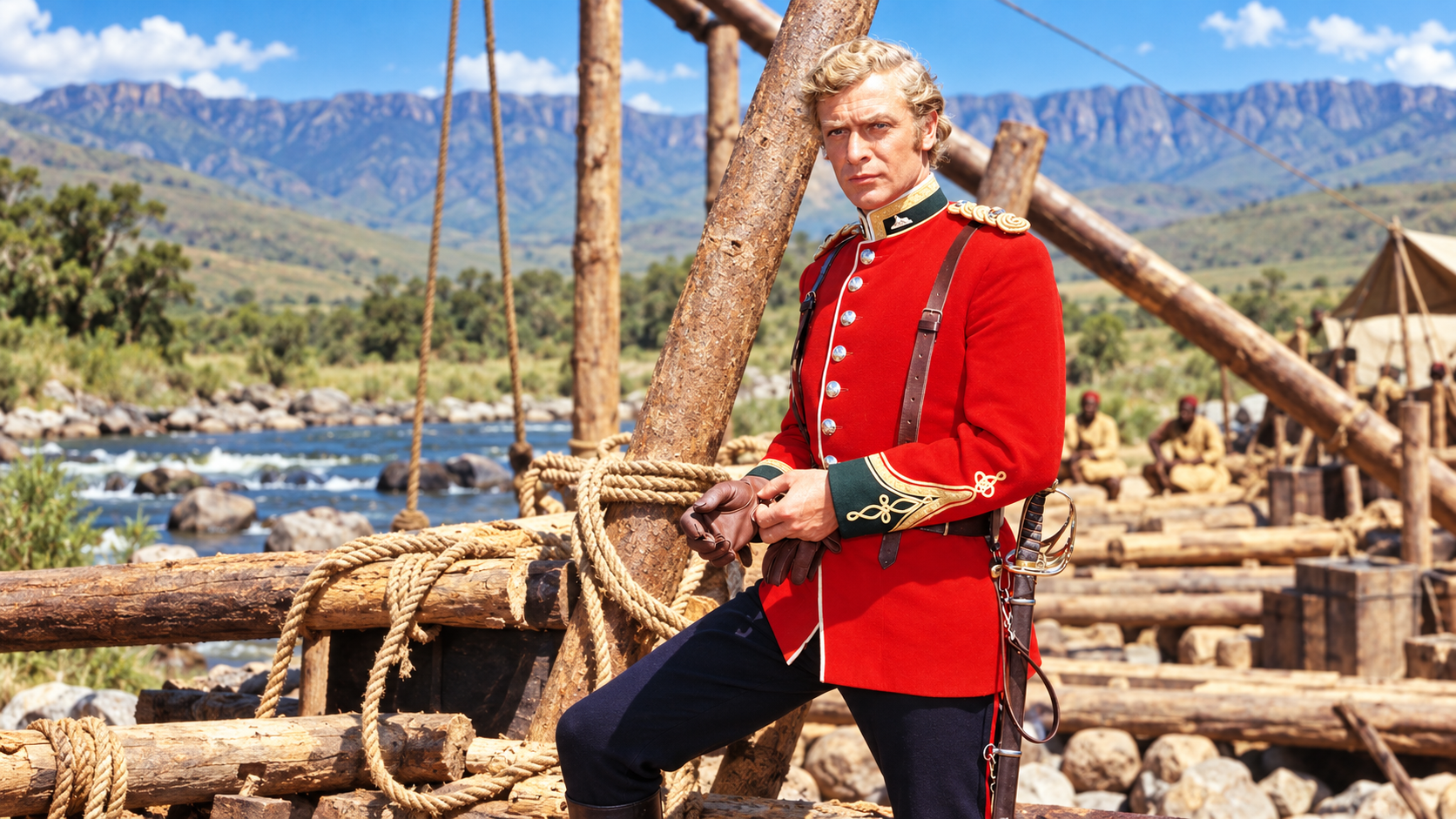
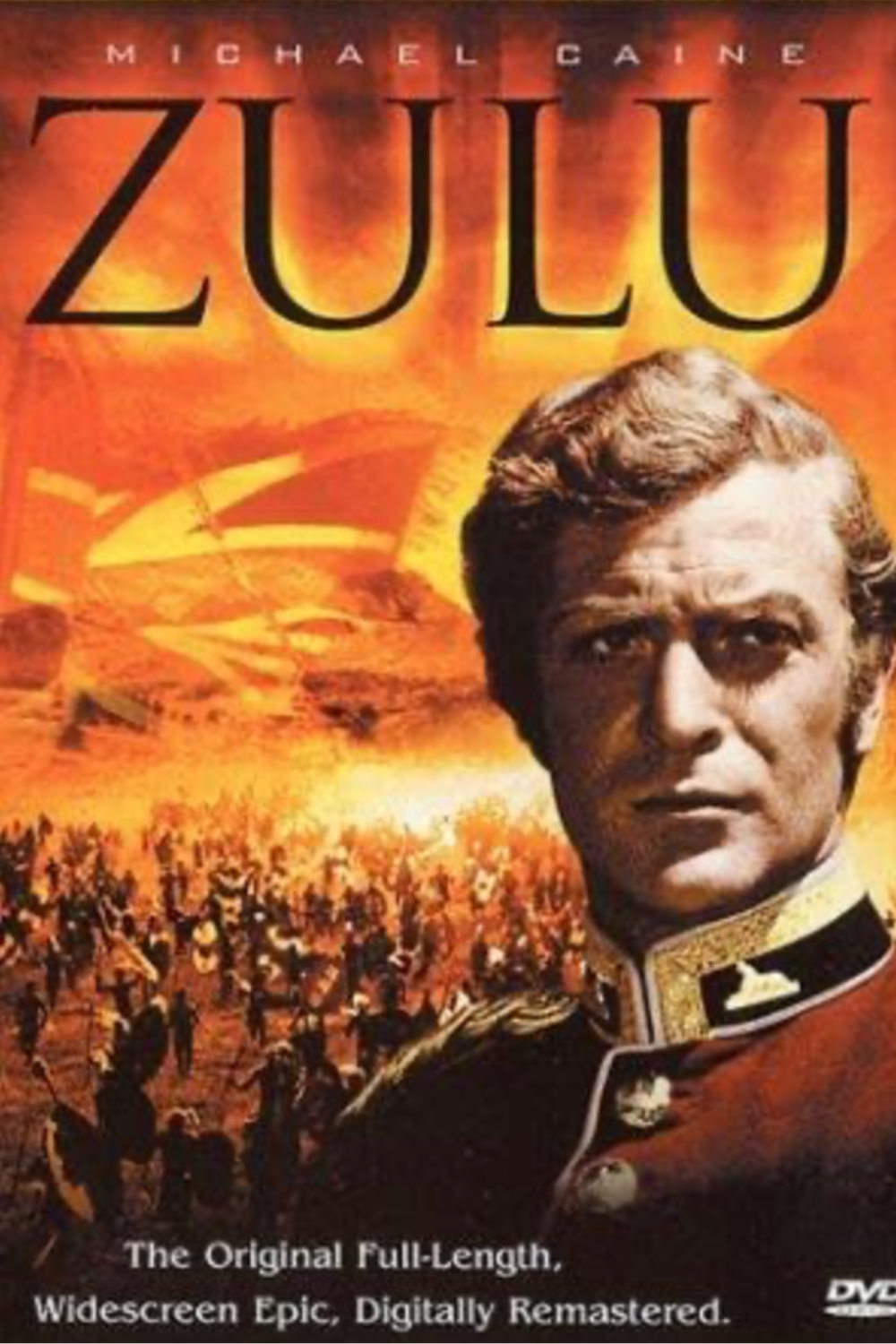
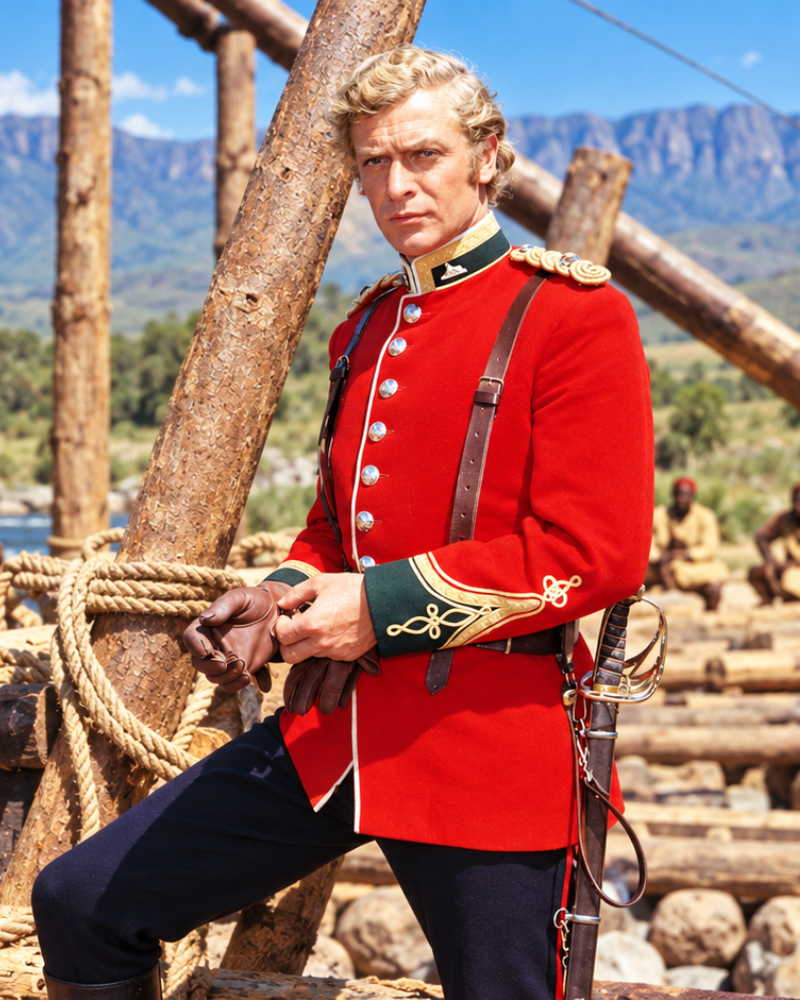
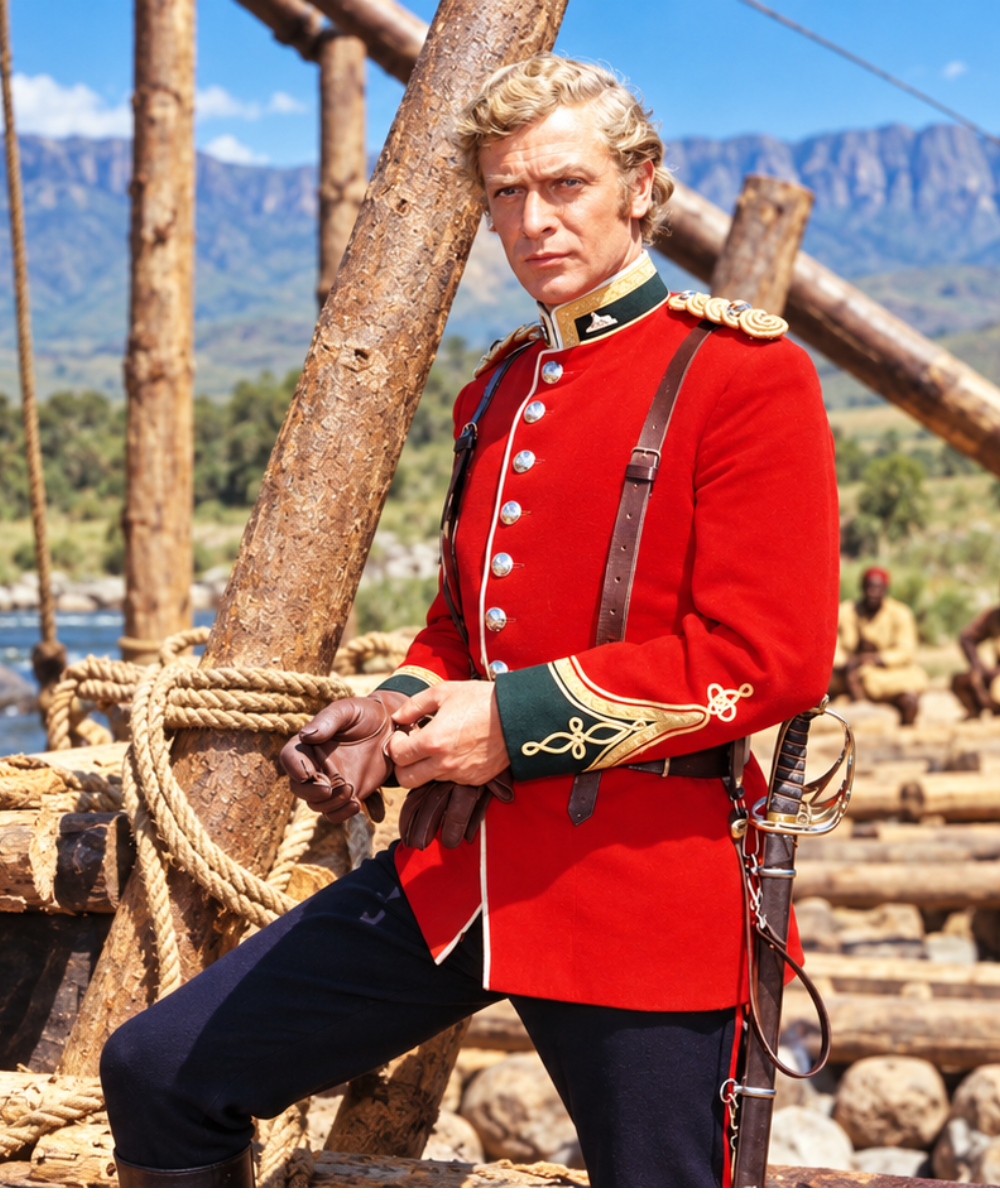
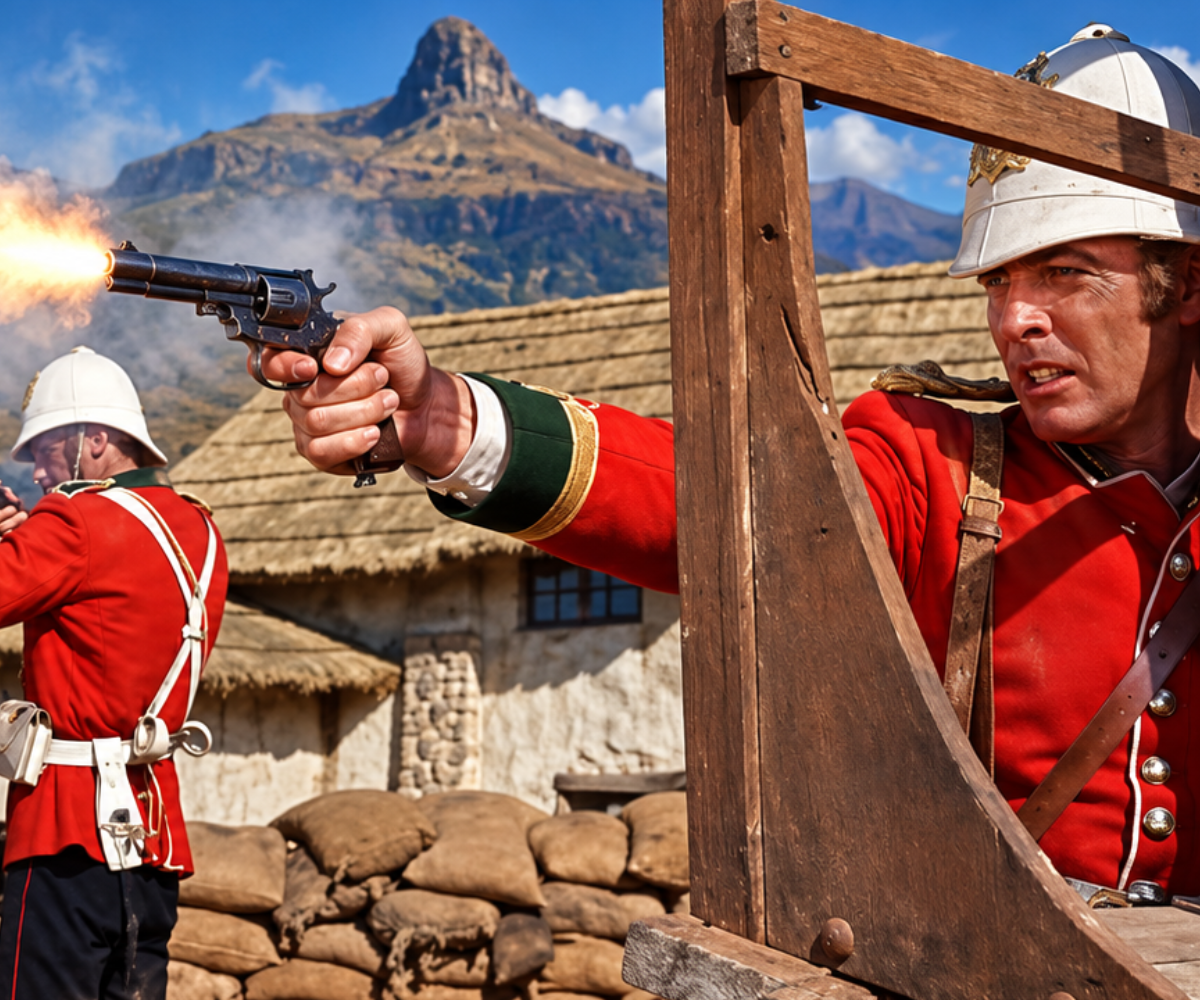
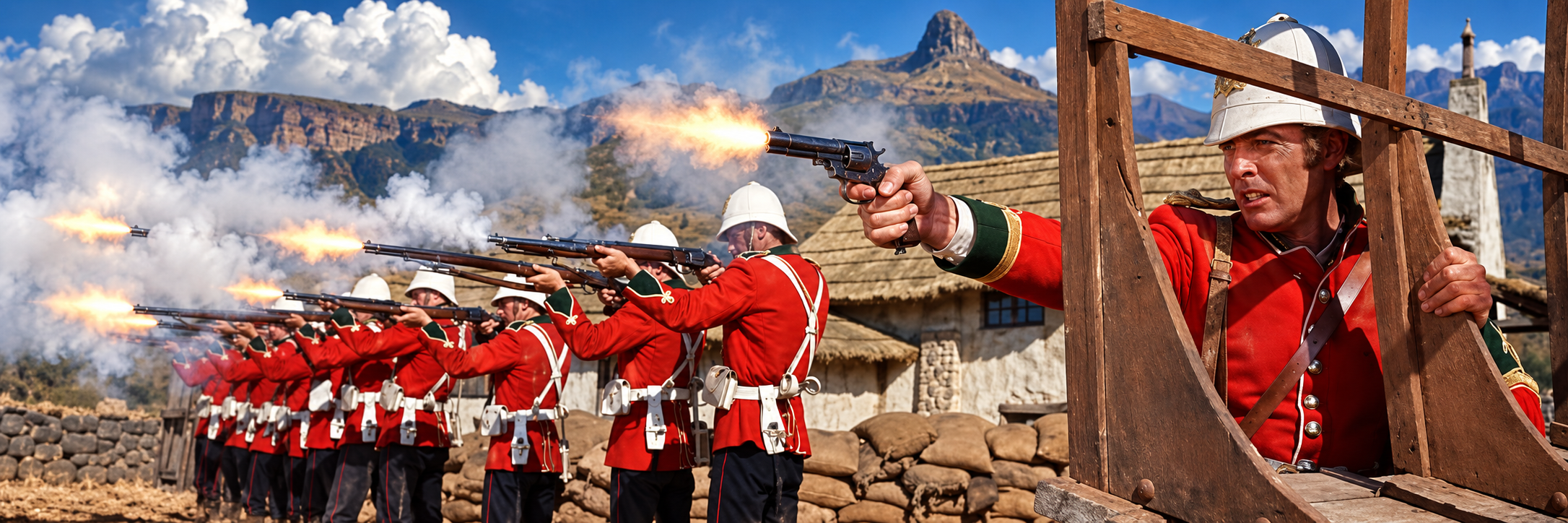
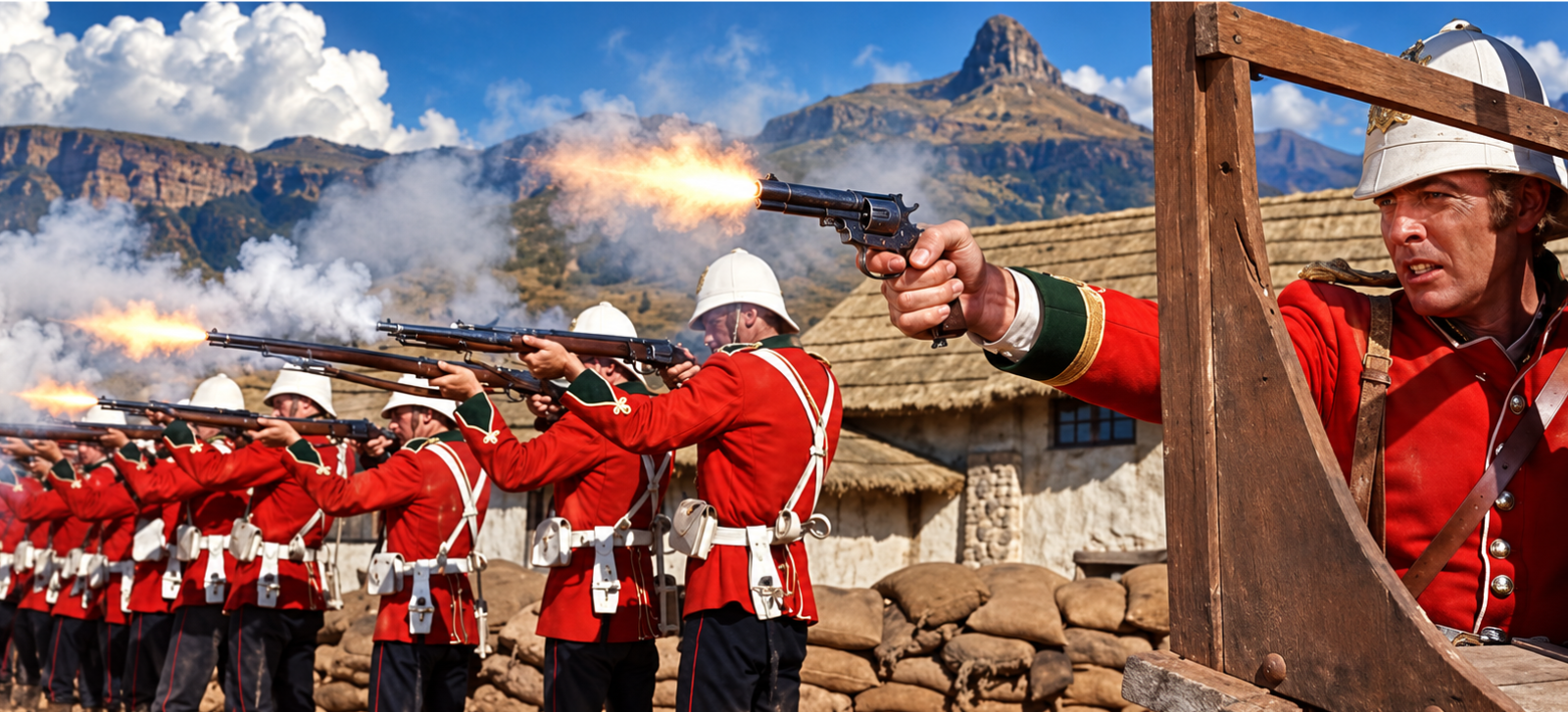
The remarkable thing about Zulu (1964) is that the part that sounds most like Hollywood fiction is actually true.
On January 22, 1879, roughly 150 men defending a small British outpost in South Africa faced an attacking force of approximately 4,000 Zulu warriors. They were badly outnumbered, fought through the night, and survived.
That's not something the screenwriters invented. It really happened.
But while Zulu, starring Michael Caine and Stanley Baker, gets the central story right, it takes considerable liberties with the people involved and some of the battle's most memorable moments.
Was the Battle of Rorke's Drift Real?
Absolutely. The battle took place on January 22–23, 1879, during the Anglo-Zulu War.
Earlier that day, a Zulu army had inflicted a devastating defeat on British forces at Isandlwana. Another Zulu force then attacked the mission station at Rorke's Drift, where a much smaller British garrison prepared to defend itself.
The soldiers improvised barricades from bags of maize and boxes of supplies. When the attacks began, they fought from behind those defenses, eventually retreating to a smaller fortified position.
Even the desperate fighting inside the hospital, including soldiers breaking through interior walls to escape, was real.
Eleven Victoria Crosses, Britain's highest military decoration for valor, were awarded for the defense.
Were the Characters Real?
Most of the principal soldiers were real people, including Lieutenants John Chard and Gonville Bromhead, played by Stanley Baker and Michael Caine.
But the movie makes some questionable changes.
Private Henry Hook, played by James Booth, is portrayed as a troublemaking drunk who eventually discovers his courage in battle.
The real Hook was a disciplined soldier with a good service record who reportedly didn't drink. He didn't need the personal redemption the movie invented for him. He was already a brave man.
The film also portrays missionary Otto Witt as a disruptive figure who opposes the defense. His actual involvement was considerably different.
These changes make for interesting characters, but they aren't particularly fair to the people being portrayed.
Did the Zulu Warriors Really Salute the British?
No. And this may be the movie's most memorable invention.
Near the end, the surviving defenders watch as the Zulu warriors gather on the surrounding hills. Instead of renewing their attack, the warriors appear to honor the British soldiers for their courage.
It's a terrific cinematic moment.
But there's no reliable historical evidence that such a salute occurred. The Zulu force withdrew after failing to capture the position.
What Does the Movie Leave Out?
One important detail is how the war began.
Britain invaded the Zulu kingdom in January 1879. The Zulu weren't simply attacking British soldiers without provocation.
The film concentrates on the courage of men defending an isolated position, which is certainly part of the story. But it provides relatively little context for why those men were fighting there in the first place.
The Bottom Line
Zulu is surprisingly faithful to the extraordinary circumstances of the battle itself. The numbers, the desperate defense, the burning hospital, and the eventual British survival are grounded in history.
It's considerably less reliable when portraying individual personalities and certain dramatic encounters.
Which leads to an interesting conclusion: the filmmakers didn't need to exaggerate the battle to make it exciting.
The real story was remarkable enough.